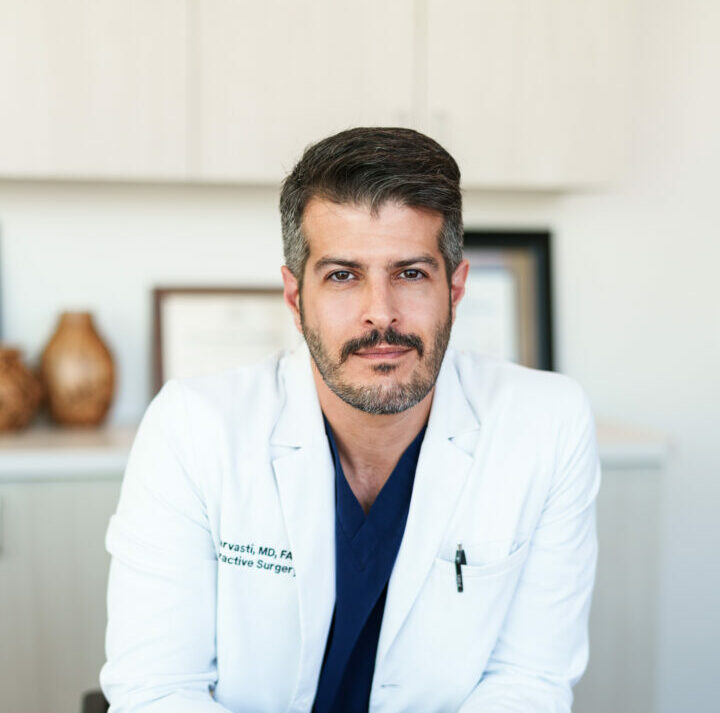
Grounded in years of firsthand experience as an ophthalmologist, Dr. Amir Marvasti launched The Marvasti Foundation to address a critical but often overlooked gap in local healthcare: access to essential vision care for uninsured and underinsured patients. Through his work at Coastal Vision Medical Group, Dr. Marvasti witnessed how preventable vision loss can quietly upend lives when financial and systemic barriers stand in the way. By centering the foundation’s mission in Orange County, he is working to restore not just eyesight, but independence, dignity, and opportunity—one patient and one community at a time.
Hi Dr. Marvasti, thank you so much for taking the time to share about the meaningful work you’re building through The Marvasti Foundation. Your commitment to serving people right in your own community is incredibly impactful, so let’s jump right in.
As an ophthalmologist with Coastal Vision Medical Group, you see firsthand where patients fall through the cracks. What specific moments or experiences made you realize it was time to create a foundation focused on local access to vision care?
As an ophthalmologist, you quickly realize that vision loss is rarely just a medical issue—it’s a life issue. I’ve seen patients delay care until a problem became irreversible, not because they didn’t care, but because they couldn’t navigate insurance gaps, costs, or access. The moments that stayed with me were the ones where the solution was clear and achievable, yet just out of reach financially. Telling someone, “I can fix this,” but knowing they may never get that chance was deeply unsettling. Over time, those moments added up and made it clear that waiting for a system to change wasn’t enough—I needed to help build something locally that could step in where patients were falling through the cracks.
Many charitable medical efforts focus internationally, but you’ve intentionally centered your work close to home. Why was it important to you to address vision inequity within your own community first?
There’s tremendous value in global outreach, but I was struck by how much unmet need exists right here in our own backyard. In Southern California—one of the most resource-rich regions in the world—there are still people quietly living with preventable vision loss. Addressing inequity locally allows for continuity, accountability, and real relationships. These are our neighbors, our community members, people whose lives intersect with ours every day. I felt a responsibility to start where I could be most present, most effective, and most invested for the long term.
Can you share what kinds of services or support the foundation will provide and how you envision it changing someone’s life when they finally receive the care they couldn’t otherwise afford?
The foundation is designed to support medical and surgical eye care for uninsured or underinsured individuals—everything from diagnostic evaluations to sight-restoring procedures like cataract surgery. The impact can be profound. Restoring vision often means restoring independence: being able to work, drive, care for family, or simply move through the world safely and confidently again. I’ve seen how one surgery can change the trajectory of someone’s life, and the foundation exists to make sure financial barriers don’t stand in the way of that transformation.
Launching a nonprofit while maintaining a busy surgical practice is no small task. How has this new chapter challenged or inspired you personally and professionally?
It’s been humbling. Running a nonprofit requires a different kind of patience and perspective—it’s slower, more collaborative, and deeply mission-driven. Professionally, it’s reminded me why I went into medicine in the first place. Personally, it’s stretched me beyond the operating room and forced me to think more broadly about impact, leadership, and legacy. It’s demanding, but it’s also incredibly grounding. It reconnects the technical side of what I do with the human purpose behind it.
Looking ahead, what’s your long-term vision for the foundation, and how do you hope it shapes the future of accessible eye care for families in Orange County and beyond?
My hope is that the foundation becomes a trusted local bridge—connecting patients, physicians, and community organizations to ensure no one is denied vision care because of cost. Long term, I’d love to see it grow into a sustainable model that can be replicated in other communities, while staying rooted in Orange County. If we can normalize access to essential eye care and shift the conversation from charity to dignity and partnership, then I think we can meaningfully shape the future of accessible vision care—one patient, one family, one community at a time.
- Instagram: @marvastifoundation