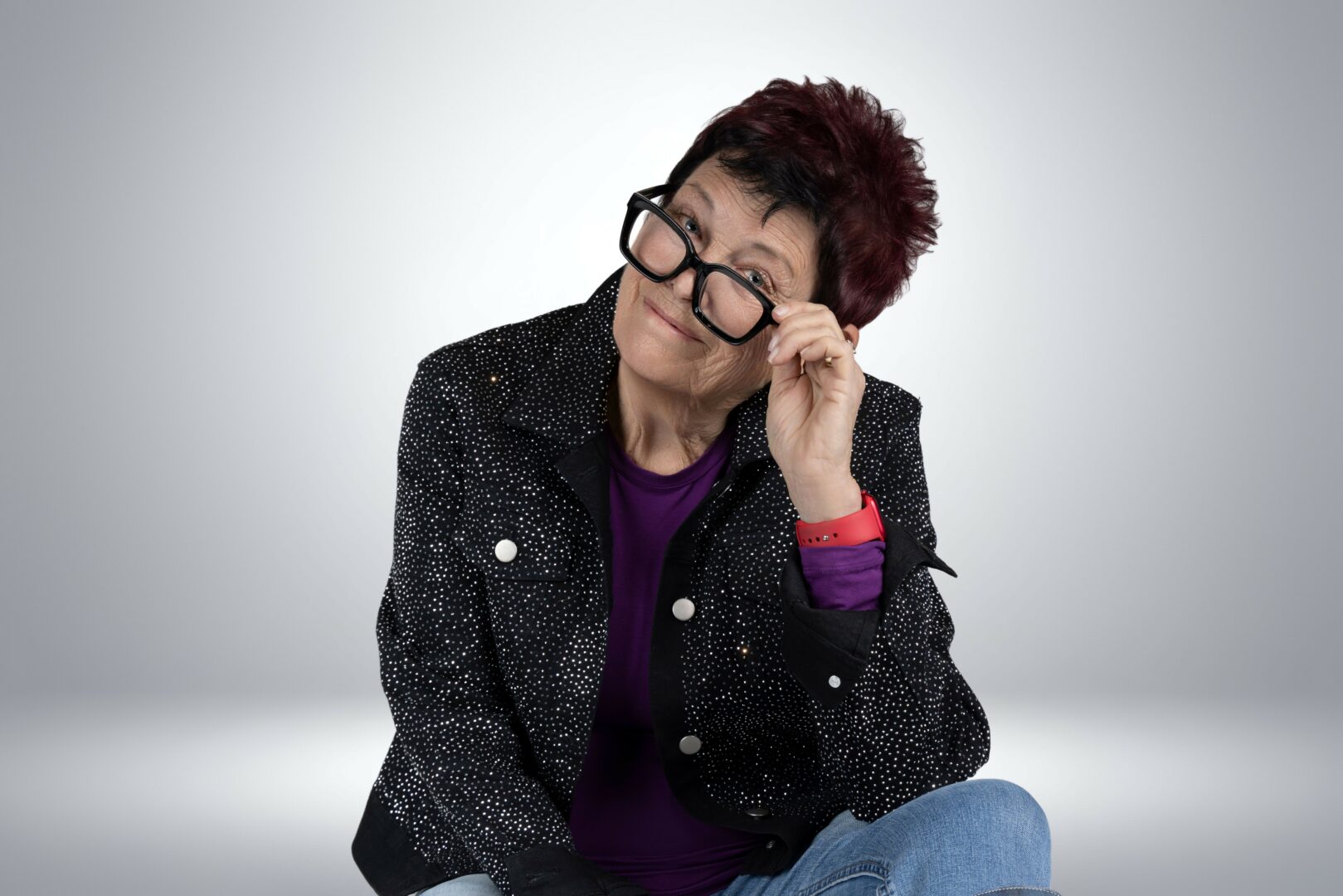
We were lucky to catch up with Heidi Dellafera Eagleton recently and have shared our conversation below.
Heidi dellafera, so good to have you with us today. We’ve always been impressed with folks who have a very clear sense of purpose and so maybe we can jump right in and talk about how you found your purpose?
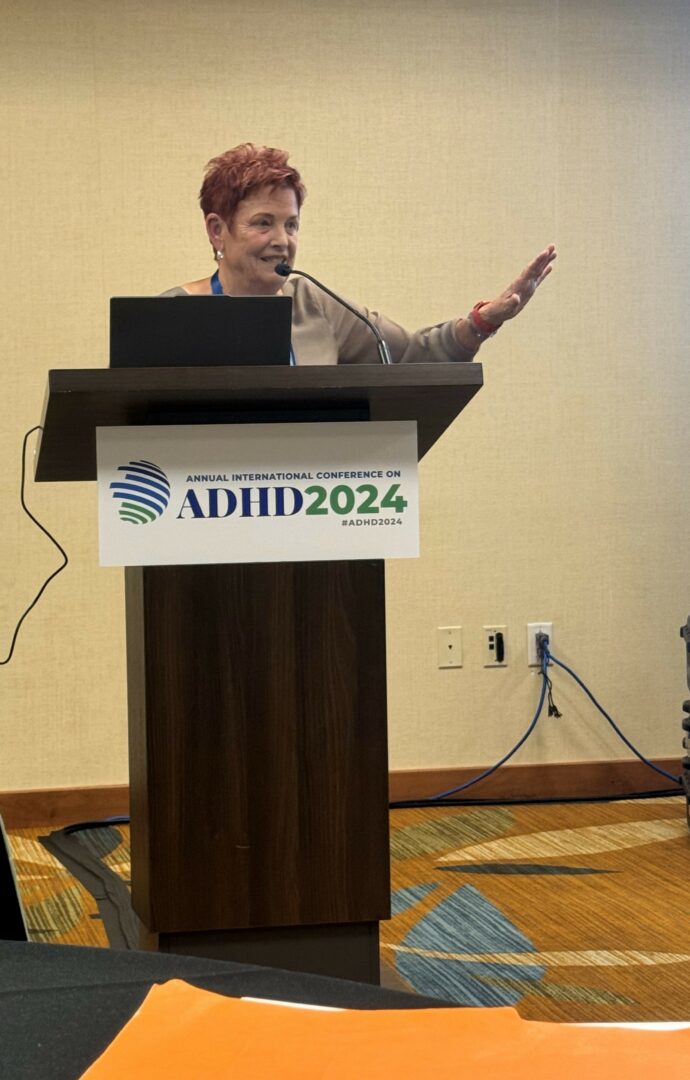
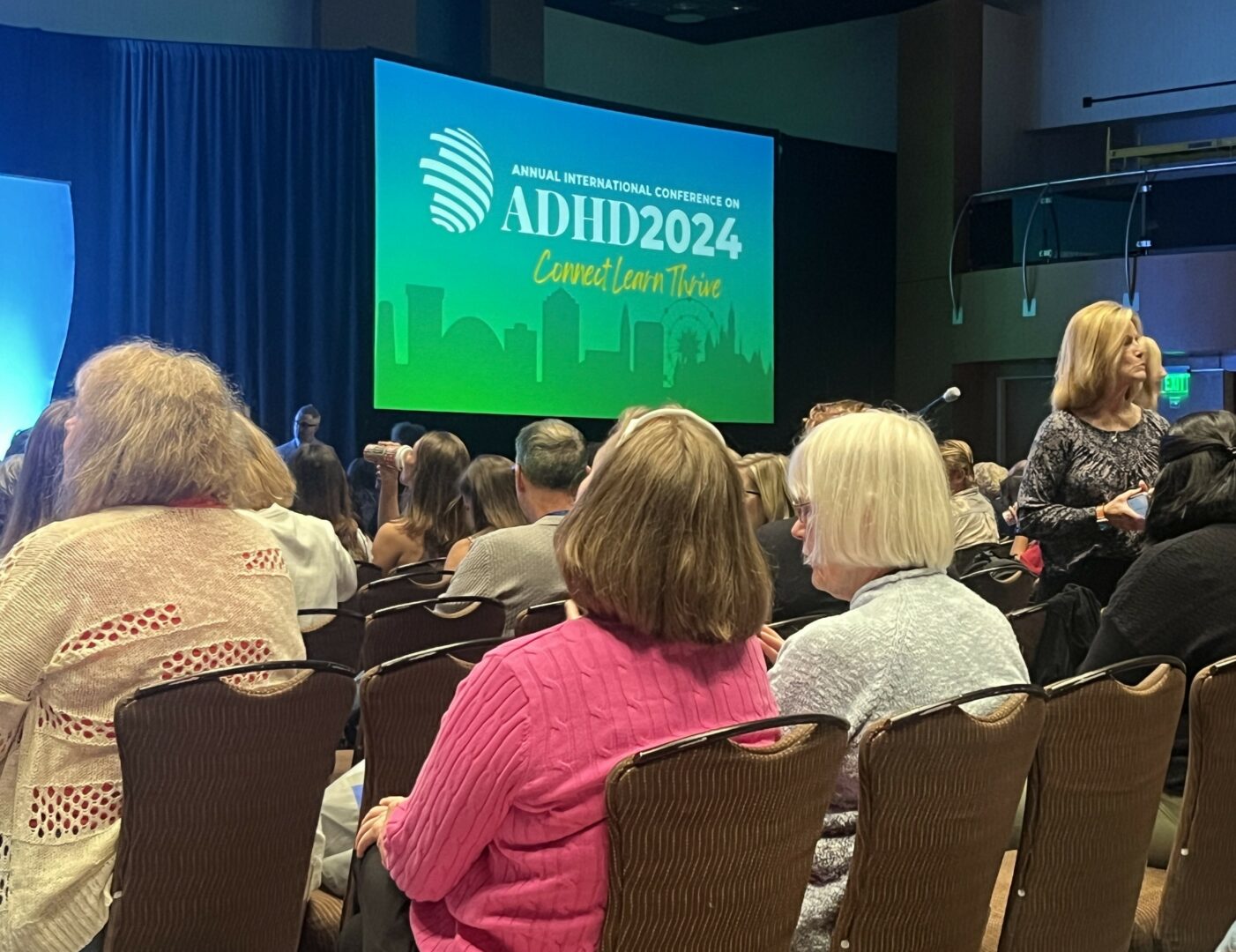
I found my purpose—to write a memoir for anyone who’s ever felt overlooked, misunderstood, or left out because of ADHD especially those of us navigating it later in life—after I was asked to be a facilitator at a pre-conference workshop at the Annual International Conference on ADHD 2024. While preparing for my workshop, “Finding Answers: Aging with ADHD” I realized how little research exists on diagnosing and treating older adults, who, like me, have not outgrown their ADHD and often face new and more complex challenges as they age.
I also discovered that many traits blamed on aging—such as inattention, difficulty concentrating, poor listening skills, and impulsivity— are not necessarily a part of cognitive decline or the beginning of dementia. For many of us, they are ADHD challenges that we have lived with our entire lives.
By telling my story about living with ADHD over a lifetime, I hope to encourage more research focused on older adults in their fifties, sixties, seventies and beyond, particularly women, with diagnosed or undiagnosed ADHD. With additional research, we—like our younger counterparts—could be better treated, and achieve more positive outcomes by taking advantage of advancing technologies, new medications, therapeutic strategies, and emerging treatments on the horizon. Older adults are living longer, healthier lives. Older adults with ADHD should not be the exception. It’s time for us to have a seat at the ADHD table.
I can’t imagine what my life over the last fifteen years would have been like without my ADHD diagnosis. I would not have understood the differences that make me, me. I also would not have recognized that ADHD, along with its challenges, has many strengths which I relied on unknowingly for decades. Without my diagnosis, I might still believe that something was wrong with me.
It’s worth repeating that today, I no longer see my ADHD as a “deficit” or “disorder” to be fixed. I see it as simply a “difference”—one that can be understood, nurtured and embraced.
Older adults with ADHD are a valuable human resource, as is our collective wisdom. Study us. Learn from us. Include us. It’s clear that more research is needed—and it’s my purpose to show that we are living proof of why.
Great, so let’s take a few minutes and cover your story. What should folks know about you and what you do?
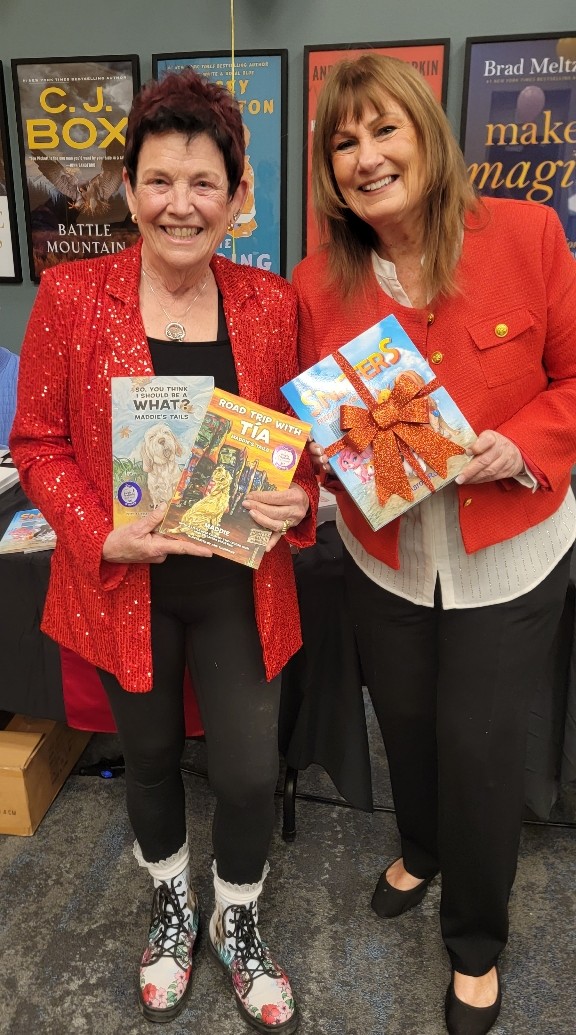
In a January 2025 interview with “Canvas Rebel,” I shared my story about what I was doing today and my vision for my tomorrow, that is, to dedicate myself to sharing knowledge I’ve gained from a lifetime of living with ADHD, by looking back in order to move forward. My memoir, “Embracing Your Rollercoaster: Navigating ADHD Across A Lifetime-Challenges and Triumphs,” is the realization of that vision. It’s now finished and is in the capable hands of my editors with a launch date planned in October 2026, ADHD Awareness Month. Today I’m a writer full-time.
A fall, an “inattentive ADHD moment,” in the middle of a Houston alleyway Christmas Eve morning 2022 is my memoir’s opening act. From there it’s divided into three parts. Part One is about my life from my early years through my ADHD diagnosis in my sixties. In Part Two, “I Am the Older Woman,” who is at a crossroads after a wakeup call. I share some parting thoughts about how I redesigned my life to continue harnessing my ADHD’s strengths as I age to negotiate its challenges in Part Three.
Recognizing that I’m not a healthcare professional, I don’t offer medical or therapeutic advice of any kind. Rather, my memoir is about my own experiences and what I’ve learned along the way. I now understand that my job and purpose going forward is to embrace my ADHD and to find joy living life to its fullest from the front seat focusing on what’s working and drawing from it. My ADHD helped me to be what I wanted to be regardless of what others thought and those pesky “naysayers” who tried to discourage me or those who laughed at my ambitions. It was with tenacity and grit driven by the strengths of my ADHD that I chose the “road less traveled” to get where I wanted to go.
I’ve come to accept and embrace my ADHD along with its challenges and its strengths. I am who I am not despite my ADHD but because of it. That I can say with certainty. At the same time, I can say with certainty that I’m still a work in progress and that I’ll be a work in progress living with ADHD until the day I die.
My memoir, is also a work in progress. I don’t really know its ending or even if it has one. I suppose that’s OK, albeit a bit different. But then again, ADHD itself is a bit different, and I won’t make promises I can’t keep. Life is a never-ending series of twists and turns to be discovered. My life with ADHD is not an exception, but I wouldn’t change any of it for the world.
Perhaps Paralympic Gold Medalist, Jessica Long says it best in her children’s book, “The Mermaid with No Tail,” based on her own life’s story: “The thing that makes you different is your greatest gift.”
Looking back, what do you think were the three qualities, skills, or areas of knowledge that were most impactful in your journey? What advice do you have for folks who are early in their journey in terms of how they can best develop or improve on these?
I now realize that long before my diagnosis, I managed to navigate my life’s journey and the bumps along the way by unknowingly harnessing my ADHD’s strengths: out of the box thinking, boundless energy, tenacity, curiosity, creativity; and the ability to hyper-focus. These strengths helped offset my ADHD challenges with inattention, hyperactivity and impulsivity. By refusing to take “no” for an answer, by taking risks and the “road less traveled,” I succeeded despite my high school guidance counselor’s dire predictions and her judgment that I wasn’t “college material” based on my dismal SAT scores.
Going to a junior college, my law school admission’s visit, hiring a tutor to teach me the “art of standardized testing,” hedging my bets by taking two state bar exams at once, bringing my children to architecture school with me, partnering with a licensed architect and one of my architecture school professors to start a practice, becoming an adjunct professor of architecture to keep the doors of my development, architecture, construction and real estate LLC afloat during the 2008 housing crisis and advocating for testing accommodations for the Architectural Registration Exam are all examples of my ADHD brain’s determination to move forward, no matter the obstacles.
But I didn’t do it alone. I couldn’t have succeeded without others, mentors—people who accepted me for who I was, who encouraged me along the way, who always had my back through good times and bad, and those whose belief in me never wavered.
There was my dad, my biggest fan, who told me to “reach for the stars but keep one toe on the ground.”
There was my college professor, the head of the government department, who helped me as a government major fulfill my dream of becoming a lawyer—offering direction, insight and a glowing recommendation for my law school application.
There was my dearest friend, architecture school professor and later my business partner, who stepped in after my dad died. Through our enduring connection and an unspoken understanding, he appreciated what made me tick—and was someone I could call on anytime day or night.
There was my friend, and my first unofficial editor and talented artist and writer, who urged me to write every day—to say what was on my mind, to tell good stories and to never pass up the opportunity to wear jewelry art.
And finally there was my Zumba buddy—a writer and fitness enthusiast who produced and directed over 350 video programs. He introduced me to the Palm Springs Writers Guild and taught me, in my mid-seventies, how to balance on one foot—my metaphor for life.
Today all but one have gone on to another life. The last slips away a little more each day, struggling to find the right words. Yet their legacies live on in me, and to each of them I owe my endless gratitude and affection.
Awesome, really appreciate you opening up with us today and before we close maybe you can share a book recommendation with us. Has there been a book that’s been impactful in your growth and development?
Having looked back over my lifetime as I now move forward, I’m beginning to use my “essence of wisdom.” I’m doing so while living with ADHD closer to the end of my life than to its beginnings. It’s no longer about what I’ve done, but about the knowledge I’ve gained from what I have done and how I use that knowledge today in some meaningful way. In my case it’s by writing my memoir.
In 2022, Arthur C. Brooks published his book, “From Strength to Strength” with its Introduction titled, “The Man on the Plane Who Changed My Life.” I first met that man in an article that Brooks wrote and published in “The Atlantic” magazine in July 2019, “Your Professional Decline Is Coming (Much) Sooner Than You Think.” Shortly after “From Strength to Strength” was released, I read it cover to cover one night. Brooks’ book and his article changed my life, like the man on the plane had changed his.
Brooks is an author, Harvard professor, reseacher, and social scientist with a focus on happiness, faith and public policy. He encourages us to “redesign our lives” in the second half of life to use knowledge gained from our pasts, or what he calls the “essence of wisdom,” in some meaningful way. He urges us to devote the back half of our lives to serving others with our wisdom and to get old sharing our knowledge and the things we believe are most important.
While there’s really no age limit on purposefully sharing wisdom, I have to admit that it’s been easier for me to do so as I near the end of my journey. I’ve had more time for introspection and reflection. Yes, I’m proud of what I’ve done and proud that in the final stages of my life I’ve rediscovered new passions like writing, which grounds me and keeps me focused. But mostly, I’m proud that I’ve learned as I age living with ADHD to find joy in every day, to accept myself for who I am and to accept and embrace both my ADHD and my aging, “the good, the bad and the ugly.” Paving my way to acknowledgement and acceptance has been empowering.
Contact Info:
- Website: https://www.heidieagleton.com
- Instagram: https://www.instagram.com/heidieagleton
- Facebook: https://www.facebook.com/heagleton
- Linkedin: https://www.linkedin.com/in/heidi-eagleton-a6153b11
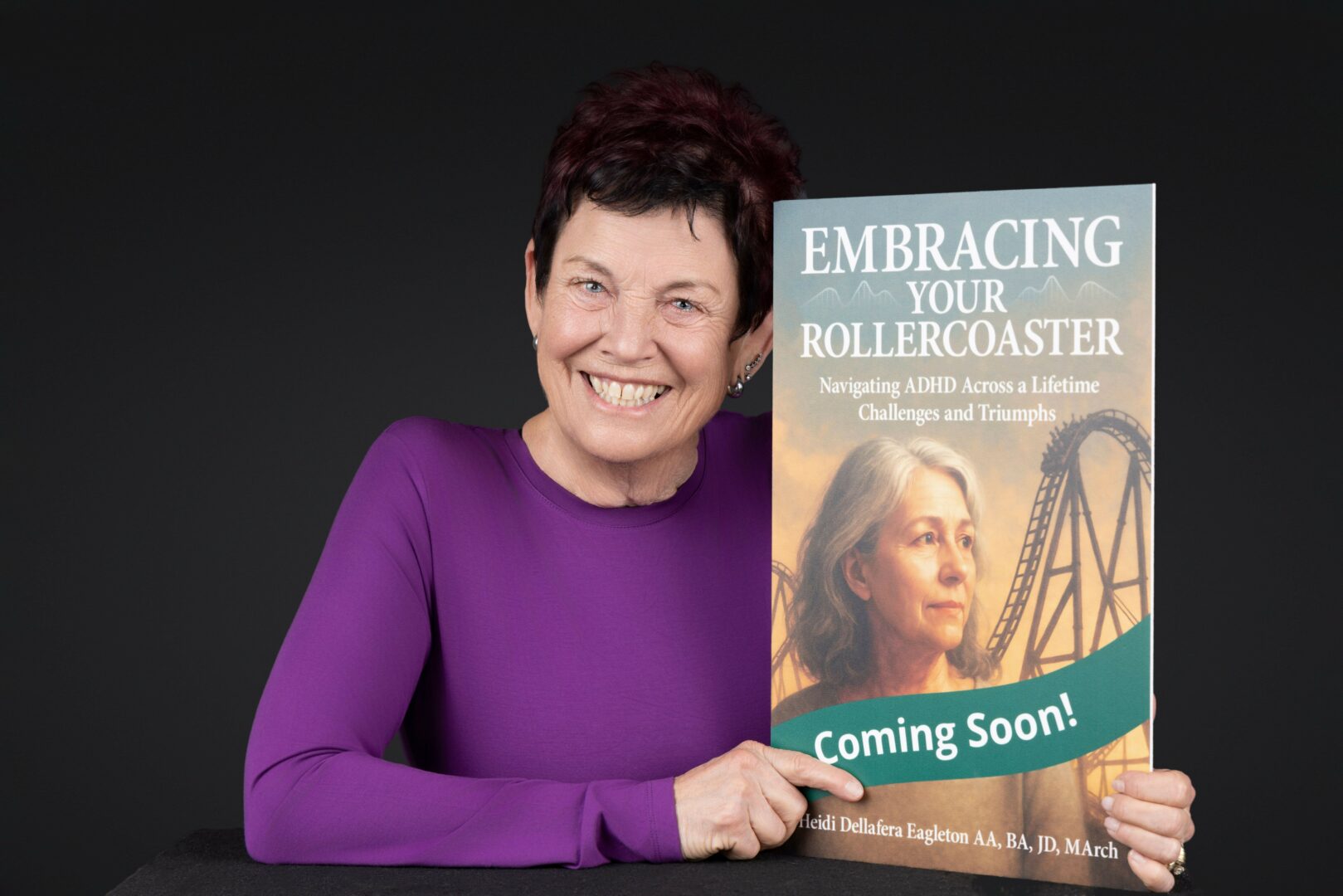
Image Credits
Sandy Swett
Red Door Pictures, Inc.
74399 CA-111 Suite p
Palm Desert, CA 92260
760-636-2650
so if you or someone you know deserves recognition please let us know here.