Joyce, since your last Voyage feature you’ve launched Just Another Leap in a much more unfiltered form — what shifted for you personally and professionally that made this the right moment to tell the story this way?
The first version of Just Another Leap came out in 2014 after a TEDx talk. I needed something to sell from the back of the room after conferences, and in classic entrepreneurial fashion, I accidentally created my own deadline. A friend added a “book coming soon” page to my website before I had written a single word. Then a client called and said, “You have the book, right?” Within 90 days, I wrote it. That first version was written for a business audience and built around the training content I was delivering for clients.
Fast forward to 2024. A conference client hired me to speak in Kansas City on personal branding and LinkedIn, the topic of my other book, Your Connecting Advantage. In that book, I referenced Just Another Leap multiple times, which meant I suddenly had another deadline. I couldn’t keep pointing to a book written nearly a decade earlier, filled with outdated platforms and social media references.
Then that same organization hired me again. And again. The third time, they asked me to create a customized three-part virtual webinar series on brain-based insights for their team. That content was straight out of Just Another Leap. I didn’t have the luxury of procrastinating. The update had to happen in record time. Only this time, instead of 97 pages, it grew to 362.
So professionally, the shift started as a business decision. I needed the book to reflect the work I was actively doing. But personally, something else had changed. The updated version was published in 2025, the year I turned 60. And I realized I didn’t want to edit my voice anymore. I’ve been in business since 2008. I know how to polish language for a broader audience. I just didn’t want to.
At the same time, culturally, the volume was going up. The We Do Not Care Club videos were everywhere. Women in midlife were not whispering about burnout, boundaries, and reinvention anymore. I was living it in real time. So I made a deliberate choice. The book wasn’t going to be the 2014 version with a fresh cover. It needed to reflect who I am now. The stories go deeper. The language is honest. And it’s written for the audience I’m growing into, not just the one I started with.
I knew this book wouldn’t just support my current business. It would be part of my “what’s next.” And if I’m building that next chapter at 60 and beyond, I’m not performing for approval anymore.
A slightly unfiltered version won’t fit everyone. That’s fine. If it doesn’t resonate, we’re not meant to work together.
You were intentional about researching categories, reader frustrations, and positioning before the book was finished — how did that strategic approach shape both the writing and the book’s visibility after launch?
I knew I was stepping into a very crowded category with this book, so I treated it the same way I treat client strategy: research first.
Amazon made the most sense for reader feedback because everything is in one place. Instead of reading five-star praise, I went straight to the one- and two-star reviews of bestselling self-help titles. What I saw over and over again was frustration. Readers literally wrote, “I can’t relate.” The authors had “made it.” They were New York Times bestsellers giving advice from the other side of success. And the reader was still in the middle of it. That’s why I wrote it from the driver’s seat.
Even the language choices were intentional. I tested multiple subtitles and positioning options with my audience before launch. The version that won was the one that made people say, “That’s me.” If someone asks what the book is about, I can answer in one sentence: how to get shit done when your brain keeps hitting the same damn wall.
The final layer was Amazon category research. When you publish, you choose three categories. If I left it in the motivational self-help category, it would disappear. So I researched the keywords people were actually searching for and positioned the book accordingly.
That’s how it landed in Midlife Self-Help and Stress Management. During the first launch to my email list (no paid ads), it hit #50 in Midlife Self-Help (print), #13 in Midlife Self-Help (Kindle), and #32 in Stress Management in the Kindle store.
The book wasn’t written exclusively for midlife women. Anyone can apply the insights. But those rankings were signals. They showed me where it was resonating most strongly.
My long-term goal wasn’t just to upload a book on Amazon. I wanted it in independent bookstores. After the initial launch, I approached Rainy Day Books here in Kansas City. They’ve been in business for more than 50 years and regularly host New York Times bestselling authors. They don’t typically carry many indie titles.
I wasn’t pitching a trend. I knew the book fit the midlife shelf they already had. They brought it in and gave it face-out placement. For an indie author, that’s huge.
The concept of “Midlife Molt” emerged directly from lived experience rather than trend-watching — what does molting represent for women navigating midlife decisions, boundaries, and burnout?
Midlife Molt wasn’t something I sat down and invented. It showed up because of timing.
I was in the middle of a tight rewrite window when my partner of four and a half years ended the relationship. The reason he gave was cat allergies. This was over a cat we adopted together two years prior. The one he named and played with every night. I wish I were kidding.
That moment pushed me to expand Chapter 6 and add two sections: Boundaries, Burnout, and Brisket and Midlife Molt: The Crack Before the Shift. What I was writing about wasn’t theoretical. It was happening in real time.
This is a brain-based book. Think neuroscience in layman’s terms. I talk about the reticular activating system—almost like a Google search for your brain. Millions of bits of information hit us constantly, but we can consciously focus on about ten at a time. Your RAS filters for what it believes matters.
I’ve been using my RAS to spot opportunities hiding in plain sight since 2008. During that rewrite, I started noticing something everywhere. Women in midlife were posting about burnout—not just work, but everything. About being done tolerating things they’d tolerated for decades. The comments weren’t quiet.
It was recognition. Boundaries. Exhaustion. Reassessment. It matched exactly what I had just lived and what I was already writing about.
I’d used the onion metaphor before. Peeling back layers. It didn’t fit anymore. Molting did.
Animals molt to shed something that no longer fits. For women in midlife, it’s the moment you realize the version of you that worked at 35 doesn’t work at 55. The expectations you carried for decades feel heavy. The tolerance for nonsense drops.
It doesn’t happen in one dramatic act. It happens in pieces… decisions, conversations, the choice not to explain yourself again.
When I ran the word by women my age, the reaction was immediate.
Midlife Molt is the moment you realize the version of you that kept everything running doesn’t get to run you anymore.
Substack entered your world organically rather than as a planned marketing move — what has that platform allowed you to do differently in terms of visibility, depth, and connection?
Substack didn’t start as a master plan. It started in the middle of chaos.
I was hosting my More Leads, Less Hustle Micro Audio Summit and interviewed Veronica Pullen, who’s become known for teaching how to use Substack strategically in the age of AI search. It’s called GEO—Generative Engine Optimization—which sounds techy, but the simple version is this: if you want your ideas to show up when people search online, you have to understand how platforms categorize and surface content.
As she explained how Substack worked, something clicked.
At the time, I was packing for a move, launching my book, and running the summit. So naturally, I thought, sure, let’s add one more thing.
Based on her advice, I launched with three posts so readers would have something to binge. And I made a clear positioning decision. My LinkedIn newsletter, The Leap, serves my business audience. Substack became The Midlife Leap. Same brain-based insights. Different stories. Midlife stories — pulled straight from what I’m living and what I see women talking about in real time.
Substack is built for long-form writing. People go there to read. There aren’t ads flashing at you every few seconds. The energy is different, in a good way. It feels closer to an online magazine than a traditional social platform.
For me, it’s freedom. On LinkedIn, I’m mindful of corporate clients and consulting relationships. On Substack, I’m writing directly to midlife women. It’s the alter ego space. I can be unfiltered. And frankly, it’s cheaper than therapy.
Strategically, I approach Substack the same way I approached Amazon with the book. I researched how the platform organizes content. I paid attention to tags and topics that matched what I’m writing about. I made sure the message was clear for the audience I want there. If someone lands on the page, they should instantly think, this is for me.
I’m not running a paid Substack. It’s open. It’s for the women who find it and think, finally, someone is saying this out loud. The book sparked it. Substack keeps the conversation going.
From the book to speaking, private clients, and the Midlife Molt merchandise, how are you deciding what evolves, what gets shed, and what stays as you build this next chapter in real time?
This next chapter isn’t about doing more. It’s about doing less on purpose.
One of the first things I shed was my lower-ticket group coaching program for business owners. I looked at the time it required and what it produced, and the math wasn’t mathing. So I closed it.
Private clients and speaking stayed. That’s where I’m strongest, and it’s still work I genuinely enjoy.
At the same time, I’m creative. And yes, being single again gives me more mental space to think about what I’m building long term. I don’t want everything tied to me being on a Zoom call, so I started layering in work that doesn’t require me to show up live every time.
That includes the book, the audiobook, and low-ticket digital offers on Gumroad like the Midlife Reboot, the Anti-Vision Board Reset, and the U*nfck Your Headspace Sprint. I also added a focused strategy session: Life Blew Up. Now What? — a 60-minute Stuck to Started call. I can help someone get a lot done in an hour. Not everyone needs months of coaching. Sometimes they just need clarity, a decision, and a next step.
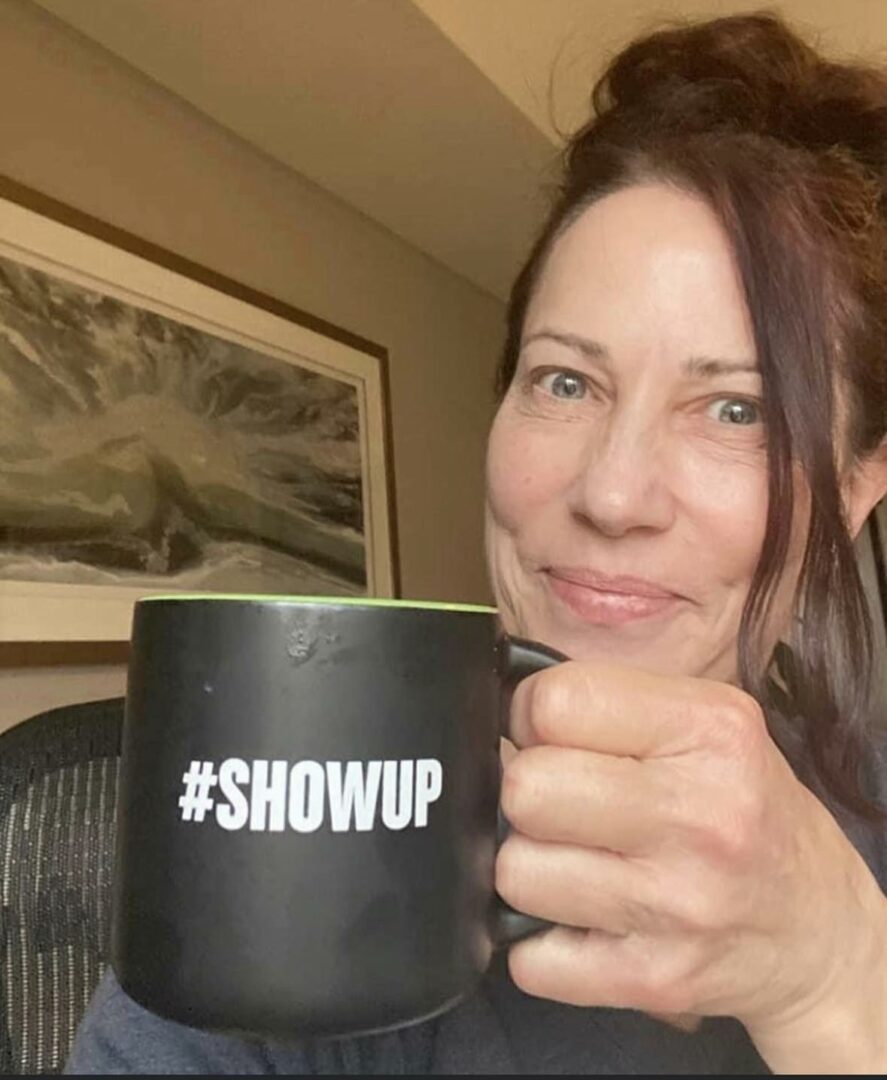
Then came the Midlife Molt merch. Friends kept asking, “Are you putting this on a T-shirt?” So I did. And yes, there are mugs too. I even crowdsourced the shirt colors because midlife women have opinions. Print-on-demand makes it simple. I create it once, and it can run in the background.
The filter I’m using now is straightforward: does this require me to constantly show up in real time, or can it live on its own once it’s built?
I’m keeping the work that energizes me. I’m letting go of what eats time without giving much back. And I’m building pieces that will still exist whether I’m online that day or not. Midlife Molt isn’t just something I wrote about. It’s how I’m operating.
- Just Another Leap: https://rainydaybooks.com/
search?q=just%20another%20leap - Substack: https://substack.com/@
joycelayman - Gumroad: https://layman.live/GUMROAD
- Website: www.joycelayman.com