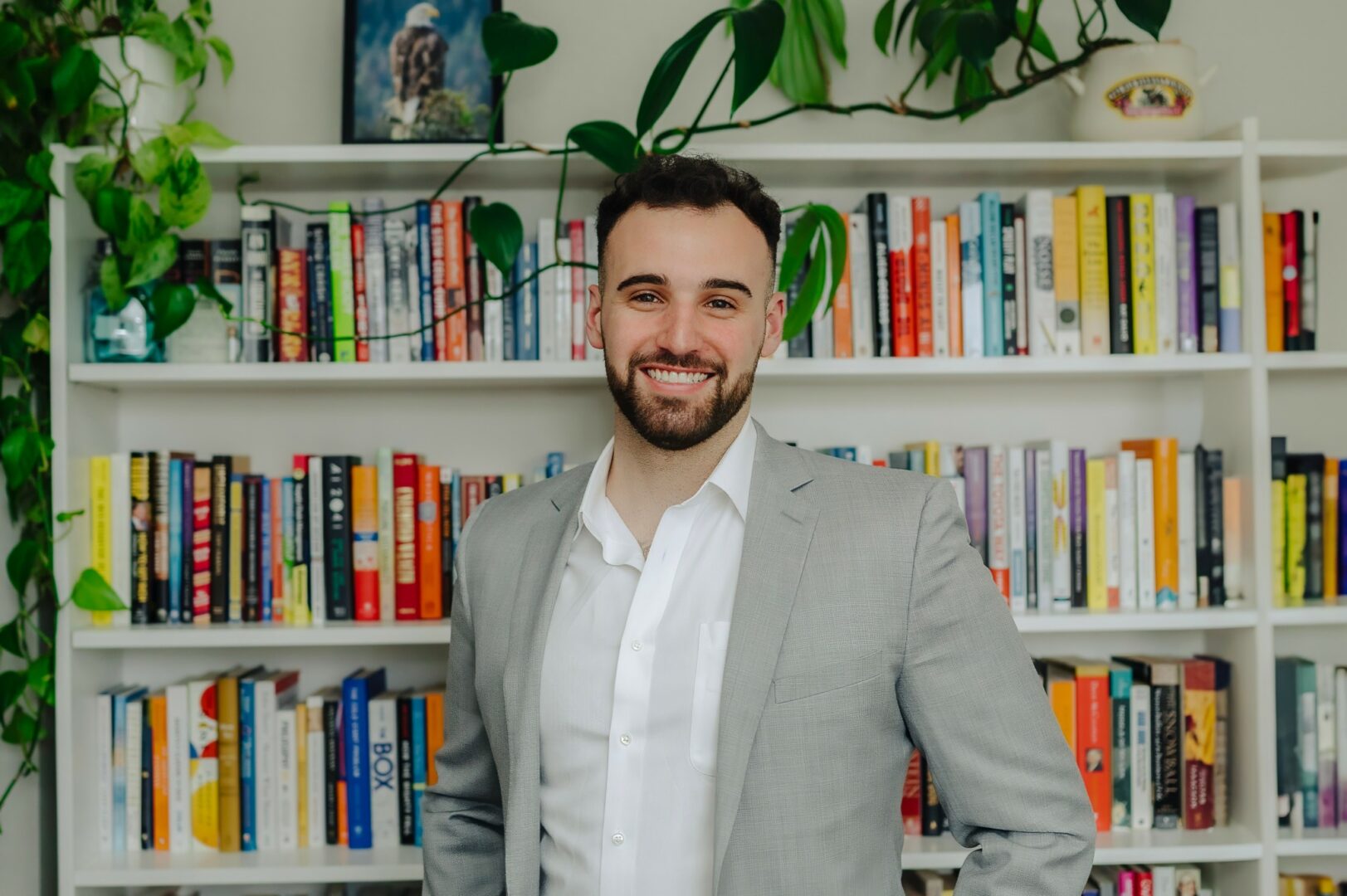
We’re excited to introduce you to the always interesting and insightful Tanner Haas. We hope you’ll enjoy our conversation with Tanner below.
Tanner, looking forward to learning from your journey. You’ve got an amazing story and before we dive into that, let’s start with an important building block. Where do you get your work ethic from?
I’m a voracious reader—especially of biographies. I’ve always believed that if you want to understand excellence, you study the lives of people who achieved it.
One of the biggest influences on me has been Warren Buffett. He talks about developing the habits of success and says you should find someone you admire and consciously model what they do. That idea stuck with me early on. Success isn’t an accident; it’s behavioral. It’s built from daily habits.
I’ve drawn inspiration from people like Theodore Roosevelt, Alexander Graham Bell, James A. Garfield, Charlie Munger, and Benjamin Franklin. They were intensely curious, disciplined, resilient, and mission-driven. They read constantly. They thought deeply. They showed up early and stayed late. They endured hardship without losing focus.
I’ve tried to adopt those same habits—continuous learning, deep work, intellectual honesty, and perseverance. When I face obstacles, I try to “soldier on.” Not because it’s glamorous, but because consistency compounds.
I also believe work ethic is trainable. Like any muscle, it strengthens gradually. You don’t go from working five hours a day to eighteen overnight. But you can stretch your capacity over time. The longer you work with intention and focus, the more natural it becomes. Discipline stops feeling extreme and starts feeling normal.
There’s also an important corollary: when you’re working on something you genuinely care about, it doesn’t feel like work. The hours aren’t draining—they’re energizing.
What I’m building now with Seald Healthcare—solving the healthcare data breach problem—doesn’t feel like work to me. It feels like purpose. And when purpose meets disciplined habits, that’s where real endurance comes from.

Thanks, so before we move on maybe you can share a bit more about yourself?
Right now, my primary focus is building Seald Healthcare.
Seald Healthcare is developing the secure data connectivity layer healthcare has been missing—the equivalent of what Plaid built for financial data, but purpose-built for protected health information. Healthcare is a system designed for interoperability, not for securing shared data. As a result, PHI flows across EHRs, payers, clearinghouses, revenue cycle vendors, analytics platforms, cloud providers, and now AI systems—often in plaintext at multiple points in the chain.
The consequences are staggering. Since 2009, more than 846 million patient records have been exposed. Healthcare breaches are the most expensive of any industry, averaging roughly $10 million per incident. And despite growing vendor complexity, only 4% of healthcare organizations report high confidence in their third-party vendor risk assessments. The ecosystem is expanding, but trust in it is shrinking.
We’re changing that model.
Seald Healthcare encrypts PHI at the source and attaches granular, policy-enforced access controls that travel with the data itself via an API or SDK. Everything you need to encrypt PHI at the source and enforce access policies in real time. Seald Healthcare secures patient data at the record level, letting organizations decide who can access patient data, how, and under what conditions — even after it leaves your systems. If a vendor is breached or a contract ends, your data stays secure and unreadable.
Instead of trying to secure every intermediary, we secure the data directly. Access is cryptographically enforced. Permissions are programmable. Exposure is minimized by design—not policy binders or compliance checklists.
What excites me most is that this isn’t incremental security. It’s foundational infrastructure. Healthcare today resembles financial data before Plaid—fragmented, high-friction, and insecure by default. We believe healthcare needs a developer-friendly, data-centric security layer that makes secure third-party exchange scalable and enforceable without disrupting workflows.
The stakes are only increasing. AI expansion is multiplying the number of systems touching sensitive data. A breach at a single clearinghouse or cloud administrator can cascade across thousands of downstream organizations. The problem isn’t stabilizing—it’s compounding.
What makes Seald Healthcare special is that we’re not asking the ecosystem to slow down innovation. We’re enabling it safely. Our SDK integrates into existing environments while fundamentally eliminating plaintext PHI exposure across third-party systems. That combination—strong cryptography paired with real-world deployability—is rare.
We’re currently focused on expanding pilot deployments, deepening enterprise partnerships, and positioning the platform as a default secure exchange layer for healthcare data. The long-term vision is to become embedded infrastructure—so secure data exchange becomes the standard, not the exception.
At a broader level, I’ve always been drawn to building foundational systems where trust has quietly eroded. Whether it’s communication or healthcare data, I’m motivated by problems that affect millions of people behind the scenes. Seald Healthcare is the most technically ambitious expression of that so far.
And like I mentioned earlier, it doesn’t feel like work. It feels like building something that should have existed years ago.
If you had to pick three qualities that are most important to develop, which three would you say matter most?
Looking back, what do you think were the three qualities, skills, or areas of knowledge that were most impactful in your journey? What advice do you have for folks who are early in their journey in terms of how they can best develop or improve on these?
There are three qualities that have shaped my journey more than anything else: persistence, curiosity, and hard work.
1. Persistence
Nothing great happens in a straight line. Every venture I’ve launched—whether it was my first company at 18 or the work I’m doing now with Seald Healthcare—was marked by setbacks, long nights, and moments where the easier choice was to quit. The only real differentiator between success and failure is the decision to keep moving forward even when progress feels invisible. Persistence isn’t glamorous, but it’s the bedrock of every meaningful achievement.
2. Curiosity and the Desire to Learn
Curiosity isn’t just an abstract trait—it’s the mechanism that drives you to read more, think deeper, and question better. I’ve always believed that real insight comes from mining the experiences of others and synthesizing that into your own decision-making. As Charlie Munger has often said, the most successful people he knows are voracious readers—a principle I’ve taken to heart in both life and business.
3. Hard Work
There’s no substitute for putting in the hours. Hard work is the engine that turns ideas into execution and intention into results. It’s not about long hours for the sake of vanity; it’s about putting in the disciplined effort to sharpen your skills, solve complex problems, and out-work your doubts. Hard work compounded over time is what turns small advantages into true momentum.
Advice for those early in their journey:
Build your persistence muscle. Treat obstacles as normal. The ability to endure isn’t something you’re born with—it’s something you develop through experience.
Feed your curiosity daily. Read widely beyond your domain. Learn from books, histories, failures, and the people who’ve gone before you. The more you know, the clearer your decisions become.
Commit to consistent effort. Don’t chase short bursts of intensity—chase sustainable, relentless focus. Discipline is what separates dreamers from doers.
The earlier you internalize that growth is a process—not an event—the more equipped you’ll be to do work that actually matters.
How would you spend the next decade if you somehow knew that it was your last?
If I knew I only had a decade left, I would focus intensely on two things: my family and building things that outlast me.
Most importantly, I would pour myself into my son, who’s approaching his first birthday. I would show him—by example—how to become the best version of himself. How to work hard. How to think big. How to cultivate deep curiosity. How to treat his mom and other women with respect and honor. How to stand firm in his values. My goal wouldn’t be to shield him from life’s challenges, but to prepare him so thoroughly that he can navigate them with strength and confidence long after I’m gone.
I would also be intentional about loving and supporting my wife, who has always been my biggest supporter. I’d want to ensure she feels secure, empowered, and fully equipped to handle anything life brings. That means not just emotional support, but building stability, clarity, and structure around our family so she and our son are both positioned to thrive.
And beyond my family, I would continue building meaningful work—things that solve real problems and improve people’s lives. Because in the end, what lasts isn’t comfort or recognition. It’s character, contribution, and the people you shape along the way.
If I only had a decade, I’d make sure every year strengthened the people I love and the impact I leave behind.
Contact Info:
- Website: https://tannerhaas.com/
- Linkedin: https://www.linkedin.com/company/seald-healthcare?trk=public_post_feed-actor-name
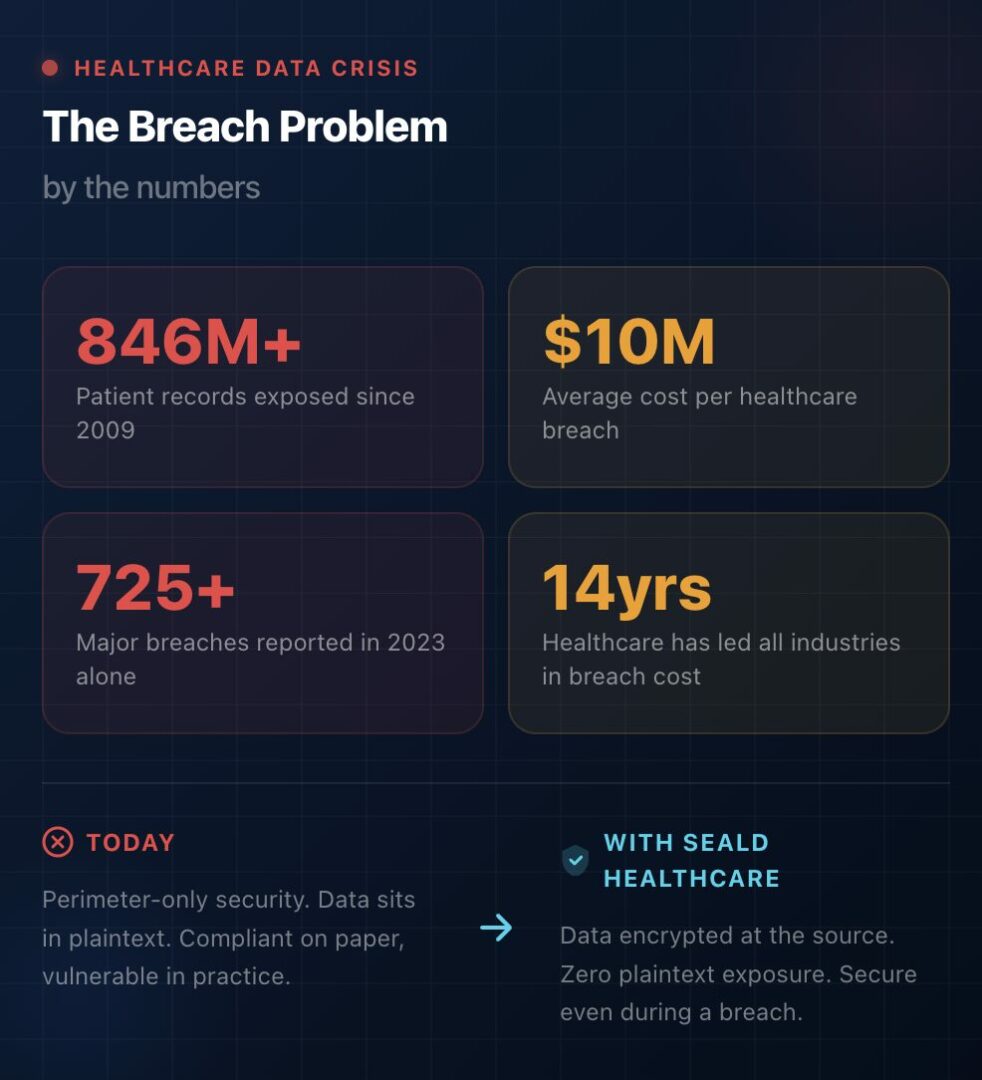
Image Credits
Go Fund Yourself
Seald Healthcare Inc.
so if you or someone you know deserves recognition please let us know here.