We were lucky to catch up with Heather Shannon recently and have shared our conversation below.
Heather, first a big thank you for taking the time to share your thoughts and insights with us today. I’m sure many of our readers will benefit from your wisdom, and one of the areas where we think your insight might be most helpful is related to imposter syndrome. Imposter syndrome is holding so many people back from reaching their true and highest potential and so we’d love to hear about your journey and how you overcame imposter syndrome.
I remember being in supervision to get my clinical license so I could open my own private practice. It initially felt like I had to “be a therapist” and I would wonder how to do that exactly. What I realized eventually and through talking to my supervisor is that I was imagining that “being a therapist” was being another person. What I realized is that I just had to be myself. I already had some knowledge and I knew how to help people better their mental health and their life situation. What worked for me was to stop thinking of myself as “being a therapist” and start thinking of myself as a person helping another person. This took away the mystique of being a therapist and the idea that I was supposed to be formal or have some “secret sauce” or know all the answers. It became a lot less pressured and a lot more fun for me and I found that clients appreciated my casual, personable approach too.
Let’s take a small detour – maybe you can share a bit about yourself before we dive back into some of the other questions we had for you?
After nearly 10,000 hours of coaching and counseling clients since 2011, I can confidently say that I love my job as a sex therapist and intimacy coach.
You know how the honeymoon period wears off after a year or two?
Well, I help people in committed relationships who have lost interest in sex to get back to a place of passion and genuine closeness again.
I work with an amazing diverse group of clients too. Sex workers, ethically non-monogamous folks, kinksters, people in the LGBTQIA2S community, LDS members, people from across the diaspora and even straight monogamous people! I love how each person has a unique history, a unique story and unique factors impacting their sex life. I never get bored and every day I get to understand humans better. How we connect, how we protect ourselves and what helps us come together in love and understanding.
I think of myself like a sex detective who helps to figure out why sex has gotten off track and how to help get it back on track and better than ever before.
I also host the Ask A Sex Therapist podcast, which launched in January 2023 and is currently ranked in the top 1.5% of all podcasts globally according to Listen Notes. The show also hit #11 on the Apple Podcast Sexuality charts. I love this outlet of podcasting because it’s where I can help people learn about sex in an uncensored format for free. I’ve also met the most amazing people from having them as a guest on my show.
Recently, I’m branching out into online courses. I launched my $29 digital “Finding Your Fire” libido guide a few months ago, which has been a hit. And I have a free mini course coming out called “The Intimacy Audit” where people will begin to understand the real reason their sex life has taken a nose dive so they can fix it! I’m also planning to launch my first group program–Emotional Intelligence–which gives participants the building blocks of emotional mastery and communication so that they have the skills they need to be an amazing partner. That course has been included in my 1-on-1 premium coaching packages for months now and is based on all the skills I wish clients had when they came to me so they could make faster progress! But I want to offer it as a group program to make it more affordable and accessible to people since I believe everyone needs those skills.
There is so much advice out there about all the different skills and qualities folks need to develop in order to succeed in today’s highly competitive environment and often it can feel overwhelming. So, if we had to break it down to just the three that matter most, which three skills or qualities would you focus on?
1. Curiousity. I love learning and am genuinely curious about people. This has lead me to keep learning and training as a professional. It’s also allowed me to get to know clients really well. I believe 90% of the work is understanding the problem really well. Then, it almost solves itself. Most people jump to the solving part too quickly.
2. Neurodiversity & Intuition. A big part of my job is detecting patterns and those patterns aren’t linear or obvious on the surface. My intuitive sense and my ADHD brain allow me to take a bunch of pieces of a human puzzle and find the common threads so we know where to dig in.
3. Confidence. Being a business owner is not easy. You need to believe in yourself and in your mission. The same can be said for being a therapist. Mental health is not easy. Addressing intimacy is not easy. Confidence isn’t about being the best in the world, it’s just about knowing you can help your particular clients. And it’s allowing yourself to be where you’re at and enjoy learning more and becoming more impactful every day.
Awesome, really appreciate you opening up with us today and before we close maybe you can share a book recommendation with us. Has there been a book that’s been impactful in your growth and development?
One book I’ve been recommending to my clients lately is The 4 Agreements. If you haven’t read it yet, there’s a reason it’s been on the best seller list for YEARS. I especially like agreement #2, which is “Do not take anything personally.” We are sensitive creatures and can take things very personally, especially intimate relationships. I once had a boyfriend tell me it was hard to bring things up with me because I was so sensitive to criticism. This book helped me realize that truly nothing is personal and there’s a whole different (healthier!) perspective on receiving feedback from others. The gist of it is that someone’s comments or feedback is about their belief system, their nervous system, their relationship to their emotions and what meaning they make out of you and your words and behavior. So it’s all about their lens on the world–not about you.
Contact Info:
- Website: https://HeatherShannon.co
- Instagram: https://instagram.com/AskASexTherapist
- Youtube: https://YouTube.com/@AskASexCoach
- Other: Podcast – https://podfollow.com/AskASexTherapist
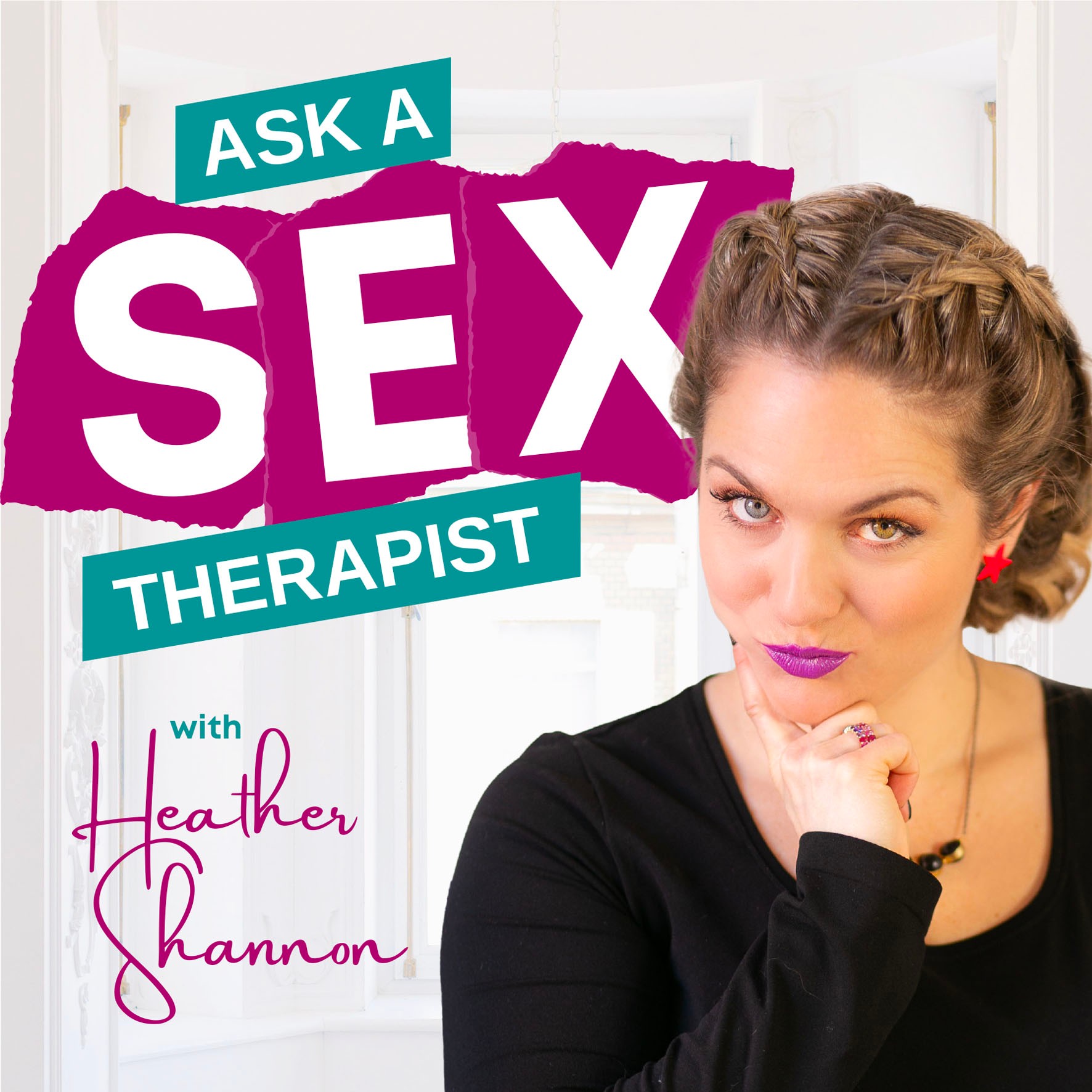




Image Credits
Jenn Gaudreau – images of me and bed Influential Audio – podcast artwork