We’re excited to introduce you to the always interesting and insightful Adam Al-Sirgany. We hope you’ll enjoy our conversation with Adam below.
Adam, we’re thrilled to have you sharing your thoughts and lessons with our community. So, for folks who are at a stage in their life or career where they are trying to be more resilient, can you share where you get your resilience from?
Hopefully no one I know ends up reading this. They suffer my soapboxes enough. If you’ve spent any time at all with me, you’ve probably heard some version of my lecture on the myth that art is an act of some singular great mind: the lede is that it’s not.
Artists work endlessly, often with few practical rewards. So it’s tempting when someone pays attention to you to say, Oh well, da da, yes in fact I am a very deserving genius. But I am not. And neither are you. But we certainly are, when we get the band together and the groove is in the pocket.
Two slightly disjunct answers for your question come from this.
First, no one should be allowed to call themselves a master of the arts—or anything else unconventional—without an experiential course (a life) in proper swashbuckling.
Whatever resilience I have is less the product of my working labors, than it is having swashed every buckle in front of me. Sometimes beyond my capacities.
By swashbuckle I mean to take a risk on your own ship. If you keep doing that, I suspect you habituate resilience. Ideally that resilience is founded on the support of good people who, ideally, you support in return.
So many fantastic, talented, loving people have taken risks on me, and without having any real reason to. I forget it constantly, but I try to remember that.
The capabilities, the sheer extent of human kindness and human forgiveness astounds me. To see them requires pursuing the kind of context that allows them to be witnessed.
There was once this guy who stopped me, when I was busking on my sax, back in the days when that was how I paid my grad school bills. He said, “Thank you for being here in the world.”
I said, “Thanks, man.”
He said, “No, really. I’ve been around 70 years, and the only thing I’ve learned is that you don’t have to do anything. You don’t have to be here. But you are. And you’re doing this.”
I think about that all the time. And I think of all the people who didn’t have to be there for me, who risked life, limb, reputation, time, hope, cash on my swashbuckling *ss.
For the human paradigm, resilience might just be standing on the shoulders of the giants of your life. That can be Kant or Faulkner, Gina Berriault or Gene Ammons—you know, people you’ll never meet who’ve generated work that moves you. But it’s simpler too, right?
It’s my Uncle Ron and Uncle Casey, Robin Metz, Alison Deming, Matthew Schmidt, Manuel Muñoz, Valerie Vogrin, Allyson and Aida, Teddy, Lauren, Ever, Hera, Ellie, Maggie, Mattie, Sarah, Dani, Yimmy, Caleb, Monica, Victoria Fernandez, Jon Riccio, Jon Miller, Steve Eoannou, Rachel Zimmerman, Sam Ashworth, Charles Jensen, Tara Campbell, Kyle Semmel, Andrew Gifford…
Do you feel what I’m saying? Like I’m not even close to listing blood family yet. And, how would I be here without Ma, my grandparents. I’m not even talking about the miracle of birth for which I’m also grateful; I’m talking about support and care. Life is an acknowledgments page.
Do you feel me? Really. I’m trying to say that resilience is dependent on the recognition that the root of consciousness begins with with.
Thanks for sharing that. So, before we get any further into our conversation, can you tell our readers a bit about yourself and what you’re working on?
So what does all that with amount to for me?
To use a practical, literary bio, I’m an Egyptian-American writer, editor and arts advocate, born and raised in the Driftless Midwest. My writing focuses heavily on the quirks and sorrows of small rural towns, often meditating on the tragedy the idea of masculinity can be. I’m polishing up a collection of short stories, More Hell; it feels like the right time to let it live in the world with others.
The writing persists; it’s there for me all the time, in the back of my mind if not the front of it. I’m doing my writing while living in a campground, owned by the startup ROL. As one of the perks I’ve got my Ford E450 short bus onsite, which I’m converting into my traveling home, so I can take my circus on the road.
As to the circus, along with doing some propane fills and drywall and marketing for ROL, I’m the Executive Director of 1-Week Critique (1WC) and the Acquisitions and Developmental Editor for Santa Fe Writers Project (SFWP).
1WC is a nonprofit digital editing studio, which aims to provide literary education and pedagogical support to writers, whatever genre they are operating in, whatever their level of formal education, and regardless of the means by which they have found themselves compelled toward the literary arts.
We run a number of programs: the Interview Series comparing early and “finished” drafts; Teaching Takeaways, which act as lesson plans focusing on a single poem; weekly workshops for teens at the Iowa City Public Library. The evolving list can be found on our website, but one thing I’m pretty excited about right now is our collaboration with Osmanthus Press, which is publishing some really daring work, as well as our friends and cofounders Ingrid Wenzler and Nick Greer starting a press of their own, Double Negative. We’ve started to expand from a little arts ed nonprofit into that plus a sort of literary launch pad for exploratory lit projects of all kinds. And, that’s the dream, aint it, to see your people dance with their daimons chest-to-chest.
SFWP is an independent press in, we are proud to say, our 25th year. We publish fiction and creative nonfiction of every genre, maintain an online literary journal and run an annual internationally-recognized Awards Program.
If you told me as a kid that I was going to get paid to read exceptional books and to hang out with their authors trying to figure out how to make them shimmer—well, I was an ambitious child, I might have thought that was possible, inevitable even. But to be a full-grown person in my mid-thirties getting to live my childhood dreams and find they’re as cool as I thought they’d be. That’s pretty remarkable. Like, I also wanted to be a lumberjack, and, sure, the enviable deltoids, but who can afford the cost of the chiropractic care you need for that?
Looking back, what do you think were the three qualities, skills, or areas of knowledge that were most impactful in your journey? What advice do you have for folks who are early in their journey in terms of how they can best develop or improve on these?
Looking back?! Oh dang, I hope we aren’t looking back yet. I’m looking to ride this slow pony a while longer.
But seriously, here’s a sort of bullet-pointed list, which I think of as intertwined:
1 – Take risks or be yourself—which are the same thing outside of medicine.
I don’t mean drop acid or base jump or tear down the capitalist establishment—unless those things are musts to you.
But if things are musts, then they are. That’s a tricky thing to say, because, not just at a young age, but at any age, distinguishing between things like I must eat this scorpion pepper and I must explore this self-dissatisfaction is a challenge.
I spent my whole summer reading Jungians, and one of the many things I appreciate about their vibe is this recognition many of them have that the self isn’t a thing you uncover. The self is a thing you dig under to encounter pieces of as that self changes with you and you seek each other in your wholeness.
A lot of folks come to me and they share something to the effect of, A terrible thing happened in my life. I need someone to help me write it. Or, I need to write it. Sometimes that seems to be absolutely true. Sometimes, that impulse seems to be a need to be witnessed in affliction. I am not at all talking about folks who live under the delusion that a memoir is the quickest way to get rich. I’m talking about real pain, real joy, real feeling. I once had an individual describe something fairly troubling to me in just this kind of way, only to be so relieved by sharing that they lost interest in their memoir altogether. That’s okay. That person needed to share. They were working their way to their musts.
Which leads me to
2 – Be Vulnerable
A friend of mine was really depressed recently and we watched this Brené Brown Netflix special together. She kept apologizing because she felt like I was going to snark at how self-helpy it was. And it was—and I did, a little.
But here’s the thing. Brown reaches so many people because she’s absolutely right. Vulnerability is one of the hardest things. It’s also the gateway to real connection.
Let’s say, you’ve done all this work to be authentic. You’ve asked yourself who you are. You’ve tried hard assessments to get that answer. Sometimes maybe you even like yourself a little. Maybe you don’t. Regardless, you try to hide that self, or a portion of that self away because if it’s hidden away, it can’t be touched; it can’t break; it isn’t subject to the suffering of loss or change or judgment.
So you want to take that self, the impulses and wild ideas and peccadillos, and you want to shield it because it doesn’t take that long in the world to discover the edges of Dukkha, the sadness of ephemerality. But I really think a lot of the anxiety people feel about themselves—certainly the anxieties I feel about myself—are rooted in conflicts between our self-understanding, which is always determined with the languages of our communities and our desires as communal animals, and the infinite, undefined potentia of what we do with those ideas and desires within ourselves. There’s a balance to be struck between what we have to keep private in order to let it sprout and what we need to let out to allow it to grow.
I have absolutely no recommendations about how to learn this except by experience through constant, ongoing trial and error. What I can say is, all those folks I mentioned (and many, many others I didn’t) when you asked your first question—I took risks by sharing my hopes and dreams and fears and love with them, and they rewarded my risks with hopes and dreams and fears and love of their own.
Finally,
3 – Cultivate meaningful doubt—or welcome the possibility of change
I can never remember which poem of Frank O’Hara’s it is where he describes art as being bored with looking at something that looks like something else. So consider that a paraphrase and attribute any wrongheadedness about that statement to me and not O’Hara. My point in pointing to it is only to say that art is craftwork elevated by being special to someone. Special because someone has had an encounter with it that makes it essential, irreplaceable, to them.
The hardest thing in art might be to stay with the intensity of encountering something you must love into a form. The second hardest thing is probably letting things you love go for awhile while you encounter something/someone else you care for as much, something/someone you can be with whole and fully right now.
I’ve watched friends wrestle for years with novels or books of poems. Whatever brought them to literary art will often leave them under the pressure of whatever success is supposed to be; they get this bitterness about not being Mark Twain or Homer or whomever. Then one day, they go on a date to a wine and painting class or something, and come back feeling guilty they’ve had this love affair with the textures of oil paint and horsehair. What’s that Kahlil Gibran line, “life goes not backward nor tarries with yesterday.”
What a loss, to be here briefly and to keep asking Why isn’t this what I thought I wanted? instead of saying Is this what I want now? or How did I get so lucky to have so much of this world in my sight?
Okay, so before we go we always love to ask if you are looking for folks to partner or collaborate with?
Always! All the damn time. I’m a hub, a proper Hartsfield–Jackson of outlandish dreams and mad literature.
Folks looking to request writing samples, editing services, or who want to do eccentric musico-visual-vanlife installations can reach out through the contact page on my website, adamalsirgany.com.
1WC can always use empathic pedagogically-minded volunteers to support our programs and help us fundraise. If anyone has an interest in volunteering, or checking out the free educational materials we provide, they can find contact information and links on our webpage, 1weekcritique.com. We’d love to hear from them. I’d also be remiss not to mention we are a small 501(c)(3), so we also welcome tax-wary supporters of the arts to visit our Donations page.
SFWP submissions information can be found at SFWP.com. We’re wide-ranging readers, as you can see across our catalogue. Dig the books. We managed to put together a small press unlike any other by looking for writing that makes us go, I haven’t seen this before, and I’m glad I’ve found it.
Contact Info:
- Website: https://www.adamalsirgany.com
- Instagram: adam_al_sirgany
- Facebook: https://www.facebook.com/adam.sirgany
- Linkedin: https://www.linkedin.com/in/adam-sirgany-8a8172124/
- Twitter: @adam_al_sirgany
- Other: For 1WC: https://www.1weekcritique.com
IG: 1weekcritique
Twitter: @1WeekCritique
Youtube: https://www.youtube.com/@1weekcritique
Soundcloud: https://soundcloud.com/1week-critique
For SFWP: https://www.sfwp.com
IG: santafewritersproject
Twitter: @SFWP
Youtube: https://www.youtube.com/@sfwp98
For Adam’s Writing: Designing Context-Rich Learning by Extending Reality: https://www.igi-global.com/book/designing-context-rich-learning-extending/309084
The Territory: http://themapisnot.com/issue-i-adam-alsirgany
Goodnight, Sweet Prince: https://goodnightsweetprince.rip/adam-al-sirgany.html
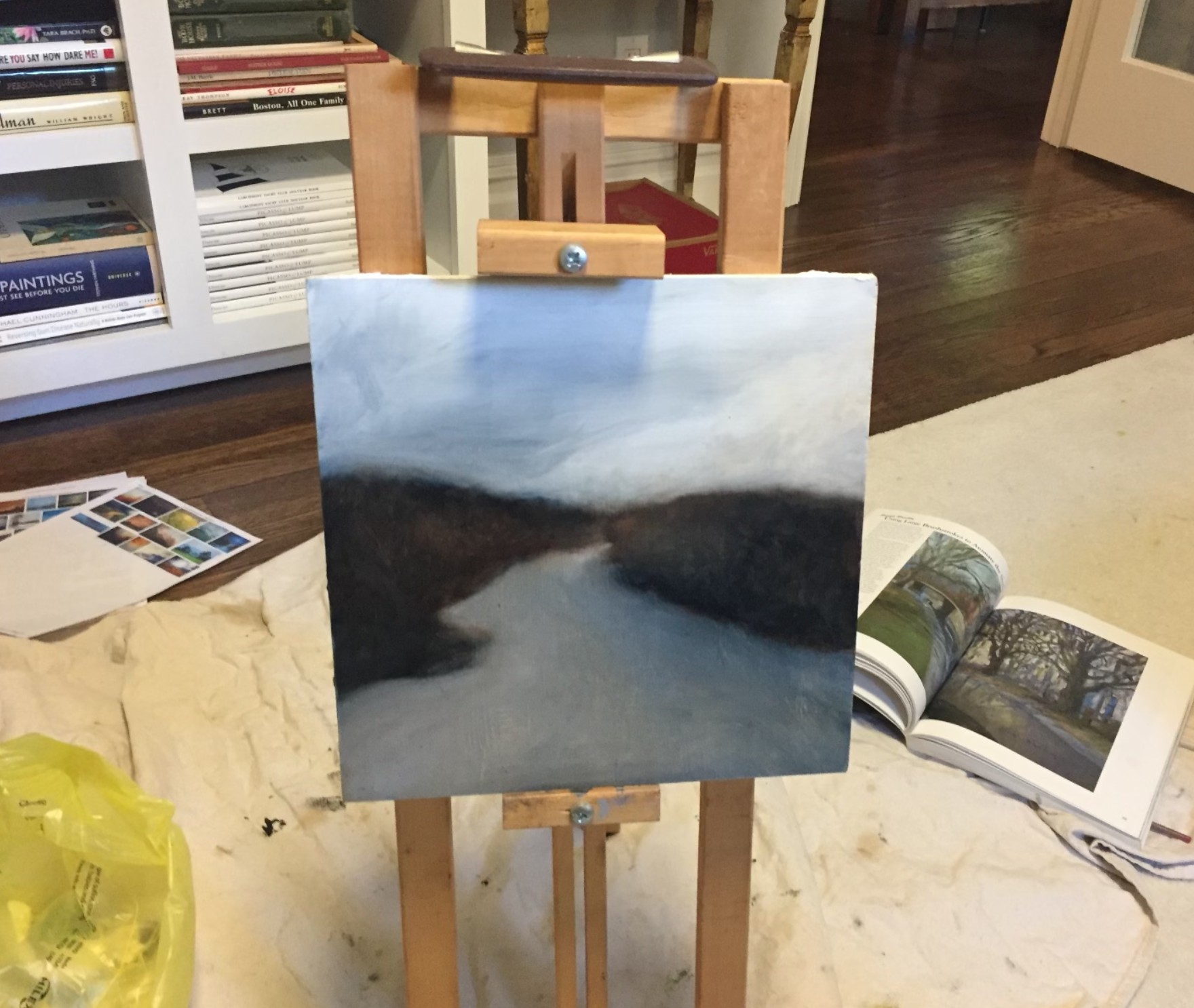
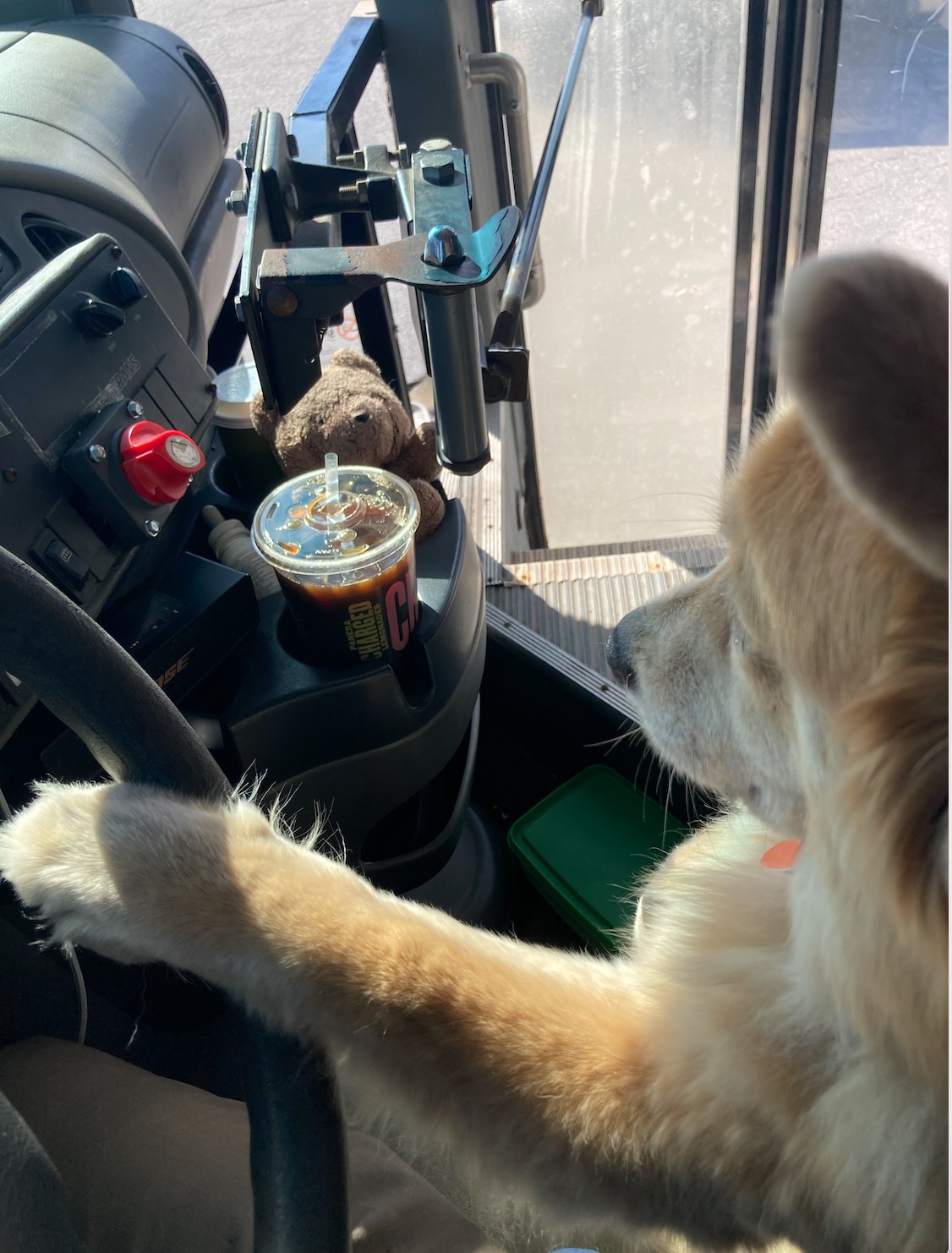
Image Credits
Ingrid Claire Wenzler Adam al-Sirgany