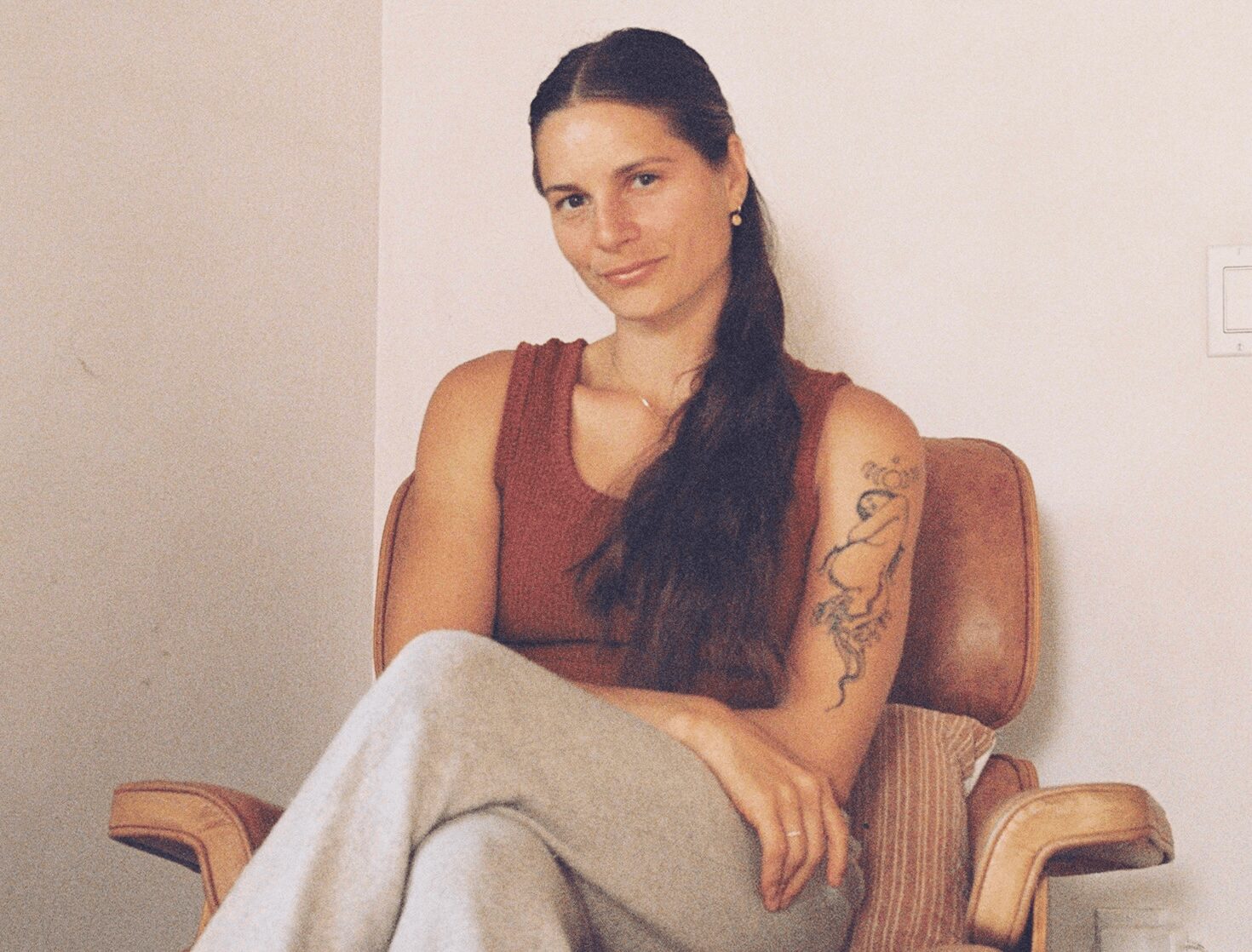
We were lucky to catch up with Molly Mitchell-Hardt Field recently and have shared our conversation below.
Hi Molly, thanks for sharing your insights with our community today. Part of your success, no doubt, is due to your work ethic and so we’d love if you could open up about where you got your work ethic from?
From a young age, I had an intrinsic motivation to “do well in school.” This was perhaps due in part because I grew up with two academically accomplished parents, one of whom is a professor. Despite this, I struggled in school early on and was diagnosed with ADHD, which left me feeling deficient and created a pattern of feeling the need to prove my intelligence and academic capabilities. On the other hand, my intelligence came naturally in gymnastics. As I excelled in athletics, more and more was required of me, practice before and after school, double practice on Saturdays, sometimes Sundays. As a high level athlete there was a culture of pushing our edges, trying new skills, doing things that scared us everyday. While so much of that was incredibly valuable and positive for me, especially as I wound my way through the web of adolescence, with my constant striving both at school and gymnastics, there was a cost. It set up a pattern of overriding my innate physiological needs for rest, recovery, and non-doing until there was collapse or shut down. This pattern went on until my mid twenties, at which point my system developed unwellness, I suffered from severe chronic fatigue, digestive issues, hormonal symptoms, and mental health challenges. It was when my body was asking for a nearly full stop that I began the long and winding road of recovery. When the traditional western medicine route quickly failed to support me, I turned to the alternative health space. I credit this first part of my journey to feeling energized enough to start graduate school, plan a wedding, and become pregnant with my son. After becoming a mother and collectively experiencing the pandemic, it seemed I needed another layer of support. This is when Somatic Experiencing came into my life. To make a long story a little bit shorter, this is where I met and continue to meet what I will call my “true work ethic,” which I might rename my capacity for activity and need for rest mixed with my intrinsic motivation or impulse for life. This was the first time in my life I was attuning to my own natural rhythm in any meaningful way and at the same time unwinding trauma that had my life force stuck for over a decade.
We tend to think of work ethic as a skill we develop versus an intrinsic motivation and impulse for life and creativity. I am wary of the idea of laziness, lack of motivation is more indicative of a nervous system state and survival response than a moral failing. I believe we all have intrinsic motivation on a soul level when we tap into our greater sense of purpose.

Let’s take a small detour – maybe you can share a bit about yourself before we dive back into some of the other questions we had for you?
I work in private practice as a depth and somatic psychotherapist for individuals, couples, and groups. In addition, I facilitate group work in the form of workshops, ceremonies, and movement practice. I have a deep calling to sit with others through the dark nights that invite us all into the depths of life.
As a seeker of the depths, I am always peeling back the layers to find veritable truths, which is how I have arrived in this place in my work. My approach is eclectic in nature, I adapt to meet client(s) where they are. No two sessions are exactly alike, it is not a one size fits all approach, it is not prescriptive, it is more akin to a dance, staying present and attuned to what arises in the container to be seen and lifted up.
Depth psychology offers an incredibly rich medicine bag that marries beautifully with Somatic Experiencing. The basis of depth work is the acknowledgment of the unconscious, this rich inner world that often unbeknownst to us dictates much of our behavior and moods, motivations, and impulses. The work entails exploring shadow material via the imaginal process, dreamwork, exploring parts of self and how they interact, mythological and ritual containers. I combine this with the somatic approach, which centers the body’s physiology, another world that exists primarily within the unconscious and out of linear time. Through slowing down and attuning to the physiology we meet those parts that often get lost when we focus primarily on the cognitive, thought or story-based content. I have found this fusion of approaches to be a powerful healing salve for the soul, ultimately revealing the wholeness that is always ever present and the healer within us all.
A great way to explore my work more is through my podcast The Whole Paradox, where I explore depth psychological concepts, somatic and healing work with experts in the field.
There is so much advice out there about all the different skills and qualities folks need to develop in order to succeed in today’s highly competitive environment and often it can feel overwhelming. So, if we had to break it down to just the three that matter most, which three skills or qualities would you focus on?
I have been thinking about this as it relates to my five year old son and what I think is vital learning that goes untaught in most schools. I think religion and philosophy are fascinating, but generally, unless you delve into religious studies you are limited to greco-roman philosophy, missing rich wisdom traditions outside of this one lens. I am clear I want my son exposed to eastern philosophy and land based wisdom traditions to give a space for and promote the natural religious function in the psyche, as Carl Jung called it, without it having to be religion itself.
In addition, as a culture we are so cut off from our bodies, which is undoubtedly linked to increased rates of chronic pain, inflammation, and illness. I wish that I had found Somatic Experiencing or somatic work in general when I was much younger. It is a joy to raise my son with the training I have and how I can see his behavior through the lens of what his body needs instead of solely what the culture imposes on his body, mind, being.
Lastly, the depth psychology/mytho poetic lens has added a richness, texture, and meaning to my life that I will be forever grateful for. I would implore people to read fairytales and myths and to get curious about their dreams as a way to connect with the archetypal currents that underscore our conscious reality.
Tell us what your ideal client would be like?
I work with a lot of mothers, young adults, and creatives who are going through some kind of transition whether that is leaving home, becoming a parent, experiencing a loss or going through a break up or divorce. My ideal client is someone who is ready to go a bit deeper with their inner work, is interested in exploring their nervous system and open to trying something other than strictly talk therapy.
This person may be new to therapy or has been on a healing path for a long time. They may be becoming aware of the areas of life where they are playing small or they may be well versed in your inner dynamics and patterns. Either way they are seeing themselves continually repeating the same behaviors or they have an awareness that there may be another dimension of themselves or life they have not tapped into yet. They may be struggling with authenticity and communication in their relationships. They may find themselves caught up in all the thoughts in your mind to the detriment of the relationship with their body/physiology. They may be struggling with patterns of highs and lows, perpetual lows, self criticism, perfectionism, or negative body image. They may be struggling to find meaning in this time in the world. They may be lacking the felt sense of connection with a higher power or feel unmothered in some way. They may find it extremely difficult to relax or slow down or they may find it difficult to get motivated and take action or speak up for themselves. Whatever the case may be, the bottom up approach of somatic work with the holding container and normalization that depth psychology offers, there is a lot of healing available.
Contact Info:
- Website: https://yoursoulrising.love/
- Instagram: https://www.instagram.com/mollymitchellhardt/
- Other: https://thewholeparadox.buzzsprout.com/
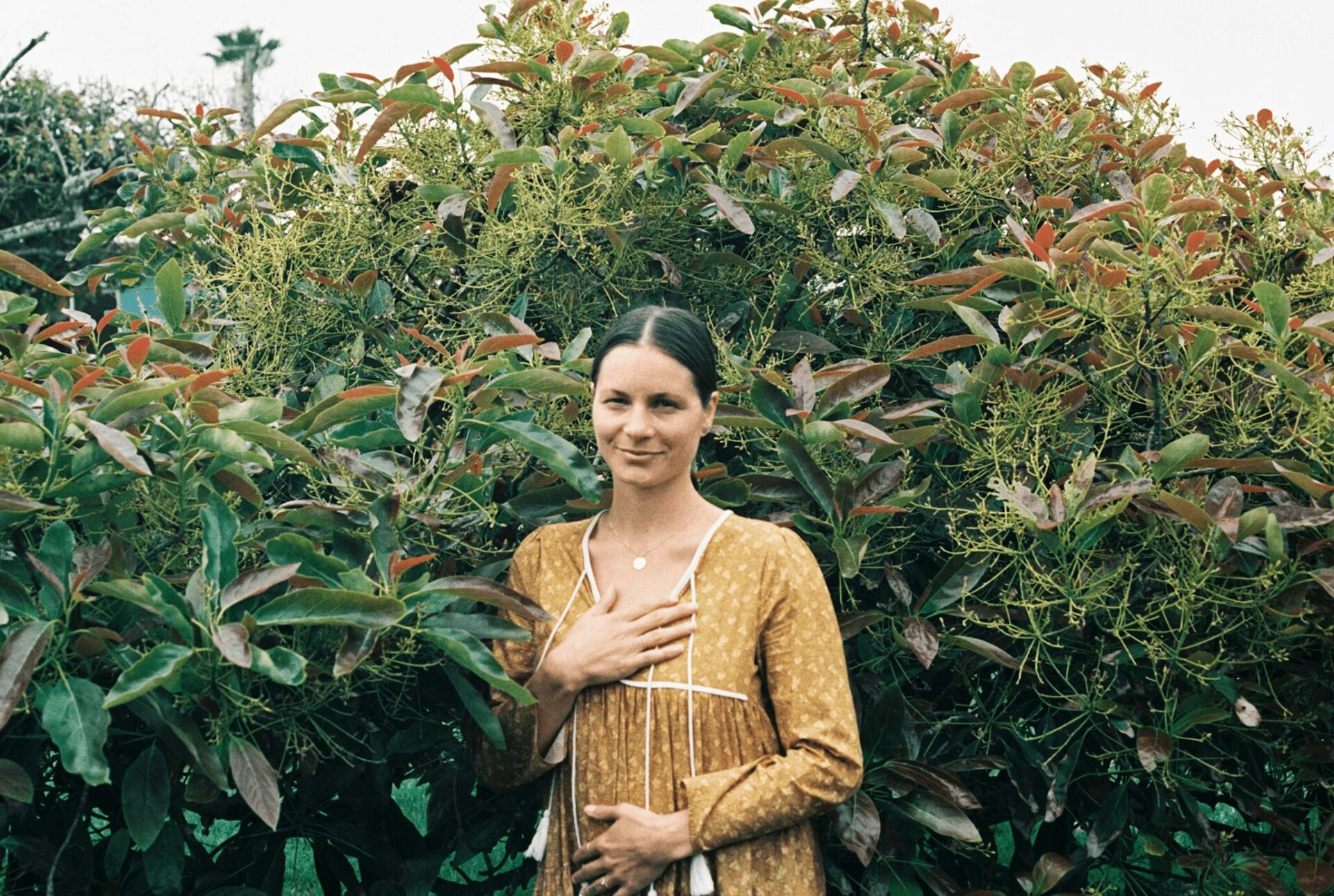
Image Credits
Digital Photos by Erick Madrid
so if you or someone you know deserves recognition please let us know here.