We recently connected with Donald “C-Note” Hooker and have shared our conversation below.
Donald “C-Note”, thank you so much for joining us today. Let’s jump right into something we’re really interested in hearing about from you – being the only one in the room. So many of us find ourselves as the only woman in the room, the only immigrant or the only artist in the room, etc. Can you talk to us about how you have learned to be effective and successful in situations where you are the only one in the room like you?
I am exhausted, literally and figuratively. Since 2017, in the cross worlds of art, the criminal justice system, and philanthropy, over $250M has been pledge by donors Agnes Gund, President Emerita and Life Trustee of the Museum of Modern Art (MoMA), through her now defunct Art for Justice Fund, and the Mellon Foundation’s Imaging Freedom Fund.
In 2017, Agnes Gund sold her Roy Liechtenstein “Masterpiece,” for $150M. She then decided to dedicate $100M, to help solve the mass incarceration crisis in the United States by setting up the Art for Justice Fund. She also encouraged others in her social circle to sell their art and to donate some of their proceeds to her fund. At the creation of her fund, she stated it was going to be for 5-years.
So in essence, the Prison Art world has been endowed with $100M to play with in the next five years, 2017 – 2022. In 2020, at the start of the Covid-19 indoor health restrictions, Nicole R. Fleetwood, inaugural James Weldon Johnson Professor at New York University’s Steinhardt School of Culture, Education, and Human Development, and previous Professor of American Studies and Art History at Rutgers University, drops her book, “Marking Time: Art in the Age of Mass Incarceration (Harvard University Press, 2020).” She sent me a pre-release copy for free, courtesy of the Art for Justice Fund.
In 2017, the University of Arizona’s Poetry Center was awarded a $500K grant from Art for Justice. The grant would fund a three-year project to commission new work from leading writers on mass incarceration in the U.S., with the goal of creating awareness and empathy through presentation and publication. In particular, through the work of poets, the project was to seek to confront racial inequities in the criminal justice system and promote social justice and change.
The Poetry Center would carry out the project in partnership with Reginald Dwayne Betts, a former prisoner, poet, lawyer and public intellectual who writes and lectures on mass incarceration. I reached out to Mr. Betts to be involved in the project, and never heard nothing from him.
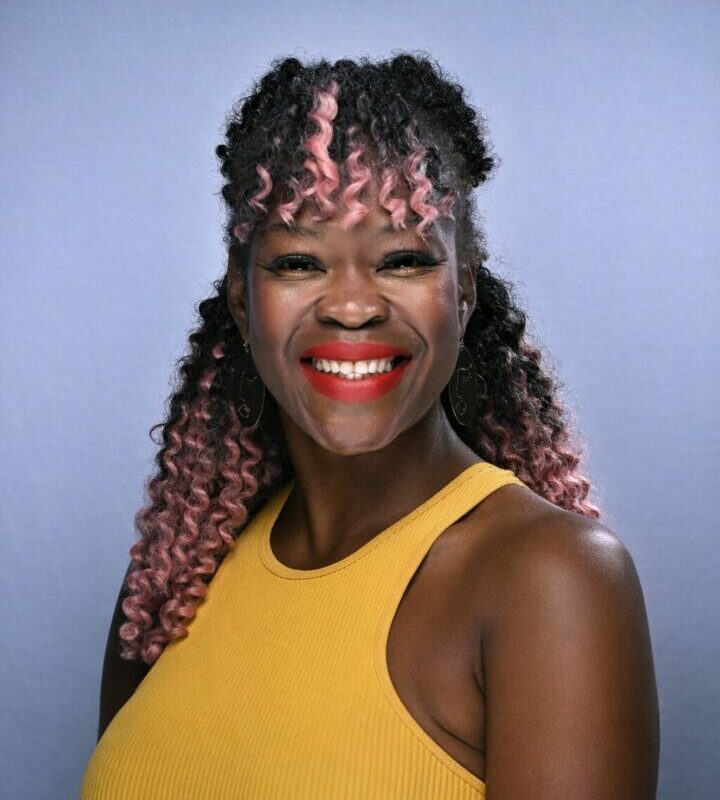
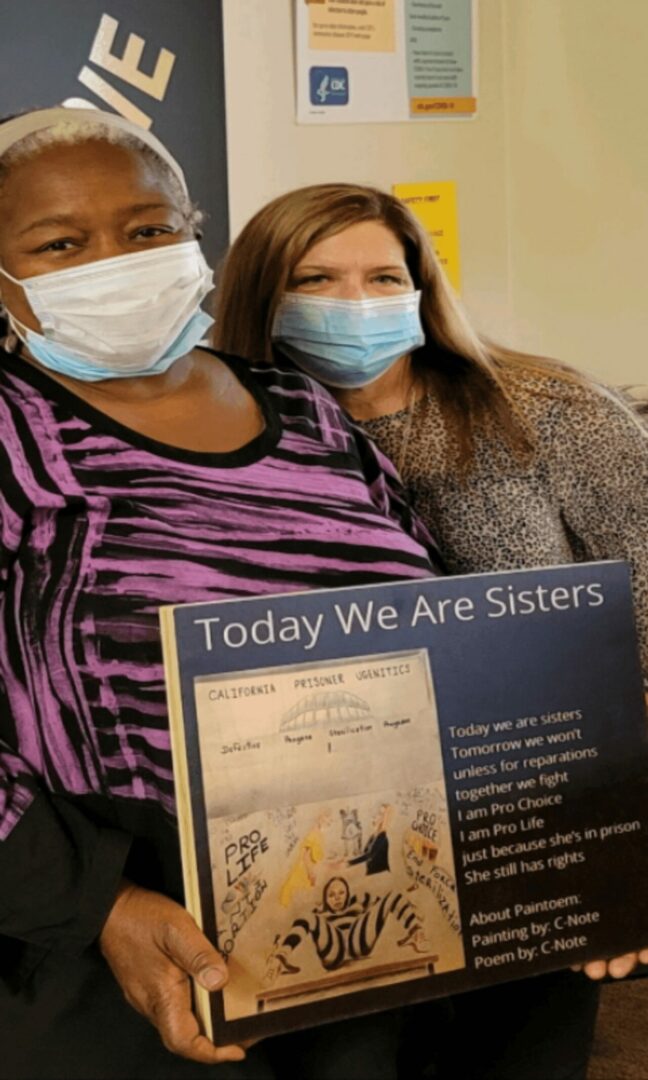
I only mention this, because when it comes to prisoners and Poets, I got a mean hand. One of the photos that has been sent over, is a 2021 photo of Diana Hafash Al-Amin at the headquarters of the California Coalition for Women Prisoners, holding a woodblock print of my 2018 paintoem (painting+ poem), “Today We Are Sisters.” This poetry vignette tells the story of women who are Pro-Life and women who are Pro-Choice uniting around the abolition of forced sterilization on California women prisoners, and to demand these women receive reparations.
This advocacy from within a prison cell, along with the advocacy of others, would lead California in 2021, to pass a $7.5M forced sterilization reparations fund for these women into law. I was the first artist anywhere, to use their artistic voice to raise awareness of the forced sterilization of California women prisoners, and that they were to receive reparations.
My 2017 poem, “Tho Her Name Is Not Gibraltar She’s Still Called The Rock,” for the Art Escape at Alcatraz prisoner art exhibition, spent 8-weeks in a glass showcase at the Marin County Civic Center Complex at the Marin County Free Library’s, Anne T. Kent California Room. This was the last architectural project of the legendary architect Frank Lloyd Wright.
My 2020 poem, “Journey to Afrofuturism,” about the historical fact that the State of California was named after a Black woman, was recited in February of 2020, at the 30th Annual Celebration of African American Poets and Their Poetry. Before the year was out, Speculative City Magazine paid me for a one-year exclusive rights to publish the poem, in their Winter 2020, Issue #10, Afrofuturism. Speculative fiction critic Charles Payseur had nothing but high praise for this poem; and the University of California, Santa Cruz (UCSC), closed their 2021 event, “Afrofuturism Then and Now,” with a recital of the poem by Hip Hop artist and Hip Hop Congress Board Chairman Rahman Jamaal.
I just said all that to say, “You mean to tell me a quarter-billion in US dollars have been floating around in the Arts for the creation of criminal justice related Art, and I have not received a half a penny of this money?”
If that’s not creating feelings of alienation, like you are the only one in the room, who is standing out for all the wrong reasons, and make you say to yourself, “What the fuck,” I don’t know what else to say about actually being the only one in the room that looks like you.
As far as their 2023, $125M pronouncement by the Mellon Foundation, they explicitly want to include incarcerated artists. My most disseminated essay, “The Untapped Potential of Prison Art,” written in 2016, and published by John Hopkins University, John Jay College of Criminal Justice, University of Southern California, The Real Costs of Prison, Inmate Blogger, and others, ends with, “We must upgrade the status of this art form and the artist who apply themselves. Rewarding this type of behavior incentivizes other prisoners to model this behavior. I know from experience trying to get other prisoners to participate in art, or to contribute works for fundraising, I am commonly asked, ‘Why should I?’”
There is a movement out there or at least a recognition for those who work in the criminal justice space, advocating for reform, and who have to rely on the “prisoner’s voice,” as a part of messaging, must pay these prisoners for providing content. Art for Redemption does this in the visual art space and the Prison Journalism Project does so in the literary space. But these are outliers. However, since 2017, real heavy hitters in the philanthropic space have committed a quarter-billion in US dollars for art creation to dismantle the inherent racial and poverty biases in the administration of criminal justice; along with the abuses found in prison administration, such as the covert forced sterilization of California women prisoners.
I come with receipts, I am by far the biggest, currently incarcerated prison artist in the United States, yet these philanthropists have treated me like shit. Just Google the search term “prison artist,” and Google will suggest just two names, Jesse Krimes, and C-Note. Formerly incarcerated Jesse Krimes has received money from both funds. He is a phenomenal artivist (artist + activist). But let me say this from the outset, “C-Note don’t do the bring someone else down so you can bring yourself up.” The part of L.A. I’m from is a mindset of abundance, “There is enough money out there for everybody.”
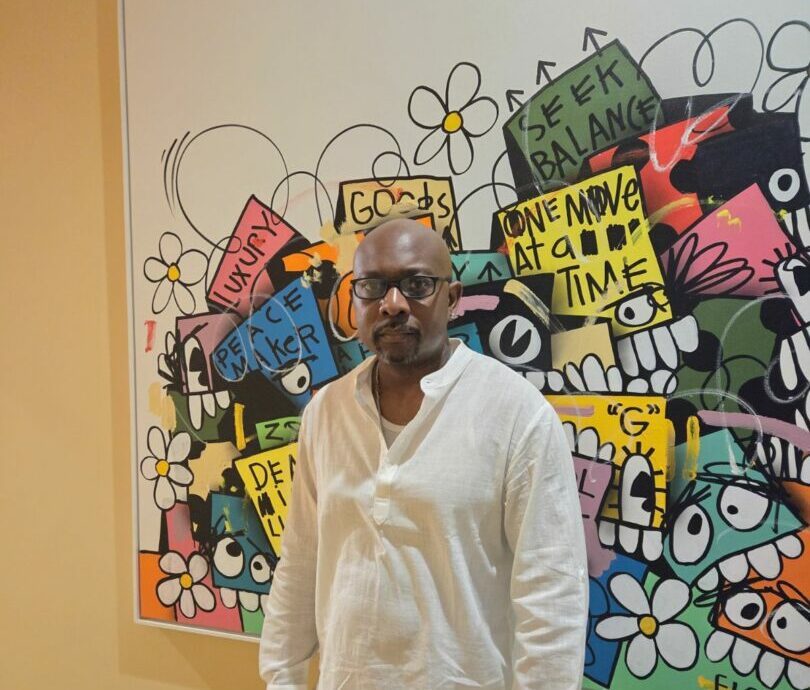
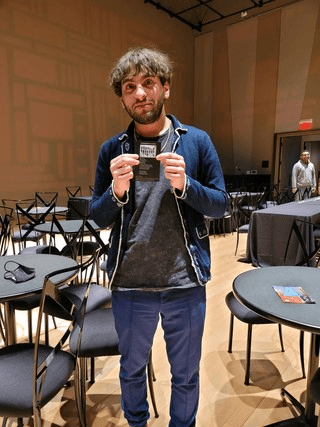
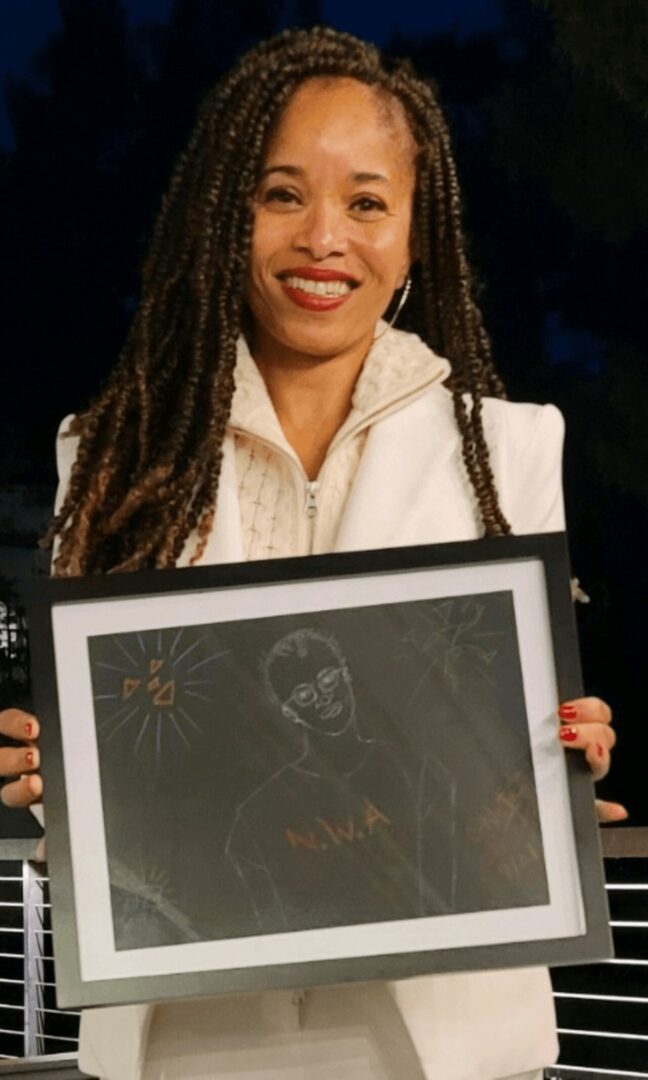
So when I give you these examples, I am not trying to eat off these individuals’ plates, nor am I suggesting their gravy-train should stop. One of the photos that was sent over to you is a 2022 photo of interdisciplinary artist Samora Pinderhughes, holding up a C-Note, “Incarceration Nation” flier. Pinderhughes received a $1M grant from the Mellon Foundation for his “Healing Project.” A 2022 photo was sent over of the most famous author in this Prison Art space, Professor Nicole R. Fleetwood, holding the 2021 original artwork, “C-Note on Haring.”
So I knew these people who have been recipients of this quarter-billion dollars in Prison Art, or Criminal Justice Reform Art grant funding. If I don’t know them, or if they don’t know me, there is only four degrees of separation between us, as this community of visual or literary Criminal Justice Reform artists is a small community.
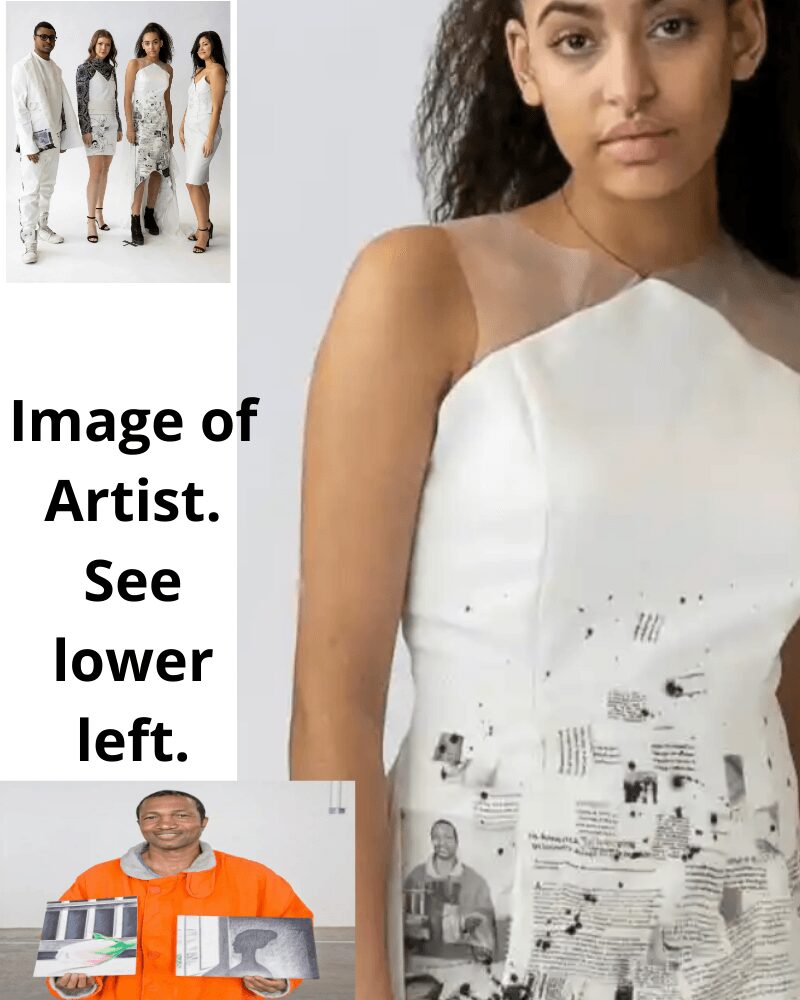
As they say about C-Note, “his art doesn’t live on walls, but in the streets,” so here are my receipts. Thanks to the generosity of Fashion Designer Makenzie Stiles, who was in her final year as a fashion design student at the prestigious 145-year-old Columbus College of Art and Design, my art was a part of her fashion line “Mercy.” I had sent over a 2020 photo in support of this fact. 2020 Covid-19 indoor health restrictions prevented us from history in the World of the Catwalk for having runway models walk in clothes featuring Prison Art.
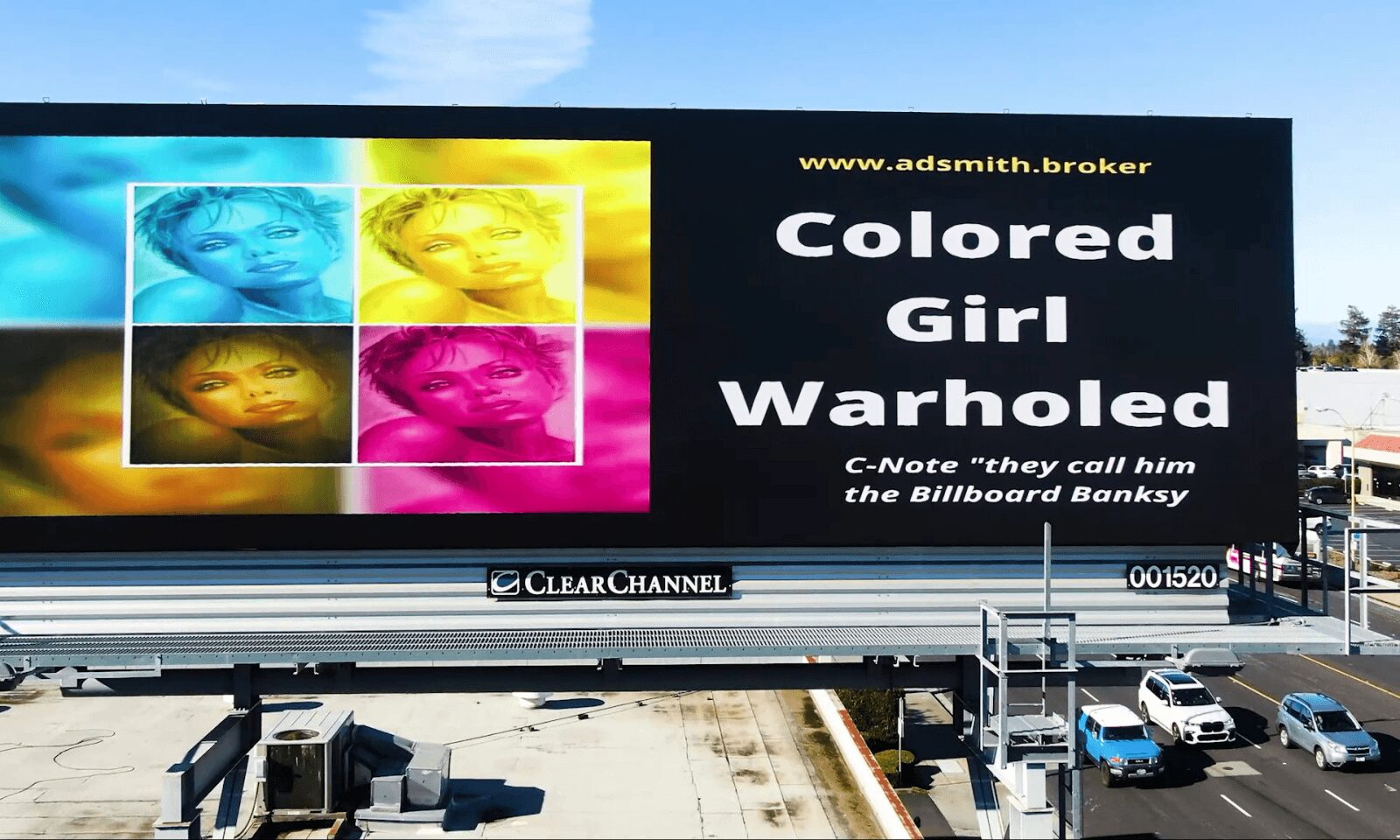
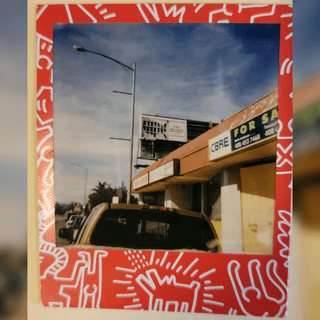
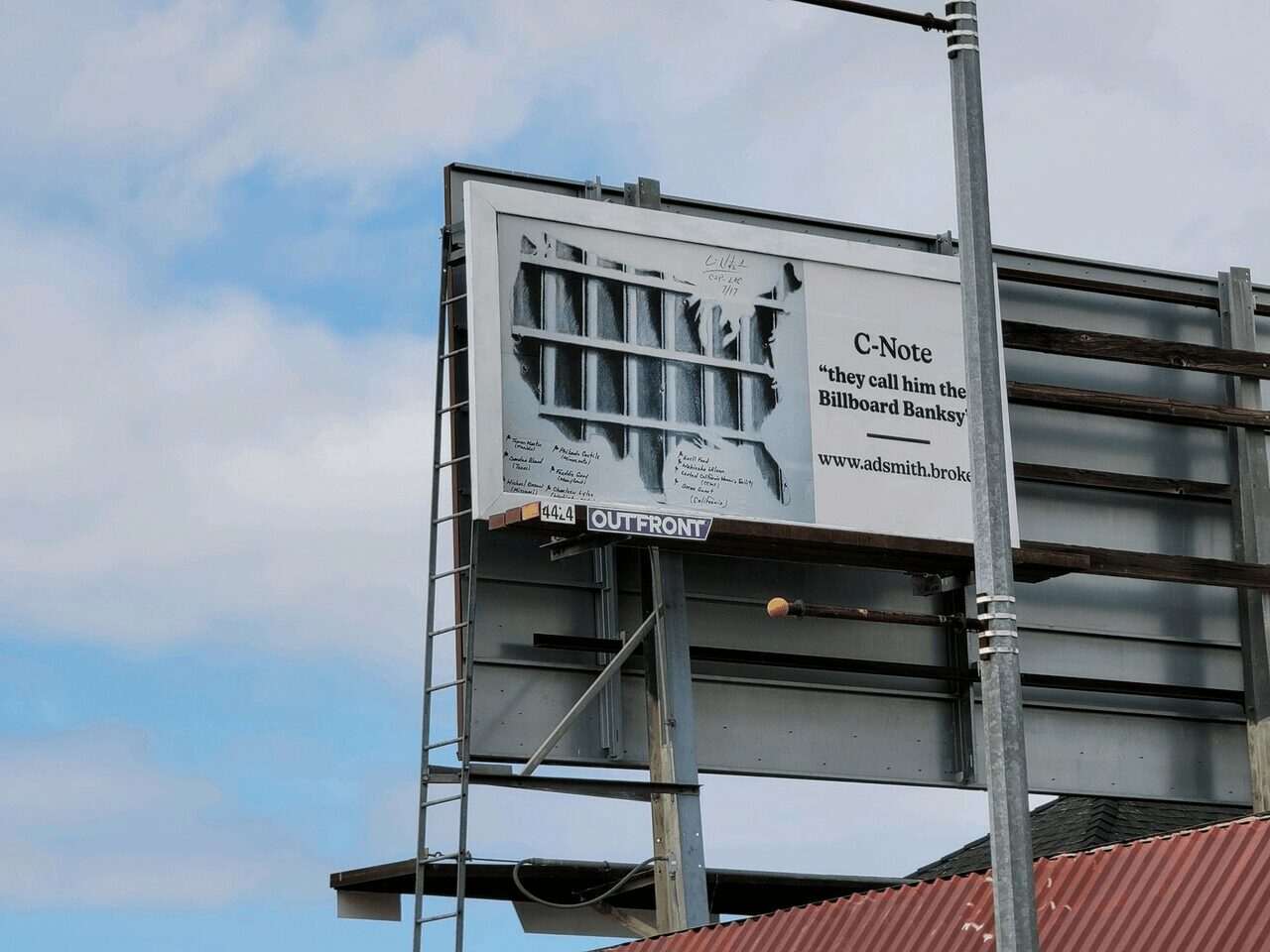
When Art In Context wrote its long dissertation on the history of Polaroid, whose lede image included Andy Warhol holding a Polaroid camera while taking a picture, that dissertation included this 2021 Polaroid x Keith Haring edition photo of the “Look Up!”, billboard art exhibition, featuring my 2017 artwork “Incarceration Nation.”
My artwork has been in music videos, billboards, books, articles, on a mural, exhibited from Alcatraz to Berlin, a film short, and used by the grassroots to raise awareness. Virginia Tech’s Architecture & Design recently featured my work in their journal, Studio Collective, Vol. XX. When a copy was sent to me, prison authorities banned me from getting my copy, because of my 2018 collage drawing “Strange Fruit,” which features a Black woman hung in her prison cell. This work was created to bring awareness to the higher than national average suicide rates at the California Institution for Women. As my receipts show, I’m delving into issues that do not directly affect me. I’ve been in People, for-crying-out-loud. Yet, I have yet to see a half of a penny of a quarter-billion in philanthropic dollars dedicated to artistic works in the Prison Art or Criminal Justice Reform Art space.
It’s a farce! The Mellon Foundation is publicly pronouncing and promoting its grant money is directly going to artists who are directly impacted by incarceration. I acknowledge this may be true. However, when I voice my concerns about the cliquish nature of the grant awarding process, my concerns are dismissed, like stay in my place. Usually I am told, “Everything is cliquish,” in other words, just shut up and be quiet.
When I create art in this space, be it literal or visual, it’s coming out of my own pocket. I’m a broke ass nigga, like most prisoners. So when I say prisoners are totally unmotivated to create art in this space, it’s because we have to pay out of our own pockets. And instead of these huge philanthropic foundations reaching out to us behind-the-wall, they expect us to reach out to them. How?
Great, so let’s take a few minutes and cover your story. What should folks know about you and what you do?
I am a native angeleno who was orphaned at birth; meaning, I have no clue as to who my biological parents are. I was adopted by a wonderful African American couple, Clavie and Paulette Hooker. Currently, I have been incarcerated for 27-years for a wobbler, under California’s Three Strikes law. My appellate attorney describes my conviction as displaying a knife on a homeless person in downtown Los Angeles’s skid row district to prevent that person from following me. I was sentenced to 35-years to Life.
I got involved in art for Justice after my involvement in a prison play, “Redemption in Our State of Blues,” led to the raising of over half a million in public-private funding for a first-in-the-nation prison re-entry program. That program, BREAK IT TO MAKE IT (BITMI): Busting Barriers for the Incarcerated Project, Los Angeles, California, has since raised millions to keep it going.
Currently I am preparing for Black August. Black August has recently become recognized as the Black History Month for freedom fighters. Black August was started in 1979 in San Quentin State Prison in California. It’s a month-long in-memoriam. Afterward I will be turning my attention fully in getting Proposition 6 Involuntary Servitude passed in California. It will outlaw forced labor as a punishment for crime. When the US abolished slavery, it left in place an exception clause when convicted of a crime. Multiple states, including California have this Slavery Exception Clause in their state constitution.
For those who don’t know who I am, I am a poet, playwright, performing artist, award winning visual artist, and am known as the King of Prison Hip Hop. My works have either been exhibited, performed, recited, or sold, from Alcatraz to Berlin. In 2017, Google Search listed me in their search results, as both America’s, and the world’s most prolific prisoner-artist.
There is so much advice out there about all the different skills and qualities folks need to develop in order to succeed in today’s highly competitive environment and often it can feel overwhelming. So, if we had to break it down to just the three that matter most, which three skills or qualities would you focus on?
Education, continuing education, and the basics. You see people want to skip over the basics, and that’s a mistake. You will eventually have to go backwards, backtrack to familiarize yourself with those basics. You don’t have to do the continuing education, but you will fall behind the competition, who are keeping their ears, eyes, and nose to the ground on the latest industry developments.
Alright so to wrap up, who deserves credit for helping you overcome challenges or build some of the essential skills you’ve needed?
Her name is Anna D. Smith. She is the owner-founder of Anna D. Smith Fine Art and Real Estate Broker. I met Anna in 2019 as a penpal after the sudden death of her twin brother and the incarceration of her adopted son. My prison related art helped her to understand the conditions her son was facing.
She would later take on the task of helping me sell my Prison art. Using the term Prison art is highly controversial on both sides of the prison wall. On this side, no one wants to be considered a prison artist, but rather than an artist; and for those on the other side of the prison wall, they don’t see Prison art, but just art. My production of prison related matters, like others in prison who dabble in this type of content, it is quite low in our artistic production.
Anna, a licensed California real estate broker in Silicon Valley, started her brokerage in order to help me sell my art. Later she trademarked in my name the brokerage’s motto, “Fine Art needs a Home and a Home needs Fine Art ®.” That’s because, it was my idea, but the US Trademark reversed its decision, and the Trademark had to be in her name as the business owner.
During the pandemic, when Covid-19 indoor health restrictions prevented the public from patronizing museums and art galleries, she brought my art to the public in a series of “Look Up!” billboard art exhibitions. She purchased that Polaroid x Keith Haring camera and film, and stood on a truck to take that billboard photo that would later be included in the history of Polaroid.
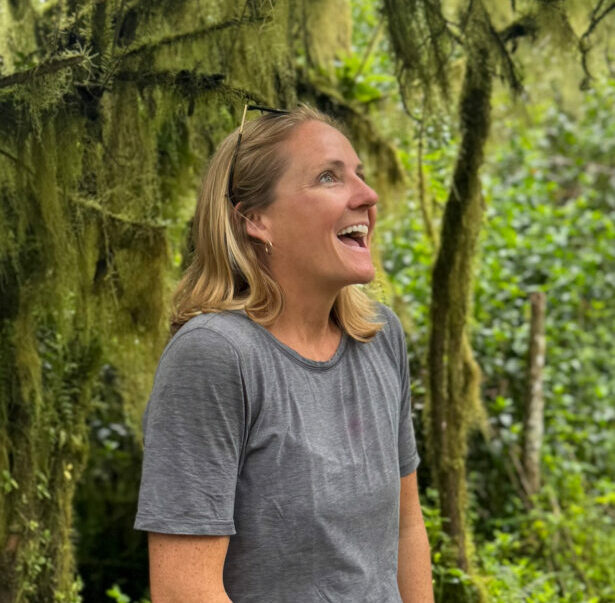
She is the one next to Diana Hafash Al-Amin in the photo of the woodblock reproduction of my 2018 paintoem, “Today We Are Sisters.” The Pinderhughes photo, and Professor Fleetwood photo were all taken by Anna. There are not enough words to state regarding the unrecoupable time and investment she has made in this endeavor to which to date, we have been unsuccessful.
So I tell people, I want to sell a single work of art for $100,000. To the fellas on this side of the prison wall, that’s crazy talk. But I know the art world, and it is not. The father of the Graffiti movement in the United States, Darryl “Cornbread” McCray, learned everything about graffiti while serving time as a juvenile, and even received his graffiti moniker, Cornbread, while serving time.
Two of Hip Hop’s four founding elements, Graffiti and Rap, have their origins in prison. Top graffiti artists sell prints of their work for $100,000 all day long. Why prints, as opposed to the original? The original is on somebody’s freeway overpass. The same week in December 2019, when Minister King X Preface and I were holding the inaugural Ratcliff Awards, part award show, part fundraiser through the selling of prison art in support of two newsprint publications, the San Francisco Bay View and the California Prison Focus, Italian conceptual artist Maurizio Cattelan duct taped a banana to a wall at Miami’s Art Basel that sold for $120,000. This stunt, or the artwork rather, is now known as “The Comedian.”
The personal ridicule Anna has had to endure for making such time and investment in me, is physiologically rough. She is white, I am Black. She is a college educated professional, and I never graduated from highschool. Our relationship did lead to her authoring and publishing the “2023 Underground Art Market Report,” on Amazon. Prison art, like Graffiti, Street art, Comics, Graphic novels, Digital art, which includes NFTs, all fall under the rubrics of Underground art, and Anna has become a premier art broker on Contemporary Underground visual art in the United States. Besides the blog in which she publishes information related to underground art and real estate, she also the editor-in-chief of the #1 online news source for Luxury real estate and Underground art, the Anna D. Smith Fine Art and Real Estate Daily.
Contact Info:
- Website: https://www.c-note.org/
- Twitter: https://x.com/adsmithbroker
- Other: [email protected]
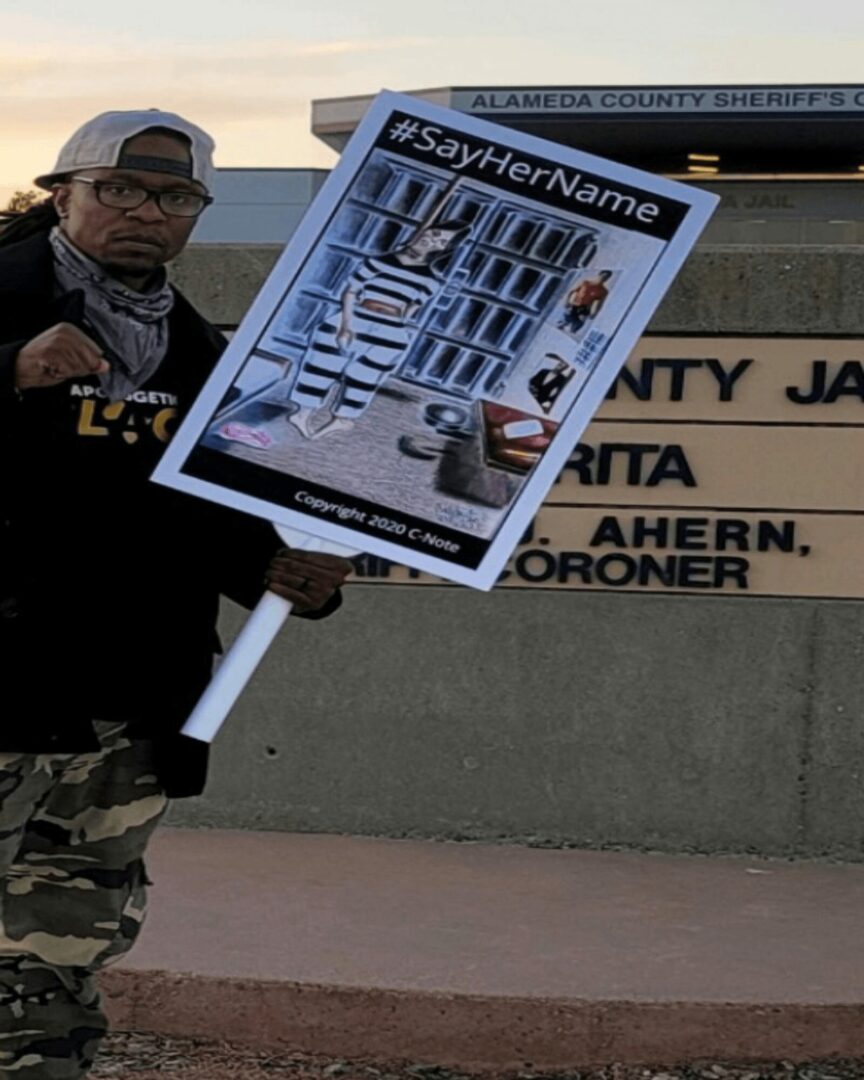
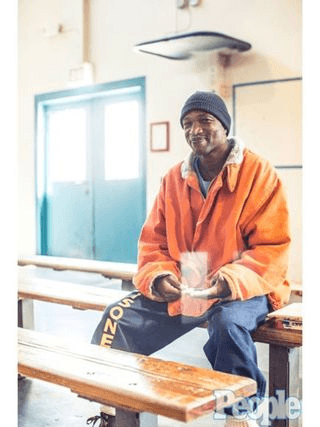
Image Credits
Anna D. Smith
Dan Powers
Chris Godley
so if you or someone you know deserves recognition please let us know here.