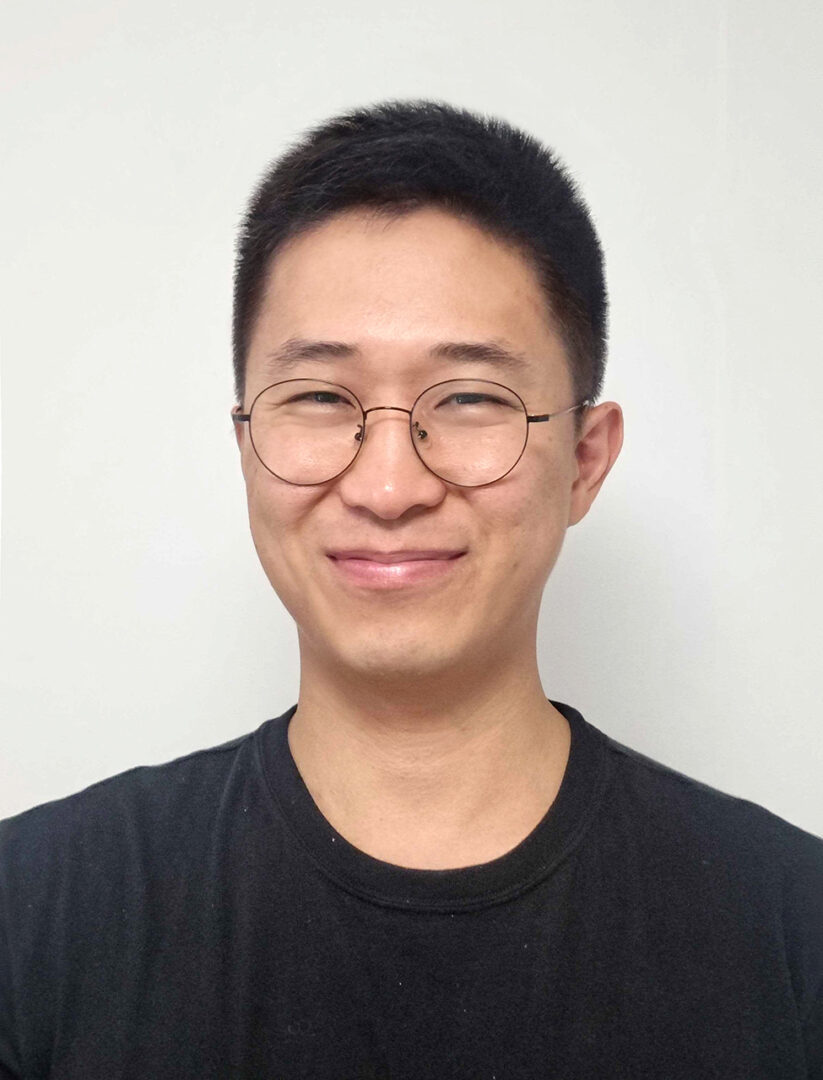
We were lucky to catch up with Sung Jae Lee recently and have shared our conversation below.
Sung Jae, thank you so much for taking the time to share your lessons learned with us and we’re sure your wisdom will help many. So, one question that comes up often and that we’re hoping you can shed some light on is keeping creativity alive over long stretches – how do you keep your creativity alive?
I used to strive to be special, not only in the creative area but also as a person. Ironically, the more I tried to be unique, the less I felt like myself. It’s still not easy to tap into the authenticity of my inner self, but I’m working hard to focus on who I truly am.
Then, unexpected ideas start coming to me, like scenes of places I don’t know, places that haven’t even been named yet. I project myself into the lives of those who sacrifice for others, and in doing so, I start to feel the essence of Korean grandmothers and mothers. These themes have recently captured my interest, and I use materials I’ve been familiar with since I was a young student.
I can also say that it takes a lot of time to finish one project because of its complexity and detail. I believe that artists gain inspiration as they work, so I try to create as much as possible and spend as much time as possible in my studio. No matter how busy I am, I make sure to do a few quick sketches during my creative process. These sketches often guide me on what to create next, even if I don’t realize it at the time.
Great, so let’s take a few minutes and cover your story. What should folks know about you and what you do?
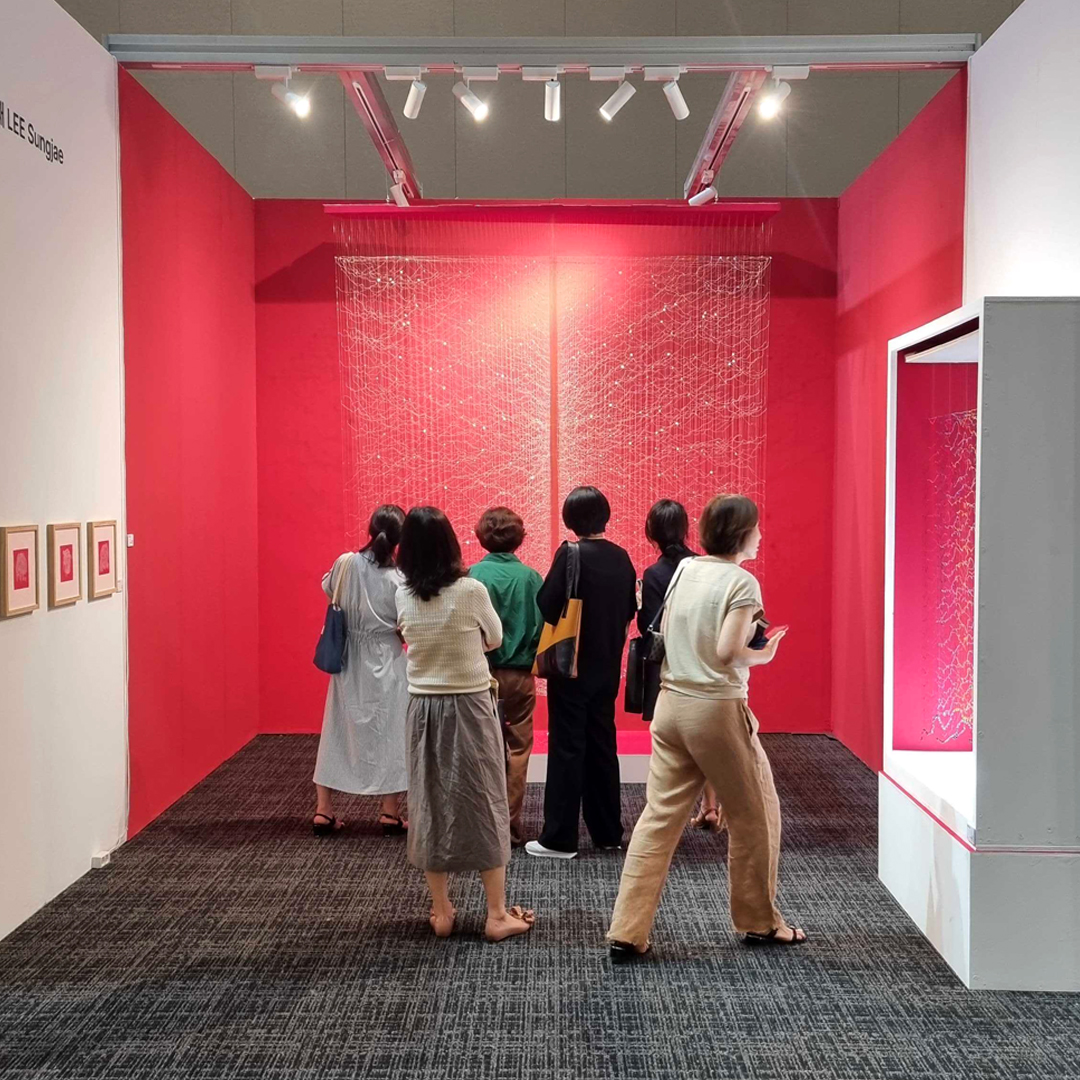
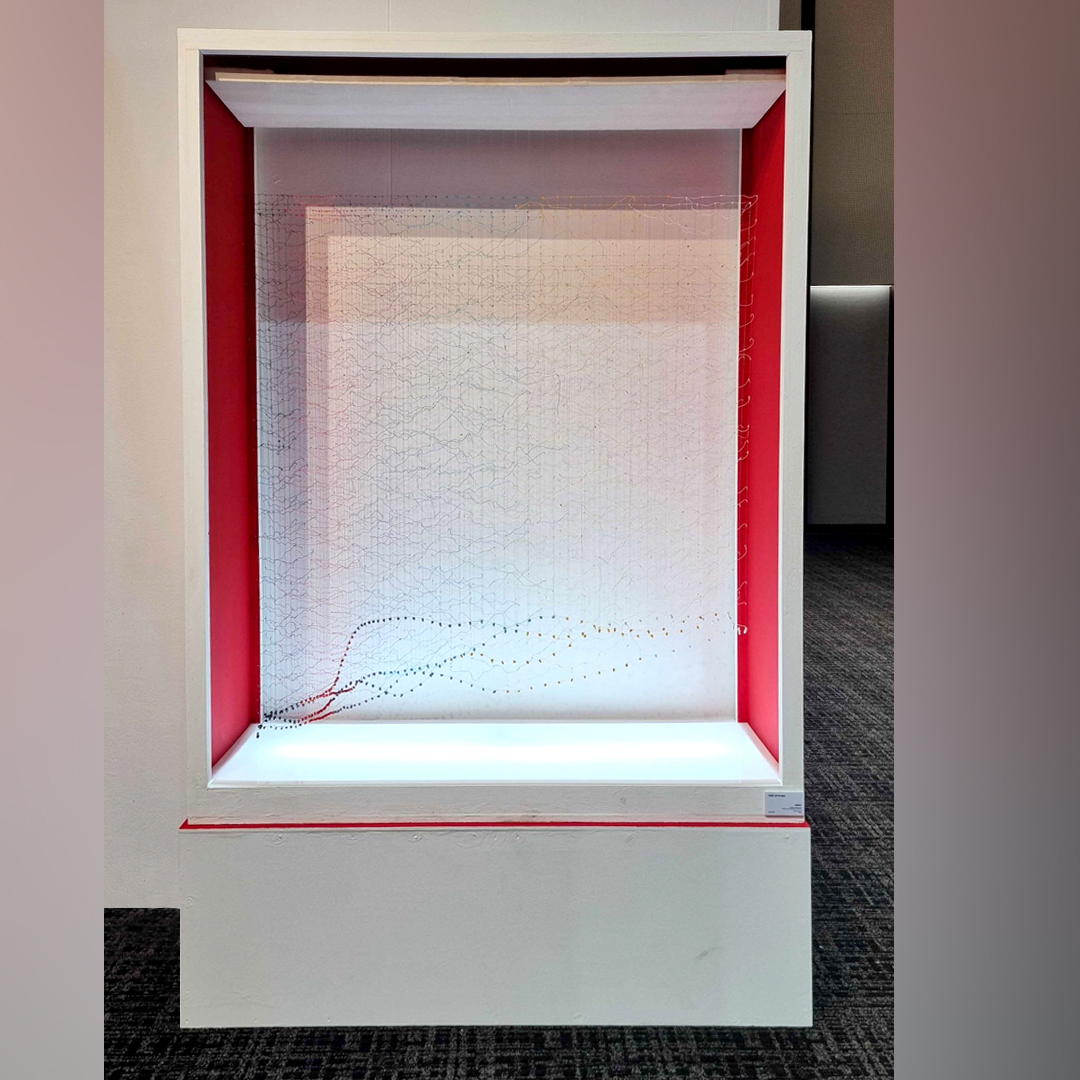
My name is Sung Jae Lee, an interdisciplinary artist who uses fiber, thread, and drawings to illustrate sceneries and people. My works form abstract shapes mostly and deliver variations of their chronological shifts and impressions I get timely.
Since early childhood, I didn’t have much time to use so-called “traditional art” media, like brushes, paints, or clay. Instead, I was naturally exposed to subcultural influences, gradually and intentionally leaning toward tools used for cartoons and animations. My undergraduate and master’s studies were in related fields because of a personal attachment to them.
For years, I created landscape-based abstract videos, but I always felt a longing for tangibility. I wanted to hold and touch something, to create art that occupies physical space. I kept searching for a breakthrough to overcome the immateriality of video art. While working at the forefront of new media art, I began dreaming of tangible experiments based on my video work. After my first residency program at Studios at MASS MoCA, I reconnected with old materials I had either used before or ignored. These were tools that even early humans knew how to handle, and along with this primitive energy, I began working with thread, fabric, and classic nib pens.
As for upcoming events, I have a pop-up solo show at Bukchon Cultural Center in Seoul from October 9th for 10 days. I’m also scheduled to have a solo exhibition in Daegu in mid-2025, and a two-person show in Busan. (All these events are in Korea, but I’m hoping to have one in the United States soon.)
If you had to pick three qualities that are most important to develop, which three would you say matter most?
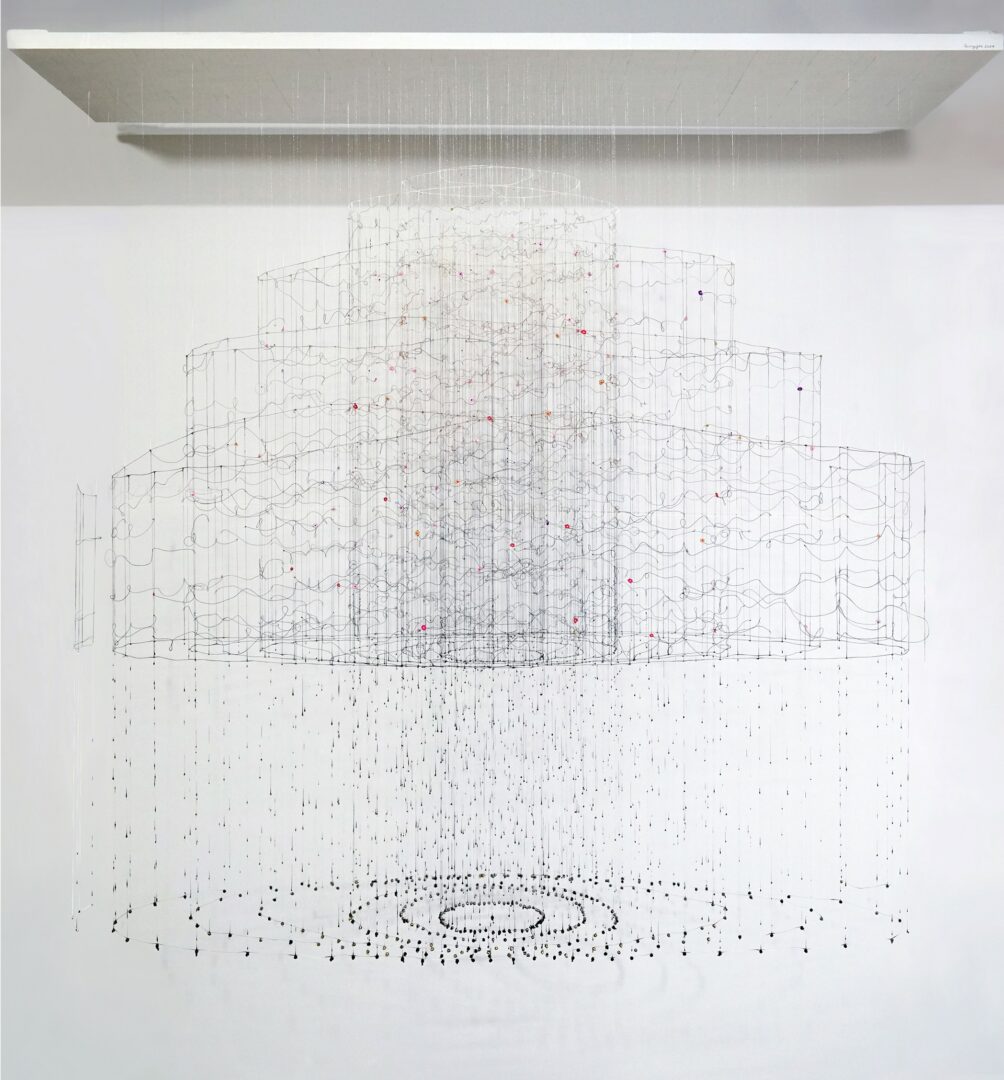
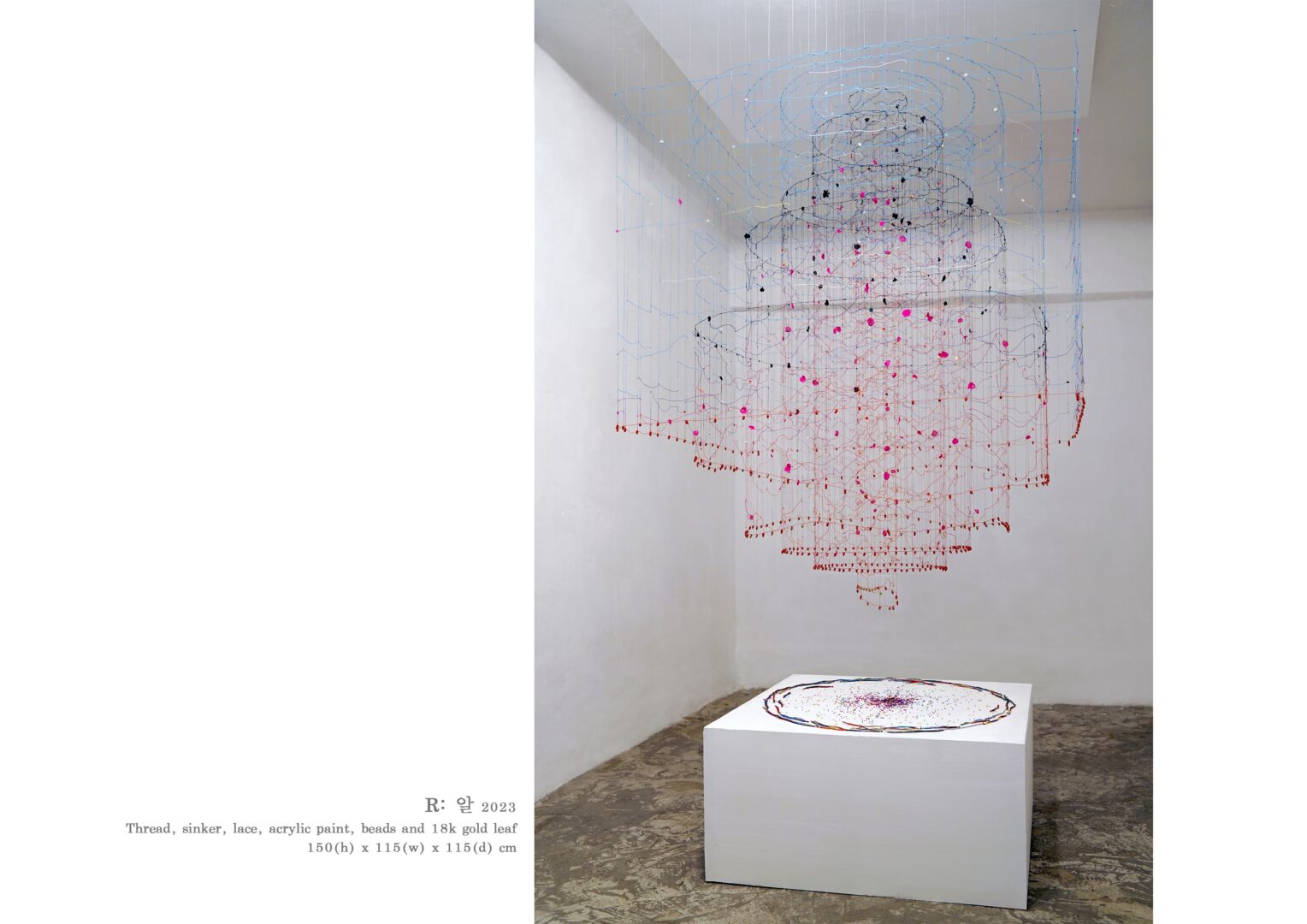
As I mentioned earlier, the extremely meticulous manner in which I create installations and drawings reveals the quality of craftsmanship. There have been moments when visitors, who didn’t know me, assumed I was a female artist simply by looking at the detailed overlapping of threads and knots. Ironically, these characteristics are rooted in fundamental techniques using materials that anyone can easily access, regardless of their educational background. I find joy in depicting scenes that are so common or uncertain that no one else takes an interest in them, and I am moved by illustrating people who are often overlooked by others.
I wouldn’t say I could give “advice,” but personally, I appreciate those who speak about themselves on a deeply personal level. By doing so, they can broaden seemingly minor issues from their experiences into social or philosophical discussions. Encountering artwork that forms a bridge between artists, their work, and its context is truly thrilling for me.
Therefore, I often remind myself that before focusing on trends, art history, or the depth of academic research, I need to reveal my true self by gently expressing the current circumstances I am experiencing.
All the wisdom you’ve shared today is sincerely appreciated. Before we go, can you tell us about the main challenge you are currently facing?
To be specific and honest, I have been struggling with transportation and installation issues for a long time. Working with materials that are so soft and light that I can even collapse them by folding them has been a great pleasure. However, I’ve always had to anticipate potential problems—ceiling panels falling, wires getting too tangled, etc.
This year, I had the opportunity to connect with a couple of galleries, and they emphasized the importance of framing and quick installation methods. I’ve been swamped, especially after moving my studio and the birth of my second son, but every day I experiment to find solutions. Canvas and sturdy wooden frames are now becoming my new companions.
Contact Info:
- Website: https://www.sungjaelee.com
- Instagram: sjlee.art
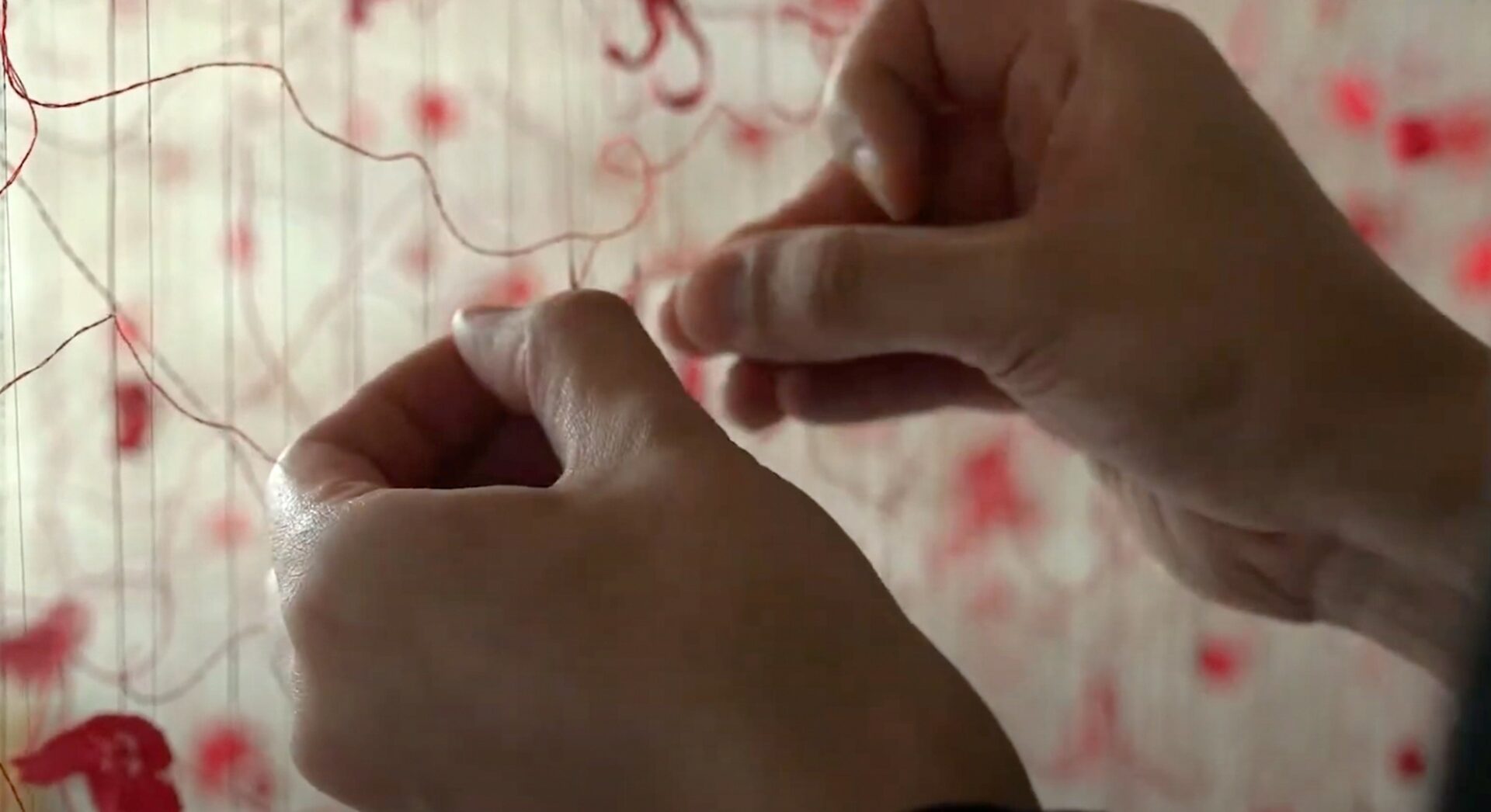
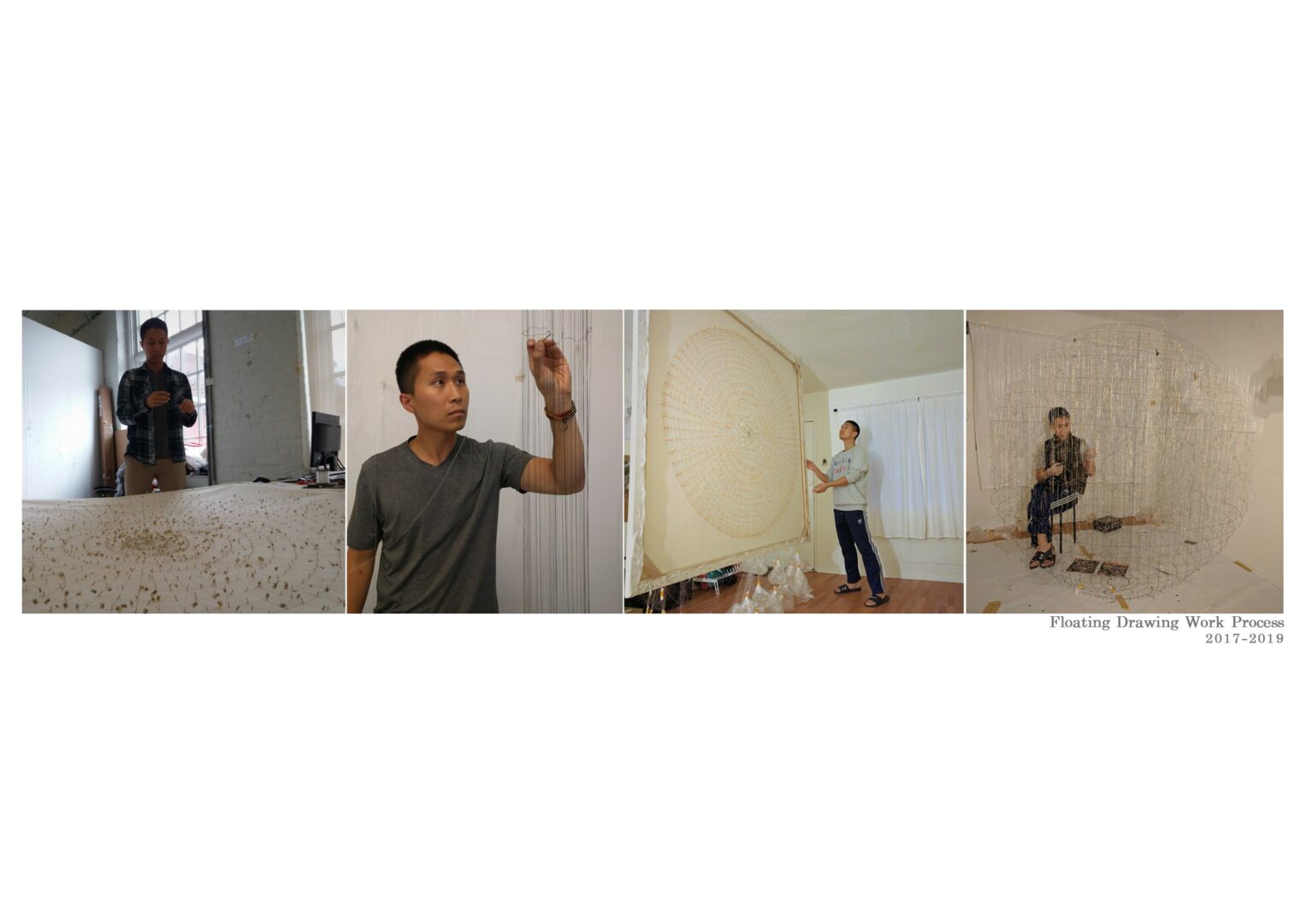
Image Credits
1. Image source: Sung Jae Lee, “Birth of Mother,” 2024. Author photo.
2. Image Source: Sung Jae Lee, “Skirt Waves,” 2024 Author photo
3. Image Source: Sung Jae Lee. “Low Mound Burnt Water,” 2024 Author photo
4. Image Source: Sung Jae Lee. “R,” 2023 Author photo
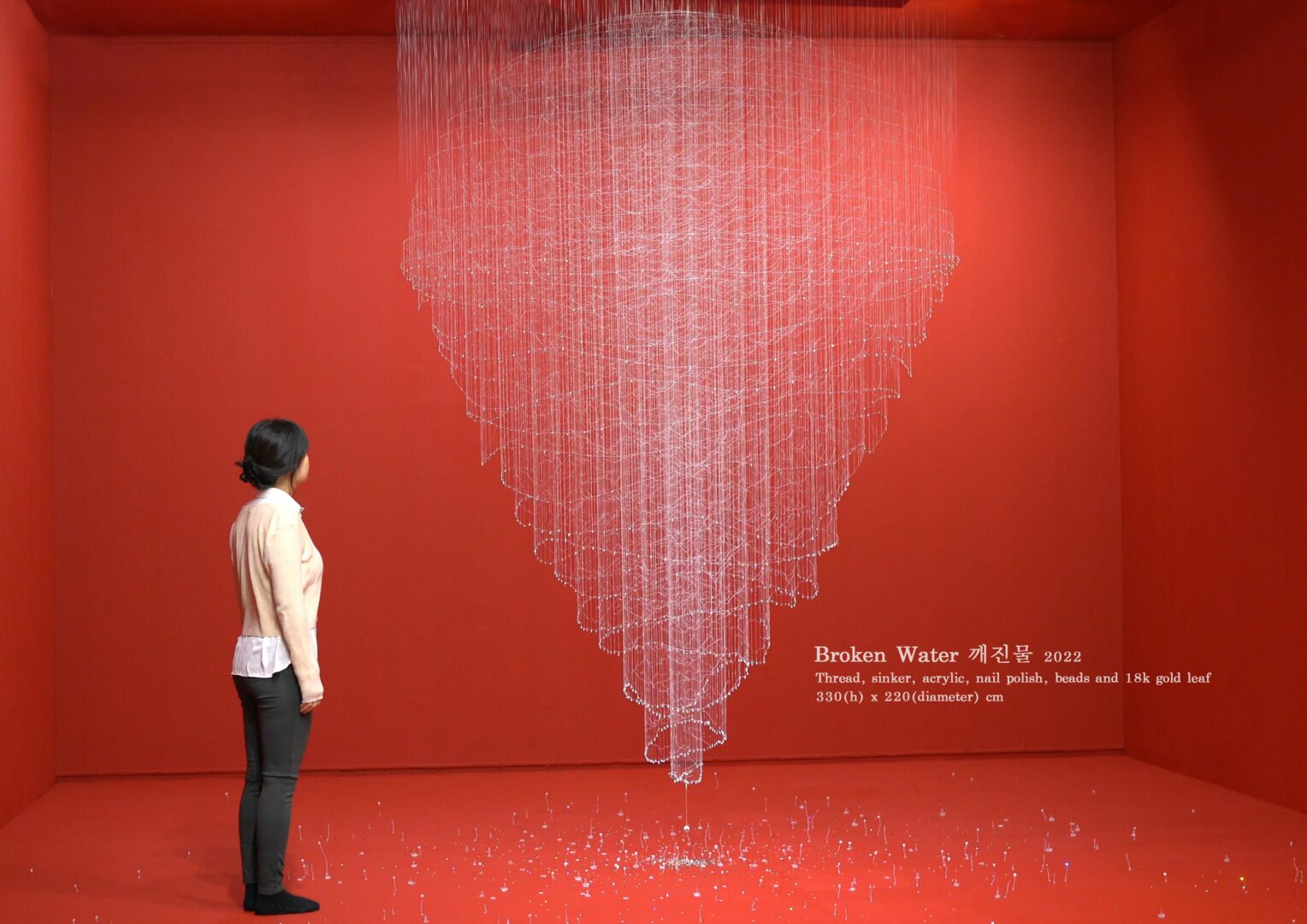
5. Image Source: Sung Jae Lee. “Broken Water,” 2022 Author photo
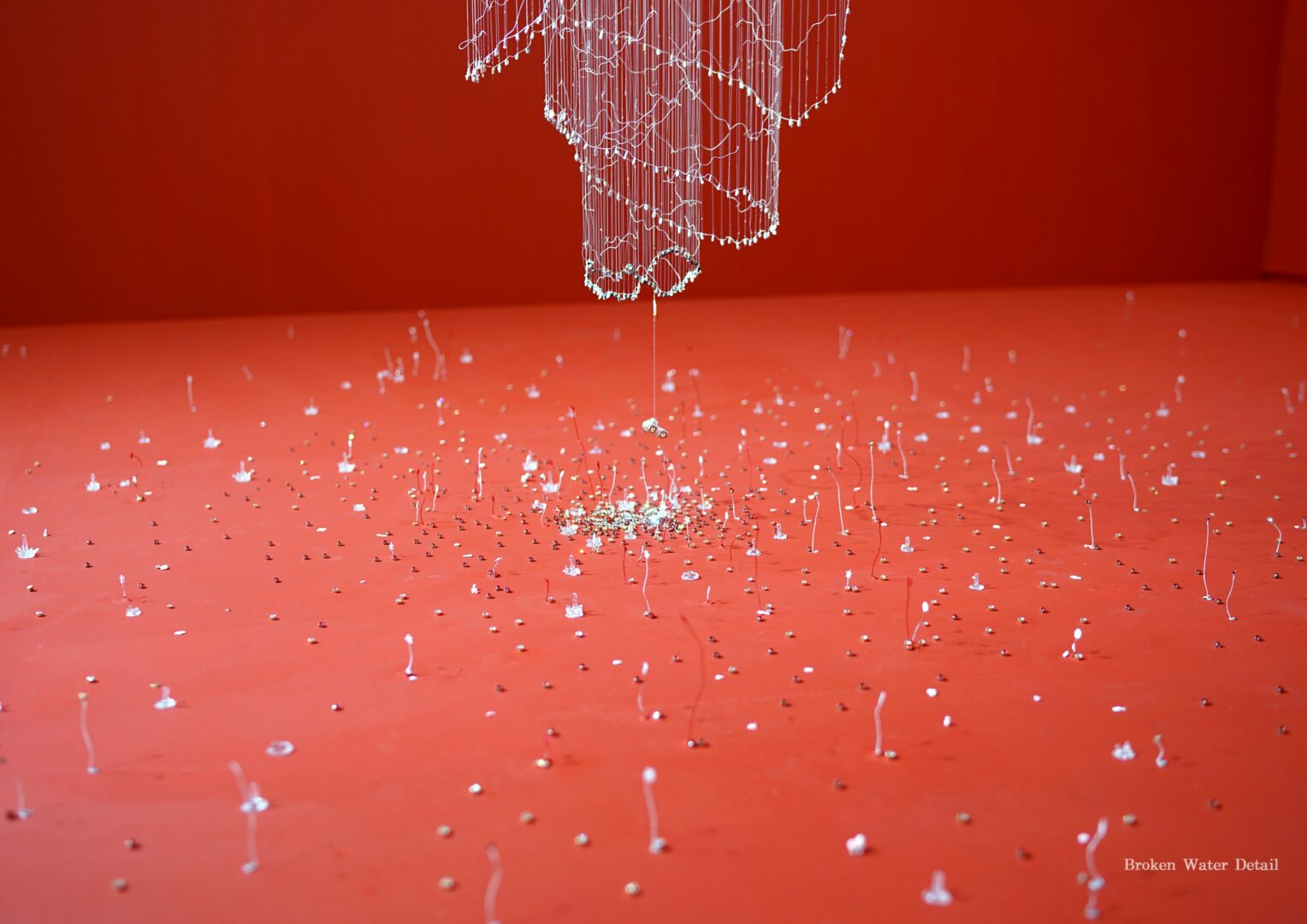
6. Image Source: Sung Jae Lee. “Broken Water Details,” 2022 Author photo
7. Image Source: SOMA Museum. “Screen Capture Image from ‘Grandma, Dad’s Mom” 2022 Original photo
8. Image Source: Sung Jae Lee. “Work Process of Sung Jae Lee,” 2024 Author photo
so if you or someone you know deserves recognition please let us know here.