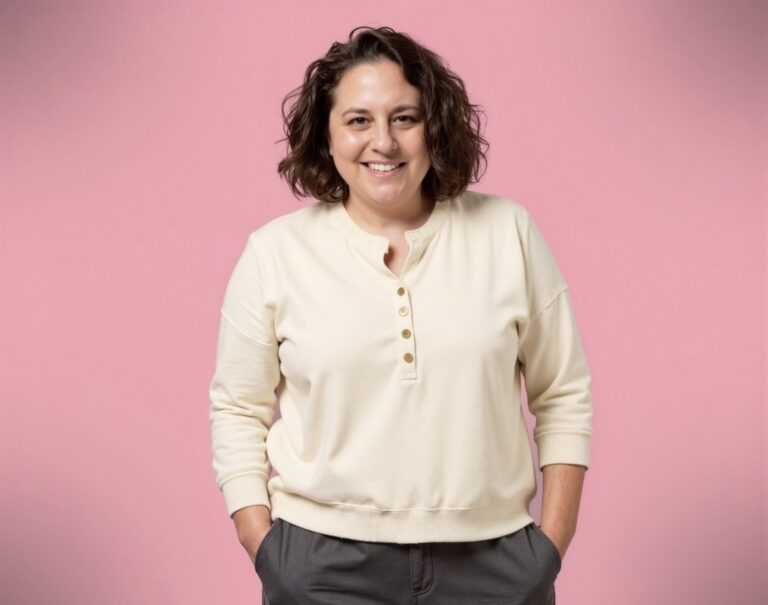
We’re excited to introduce you to the always interesting and insightful Christine Sharp. We hope you’ll enjoy our conversation with Christine below.
Hi Christine, appreciate you sitting with us today to share your wisdom with our readers. So, let’s start with resilience – where do you get your resilience from?
I have a lot of health issues. I have chronic, daily migraines, an autoimmune thyroid disease, a digestive system disorder that has previously been diagnosed IBS-C but hasn’t responded to medication for that condition, cluster headaches, reactive hypoglycemia, chronic neck pain, preeclampsia (with my pregnancies), as well as the more minor conditions of asthma, carpal tunnel, radial tunnel, and cubital tunnel, allergies, vascular reflux, and motion sickness, among other things. All of that can be summed up as: I am in a lot of pain, almost all of the time.
Nothing I have is terminal, so I am not facing my mortality, as so many have had to do. What I am facing is a long life of near-constant, debilitating pain. But the thing is, “the Lord is close to the brokenhearted and saves those who are crushed in spirit” (Psalm 34:18, NIV). In my experience, that is profoundly true. I feel the Lord near me. I don’t just know it to be true in my mind, I experience his nearness in day-to-day life. I have heard people say that they can’t tell if God is listening or is even there. But I feel him near me, with me, at all times. All of my desperate crying out is to him, and I know in every part of me that he is there, is listening, and is comforting me.
Of my conditions, the two most difficult to deal with are chronic, daily migraines and cluster headaches. They both come with severe pain in the head, neck, shoulders, and back, nausea, visual disturbances, incapacity, and cognitive impairment. The difference between migraines and cluster headaches is: with a migraine, all I want to do is go to a dark, cold, silent place, and roll in a ball and sleep. With a cluster headache, I cannot stop moving. I cannot sleep off the pain, I have to feel every moment of it. I instinctively roll and hit my head on hard surfaces, I writhe in pain, vomit, and I weep uncontrollably. Thankfully, my daily headaches are usually migraines and I only have a cluster headache every couple weeks. Cluster headaches are nicknamed “Suicide Headaches,” and I entirely understand why they are called that. But I am not defeated by them.
In fact, I am undefeatable. The pain is terrible, and I wish I didn’t have the pain. But I am unable to be defeated because the Lord is near to me, he saves me when I am crushed in spirit. It’s hard to explain to another person what that experience is like. Elisabeth Elliot (a woman who had a profound heap of suffering in her long life) said, “The loved ones of a sufferer can’t see how the grace of God goes to work in the person who needs it” (Suffering is Never For Nothing). That has been my experience. I have suffering, but really, who doesn’t? In my suffering, though, I have had the best experiences of my entire life: the grace of God is tangible in every moment of my suffering. He is near me, he is loving me, he is comforting me. I would rather have the pain and the nearness of God than no pain and lack the real awareness of the Lord’s nearness. That is where my resilience comes from.
I love my life. I am entirely satisfied with my life. How many can say the same? My resilience does not make me able to do things that my body won’t let me do. But my resilience makes me utterly undefeatable.

Appreciate the insights and wisdom. Before we dig deeper and ask you about the skills that matter and more, maybe you can tell our readers about yourself?
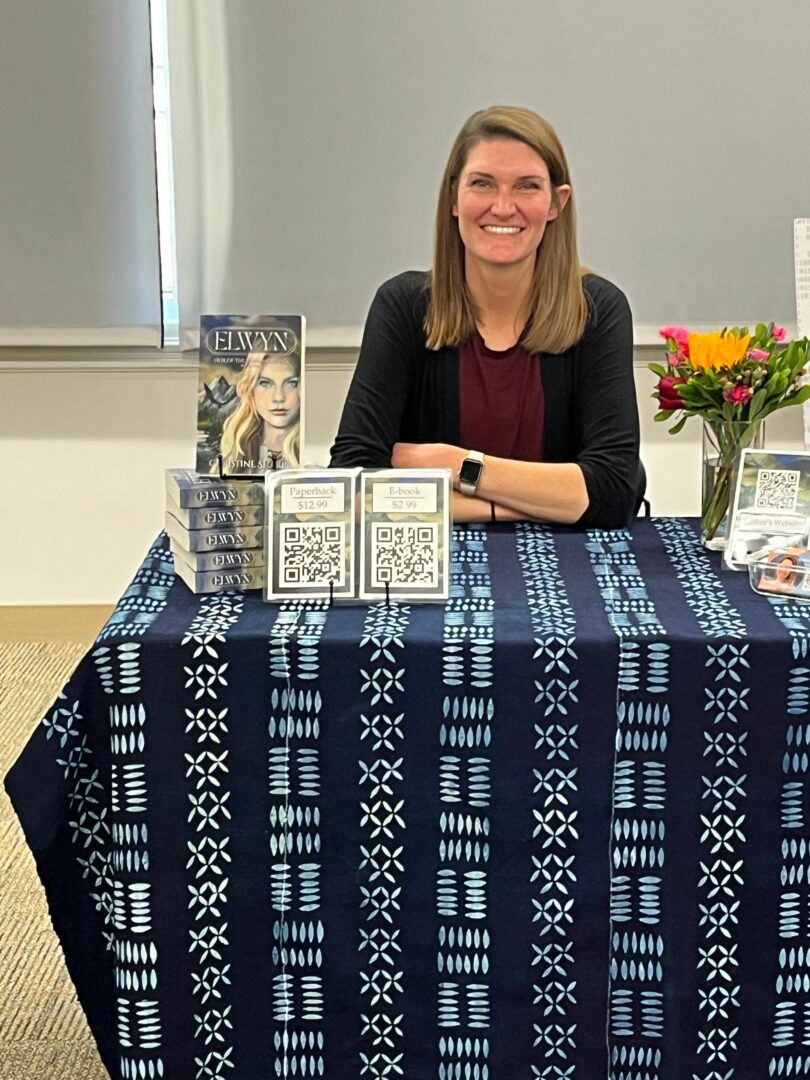
I previously earned a Bachelor’s in English from Biola University, but in my day-to-day life, I am a wife and stay-at-home mother of two young children. Alongside my joys and responsibilities with my family, I have written and published my debut novel, a young adult fantasy: Elwyn, Heir of the Eudaimonians. I worked on Elwyn for ten years, and I published very recently (November 2024).
In trauma recovery, resilience is a desperately important concept. Many who have studied resilience after traumatic experiences have discovered the importance of community. Trauma resilience through community is the underlying concept of the story.
In Elwyn, the protagonist (Elwyn) discovers that she cannot solve her problems by causing more pain in others (the trauma cycle). She must break the cycle and create a positive community by mutual leaning and supporting, in order for her world to heal. The villain cannot be killed, so his power must be diminished through people no longer serving him. The only way people will turn from him is if they have something better to turn to. However, people are messy. Relationships are messy, and community isn’t easy. Elwyn, and the subsequent books, will present a model for community healing, struggling through the messiness of human relationships while at the same time seeking to defeat the powerful, immortal enemy.
Eudaimonia, or “good spirit,” is a concept coined by Aristotle, in which he defined his idea of human flourishing (both what constitutes human flourishing, and how to reach a state of human flourishing). In the millennia since then, many have contributed their own theories of Eudaimonia. Elwyn is the first in what will be a four-book series. This series, Heir of the Eudaimonians, is my drop in that ocean of thought, defining what I believe human flourishing is, as well as how I believe humans can reach a state of flourishing.
If you had to pick three qualities that are most important to develop, which three would you say matter most?
Determination, Community, Faith
Determination. I felt like I was supposed to write Elwyn, so I was going to write it no matter the setbacks. I had no idea when I started out that it would take ten years. I didn’t know it would take many rewrites. I also didn’t know that I would have an onslaught of health issues that would make every second difficult, as well as impairing my ability to think and remember. But I was going to do it. I did it very slowly, a very VERY slow version of the proverbial tortoise. But every tiny bit was a step in the right direction. I could have given up, or been defeated by the length of time it took, but I wasn’t, because I was determined to do it.
For someone who wants to be determined but who isn’t there yet, keep going. That’s it. Just keep going. That refusal to stop is what determination is.
Community. Find the people who feed your soul. I have a wonderful husband, two wonderful children, and a loving and supportive extended family. They have supported me in all the emotional and practical ways I needed support during these hard years of health issues. I have friends who meet once a month as a “creatives collective,” simply to talk about what we’re working on, encourage one another, and take one another’s work seriously. They have supported me in the emotional and practical ways I needed support during these hard years of writing.
For someone who wants a strong community but who isn’t there yet, start with one person. Find one person around whom you feel your soul fed. Support that person in the practical ways you see that person needs support, and accept that person’s support in return.
Faith. My faith in the Lord, and his continual presence, have kept me going in every day. I know that this life is not the end, I know I can depend on the Lord to get me where I need to be, I know there are better things coming. Every bit of me knows that. I am unable to be defeated by anything in this life, because I know the one who is beyond this life.
For someone who wants faith but who doesn’t have it, I say practice gratitude. My tangible feeling of the Lord’s presence grew out of a practice of thanking him for every thing that came along in my day. Thank him for the good things and the bad things: the pretty sky, for the trees you see, for air conditioning, for pain, for red lights, for weeping, for laughing, for all of your experiences.
Before we go, any advice you can share with people who are feeling overwhelmed?
When I feel overwhelmed, it is usually a sign that I have had too much input without sufficient time to process. We are bombarded with input every moment of the day. Some of it we ignore, but a lot of it requires processing for our minds to settle.
We can avoid processing by choosing a different input at that moment (turning on a show, etc.), but I have found that doing so just delays the necessity for processing, rather than solving it. My low capacity due to health issues has forced me to notice when my brain is overwhelmed with input.
When I reach that state, I sit alone in a quiet, comfortable place, and stare at something natural and growing. My favorite place to do this is on a window seat in my house with a planter on the opposite side of the window. But it can happen anywhere, as long as I have something growing to look at. I stare at it blankly for a long time.
During that time, my mind spins, running through all the inputs I have taken in, and I let it. I let my mind go, and eventually I start noticing things about the growing thing I am looking at. Once I reach that point, it’s a sign that my brain’s processing is done and now I can enjoy the beauty of growing things.
Contact Info:
- Website: https://www.christinesharpbooks.com
so if you or someone you know deserves recognition please let us know here.