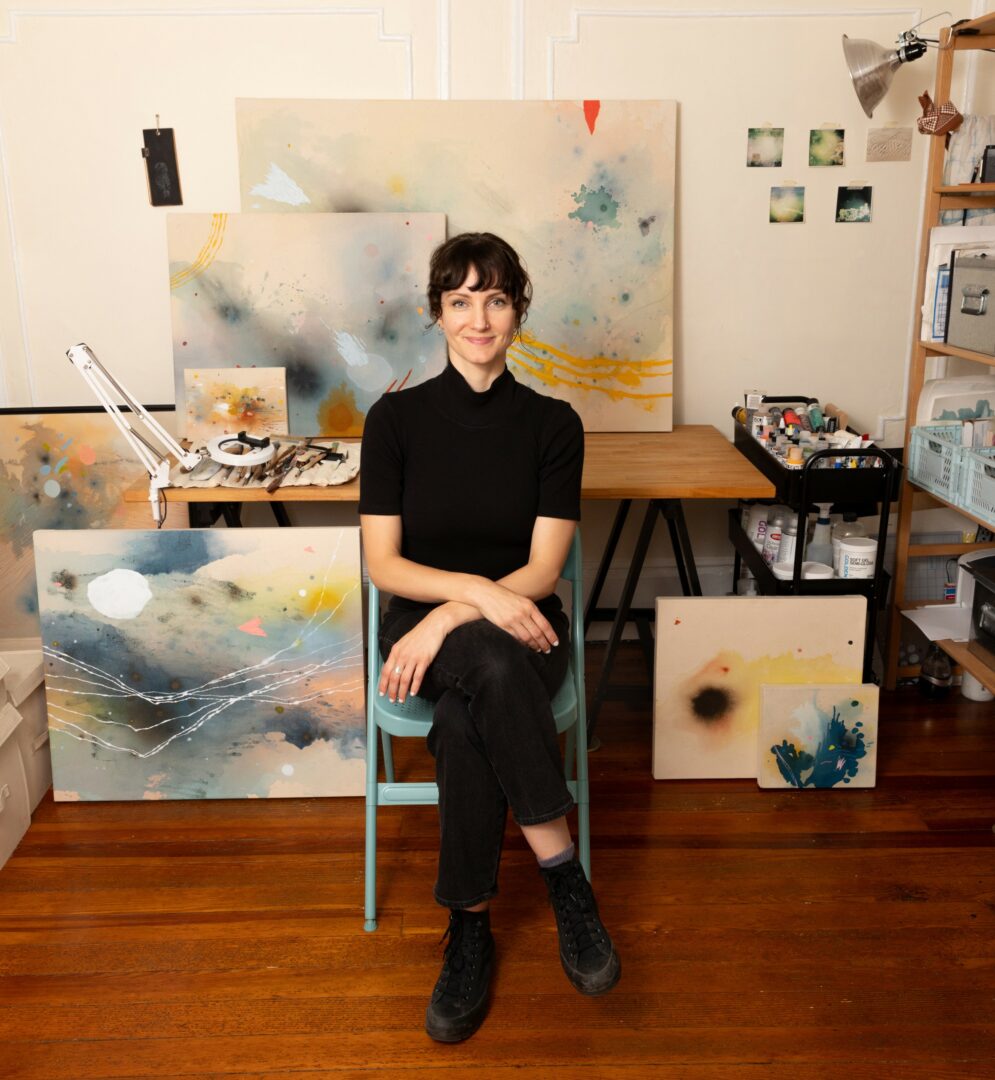
We caught up with the brilliant and insightful Sarah Rockower a few weeks ago and have shared our conversation below.
Hi Sarah, really happy you were able to join us today and we’re looking forward to sharing your story and insights with our readers. Let’s start with the heart of it all – purpose. How did you find your purpose?
I’ve often joked that English is not my first language, even though it’s the only one I know. Words and numbers have always felt foreign to me, and don’t align with the way my mind works. Art is where things make sense. The exploration of color, line, shape and form brings me a specific type of charged joy.
I made art throughout childhood. I didn’t always think I was good at it, but loved how creating made me feel: calm, centered, and connected to something larger than myself. I loved getting in the creative zone. It felt like magic to me- a spiritual experience.
Thanks for sharing that. So, before we get any further into our conversation, can you tell our readers a bit about yourself and what you’re working on?
I was one of seven children, and most of us were homeschooled. If my mom felt that we needed more exposure on a particular subject than she and our books could offer, she found tutors. My art teachers were painting majors from the nearby university. This was such a gift. I loved having one-on-one time with artists. I was also lucky to befriend a successful artist couple who lived down the street- the husband, a sculptor and the wife, a painter. They quickly became mentors close to my heart, living a life of non-conformity which inspired my young, misfit self.
As a freshman at RISD, I planned to major in painting but found myself drawn to the textile department. I decided to follow my gut and learn something completely new. I spent the majority of my time in college weaving, silkscreening, and studying the technicalities of textiles. I went on to work as a designer in New York, continuing to create fine art in my free time. Sometimes the painting and textiles would overlap.
I went through a rough time in my early thirties. I was a single mom, working full-time, and barely sleeping. Desperate to continue my own creative practice, I would sometimes stay up throughout the night drawing. I had a tendency to make very detailed work, which was one reason textile design suited me. At the time my work was a sort of abstracted realism, pencil drawings on paper and fabric. I zoomed in on objects, depicting their various textured surfaces and expanding on them. Pencil on fabric took three times as long as it would on paper, having to run the graphite over the fibers numerous times before creating enough density.
Going from meticulously cleaning design images down to the pixel on the computer all day, to studying and drawing every minuscule detail by hand at night, became an unhealthy amount of micro-focus. I needed to loosen up. I felt a growing desire to create large abstract works, but fundamentally changing my approach seemed like an overwhelming undertaking.
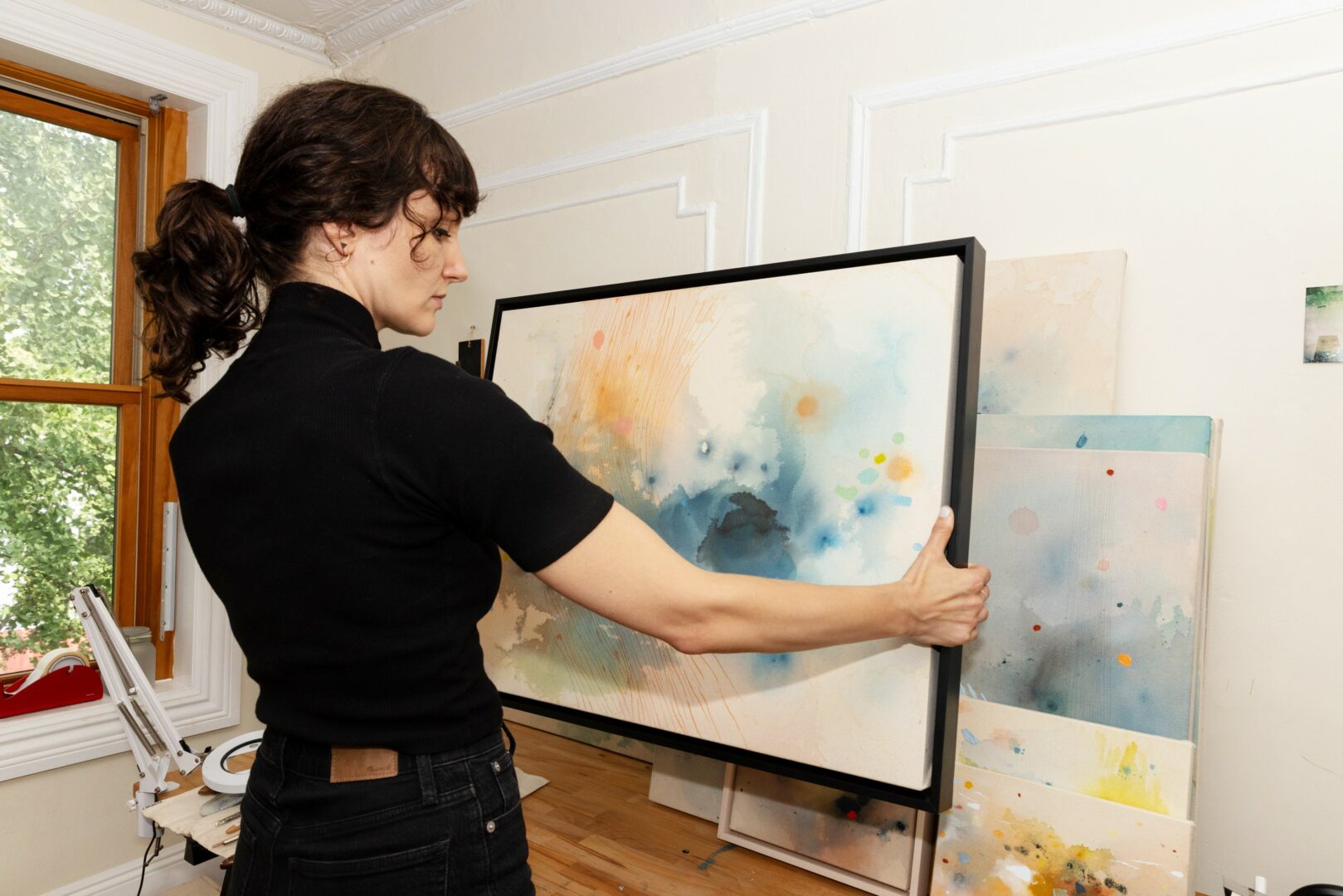
The pandemic changed that. Suddenly I had time and space. I set up several canvases and started painting, loose and big. I challenged myself to paint with less control. I didn’t like what I made at first but held on to a vision. Eventually things started to click. My work moved closer to what I wanted it to be, and I got better at accepting when it wasn’t what I thought I wanted it to be.
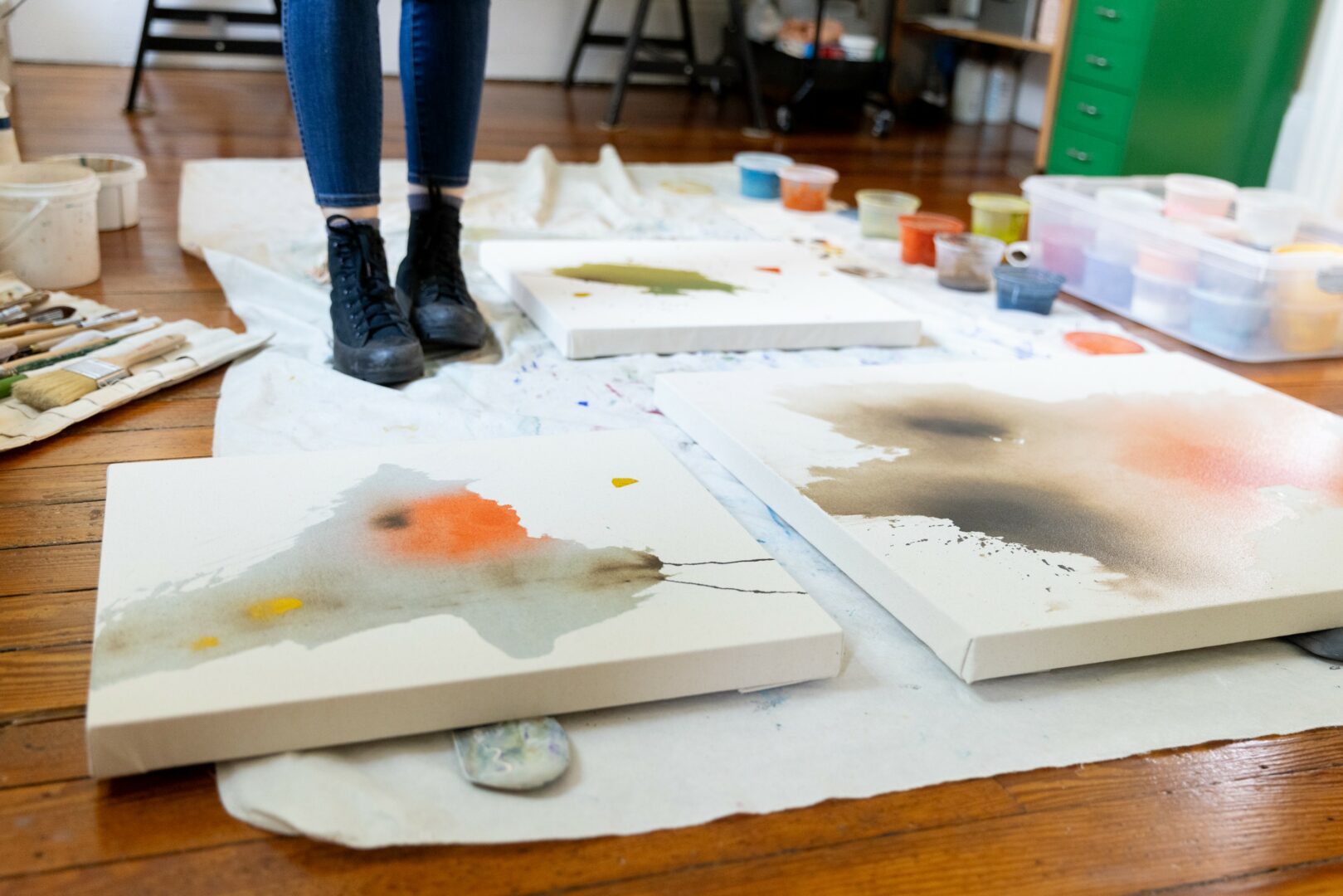
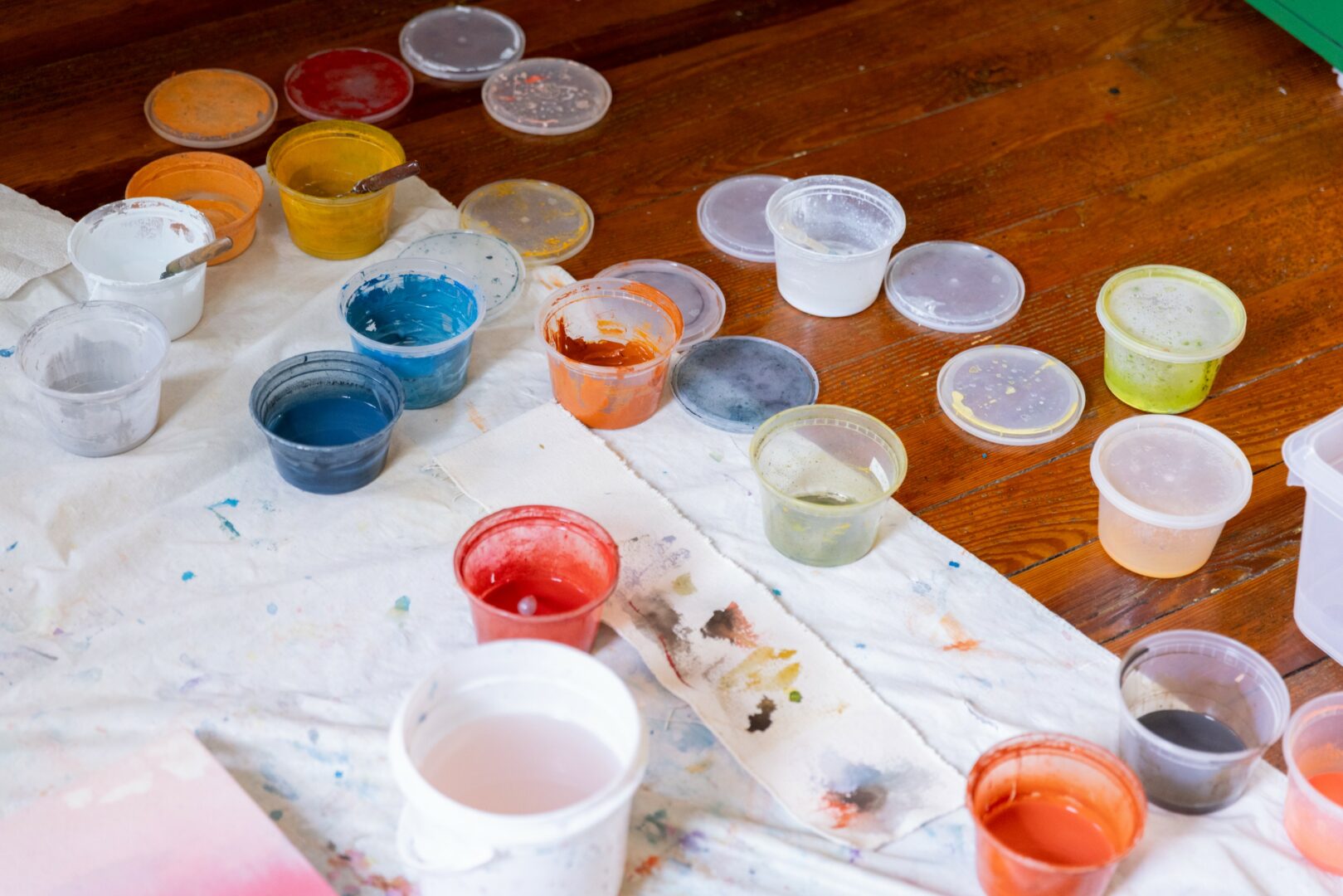
Painting with spontaneity continues to be a challenge, always taking me out of my comfort zone. I paint on raw canvas, and can’t really undo or cover up areas I’m not happy with; I do my best to make them work. Sometimes I’m able to pull the piece back together, and other times I know it’s reached a dead end and will become a fabric scrap. Overall making these paintings has felt like a dam breaking. The practice continues to be a release, and it continues to flow.
Paintings are sold through my website and gallery shows. I’m excited that Sarah Rockower Studio (SRS) will have a booth in New York’s Superfine Art Fair Spring 2025.
Since the pandemic I’ve freelanced, working as a design consultant which has given me the flexibility to paint and spend more time with my daughter. I enjoy the duality of design work and fine art, and it’s been interesting to observe how they feed each other. Although art and design have similarities, they are different enough that if I feel stuck in one area, I can move to the other and it often helps bring clarity to both. Lately I’ve also been painting for the design work, sometimes in a completely different style that’s more realistic, which is so fun to do. Design is generally more straightforward and methodical, with clear restrictions for an end use, whereas fine art can be overwhelmingly open-ended. Fine art is a more challenging endeavor in my opinion- abstraction in particular. The amount of freedom it offers can be intimidating.
What is most exciting to me about painting is that it feels like a connection to something bigger than myself and the physical canvas. I’m not only working with shape and color, but also with energy and movement. I love that the viewer can sense the amount of force that was used to apply the paint, whether it was slowly and carefully placed, or poured in a flooding cascade. The energy used in the application is permanently captured on the surface. The viewer can feel the movement of the paint, even though it’s still. I like knowing that because paint does what it does in this sense, the viewer and I share an experience through the painting, no matter how far removed we are in time and space. This is something I’ve always been fascinated by when looking at other artist’s work.
Painting has helped me in so many ways. Doing loose, abstract work, often including paint pouring, is an exercise in embracing lack of control, which I want to apply to all areas of life. We can’t control everything, but we can attempt to surrender and ride the waves, making the journey more enjoyable and expansive.
There is so much advice out there about all the different skills and qualities folks need to develop in order to succeed in today’s highly competitive environment and often it can feel overwhelming. So, if we had to break it down to just the three that matter most, which three skills or qualities would you focus on?
1. Trust. Having trust in what you love doing, simply because you love doing it. Maintaining that trust even when you don’t like what you’re producing, or feel like a failure. Trusting that you can improve. Trusting that gut feeling and knowing that because you have a desire to reach a goal, there is something valuable within its pursuit.
2. Education. Making the commitment to learn and practice a skill, and to put in the time, is a priceless gift to give yourself. If you can find an opportunity to work under someone who knows more than you do, take advantage. Let yourself start at the bottom and be bad at something and keep doing it anyway. Developing a solid foundation can provide the confidence to eventually take what you learn in your own direction.
3. Vision. The practice of envisioning a desire or goal and holding that vision in your mind and your heart, without evidence of its reality, is essential. It can be terrifying to allow ourselves to want things that feel out of reach. But if we don’t give ourselves permission to want something bigger, then we will keep ourselves small.
Trust and respect your desires. Listen to your gut because it knows things that your brain doesn’t. Be patient with yourself and keep doing what you love, simply because you love doing it. Notice the negative self-talk and say thank you, but no thank you. Focus on why you want what you want. Take note of what inspires you and make time for that regularly. Remember that life’s challenges are gifts in disguise. Spend time with people who support and lift you up. Be kind.
Do you think it’s better to go all in on our strengths or to try to be more well-rounded by investing effort on improving areas you aren’t as strong in?
This question makes me smile, because if I could go back, I would give myself the opposite advice. I would tell myself to spend more time pursuing and enjoying my strengths, because I spent most of it struggling to work on my weaknesses. I was very focused on how I thought I should be different than I was. I forced myself to do things I was bad at, not because they were things I wanted to do, but because I thought I should be better at them. I thought I should be more well-spoken, a faster reader, and better at math. It felt like hitting my head against a wall for a long time. Eventually I accepted the fact that these were not my strengths and that there was nothing wrong with that. Sometimes giving up is a good thing, because it helps you see other pathways. I had to accept, respect and nourish my own strengths, and I’ve been much happier since.
Contact Info:
- Website: https://sarahrockower.com
- Instagram: https://www.instagram.com/sarahrockower/
- Facebook: https://www.facebook.com/sarahrockowerstudio
- Linkedin: https://www.linkedin.com/in/sarah-rockower-727098224/
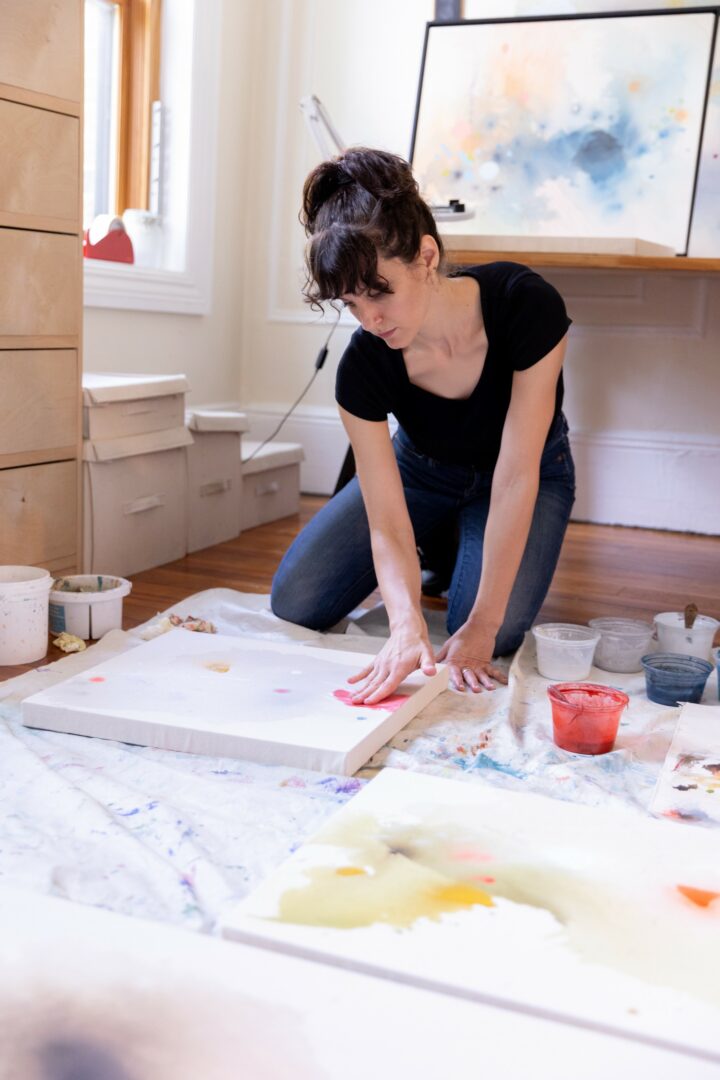
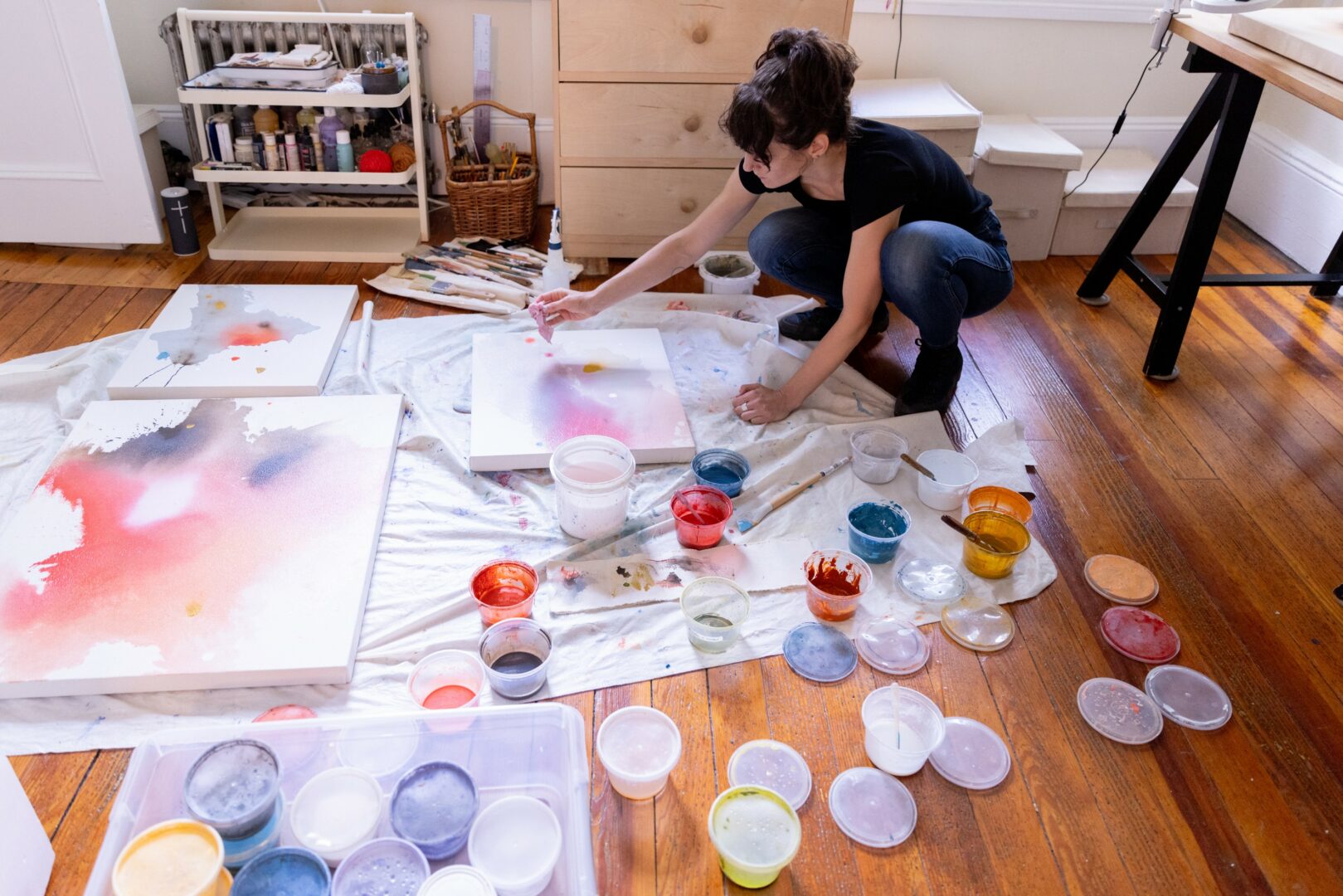
Image Credits
Jeanette Moses
so if you or someone you know deserves recognition please let us know here.