We’re excited to introduce you to the always interesting and insightful Karen Docter. We hope you’ll enjoy our conversation with Karen below.
Hi Karen, really happy you were able to join us today and we’re looking forward to sharing your story and insights with our readers. Let’s start with the heart of it all – purpose. How did you find your purpose?
I breathe writing. If I’m not actually writing, I’m thinking about it. I’m creating characters and scenarios in my head all the time, drawing on what’s happening around me.
The truth is that I’ve written my entire life. Journals. Short stories. Poetry. Reports. I was a whiz in my English classes and lived for essay assignments. I never thought about writing as a career path. Oh, I graduated from college with a Liberals Arts degree plus a B.A. in Technical Journalism. But when I left college and entered the real world, I realized the jobs I had in business that put me through college paid infinitely better than journalism.
I got married and had two children, and even my personal writing languished for the longest time. As an office manager at a large retail mall, I had a challenging job handling all the receivable accounts. I was also the executive assistant to the mall’s leasing officer. My husband was running a business we had started together. We were both working twelve-hour days, seven days a week. Our two children had a great babysitter, but one of my girls started having nightmares and insecurity issues. After much discussion, my husband and I decided I would quit my job and become a stay-at-home mom. We decided our children’s welfare had to come first.
At first, to supplement some of the income that we’d lost, I took on babysitting. I did that for a year, and now Mom was miserable. <grin> I was bored just talking to kids under the age of five all day, so I took up my reading habit, which I’d also given up. That helped for a short while. Then, I read a book that made me crazy. I told my husband about the book and what I’d have done differently when I finished it. I said I could write a better book. He looked at me and said, “Why don’t you?”
It was like a bell had gone off in my head. Why didn’t I return to the one thing that gave me the most pleasure? I loved to write. I didn’t have to leave my kids to write. It was a win-win. I started writing a story (longhand, ack!) that had popped into my head months earlier. A friend gave me an old computer, and I taught myself to use it. When I no longer had to create longhand, my brain started popping new ideas into my head almost daily. I wrote them down in a file and kept writing the book I’d started.
I wrote every day for months until I finished my first book. I had found my bliss, my purpose, and thanks to Amazon’s new burgeoning digital publishing, I could foresee it as a career path. That was 35 years ago, and writing still makes me happy. When I can’t write every day, I’m thinking about the book I’m working on, developing the scenes in another book, making notes of things that prompt characters, or talking about books. Even when my health slowed me down for a few years, I wrote.
I can’t imagine retiring as a writer as long as I have stories to tell.
Thanks, so before we move on maybe you can share a bit more about yourself?
I’m a bestselling author who writes two romance genres under two different names.
As Karen Docter, I write romantic comedies and contemporaries that are spicy, sweet, hometown hero romances. My True Love in Uniform series is about the men and women who work at the police department in the fictional suburb of Riverton, Colorado, and how their lives change when they meet their love.
As K.L. Docter, I write romantic suspense novels that are also filled with romance, although the dangers the hero and heroine face are intense, usually because a serial killer is bent on ending one or both of their lives. My Thorne’s Thorns series tells the individual stories of six foster brothers with protective streaks a mile wide for their families and the women who enter their lives.
Although many of my readers read both of my genres, some may not. I created two personas so that readers will know what they’re getting when they pick up one of my books.
Wearing both personas, I’m an award-winning author, a four-time finalist of the prestigious Romance Writers of America® Golden Heart®, and won the coveted Kiss of Death Romance Writers Daphne du Maurier Award Category (Series) Romantic Mystery Unpublished division.
I have a Technical Journalism degree and taught plotting for over 20 years to members of Romance Writers of America chapters and other writing organizations. My original workshop, The “W” Plot..or The Other White Meat for Plotters, is available on my website and recommended by several other writing workshop programs. I still occasionally conduct full or half-day workshops for writers’ organizations.
There is so much advice out there about all the different skills and qualities folks need to develop in order to succeed in today’s highly competitive environment and often it can feel overwhelming. So, if we had to break it down to just the three that matter most, which three skills or qualities would you focus on?
This is a challenging question when it comes to writing books. There are so many things you need to know to make a successful writing career, especially if you intend to become an Indie author. (I write for myself, not a publishing house.) There are a lot of people out there who say, “Oh, anyone can write a book.”
That’s not quite true.
Yes, Anyone can write a book. But you must be willing to work hard, build your skills, develop a thick skin, and find a support system if you want to write a good book. One that sells. Assuming you have a good story to tell, you need to add the following three things to your arsenal: 1.) English skills (don’t groan yet; you don’t have to be an English whiz), 2.) knowledge of your market, and 3.) a thick skin.
1.) This first one is exceedingly important and may be the hardest thing to accomplish for some writers. I had a strong English background when writing my first book. I thought it would be a piece of cake. “Not hardly,” as The Duke, John Wayne would say. An English background is a good thing, but I quickly learned about the things I didn’t know. For instance, journalism doesn’t use dialogue, narrative, or exquisite settings and descriptions. I lacked these areas of knowledge, and it showed in my first book. I didn’t even know what I needed until I showed my baby to my first seasoned writer. It was a painful lesson.
You will need to figure out your strongest and weakest English skills. If you don’t have an English background, it’s okay. Don’t panic. There are a vast array of editors out there who can help you with that. However, even the best editors don’t have time to correct everything, and they do cost money. Try to learn some basics on your own. Enroll in English classes, if you can. Join a critique group that will help you with that. Practice is a good teacher. As for learning the other basic writing skills that were my weakest, I found workshops teach me dialogue, how to use narrative and description, etc. Many might have recordings in a group library if you’re in a writing group. That’s how I learned the most skills. I’d check out one or two workshop recordings at every meeting until I reviewed everything I needed. The point is to find a source to bolster your English and writing skills.
2.) Learn your market. Even though the markets have opened up thanks to digital sales, there are still things you must know. If you don’t know what kind of books you’re writing, read across as many genres as possible to see where you might fit. You won’t be selling that serial killer book you’re writing to the paranormal or Inspirational readers unless those elements are in the book you’re writing. I think writers are generally readers first, so you probably have a good idea of where you want to go on your writing journey. But, even if you know, read to find out what’s selling, what’s taboo, presentation, etc. You don’t necessarily have to write to the market, meaning write precisely what everyone else is writing (actually, your unique story and voice are better when they stand out), but you do need to know where you fit. Many books are written and then slapped up on the internet to stand alongside several million other books. Readers sift through those books using genres. It’s a good idea to learn them.
3.) This last one is tough. How do you develop a thick skin…against the naysayers, the critics, and even your family members who think your writing is a hobby or stupid, or even worse, they stand in your way? I don’t know about you, but I’m emotionally invested in my writing. When someone takes potshots at me when I say I write, gasp, romance novels, it stings, especially if it’s someone important to me. Thankfully, my husband and family support me. My kids, even when they were young, proudly tell their friends. I know that’s not the case with everyone. Developing a thick skin will be crucial to your own piece of mind when you run into someone who rolls their eyes when you say you write, or when they say the story sucks, or whatever. You must go into this expecting bad ratings, reviews, contest scores, and rejections. It’s the one part of the publishing industry that can really suck boulders. Come to terms with the fact that you can’t write a story that will appeal to everyone in the universe. There will be haters. They. Are. Not. Buying. Your. Book. It’s okay even if you sell that book to someone who still hates it. I used to check my ratings and reviews daily on Amazon. That way lies madness! Some people will give your book a 1-rating and admit in the review that they haven’t read it yet. You have no control over these things. You have no control over the people who diss your career, the book, or the way you present yourself at a conference. All you can control is the way you respond. Don’t respond. Ever. Yeah, it hurts, but that reader over there loved it. She’ll buy your next book. Even a reader that diss a book might pick up another one and love that one. The publishing industry is smaller than you think. Never burn bridges. Editors move around from publishing house to publishing house. If it helps you develop a thicker skin, treat yourself to chocolate or coffee from your favorite barista or whatever makes you happy…and move on. Yeah, writers are emotional creatures. We have to be to write emotional stories. But publishing is a business. Treat it as such and leave the emotions on the editorial floor.
Alright, so before we go we want to ask you to take a moment to reflect and share what you think you would do if you somehow knew you only had a decade of life left?
As I mentioned earlier, I had health issues that slowed my writing. In fact, those issues took me down for several years. We didn’t realize it for years, but the altitude in Colorado where we lived was killing me. My heart and pulmonary doctors both agreed I needed to get to a lower altitude. My husband and I moved to South Carolina on the coast, less than 200 feet above sea level, with our son (3rd child) and his family. It was the best thing we could have done. I’ve spent the past two years rebuilding my health and returning to my writing.
Now, if I can only stop compromising my health. The week before Christmas, I fell off a stool while decorating the house, fracturing my femur at the point where it connected with my knee replacement. 10-12 weeks of bed rest! Ack. On the one hand, I’m confined to doing only one thing. Writing! I was making progress before I fell. I have spent the past month not accomplishing as much as I’d like while on medications. However, those are now done, and I still have 7 more weeks of bed rest. I’m determined to finish the book I’m working on (a romantic suspense novel called SHADOW PURSUIT), by the time I stand again.
My particular challenges always seem to be health-related. I can’t create when I’m in pain or sick. When I was in Colorado, we didn’t realize my lack of oxygen meant my brain wasn’t getting enough of it either. So, I’m addressing one health issue at a time to get back into full writing mode. I envy those who can write through everything. Not one of my strengths!
Contact Info:
- Website: https://www.karendocter.com
- Facebook: https://www.facebook.com/KarenDocterAuthor/
- Twitter: https://x.com/KarenDocter
- Other: Karen’s Killer Book Bench & Killer Fixin’s Blogs: https://www.karendocter.com K.L. Docter FB: https://www.facebook.com/kldocter/ Docter in the House! FB chat group: https://www.facebook.com/groups/1958681054151982 Founder/Midnight in the Garden FB reader group: https://www.facebook.com/groups/midnightgarden Founder/Book Bench for Romance Lovers reader group: https://www.facebook.com/groups/281099382014548 Karen Docter”s in the House Newsletter: https://kdocter.substack.com/
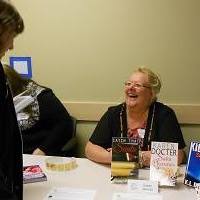
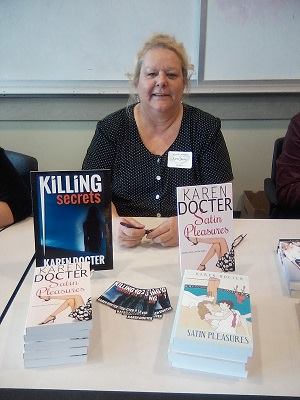

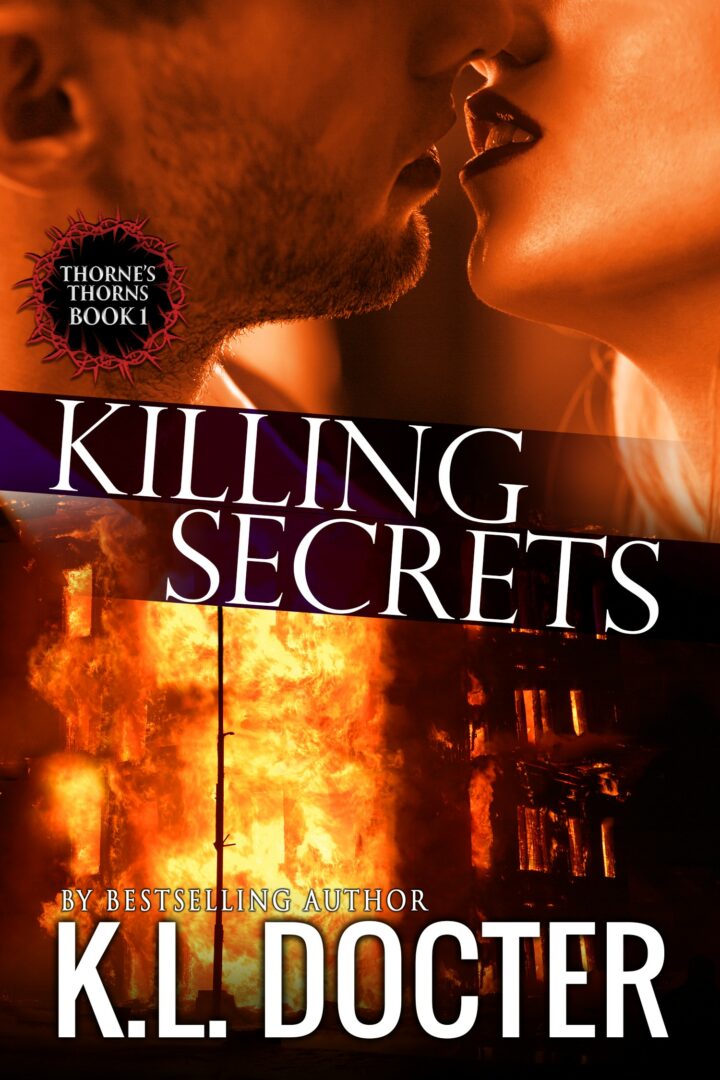
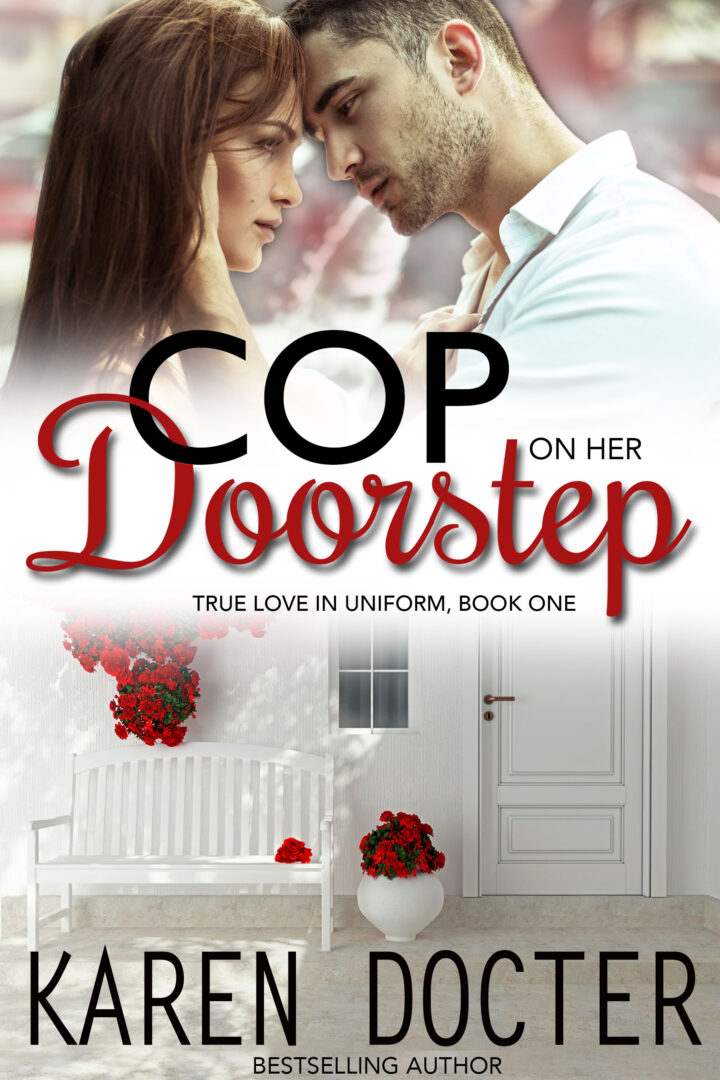
Image Credits
Karen Docter