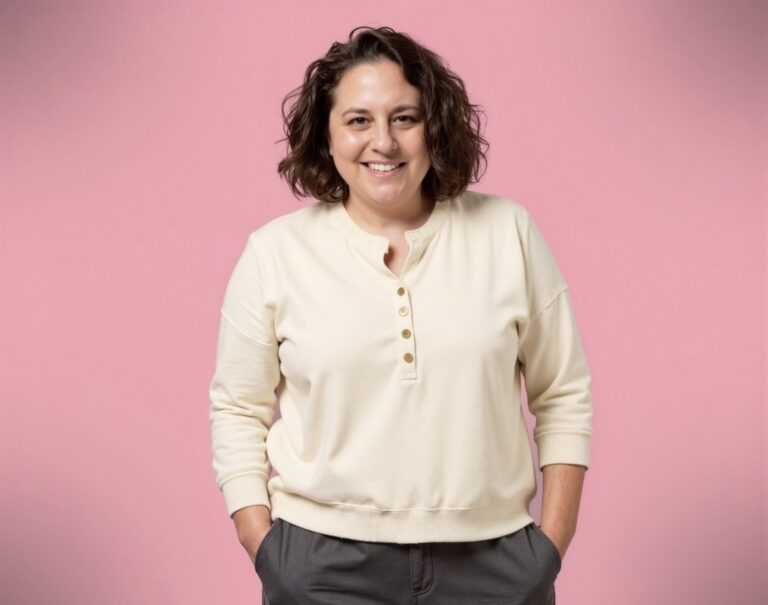
Alright – so today we’ve got the honor of introducing you to Kristin Vanderlip Taylor. We think you’ll enjoy our conversation, we’ve shared it below.
Hi Kristin, thanks for sharing your insights with our community today. Part of your success, no doubt, is due to your work ethic and so we’d love if you could open up about where you got your work ethic from?
I believe my work ethic is generational, as I was raised by parents and grandmothers who were loving, supportive, and dedicated to helping others. I saw my parents’ work ethic as inherited from their own folks. My grandparents lived through the Great Depression and were hardworking and economical out of necessity, fixing things that broke rather than replacing them and saving for things they really needed. Each of them modeled the value of hard work and care through love and tenacity. My mom was always actively engaged in learning for herself beyond her teaching career and working to help others. She encouraged me and my brother to try new things but never pushed us to continue pursuing things that weren’t of interest. My dad can build, make, or fix anything – beyond his work as a printer, he was always busy around the house and would help us with projects whenever we had things we needed guidance on. I’ve always loved working on home projects with my dad, as he’s taught me so much (though I definitely still need his help with things like electrical work!) They are the “helpers” that Mister Rogers spoke of – the kind of people who show up when you need assistance and stay until the work is done, which is something I try to follow in my own life.
Thanks, so before we move on maybe you can share a bit more about yourself?
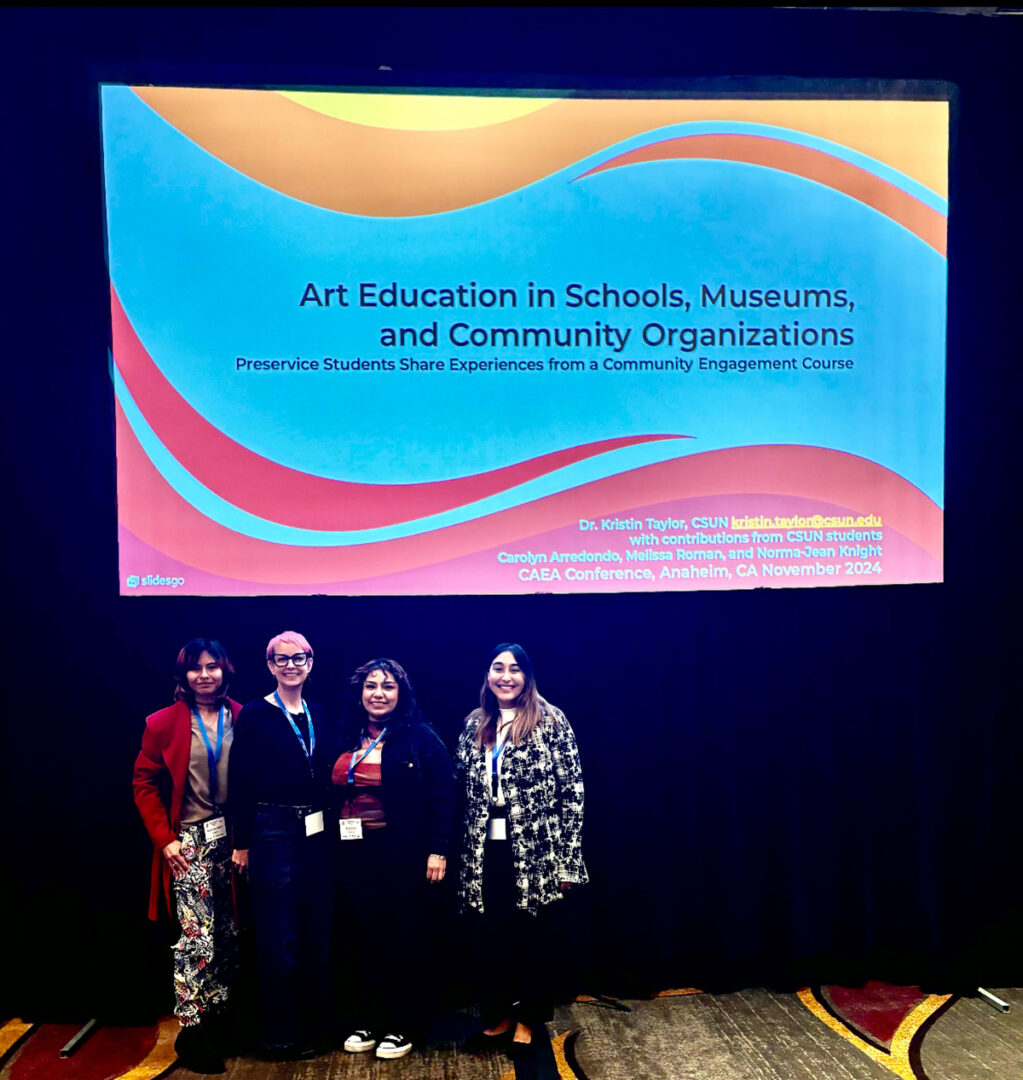
I am an Associate Professor of Art Education at California State University, Northridge. Before teaching full time at CSUN, I taught art in grades K-8 in many different schools in the Los Angeles USD. I actually never thought I would be a teacher – when I decided to change my undergraduate major from psychology to art, my mom (a lifelong educator herself) told me to get my teaching credential along with my degree in art so I would “have something to fall back on.” My response – “No! I never want to teach!” Unfortunately, I didn’t take her advice then. It wasn’t until spending several years as a graphic designer, art director, and production artist that I realized I was tired of working in isolation and really did want to teach art after all! Along the same lines, I never considered getting my doctorate – but I’m not one who likes to be settled in my work, so in 2015 I decided to go back to school to pursue my doctorate. Once completed, I made the shift from working with younger students to adults at the university, and I was fortunate to earn the position I’m in now at CSUN where I get to work with so many amazing future educators.
My focus in teaching art is really about using art as a tool for visual communication, no matter the age of my students. How can we use art (making/looking at/talking about art) to help us understand the world around us, to deeply explore and reflect on the things that matter to us? I know that not every student I work with will go on to pursue a career as a visual artist, but if I can empower them to help others in creating art, we can collectively expand our impact in visually communicating ideas to make our world better.
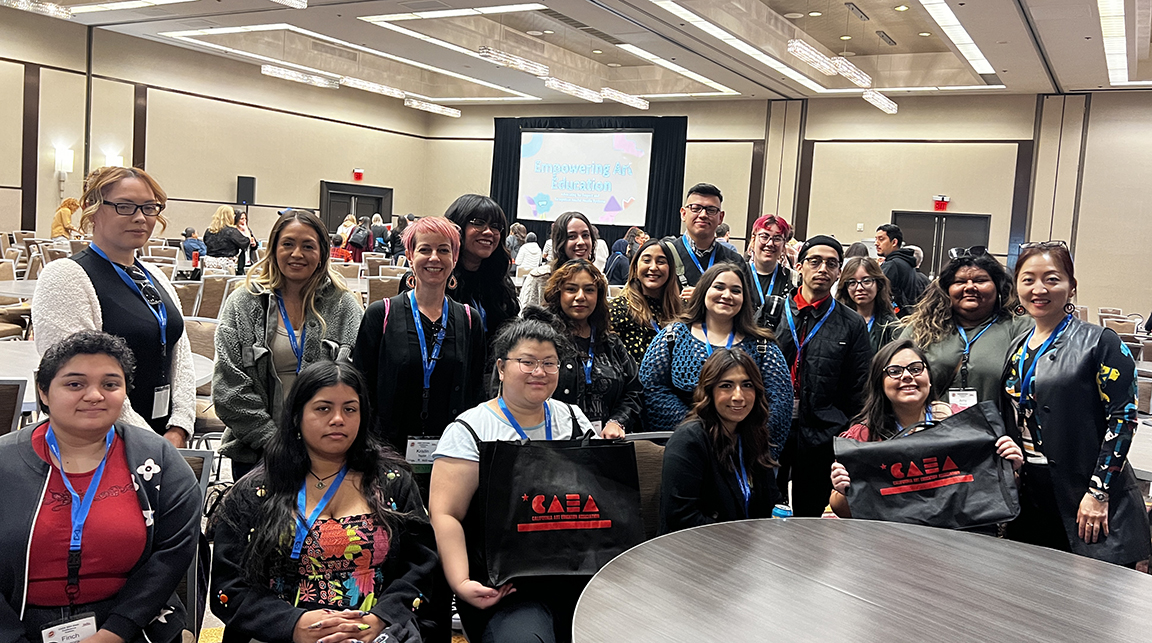
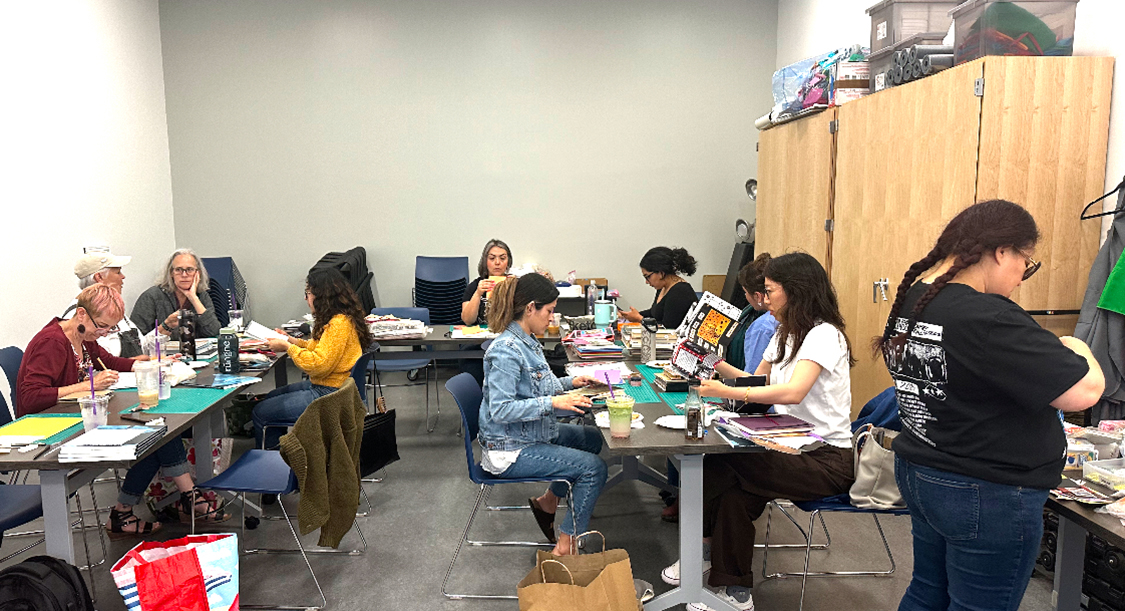
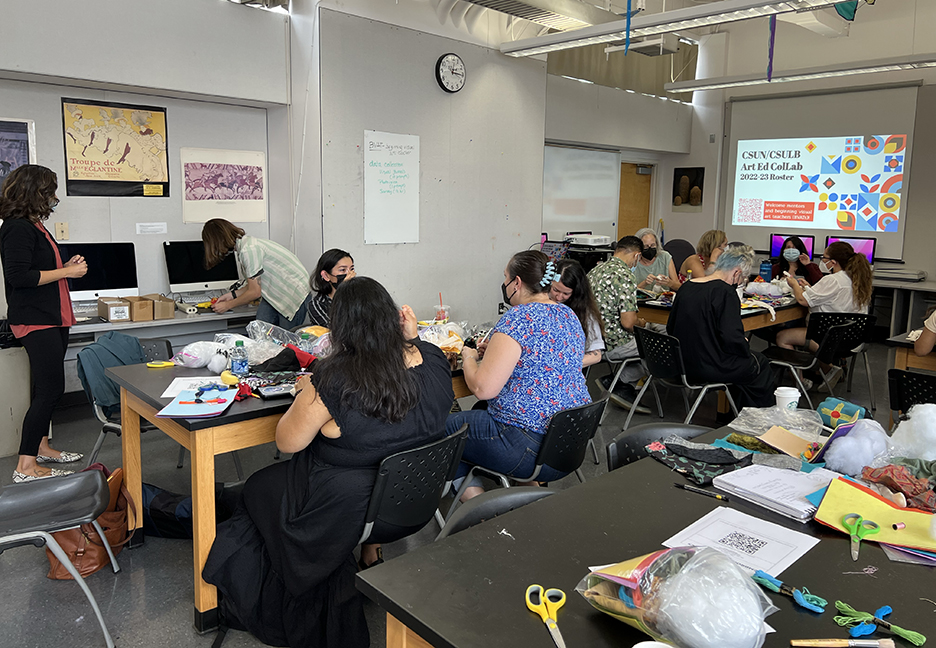
Mentorship is also critical to my practice, and new teachers (especially new art teachers) need content-specific mentorship more than ever to support them as whole educators. With teacher attrition growing – along with challenges in the field of education across the board – new teachers need to know they are not alone and that they have the resources they need to thrive, both in and outside of the classroom. In collaboration with Dr. Laurie Gatlin and Dr. Brian Trimble (both art educators from CSU Long Beach), I designed and co-facilitate the Art Education ColLab, a mentoring community of practice for beginning art teachers from our respective universities. Now in our fourth year, we are hoping to expand to other CSU campuses with strong art education programs to provide mentorship and resources to beginning visual art teachers throughout California.
There is so much advice out there about all the different skills and qualities folks need to develop in order to succeed in today’s highly competitive environment and often it can feel overwhelming. So, if we had to break it down to just the three that matter most, which three skills or qualities would you focus on?
My first piece of advice is to understand that your career path may not be linear – you might have an idea of where you want to end up, but your journey may take you in different directions first. That’s ok! To know immediately where you want to be 10, 15, or 20 years from the time you begin is sometimes a huge ask, and one that we don’t always know. The stops along the way make us more interesting human beings, giving us lots of different experiences.
Second, show up and say yes to things that excite you. You never know who you’ll meet and what opportunities you may encounter for growing your own practice, personally or professionally. However, it’s equally important to set boundaries so you don’t overburden yourself, especially with things that don’t align with your purpose. Early on in my career, an administrator told me this because she didn’t want to see me burn out. It took awhile, but eventually I learned to start saying no to the things that don’t feed my soul. Because I like to spend time collaborating with and mentoring others, I have to remember to give myself the same care and attention so I don’t run out of the energy I need to be of service to others.
Lastly, I live by (and frequently quote) one of art educator (and former nun) Corita Kent’s rules for students and teachers from when she taught at Immaculate Heart College: Rule #4 – Consider everything an experiment. Letting go of expectations and trusting that experimentation and play will bring about something new and interesting can be very challenging, especially for someone like myself who likes structure and known outcomes. This is something I’ve had to push myself to practice, and I’m so grateful for this guidance in helping me learn to let go and appreciate the unknown, especially in artmaking. Sometimes the outcomes are even better than we could have imagined in the first place!
Is there a particular challenge you are currently facing?
Right now, my biggest challenge work-wise is finding the financial support needed to grow the Art Education ColLab. It is purely a labor of love for everyone involved – the mentors give of their time freely for training and to support our new art teachers, while our new art teachers give up one Saturday morning every month to engage in professional learning together, and our facilitators (including myself) use our university research time to plan, organize, collect/review data, and lead this community. There are so many grants and stipends in the science and health fields that often go to support new teachers, but we’ve found that it’s not as easy for the arts. Our goal is to expand to other CSU campuses throughout the state (and beyond, if possible, at some point), but we need to be able to compensate our participants, as time for teachers is incredibly limited, and they should be recognized for the work they are doing to improve their professional practice. As public educators, we are used to doing this kind of work because it feeds our souls, but at some point, we need to recognize the value that each person brings to our community and support them in return.
Contact Info:
- Website: https://www.kristinvtaylor.com
- Instagram: kristinvtaylor
- Linkedin: https://www.linkedin.com/in/kristinvtaylor
so if you or someone you know deserves recognition please let us know here.