We caught up with the brilliant and insightful Gwenyth Hayes a few weeks ago and have shared our conversation below.
Hi Gwenyth, appreciate you sitting with us today to share your wisdom with our readers. So, let’s start with resilience – where do you get your resilience from?
My resilience has been forged through experience—through heartbreak, adversity, and long seasons of emotional instability that left me feeling completely lost and untethered. People who know me know that part of my story. But that’s not where I live anymore. I’ve grown, I’ve healed, and I’ve made peace with the past—not by forgetting it, but by turning it into art.
Each song I write begins differently. Sometimes it starts with the bassline—that steady, grounding pulse I feel before anything else. Other times, a melody arrives first, or even emerges in a dream. However the music finds me, the lyrics follow—and they’re always rooted in emotional truth. Sometimes that truth is my own; other times, it’s what I’ve witnessed in others.
As both an artist and a therapist—now building my private practice, Soul Sessions—I move between two professions that ask a great deal of emotional presence. In both fields, I hold space for people’s most vulnerable truths. That work is meaningful, but it’s also demanding. I’ve had to learn to honor my own limits, to place boundaries around my time and energy, and to accept that some creative projects may unfold more slowly than others. That, too, is part of my resilience: knowing when to pause, when to protect my process, and when to give myself grace.
The themes in my songs—grief, abandonment, longing, boundaries, healing—are deeply personal, but also widely felt. I write to make sense of what I’ve lived, and to reflect something true for those still navigating their own journeys.
“Leaving Me Lonely” explores the quiet ache of emotional abandonment—the moment someone starts to slip away without explanation.
“You’ve been acting so cold baby / Leaving all my message unread / I am starting to think that maybe / You are trying to mess with my head.”
It’s about trying to hold on, but slowly learning that someone else’s distance does not diminish your worth.
“Led Astray” is more intense. It explores the confusion and cognitive dissonance that come with loving someone who becomes emotionally unsafe. Some of the lyrics are written from the voice of a friend—a woman on the phone, urging the singer to see what she already knows deep down:
“(He’s dangerous) / Girl and he don’t play / (Not one to trust) / Oh no he won’t change…”
That outside voice matters. It’s a reminder that part of our resilience often comes from those who witness us, affirm us, and help us name what we cannot yet say ourselves.
“Find Somebody Else” takes that realization further. It’s a boundary song—unapologetic and unfiltered. One verse, in particular, says it plainly:
“I won’t be your mama / And I won’t be your wife / I ain’t trying to sacrifice my whole life.”
It’s a declaration of emotional sovereignty. The song is about no longer carrying someone else’s dysfunction, no longer enabling it, and no longer mistaking sacrifice for love.
“Your Son’s an A**hole” brings humor, truth, and fire. It riffs on blues tradition while flipping the gender script—instead of casting the woman as the villain, it puts accountability where it belongs:
“Gave 7 women 7 children / Won’t pay child support / Brags about it to his friend’s / Then he lies when he’s in court.”
It’s biting, bluesy, and bold—resilience delivered with wit and a sharp tongue. It’s about reclaiming space in a genre that hasn’t always allowed women to tell their side with honesty and humor.
“It’s Enough” carries its own quiet strength. Though rhythmically upbeat, the emotional tone is reflective. Only the singer knows the relationship is over—she’s already let go. The song captures one final night of shared presence, not to rekindle anything, but to enjoy what’s left before walking away. That kind of closure, offered in silence rather than confrontation, is resilience too. “Still remember how you did me dirty / But come and pick me up at seven thirty…” “It won’t make me happy / But it’s enough / Tonight.”
In “Always Come Back to You,” I write from the perspective of someone who has always made space for a love that leaves and returns. But now, that pattern is beginning to break:
“I’m so in love with you but you act like it’s just a game” “Someday you will come for me and I / Won’t even know your name.”
It’s a song about finally choosing self-preservation over emotional inertia.
And “Good Good” brings playful discernment. It explores attraction, temptation, and standards.
“Tell me why I should / Give you all my good good, baby.”
It’s flirtatious but grounded—about knowing your worth and asking for what you deserve.
Each of these songs is part of my healing. They’re how I’ve turned silence into sound, and grief into groove. Writing and performing help me process what I’ve lived through—and offer something real to others. I’ve stopped running from what shaped me. I’ve chosen to turn it into music.
This project is still unfolding. While “Leaving Me Lonely” and “Led Astray” are available now, the full album—including “Find Somebody Else,” “Your Son’s an A**hole,” “It’s Enough,” and others—is still in production. Additional funding is needed to complete these recordings with the care and quality they deserve.
My resilience lives in every note I play, every lyric I write, and every space I hold—on stage, in session, and everywhere in between. I’ve learned to turn harm into harmony, heartbreak into healing, and grief into groove—and the most meaningful part of that journey is sharing it with others.

Appreciate the insights and wisdom. Before we dig deeper and ask you about the skills that matter and more, maybe you can tell our readers about yourself?
I’m Gwenyth Hayes, a bassist, vocalist, and song stylist whose work lives at the intersection of blues, jazz, and progressive neo-soul. My sound is a fusion of tradition and modernity—anchored by sultry vocals, foundational basslines, and a refined, improvisational spirit. I call it progressive soul: music that values subtlety, sophistication, and emotional depth.
My latest singles, Leaving Me Lonely and Led Astray, reflect this ongoing fusion—blending the emotional weight of blues, the spontaneity of jazz, and the smooth textures of neo-soul. Over the years, I’ve performed at premier venues and festivals across Michigan, Chicago, and beyond.
In addition to my music, I’m also a licensed therapist with a master’s degree in clinical social work. I’m currently in the process of launching my own private practice, where I’ll continue supporting others in their healing journeys. Whether through music or therapy, my work is grounded in emotional honesty, connection, and the belief that vulnerability can be transformative.
At its core, my artistry is a fusion of Black musical legacies and personal expression—inviting listeners into a soundscape that is both timeless and uniquely my own.

Looking back, what do you think were the three qualities, skills, or areas of knowledge that were most impactful in your journey? What advice do you have for folks who are early in their journey in terms of how they can best develop or improve on these?
Looking back, three qualities that have been most impactful in my journey are courage, self-compassion, and community. Courage doesn’t always look bold—it often feels like quiet persistence in the face of doubt. Some of the most meaningful decisions I’ve made, musically and professionally, came from a place of fear—but I did them anyway. That willingness to move through discomfort has opened doors I never imagined. Just as important has been the ability to offer myself compassion instead of harsh comparison. There’s always someone who seems more accomplished or further along, but measuring your path against someone else’s highlight reel only robs you of the joy in your own growth.
Finally, nothing has sustained me more than surrounding myself with safe, supportive people—those who see and value me beyond what I produce. Whether in music, therapy, or any creative or service-based field, your environment matters. Find those who nurture your voice, not silence it. My advice to anyone just starting out: be brave, not perfect. Trust your instincts, protect your energy, and know that it’s okay to grow at your own pace.

What is the number one obstacle or challenge you are currently facing and what are you doing to try to resolve or overcome this challenge?
One of the biggest challenges I’m currently facing is balancing the simultaneous launch of two deeply personal projects: finishing my album and starting my own therapy practice. Both require significant time, energy, emotional presence, and financial investment, and navigating them at the same time has pushed me to grow in ways I didn’t expect. I’ve had to become more intentional about pacing myself, setting clear boundaries, and learning to communicate my needs—whether that means asking for support, saying no, or simply acknowledging when I need rest.
Perhaps the most important lesson has been giving myself grace. It’s easy to fall into the trap of feeling like you should be doing more or moving faster, especially when both music and mental health work are driven by passion. But I’m learning that sustainability matters more than speed, and honoring my capacity is essential not just for my well-being, but for the integrity of the work I’m doing in both spaces.
Contact Info:
- Website: https://gwenythhayes.com
- Instagram: https://instagram.com/gwenyth_hayes
- Facebook: https://www.facebook.com/gwenythhayesmusic
- Youtube: support.google.com/youtube?p=sub_to_oac
- Other: Bandcamp: https://gwenythhayes.bandcamp.com/track/led-astray-single
Spotify: https://open.spotify.com/artist/7jrHuXGSbXn6rgrbz4x7MM?si=oeYWFCq2TqeiwXyBD8dMSA
Apple Music: https://music.apple.com/us/artist/gwenyth-hayes/1519360906

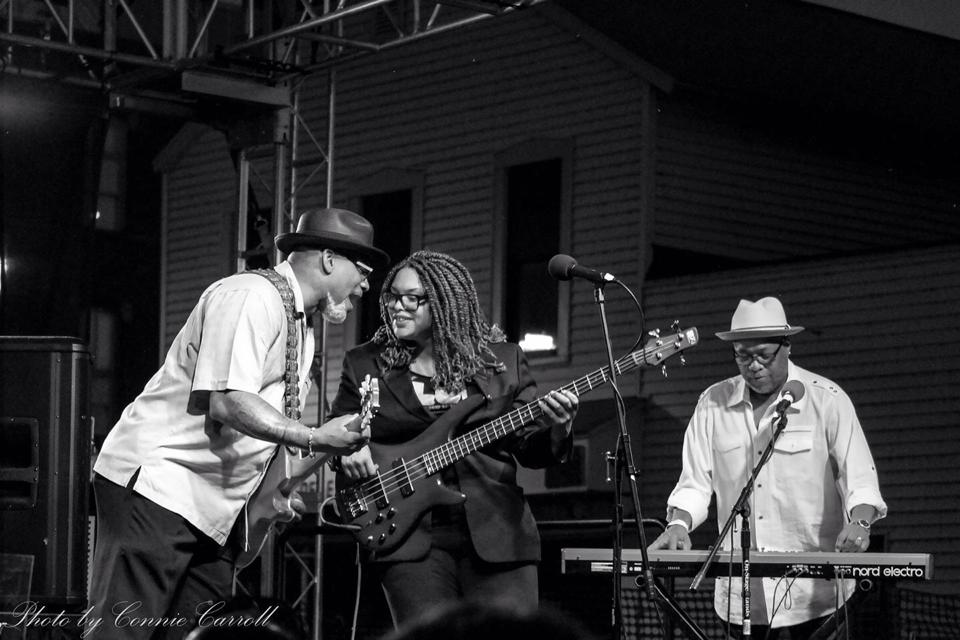

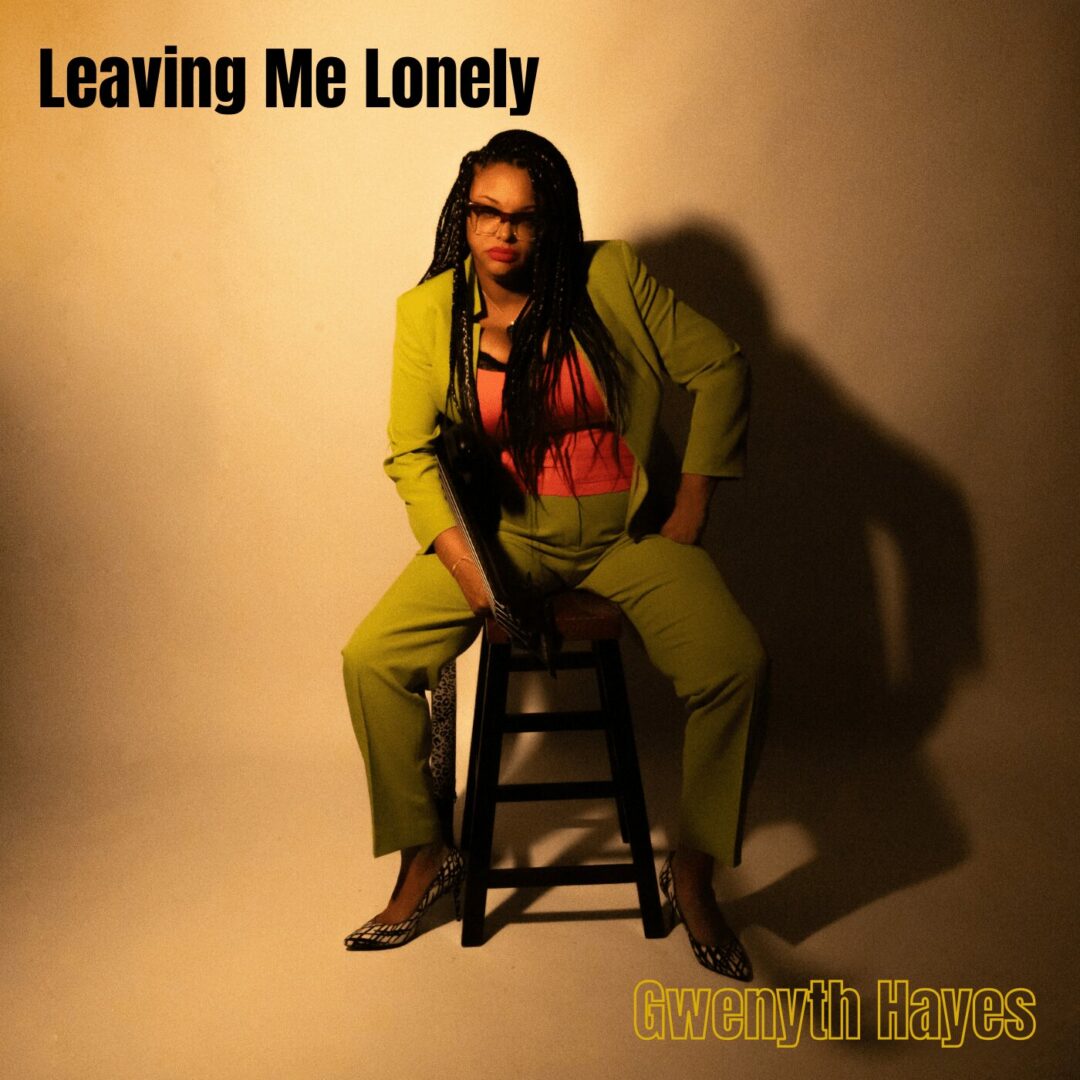
Image Credits
Dori Sumter Photographer – More images available here: https://dorisumter.smugmug.com/Musicians-Singers-Artists/Gwenyth-Hayes-2023
so if you or someone you know deserves recognition please let us know here.