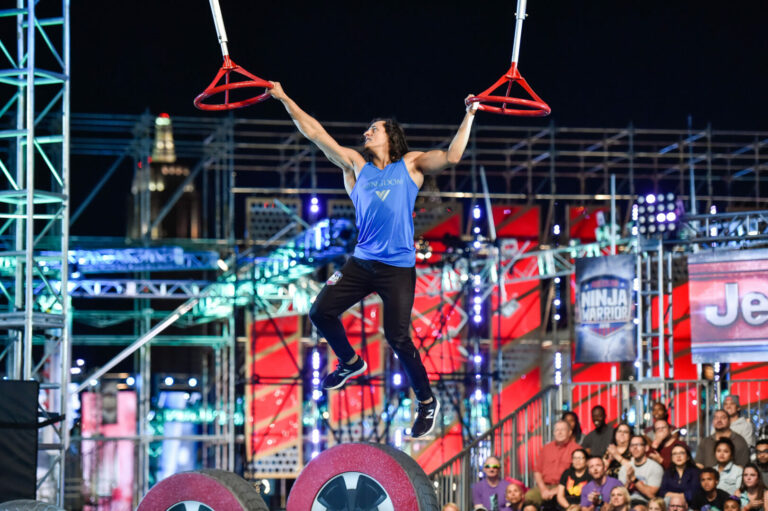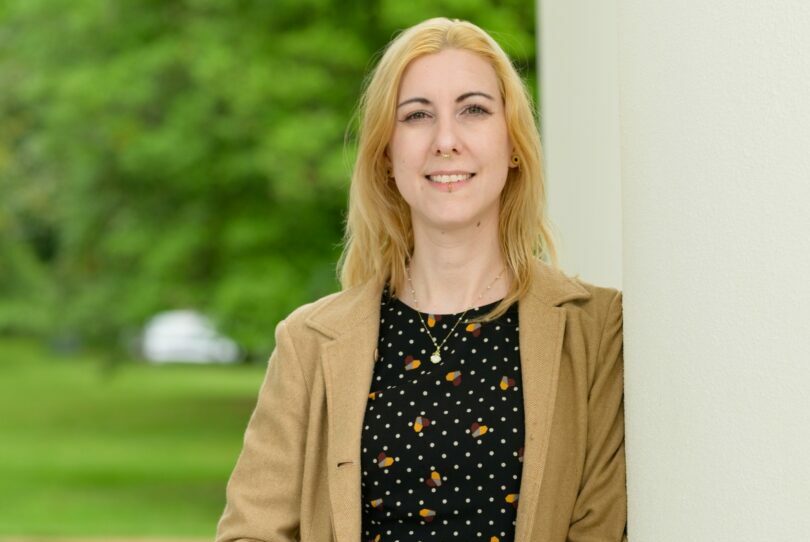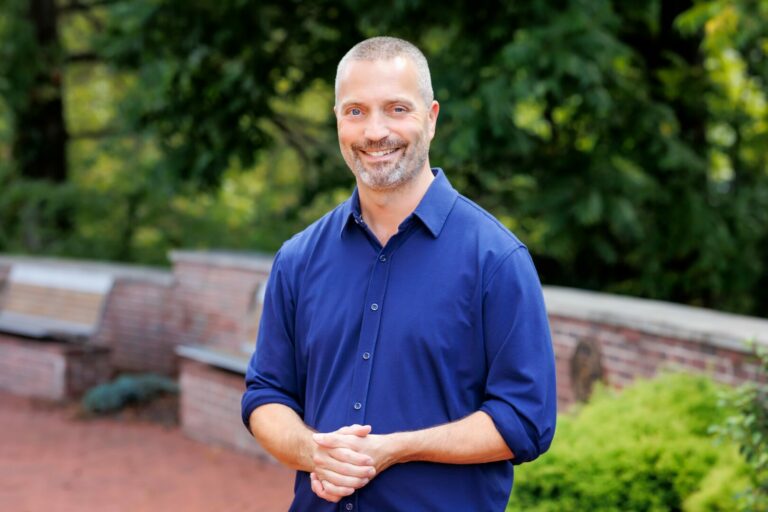
Nancy Dobbs Owen shared their story and experiences with us recently and you can find our conversation below.
Nancy Dobbs, it’s always a pleasure to learn from you and your journey. Let’s start with a bit of a warmup: What are you being called to do now, that you may have been afraid of before?
I think, in an era where marginalized communities are actively threatened, it is easy for many of us to fade into the background. Identity can be fraught, and embodying a marginalized identity is increasingly more dangerous. I have several marginalized identities, but have only recently been open about one of them. While I have identified as queer for most of my adult life, I have just, over the last few years, started to cautiously articulate that identity out loud, perhaps in protest, perhaps just because it is time. Growing up in dance, when I did, offered particular paths for queer folks that I did not exactly fit into. I think that those paths are still relevant, particularly in ballet, and that progress for those of us in female-presenting bodies has not been as quick as for those in male-presenting bodies, even when those male-presenting bodies are non-binary. It’s complicated by many factors, including age. As my work and research in gender equity in dance, focused on women, has developed, I have had to acknowledge my own privilege and also those places where perhaps I have held or been held back. I find myself called to be even more transparent and activist moving forward.
Can you briefly introduce yourself and share what makes you or your brand unique?
I am an artist activist. Those words, both artist and activist, can be fraught. Many of us shy away from the labels, but I think it is essential that we own them. I am a dancer, writer, educator, actor, choreographer, director, and researcher. I take all of these elements of my work and actively employ them in the hope of making the world a better place. I try to funnel my energy into work that betters people’s lives. This can take so many different forms, from an article on a dancer who became a writer and now inspires young dancers through stories, to a research paper on inequity in dance leadership, to taking on difficult material as an actor or director to open up conversation regarding sensitive topics. I step into a classroom and hope to lead by example, giving space for experimentation and empowering voices to speak up in the face of injustice. It sounds lofty and honestly obnoxious on paper, but in reality can be as gentle as saying, “Try again, you’ve got this! I hear and see you.”
Appreciate your sharing that. Let’s talk about your life, growing up and some of topics and learnings around that. What did you believe about yourself as a child that you no longer believe?
I am not sure if this is something that I believed about MYSELF, but it is something that I believed. I was obsessed with Anne Frank, with Elie Wiesel, and with Viktor Frankl as a child. The Holocaust was a constant in my reading, my imagination, and in my family lore. I believed what these writers and philosophers wrote: that good could emerge from evil and that meaning could come from even the darkest of times. I no longer believe that. I fear that while humans may lean towards good as individuals, as a species, we do not. This is a dark view to be sure, but what I also no longer believe, that perhaps I did as a child, is that our individual actions are small. I believe that if we can positively affect one person, then what we do has meaning; it matters. As a child, I thought that for something to count, for an action to matter, it had to count for everyone.
If you could say one kind thing to your younger self, what would it be?
There is the phrase that we often tell young people who are struggling; Hang in there! It gets better!
I don’t actually believe that. I do not think that life gets better or easier as a rule. What I do believe is that we get stronger. We take each setback, heartbreak, injury, and relationship (good or bad) and use those skills to become more facile, more resilient, and perhaps, hopefully, more understanding. I have had truly dark periods of my life. I have struggled with mental health, with physical health, with injuries, and with abusive relationships. I now know who to talk to, what the warning signs are, and when to walk away. I sometimes still fall into the holes, but have ropes; coping mechanisms, people, and routines, that can pull me out.
So, my advice is “Hang in there. It probably won’t get easier, but you will get stronger, and I will be there for you.”
Sure, so let’s go deeper into your values and how you think. Is the public version of you the real you?
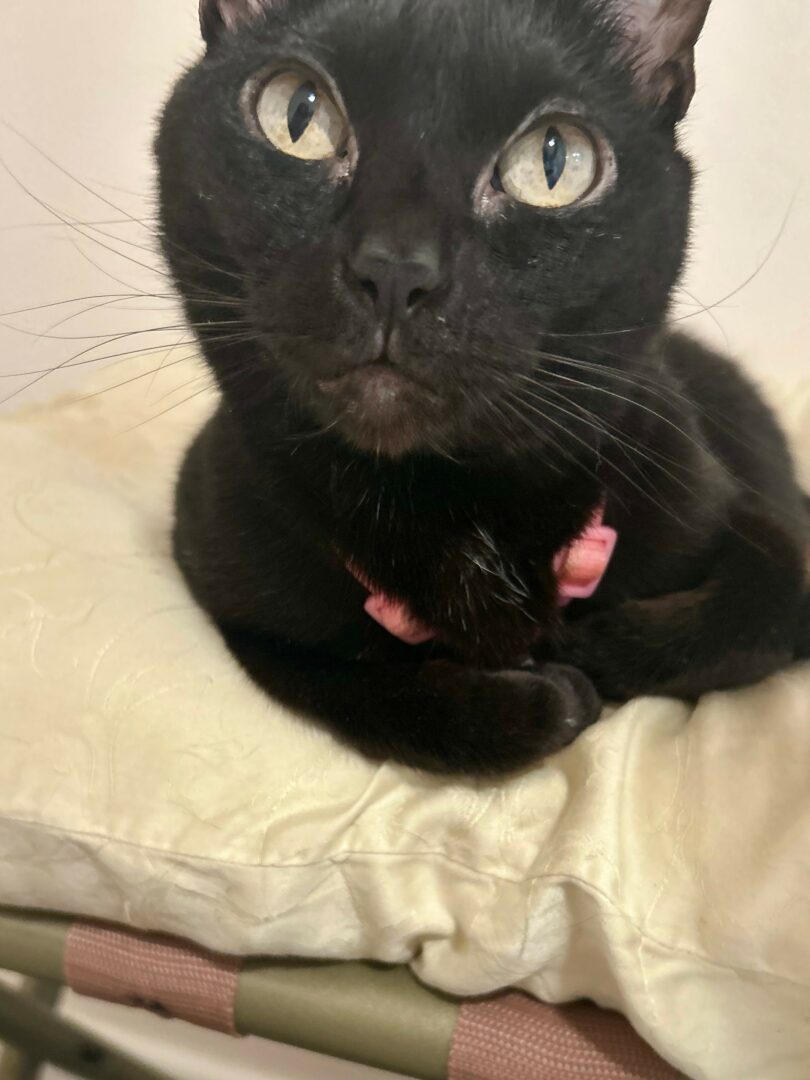
The version of me that shows up in public is highly trained. She is the real me, in terms of belief systems, actions, and activism. I believe that she shows up in the world with integrity. I have practiced my entire life so that when I am in public, I appear articulate, friendly, confident, and knowledgeable. And I am. I am also painfully shy. It takes an enormous effort for me to arrive at that public persona, and I am exhausted when I return home. I have to consciously put that persona on, and, in all honesty, I am grateful to take her off. I need time to recover, to be alone, and to converse only with my feline familiar, Sprite.
Before we go, we’d love to hear your thoughts on some longer-run, legacy type questions. What is the story you hope people tell about you when you’re gone?
I honestly do not care what people say about me when I am gone. What I do care about is what they feel now. Do they feel cared for? Do they feel seen? Do they feel that I am someone who will fight for their rights and defend them? Do they feel that I will give them a thousand percent of my effort in any given job or project? Do they feel respected and honored? Do they know that I am working from a place of kindness and integrity? If those attributes are present in my living interactions and relationships, then I don’t care what is said when I am gone.
Contact Info:
- Website: http://www.nancydobbsowen.com
- Instagram: @nancydobbsowen
- Linkedin: @nancydobbsowen
- Facebook: @nancydobbsowen
- Other: Same handle on Bluesky and Threads
Image Credits
1. Sprite, photo by me
2. Joanna DeGeneres
3. Heidi Marie
4. Leslie Stevens
5. Sandra Parks
so if you or someone you know deserves recognition please let us know here.