We caught up with the brilliant and insightful Munus Shih a few weeks ago and have shared our conversation below.
Hi Munus, you’ve got such an interesting story, but before we jump into that, let’s first talk about a topic near and dear to us – generosity. We think success, happiness and wellbeing depends on authentic generosity and empathy and so we’d love to hear about how you become such a generous person – where do you think your generosity comes from?
I think my generosity really comes from my mom. She’s a science teacher, and she always told me, “One should help others when we have the ability to.” Growing up, I watched her live by that. She taught in underprivileged schools, and sometimes she would treat her students almost like her own kids. I remember moments when a student couldn’t afford to join a field trip. She would quietly pay for their expenses herself, but pretend it was sponsored by the school. She didn’t have to do that, but she did it anyway, and seeing that made a huge impression on me. It shaped the kind of educator I wanted to become. The one that really supports student’s learning and redistributes resources.
I also think part of it comes from my personality. Growing up queer in Asia could feel really isolating, and I think that’s what pushed me to create a community where it didn’t already exist. If something wasn’t there, I’d make a plan, ask someone to join me, and just start building it. That instinct—born out of a need for belonging—stayed with me and eventually grew into more of a philosophy about how I move through the world.
Later, when I became involved in the open-source community, that sense of generosity deepened. Open source challenged the whole idea of authority and hierarchy. No one is just the “order-giver”; everyone is here to share and circulate their piece of knowledge. As I immersed myself more in that culture, especially in connection with ideas of critical pedagogy, it resonated with me deeply. It showed me that learning and building aren’t about competition, but about lifting one another up. And in many ways, that brought me back to the lessons I learned from my mom, that teaching isn’t just about delivering knowledge, it’s about care, and about making sure people have what they need in order to grow.

Thanks, so before we move on maybe you can share a bit more about yourself?
I’m a creative technologist, artist, and educator. I recently started teaching full-time at Pratt Institute in Brooklyn in the Graduate Communications Design program. I often joke that my practice sits right at the intersection of code because I personally use code to make art and design, teaching people how to use code, and organizing events around code. For me, there’s always been a strong connection between coding, teaching, and community building. So code isn’t just a tool for me, it’s also a method of inquiry, and the philosophies around it really shape the kind of educator and designer I am, and I try to bring that same spirit into the classroom.
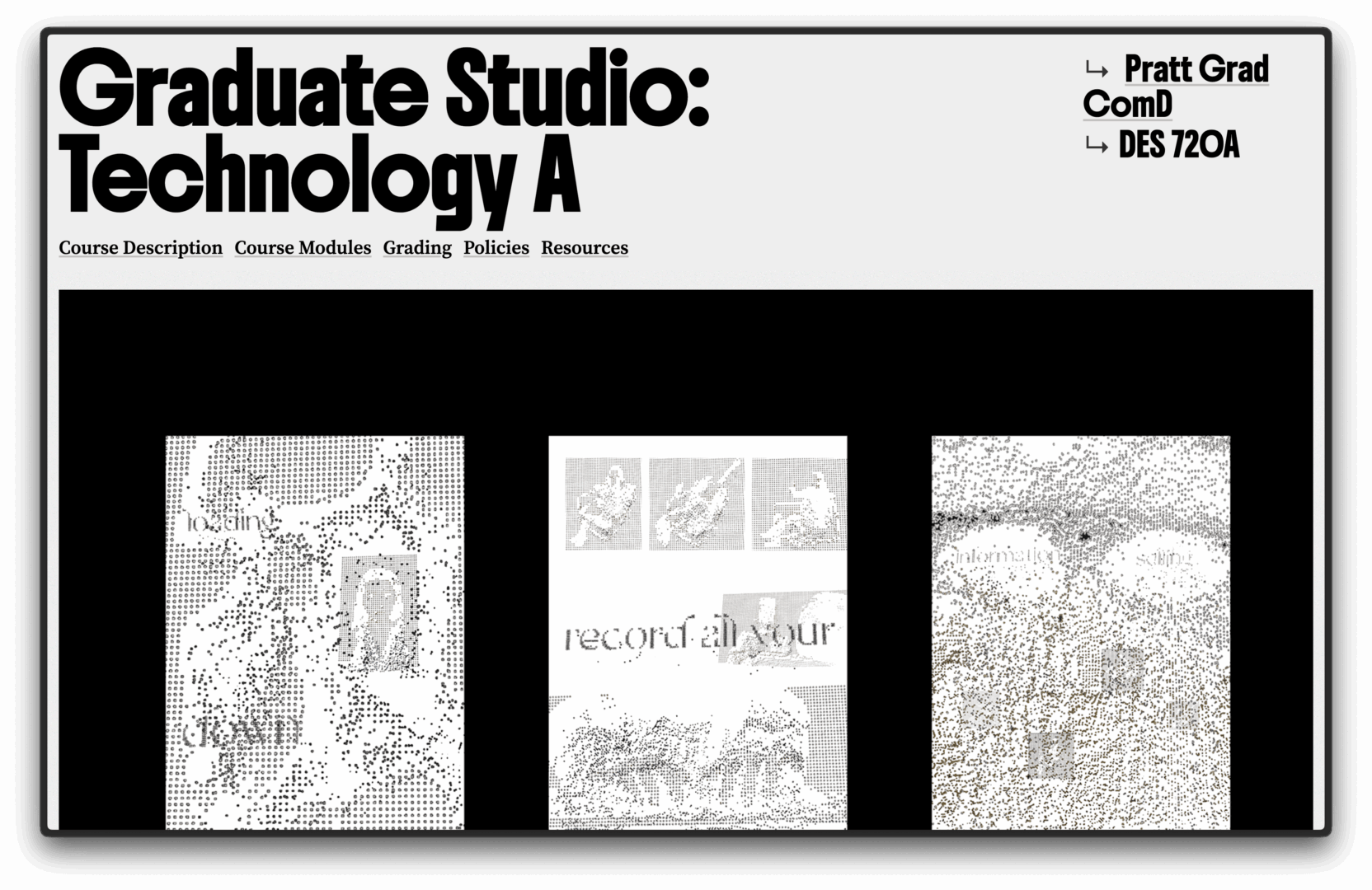
In my classes, I’ve been experimenting with different ways of co-creation and mentorship. For example, I’ve built class sites that function like open platforms where students need to post reflections and respond to one another each week. Over time, the site grows into a collective notebook, a record of what we are learning together. That feels important to me because it reflects my belief that knowledge should circulate freely rather than stay confined to one voice.
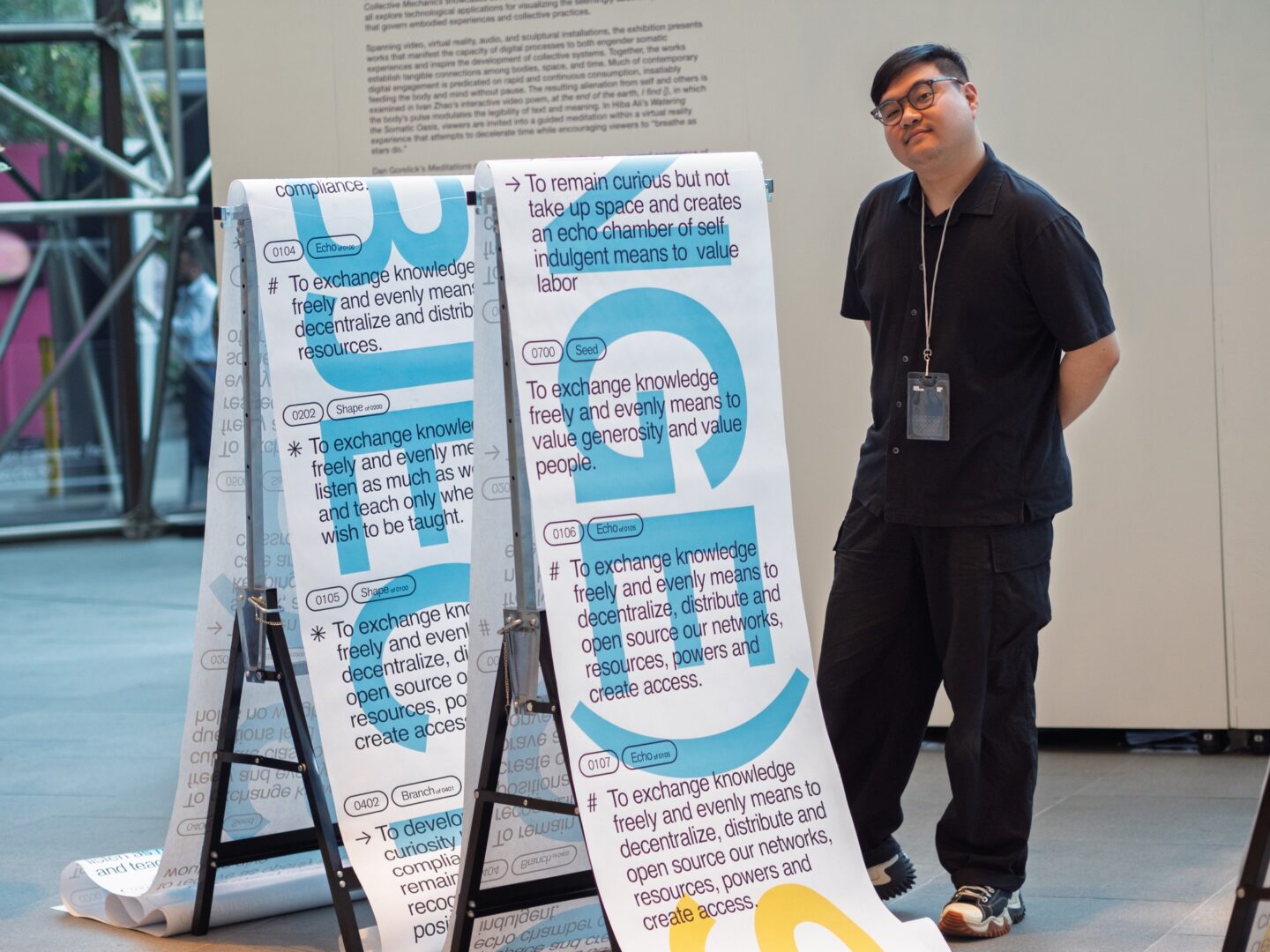
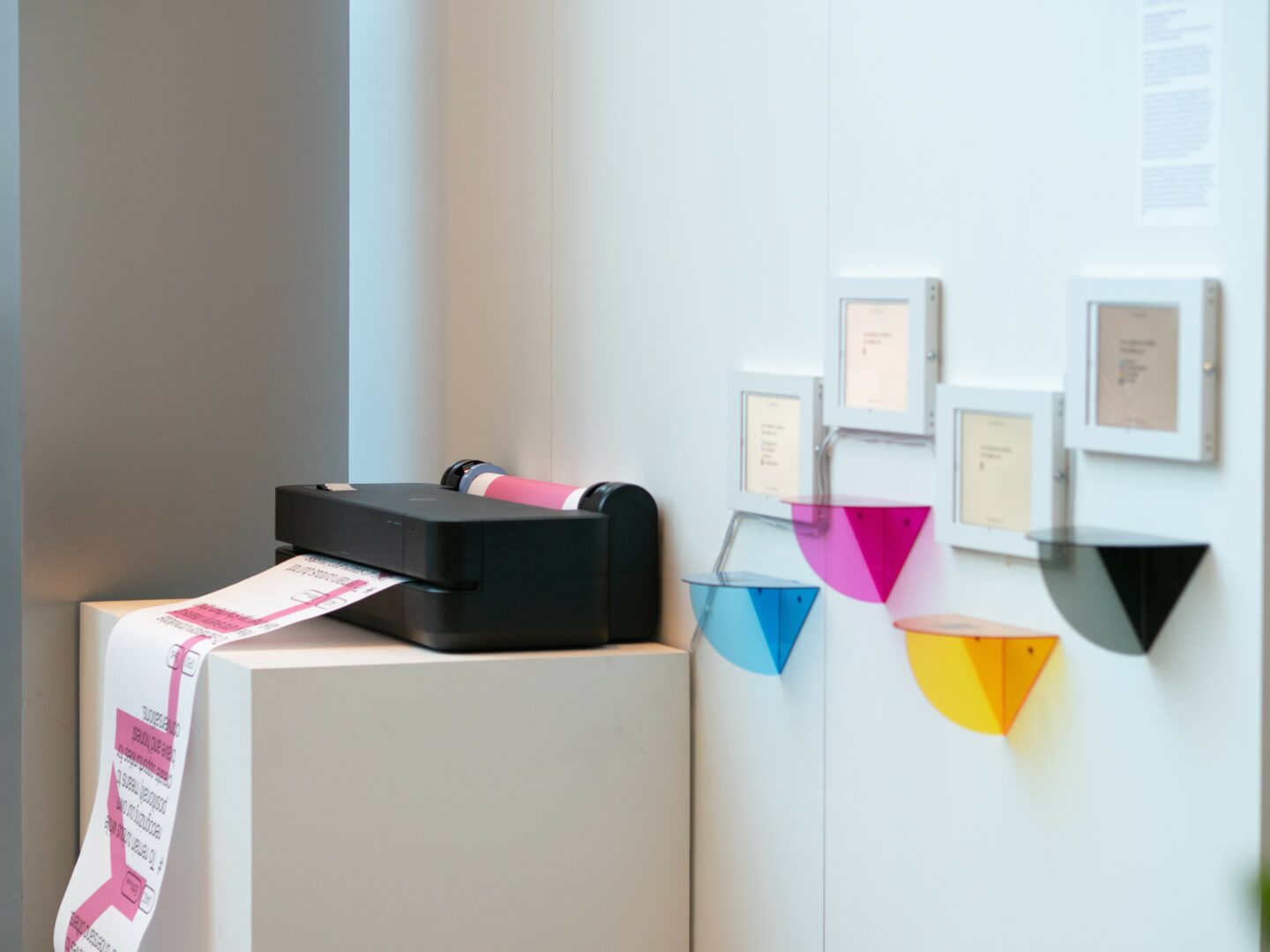
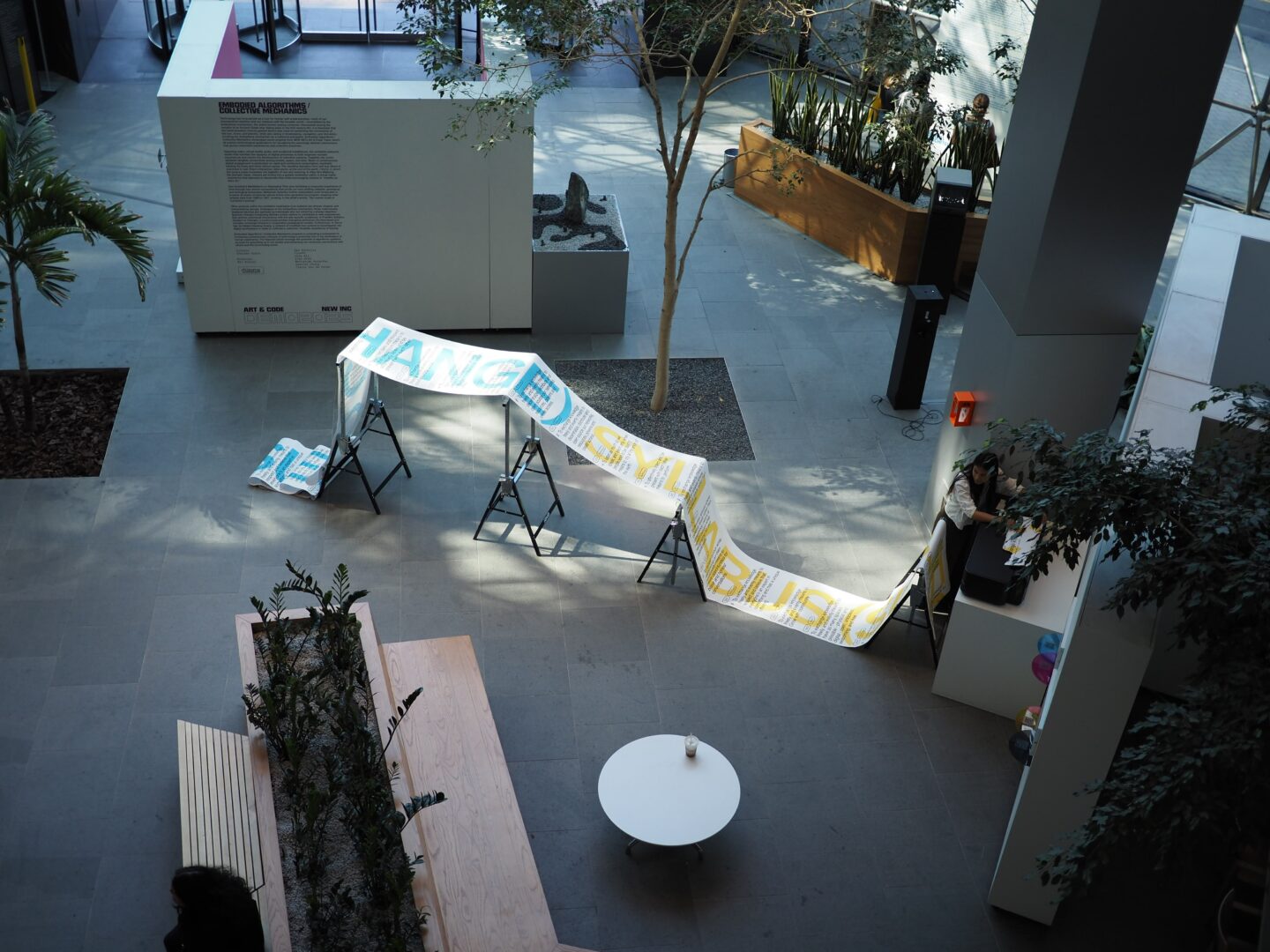
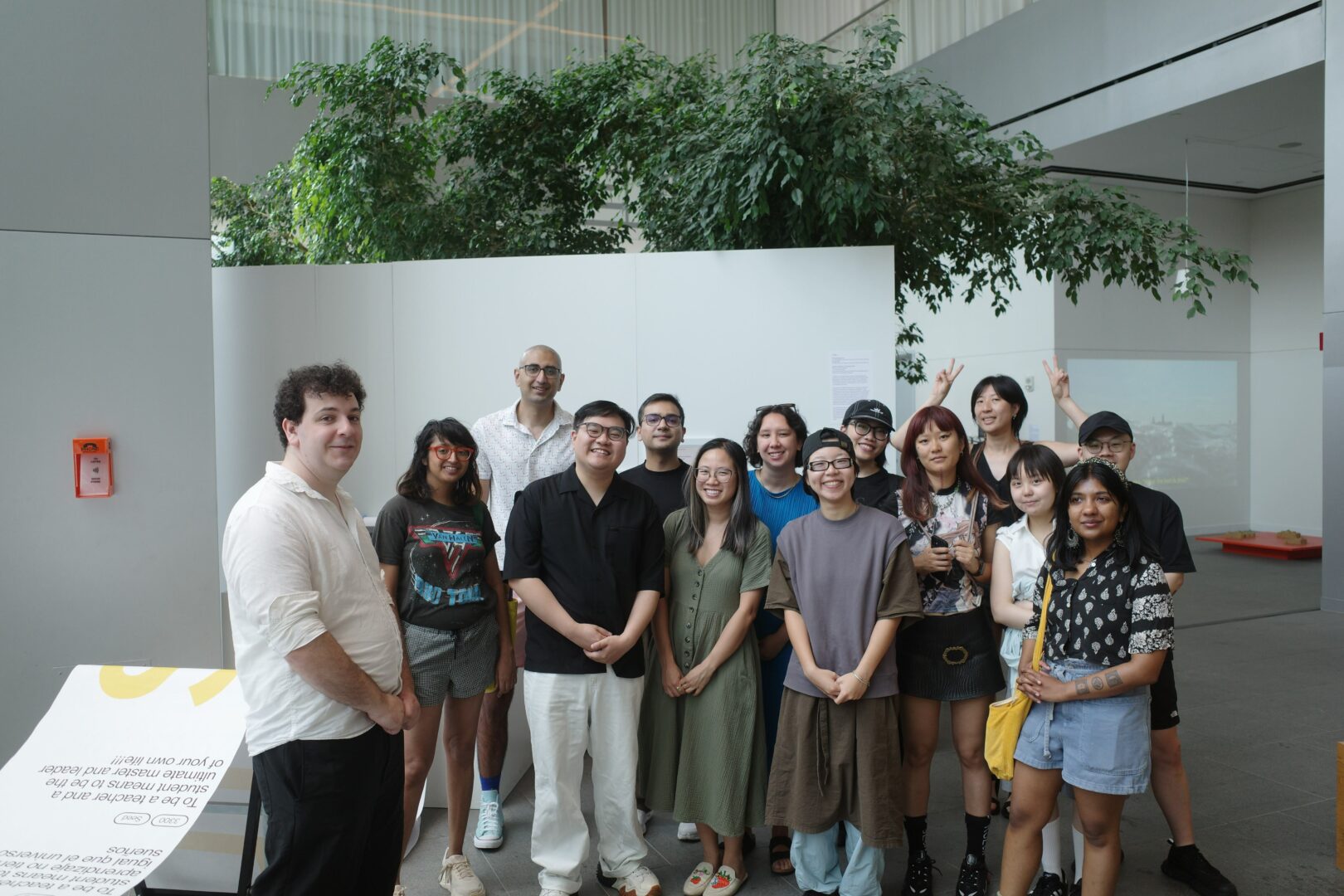
The same pedagogical ideas I bring into the classroom can also translate into installations and exhibitions. One example is Syllabus (Subject to Change), an interactive work where participants are invited to imagine the kinds of learning communities they want to build. Their responses are printed onto a continuous roll of paper, turning the syllabus into a living document that is collective, shifting, and never finished. I co-created the project together with designer and educator Nikki Makagiansar, and we invited our friends, production designer Franco Chen and poet Em DeVincentis, whose contributions made the piece much richer and more expansive.
What excites me about projects like this is how they extend the same values of co-creation, open exchange, and shared authorship into public space. Whether it takes the form of an installation or a class platform, I am always exploring how art and design can create spaces where people connect, learn from one another, and imagine new forms of community. Code has been a way to amplify that, because it makes it possible to build systems that are open, adaptable, and collaborative in ways that mirror those same values.
If you had to pick three qualities that are most important to develop, which three would you say matter most?
Looking back, three lessons have really shaped my journey, and they all connect to how I think about co-creation, open source, and teaching.
The first is learning to give up the idea of the single author. In open source, nothing grows if you try to hold onto it yourself. The work only becomes meaningful when you make it public, open it up for contribution, and let other people shape it with you. That shift, from making something finished to making something that others can build on, has been important for me. A lot of my projects function like prompts, where I put out an idea not as a final answer but as an invitation for others to respond to, remix, or expand. That is what co-creation looks like to me.
The second lesson is that if there is not a collective for you, then you can start one. Growing up, I did not always have spaces where I felt I belonged, so I learned to create them. Over time that turned into a practice: organizing workshops, starting collectives, and building platforms with friends and collaborators. Even if it begins small, it can grow into something much larger. For me, that has always been tied to the open-source ethos too. If the resource or community does not exist, you make it, and then you invite others in to shape it alongside you.
And the third is that teaching is the best way to learn. I really believe knowledge should not be gatekept. Every time I have shared what I know, whether in the classroom, through an open-source library, or in a workshop, I have ended up learning even more myself. Teaching forces you to clarify your own understanding, and when you make space for students or collaborators to respond, they bring perspectives that change how you see things. That is what open-source pedagogy means to me. Teaching is not one-way instruction, but co-learning and collective growth.
These three lessons, letting go of single authorship, creating the collectives you need, and seeing teaching as learning, are what tie my practice together. Whether I am coding, creating art, or teaching, I am always thinking about how to create spaces where knowledge and creativity can circulate freely, where people feel invited to contribute, and where what we build together is greater than what any of us could have done alone.
How can folks who want to work with you connect?
I am always looking to connect with more creative coders and people who share an interest in teaching, co-creating, and organizing around technology and art. Recently, I am especially interested in meeting folks from the Global South and from South East Asia, since I think there is so much happening in those contexts that often gets overlooked in more dominant narratives of creative technology.
What excites me most is collaborating with people who are not only making with code, but also thinking about how to build communities around it, how to teach it in more accessible ways, and how to reimagine what collective practice can look like. Those are the kinds of conversations that push me to grow and that often turn into projects I could not have made alone.
If any of this resonates, I would love to connect by email ([email protected]), and I am always open to talking and seeing where things might lead.
Contact Info:
- Website: https://munusshih.com
- Instagram: https://www.instagram.com/munusshih
- Linkedin: https://www.linkedin.com/in/munusshih
so if you or someone you know deserves recognition please let us know here.