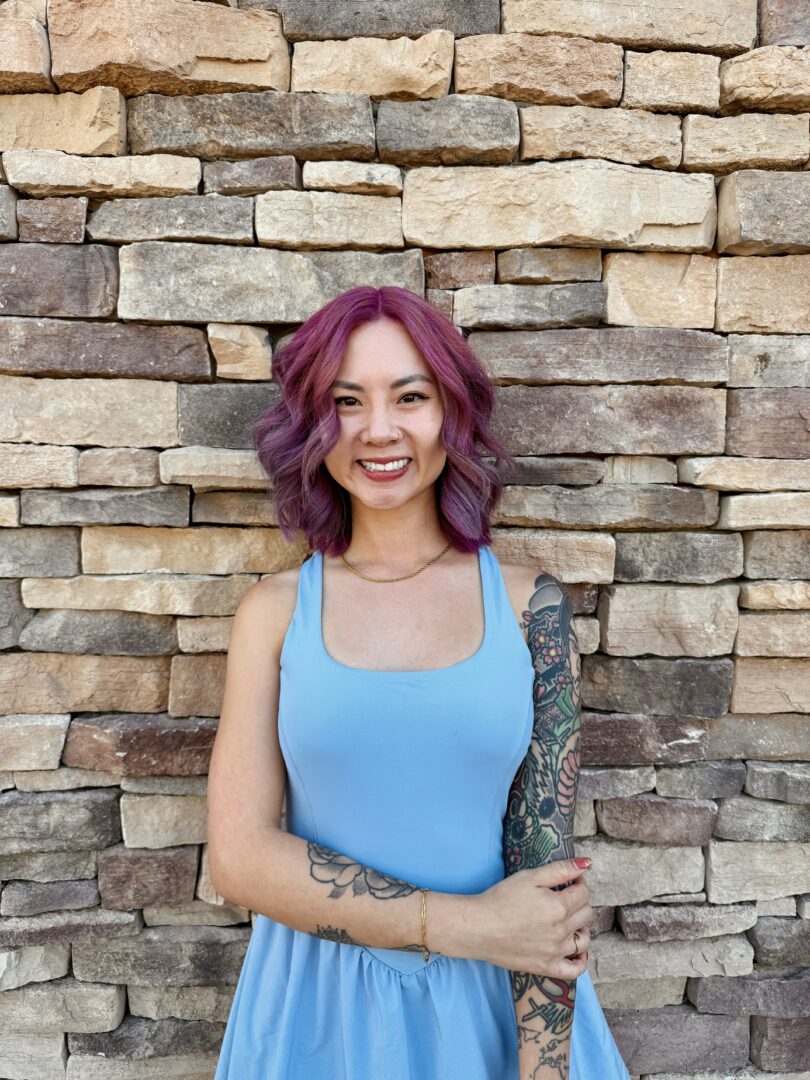
Dr. Panicha McGuire LMFT, RPT™, PsyD shared their story and experiences with us recently and you can find our conversation below.
Panicha, it’s always a pleasure to learn from you and your journey. Let’s start with a bit of a warmup: What do you think is misunderstood about your business?
I think what people often misunderstand about therapy as a profession is that we exist within a very capitalistic world and field. Therapy is often seen as a service to be purchased, something that fits neatly into a medical or business model. But healing itself does not function that way. Emotional healing and community care have existed for centuries across cultures, long before psychology was formalized or monetized. What Western systems did was turn something that used to belong to the community into something people now have to pay for, often with barriers that determine who gets access to care and who doesn’t.
As therapists, we have to navigate that contradiction every day. We are holding the truth that therapy is both a profession and, in many ways, a calling. At Living Lotus Therapy, I try to stay mindful of that tension. I still operate within the structures of business because that’s the system we have to survive in, but the way I approach therapy is intentionally different. The focus isn’t on selling sessions or performing productivity. It’s on cultivating relationships, building safety, and helping people reconnect with their own sense of agency and wholeness. That means acknowledging systemic factors that shape mental health, like capitalism, racism, ableism, and colonialism, and refusing to reduce people’s struggles to individual pathology. So while therapy exists in a business framework, my goal at Living Lotus is to practice in a way that resists commodification. Healing is not a product.
Can you briefly introduce yourself and share what makes you or your brand unique?
My name is Dr. Panicha McGuire, and I’m a licensed marriage and family therapist and registered play therapist based in San Diego, California. I’m the founder and clinical director of Living Lotus Therapy, a practice that centers neurodiversity-affirming, trauma-informed, and liberation-oriented care. I work primarily with children, teens, and adults who identify as neurodivergent or 2SLGBTQIA+ who are exploring their identities after years of masking, code-switching, misunderstanding, or misdiagnosis.
My story and my practice are deeply connected. I came into this field out of curiosity about human connection and identity, but also through personal experience. I am AuDHD, queer, and a 1.5 generation Southeast Asian American who grew up navigating multiple cultures and expectations. Like many of my clients, I know what it feels like to be missed by systems that are supposed to help. That lived experience shapes how I practice. My work is relational, compassionate, and grounded in the belief that healing is not about fixing people. It is about creating space for them to exist more fully and authentically.
Before founding Living Lotus Therapy, I worked within traditional behavioral frameworks of mental health. Over time, I became disillusioned by the harm that is perpetuated in the mental health industrial complex, especially the ways those systems prioritized compliance over autonomy. That realization pushed me to pursue my doctorate in Marriage and Family Therapy and to reimagine what mental health care could look like when it is rooted in liberation and community instead of control.
Living Lotus Therapy was created from that vision. What makes it unique is how it bridges clinical work, education, and activism. The continuing education programs I design are open to both professionals and community members, followed by shared learning spaces where everyone can learn from one another. When possible, I help fellow community organizers with Too often, professionals stay on pedestals, centering their own expertise instead of the lived experiences of the people they serve. We see this especially in the autism community, where for decades the loudest voices have been parents, teachers, and clinicians instead of autistic people themselves. Living Lotus Therapy intentionally challenges that dynamic.
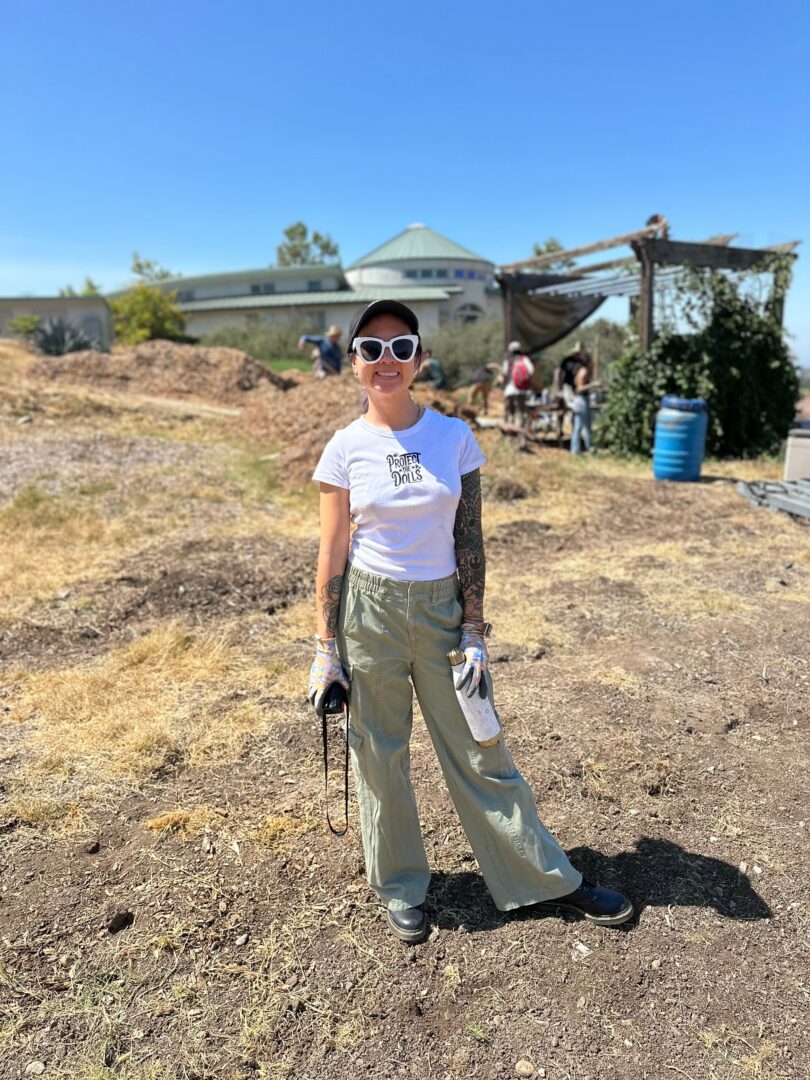
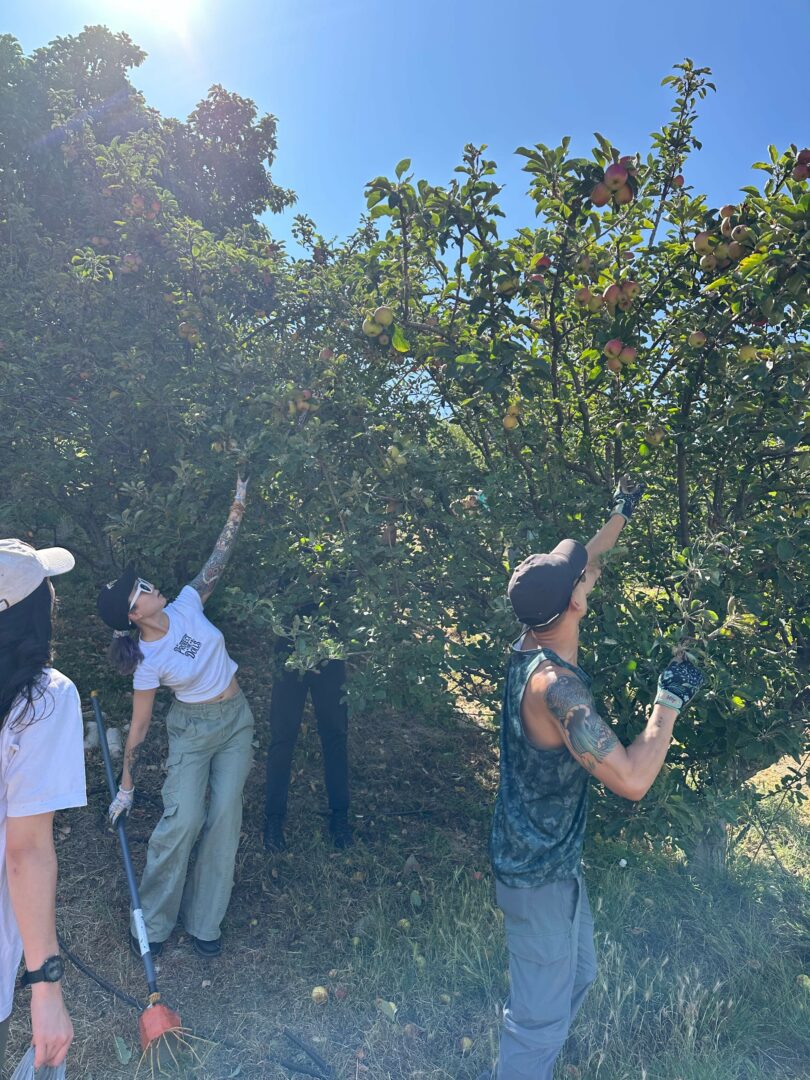
Beyond my professional work, I stay rooted in community care. I support mutual aid and grassroots efforts focused on food sovereignty, local relief, and humanitarian aid. Sometimes that means helping build systems of care from the ground up; other times it means listening, showing up, and meeting immediate needs with compassion and solidarity. These spaces remind me that healing is collective and it is found in how we nourish and protect one another, especially in times of crisis. They keep me grounded in the truth that liberation is shared and keeps me accountable to the world I say I want to build.
The name Living Lotus comes from my childhood memories of watching lotus flowers bloom in the murky waters of Echo Park Lake in Los Angeles. It is a symbol of resilience and rebirth, of beauty that grows through difficulty. That is the heart of my work. Healing does not require perfection. It is about finding meaning, connection, and freedom right where you are.
Great, so let’s dive into your journey a bit more. Who were you before the world told you who you had to be?
Before the world told me who I had to be, I was a curious, observant child who felt everything deeply. I noticed patterns, emotions, and energy shifts around me long before I had the words to describe them. But as a 1.5 generation Southeast Asian immigrant growing up in the 90s, the world I entered rewarded conformity and quiet compliance. I was old enough to remember leaving my home country and not speaking English, but young enough to learn how to perform and acculturate quickly. I became fluent in blending in.
Like many autistic girls, I slipped through the cracks because I did well in school. My preference for books and animals instead of socializing with peers was written off as being shy, not as a sign of how much I was struggling to understand social cues or how desperately I wanted to avoid another miscommunication. My shutdowns or meltdowns were dismissed as being dramatic or too emotional. My isolation was brushed off as envy from others because I was at the top of my class. No one saw that I was scripting in front of the mirror, replaying interactions for hours, or trying to make sense of why connection felt so confusing and exhausting.
Growing up between two cultures added another layer. In one, I was expected to be obedient, respectful, and not make waves. In the other, independence was celebrated, but only within certain limits of acceptability. There was no room to simply exist as I was. My queerness, too, was something I struggled to name for a long time because it did not fit neatly into the expectations of either world. I have always been, and will always be, a product of two cultures, constantly balancing what is acceptable in each. For a long time, that meant I learned to read everyone else before I ever learned to read myself. Conformity, acculturation, and masking were not about wanting to fit in. They were acts of survival or ways to stay safe, to belong just enough to be accepted, and to avoid punishment or exclusion. But survival is not the same as living. Over time, those survival strategies created a distance between who I was and who I thought I had to be.
It took me well into my mid to late twenties to feel genuine belonging. Unmasking and embracing both my queerness and my neurodivergence became acts of liberation. I started to see that the traits I once tried to hide (my sensitivity, intensity, empathy, and focus levels) were not flaws but it just “is”. I began to see that the traits I once tried to suppress, such as my sensitivity, depth, and intuition, were not flaws but the roots of my humanity and my strength. They are the same qualities that now shape how I show up as a therapist, an educator, and a person. Today, my work is about helping others do the same. To unlearn who they were told to be and return to who they truly are. Healing, to me, is that process of coming home to yourself and finally giving that version of yourself permission to exist freely.
What did suffering teach you that success never could?
Suffering taught me that wholeness matters more than achievement, and that survival is not the same as living. For much of my life, material success was the only language I knew to measure safety and worth. I learned quickly that the more I performed or produced, the more I was accepted. Good grades, achievements, composure, obedience, these were the currencies of belonging. I was praised for being responsible, mature, and high-achieving, but no one saw the masking beneath it. The loneliness. The exhaustion. The constant calculating of how to exist in a world that demanded I be everything but myself.
The truth is, my “success” was built on survival strategies. Masking, perfectionism, hypervigilance. Those things kept me safe, but they also kept me disconnected, from others and from myself. When I began unmasking and confronting my suffering, I realized that the very traits that had helped me survive were also the ones that prevented me from being fully alive. Suffering stripped away the illusion that success equals inner peace. It revealed that what we often call success, productivity, control, and assimilation, is rooted in colonial and supremacist values that define worth by how well we conform, produce, or perform. This is the framework so many of my clients come into therapy with, believing they are broken because they cannot meet impossible standards set by systems that were never designed for them.
Over time, I also came to understand that suffering is part of the human experience, as much as we may wish it were not. (Shout out to my therapist for this reminder.) It is not a sign of weakness, but a reflection of our capacity to feel deeply and to be moved by life. Avoiding pain does not make us whole, but acknowledging it allows us to grow through it. Suffering taught me that there is power in naming the systems that harm us and in reclaiming definitions of success that honor our humanity. I now see pain not as something to overcome but as a part of being human. Suffering taught me compassion, humility, and the courage to choose to choose authenticity over approval. Success could never teach me that.
Alright, so if you are open to it, let’s explore some philosophical questions that touch on your values and worldview. What are the biggest lies your industry tells itself?
One of the biggest lies the mental health field tells itself is that it exists outside of the systems that harm people. We like to believe that therapy is inherently good, neutral, or healing, but in reality, much of the mental health industrial complex is built on the same foundations as the institutions it claims to liberate people from.
The industry tells itself that if clients are “functioning” better, therapy has done its job. But functioning according to whose standards? To insurance companies? To be deemed “fit for work”? Therapy then becomes compliance and productivity. The dominant framework in mental health still locates the “problem” within the individual rather than within the oppressive environments they must navigate. People are labeled, pathologized, and “treated” for their responses to systems that were never designed for them in the first place. What we rarely name is that this framework has always been a form of control. The language of diagnosis and disorder has been used historically (and currently) to police, institutionalize, and marginalize those who do not conform. It is a carceral tool disguised as care, reinforcing who is deemed “healthy,” “stable,” or “normal,” and who is not. These labels determine access to resources, credibility, and humanity. They shape laws, education, employment, and even who is seen as deserving of compassion.
Another lie is that therapists are the experts and clients are the ones who need to be “fixed.” This hierarchy distances us from genuine healing. It allows therapists to hide behind professionalism while avoiding accountability for the harm that the field itself perpetuates. When therapy becomes commodified, it begins to serve the system more than the people it claims to help. Healing is not about normalizing people into an oppressive world. The mental health field will only move forward when it stops pretending to be neutral and starts telling the truth about its history and its ongoing complicity in controlling and pathologizing human difference. True healing requires us to confront not just individual wounds but the societal structures that continue to create them.
Okay, so let’s keep going with one more question that means a lot to us: If you laid down your name, role, and possessions—what would remain?
If everything else were stripped away, what would remain is my conviction that even the smallest acts can ripple outward. I am one small dot in a vast universe. The change that we would love to see in the world will not happen overnight (or even in our own lifetime). We are in the long game. The world right now is fractured with climate crisis, social injustice, growing inequality, oppression of marginalized bodies and minds. Many of us come to therapy carrying wounds not only from personal history but from living under systems that dehumanize. What remains is the insistence that care, connection, and collective accountability are essential.
What remains is hope and action: showing up for community, telling truths others are afraid to name, creating spaces where people can remember their dignity. What remains is a domino-effect vision that what I do may not fix the world, but it may shift one life (one domino), and that change may carry on in ways I will never get to see.
So the legacy I leave is not in titles or possessions. It is in courage, in presence, and in the small movements toward justice. So to those reading this, to those in your communities, I encourage you to lean into discomfort, speak honestly, stay in the work. Because even tiny dots become constellations when we are aligned.
Contact Info:
- Website: https://livinglotustherapy.com/
- Instagram: https://www.instagram.com/drpanichamcguire/
- Linkedin: https://www.linkedin.com/in/drpanichamcguire/
- Facebook: https://www.facebook.com/drpanichamcguire
- Other: https://www.tiktok.com/@drpanichamcguire
so if you or someone you know deserves recognition please let us know here.