We’re looking forward to introducing you to Naila Francis. Check out our conversation below.
Naila, we’re thrilled to have you with us today. Before we jump into your intro and the heart of the interview, let’s start with a bit of an ice breaker: What is something outside of work that is bringing you joy lately?
Unplanned moments of human connection always bring me joy, like running into two friends recently at my local co-op and standing for more than 30 minutes with them in the supplement aisle, sharing about our days, our worlds, our upcoming plans for the fall, laughing boisterously, reluctant to leave our small oasis of ebullient warmth. When another woman two of us knew joined us, our laughter became even more raucous. We joked that this was the place to be on a Saturday night and we’d meet each other there at the same time the following week.
Can you briefly introduce yourself and share what makes you or your brand unique?
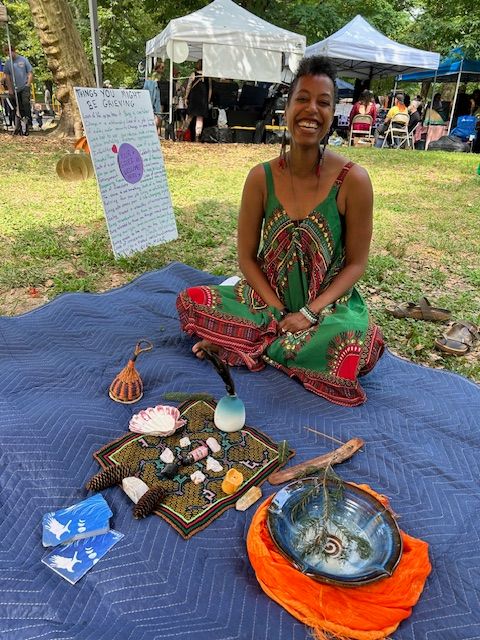
I’m a grief coach, death midwife, interfaith minister, Reiki practitioner and poet-writer. I’m also a mesa carrier in the mystical Andean Pachakuti Mesa tradition. My practice, This Hallowed Wilderness, serves grievers and families and their loved ones facing the end of life. I’m passionate about working to create a more grief- and death-literate culture in a society that fears and denies these two very human experiences. Loss comes to all of us, as does death. Yet we rarely talk about either.
When working with individuals at the end of life, I serve as a spiritual and emotional companion, meeting them in the place of their fears, regrets, longings and questions, while also holding the possibility for more joy, beauty and love at this tender threshold. This can be one-on-one work or involve the entire family as everyone tries to come to terms with the inevitable.
In my grief work, I hold space for groups and individuals to honor and express their grief, through one-on-one coaching, workshops, classes and ritual space. So often that work begins with examining the models of healthy grieving we’ve grown up around (most of us don’t have any) and the harmful messages we’ve internalized about grief (like “you just need to get over it,” “it’s time to move on,” “stop moping around,” “stop being so negative,” “you should be grateful for x,y,z instead …” etc.) — messages that stigmatize and encourage bypassing our very natural response to the losses and changes we experience in our lives. Whether working individually with a client or in a group setting, my intention is to invite an approach and practices of care that support softening into our grief with compassion and curiosity. Rather than something to fear, what if grief’s many moods, emotions, memories, dreams and images awakened us to more authentic living, deepened our capacity for connection and rooted us more fully in our humanity? What if we realized how much energy we were giving to our strategies of avoidance, blunting our own life force in the process, and chose instead to return grief to a place of reverence, personally and collectively?
I am also one of the co=founders of a collective called Salt Trails. Since 2021, we. have been offering community grief rituals to help people feel less alone in their sorrows as we gather to honor and metabolize our grief together through singing, movement, poetry, storytelling embodied practices and connection to the more-than-human world.
Okay, so here’s a deep one: What was your earliest memory of feeling powerful?
I’ve actually never thought of this moment in this way but it’s what’s surfacing for me now. I was a huge Smurfs fan as a kid. I grew up in St. Lucia and our access to popular TV shows was generally limited and often outdated. But the Smurfs eventually came to our Saturday morning cartoon lineup. I decided to form a Smurfs Club at school, though it was admittedly made up of more Smurfettes than Smurfs since it was a harder sell to get the boys to join. Still, I was incredibly shy as a child and to rally my classmates to form a club to engage in activities together both in and out of school was a pretty bold undertaking. We had blue and white uniforms. I enlisted the support of my favorite teachers and our principal, and we even had a ceremony in the school yard, with our families in attendance, to mark our official launch. Unfortunately, we didn’t get to do much besides a few meetings and a picnic at the beach because that ended up being my last year in St. Lucia before my family moved to the U.S. Still, I’ve spent a large part of my life protesting the leadership qualities others have seen in me and resisting the spotlight (always professing to feel more Pisces than the double Aries I am). Yet perhaps that was a blossoming back then of a different kind of leadership that could arise from softness and joy and the simple desire to gather with others to create something meaningful.
What fear has held you back the most in your life?
I know this Marianne Williamson quote has resonated with many over the years: “Our deepest fear is not that we are inadequate. Our deepest fear is that we are powerful beyond measure. It is our light not our darkness that most frightens us.
We ask ourselves, who am I to be brilliant, gorgeous, talented and fabulous?”
For much of my earlier life, I operated from a place of fearing I wasn’t enough. That simply being me was never enough. In many Caribbean families, there is an overwhelming emphasis on academic achievement. We learn our worth through strong grades, awards and accomplishments. Success is then measured by what we do for a living. While that message wasn’t reinforced by everyone in my family, I felt the weight of its expectation with my father, who loved boasting about my accolades, who talked about my applying to Princeton when I never did, who dreamed of me being a lawyer or diplomat when I wanted to be a writer. I still became a journalist, and I know he was ultimately proud of me, but I never truly felt known or seen by him. And I’ve spent a lot of my adult life thinking I had to perform, to produce, to achieve as a measure of my worth.
Grief has been an incredible teacher and healer for me in this way. It doesn’t subscribe to the values of productivity, efficiency, accumulation and status endemic to this culture. It strips us to our core, forces us to slow down and do less, asks us to examine our values, our relationships and whether we are truly living in alignment to what matters to us. Grief centers being rather than doing. It brings us back to the heart, to our wild and wondrous humanness. And though I still wrestle with my old scripts and programming, the greater practice of inhabiting my days and showing up in the world from a heart-centered place reminds me again and again that who I am is enough.
Next, maybe we can discuss some of your foundational philosophies and views? Where are smart people getting it totally wrong today?
People will pay for fancy vacations and meals out. They will shell out money for the latest anti-aging or weight loss fix. They’ll devote inordinate amounts of time and energy to renewing, repairing, remodeling and cleaning up their exterior lives and images. But supporting the healing arts? Investing in deeper spiritual work? Recognizing the importance of the healers and artists who hold space at life’s thresholds, who navigate realms beyond the ordinary, who rely on a wider web of support that calls on the ancestors and the more-than-human world? Who believe in the medicine of presence and the power of portals that call us to more expansive states that nourish not only mind and body but the soul? That work is constantly undervalued.
So many of us suffer from relational wounds that need relational support for our healing. So many of us carry painful imprints of rupture in our psyches that need more than the path of individualism and resolution that capitalism reinforces. The late spiritual teacher Sobonfu Somé would say that someone who doesn’t have access to their feelings, who doesn’t allow themselves to feel anything that isn’t considered “positive” is not only a danger to themselves but to their entire community. I think we’re seeing that play out in so many realms nationally and globally right now. Spiritual and emotional malaise, left unacknowledged and untended, are wreaking havoc in our society. Who might we be and what could we creative collectively if our inner landscapes were more soulfully cared for and nourished, if we lived with greater emotional depth?
We need spiritual workers and healing artists more than ever now. And instead of constantly trying to negotiate our pricing with us, to talk us down, to offer us the bare minimum to create workshops and programming that requires not only our skill but the immense energy it takes to hold space for all the other energies in the room, it would benefit society as a whole if we were held with the same reverence and esteem afforded to more traditional occupations.
Okay, we’ve made it essentially to the end. One last question before you go. What is the story you hope people tell about you when you’re gone?
That I loved well and was well loved in return.
Contact Info:
- Website: https://www.thishallowedwilderness.com
- Instagram: https://www.instagram.com/thishallowedwilderness/?hl=en
- Linkedin: https://www.linkedin.com/in/naila-francis-9793182/
- Facebook: https://www.facebook.com/ThisHallowedWilderness/
- Other: https://nailafrancis.substack.com
https://www.instagram.com/disarmingdarling/
https://paulitomuse.hearnow.com/wonder-unsung
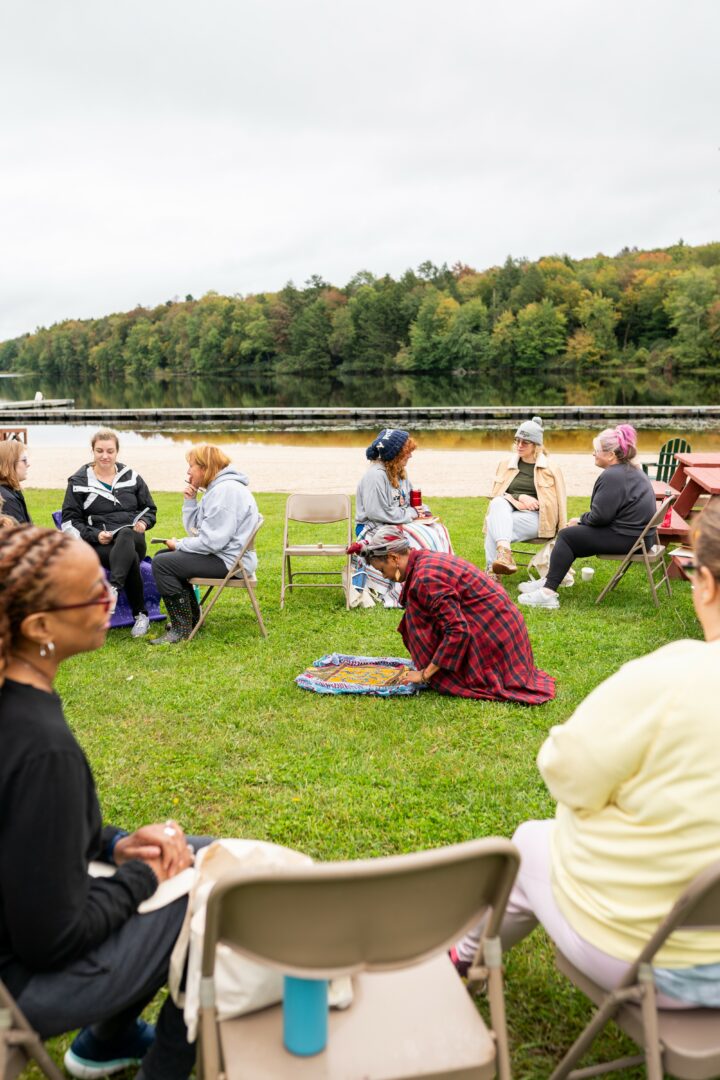
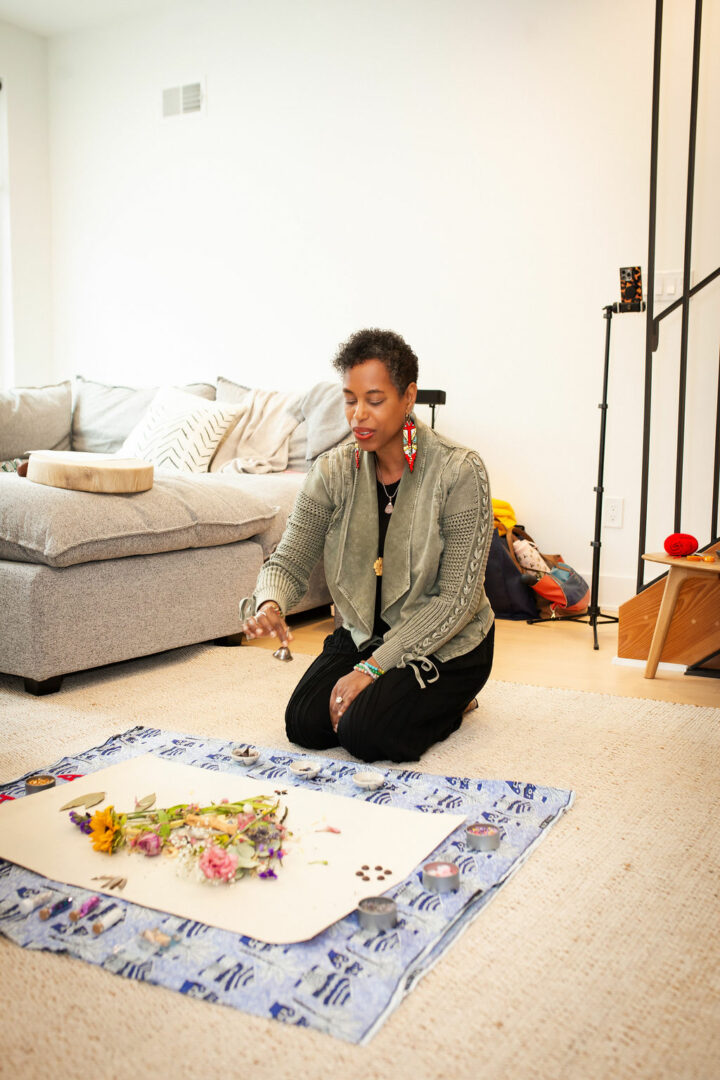
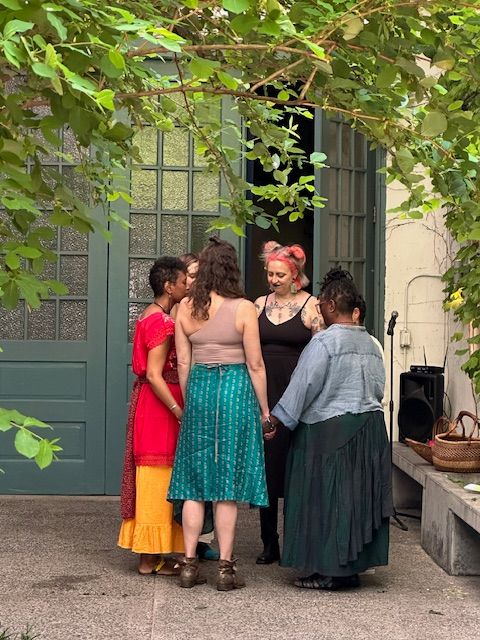
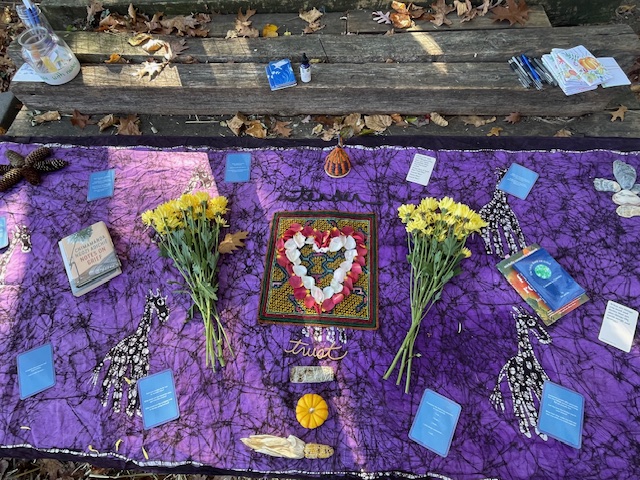
Image Credits
Photo of me ringing the bell over despacho (paper with natural elements in a pattern on the floor) by B PHILLY PHOTOGRAPHY
so if you or someone you know deserves recognition please let us know here.