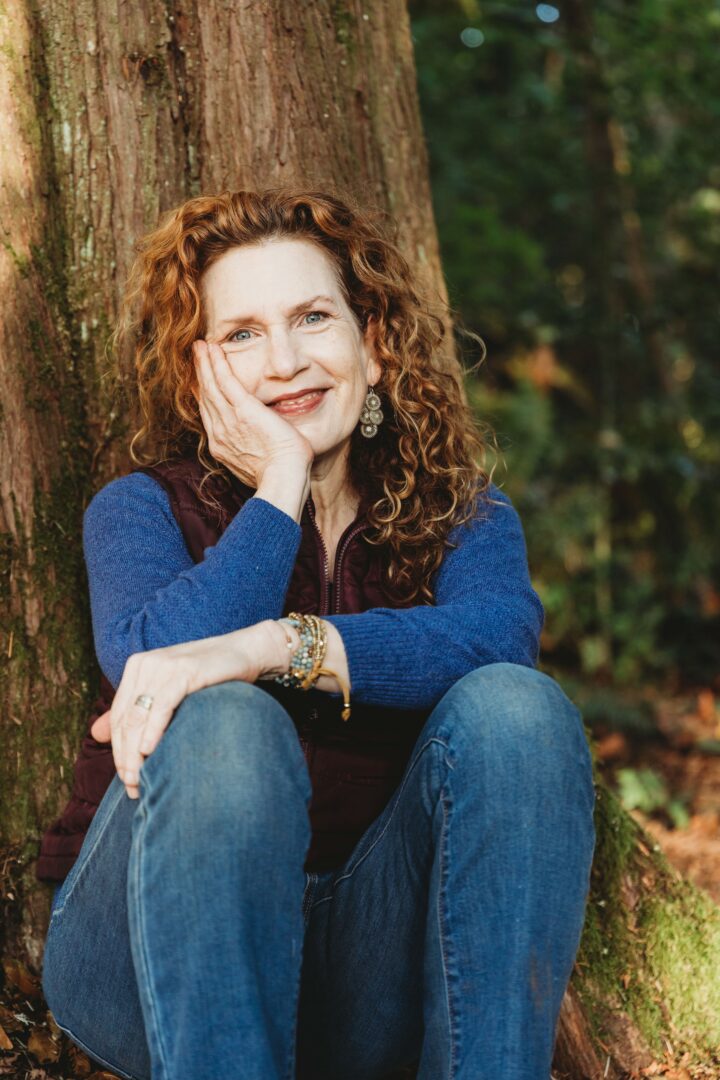
Madeleine Eno shared their story and experiences with us recently and you can find our conversation below.
Good morning Madeleine, it’s such a great way to kick off the day – I think our readers will love hearing your stories, experiences and about how you think about life and work. Let’s jump right in? What is a normal day like for you right now?
A normal day: I wake up pretty early and immediately let the dogs out and feed the chickens. On chilly mornings, I love to make a fire in the woodstove and sit by it while I meditate or read something inspiring. When it’s warm enough outside, I hang out watching the chickens poke around in the woods. I could do that all day, but tear myself away because the work day begins around 9.
I’m working on a novel, so three or four mornings a week, I spend a few hours on that. That can be challenging, as I have a bunch of client work pulling my attention—from ghostwriting spiritual fiction, to editing manuscripts that clients have written, to book coaching. Lots of really interesting projects that keep me at my laptop a few too many hours a day, though I try to get out with the dogs at some point. Some days I go to a cafe and work there a bit–I find all the people noise and kitchen clatter really comforting.
On an ideal normal day, I try to shut the door to my office by 5 or 6 and take a walk, head to the gym or yoga studio, or make some dinner with my husband. If we watch Netflix later at night, I usually have pen and paper in hand as I’m trying to improve my dialogue-writing skills. (All the streaming series are really helpful for learning about character development and snappy dialogue.) Then it’s time for mushroom cocoa, hot tub, and climbing into the tiny sliver of bed-space the two dogs have left for me.
Can you briefly introduce yourself and share what makes you or your brand unique?
I help people say things they’ve often been carrying in silence for decades.
Many of my clients are over 50. They may be writing memoirs or channeling guidance that doesn’t easily fit into existing publishing categories. Or they’re coaches and healers who know they have a book in them but can’t figure out how to organize years of wisdom into something coherent.
They come to me because I work in two worlds at once: I’m a developmental editor and book coach who loves structure–building and rebuilding it —and I’m also someone who reads Human Design charts, works with Gene Keys, and understands that books benefit from working with the energetic realms as much as we humans do.
I started as a co-editor of an outdoor magazine, and learned from a wonderful mentor how to turn messy, passionate drafts into compelling narratives people actually want to read. I eventually became a copywriter working with entrepreneurs. Along the way, I started working on books not written by professional writers, but by people who’d been silenced—by their family, by trauma, by society, by not having language for what they knew.
Over the past decade, I’ve worked on about 50 books. Many of these are memoirs, lots are self-help, and probably 50 percent involve channeled material or spiritual guidance.
My signature process is called Find Your Golden Thread: it consists of four 60-minute sessions where we use questions, Human Design chart work, and creative exploration to uncover the framework of your book actually. We identify your ideal reader, your unique message architecture, and how this book fits into your larger vision. These can be emotional sessions for authors—not because they’re therapy, but because someone finally understands what you’ve been wanting to say.
I’m a revision maximalist, meaning I’m not one for quick fixes or templates to write your book. When editing, I read your manuscript multiple times, write editorial letters that are sometimes longer than your chapters, and stay in conversation with you through multiple drafts. The books I work on take time—good ones do. If you’re going to put your time into writing a book, let’s make it something someone can’t put down.
Right now I’m ghostwriting two books, editing several memoirs, coaching nonfiction authors, and writing my own middle-grade novel about a grieving girl in an Oregon logging town in 1975 who discovers she has some unusual powers.
The clients who work best with me know they have something urgent to say but they’re tangled in doubt, confusion, and time constraints. They want an editor who understands that their book needs both rigorous structure and space for mystery and exploring.
If your book involves spiritual downloads, ancestral healing, or knowledge that arrived in unconventional ways—I can help you trust what’s coming through enough to structure it, clarify it, and send it out into the world where it can do its work.
Amazing, so let’s take a moment to go back in time. Who saw you clearly before you could see yourself?
Mrs. Clark worked at my elementary school–I’m not even sure what she did. Maybe she was in the office? Somehow, she came to an assembly where I’d been asked to read my 4th grade essay on baby seal killing. When I was a kid we wrote a lot of “term papers”–and for a few years in there they all seemed to be about either euthanasia, the Bermuda Triangle, or the terrible plight of baby seals in the fur market of the 1970s.
I no longer have the paper I read that day, but remember that I wrote it from the mother seal’s POV. I looked up as I was reading it aloud and saw Mrs. Clark was crying. She came up to me afterward with tears still in her eyes.
“That was so good and so sad! You are a WRITER!” she said–giving me a big hug.
It was a huge moment because I had no idea prior to this that my writing could actually speak to people. That it could communicate emotions. Mrs. Clark changed everything for me.
Is there something you miss that no one else knows about?
I love this question. One thing I’ve been missing lately is READING for pleasure–newspapers and books on the subway and books on my bedside table.
And another thing I REALLY miss is working in a roomful of people.
I’ve been very grateful to work from home for the past two decades—I appreciate the quiet, the flexibility, the ability to sink deep into a manuscript for hours.
But I have been missing the energy of colleagues. I got together with a bunch of colleagues from my magazine days this past summer and we all agreed how great it was to have both the spontaneous conversations about weekend plans and someone to easily talk with to solve big problems. I miss popping into someone’s office when I’m stuck, brainstorming headlines over pizza, and the way ideas sharpen when you explain them out loud to another human who gets it.
Zoom brings my clients closer, and I love that. But I miss colleagues, being confused together, figuring out solutions, laughing in the middle of the day about nothing.
What I’m craving isn’t a mastermind–it’s that feeling of intellectual companionship. The pleasure of other people’s minds and senses of humor. The energy that builds when you’re generating creative energy in the same space. I still dream about a shared office with coffee cups and whiteboards, where editors and writers can talk through projects and problems in real time.
Next, maybe we can discuss some of your foundational philosophies and views? What’s a cultural value you protect at all costs?
Another good question!
I would protect the cultural value of ACKNOWLEDGEMENT—genuinely seeing and responding to people, not just moving past them.
I’m kind of a stickler about this. I acknowledge cashiers, servers, people on walks (who might not want to say hello), drivers who let me cut in. My granddaughter and niece will tell you I’m constantly “demonstrating” how to interact with people in ways that leave them feeling seen. I’m sure it drives them crazy.
It’s not just being polite. I think it weaves in with what I do professionally. My work is helping people who’ve been silenced finally speak—acknowledging how their stories have been dismissed, how their trauma made them invisible even to themselves, how they don’t think they have permission to write.
Now that I’m thinking about it, acknowledgment is really a practice. It’s how we remind each other that we are real, that we each matter, that each of is here… together. That thread in our cultural fabric has worn pretty thin. But every interaction we have is a chance to reinforce it.
Okay, so let’s keep going with one more question that means a lot to us: Are you doing what you were born to do—or what you were told to do?
I think I am doing what I was born to do. I grew up in the era of the wonderful Marlo Thomas album “Free To Be You and Me.” While it took me a long time to find my path, I had a pretty expansive notion of what was possible when I was young. When I’m doing a Find Your Golden Thread session, I always ask my clients about what they were like when they were or 8 years old. Back then, I was a girl who spent all her free time building treehouses and writing poems–and I think that girl would be pretty stoked about where I ended up and what I do all day.
When I check with the stars, as I recommend all writers do, I’m a Leo sun sign with a Capricorn rising and moon sign. Leo is all about EXPRESSION and Capricorn is all about working hard, creating STRUCTURE and ORDER. In my Human Design, I’m a PROJECTOR, which is the type that guides others. More confirmation that I was born to help people the way I’m doing–guiding them to express themselves as well as to create the structures they need to organize their words and ideas.
Contact Info:
- Website: https://madeleine-eno.com
- Instagram: madeleine_eno
- Linkedin: https://www.linkedin.com/in/madeleine-eno-50a189344/
- Facebook: https://www.facebook.com/MadeleineEnoWritingStudio
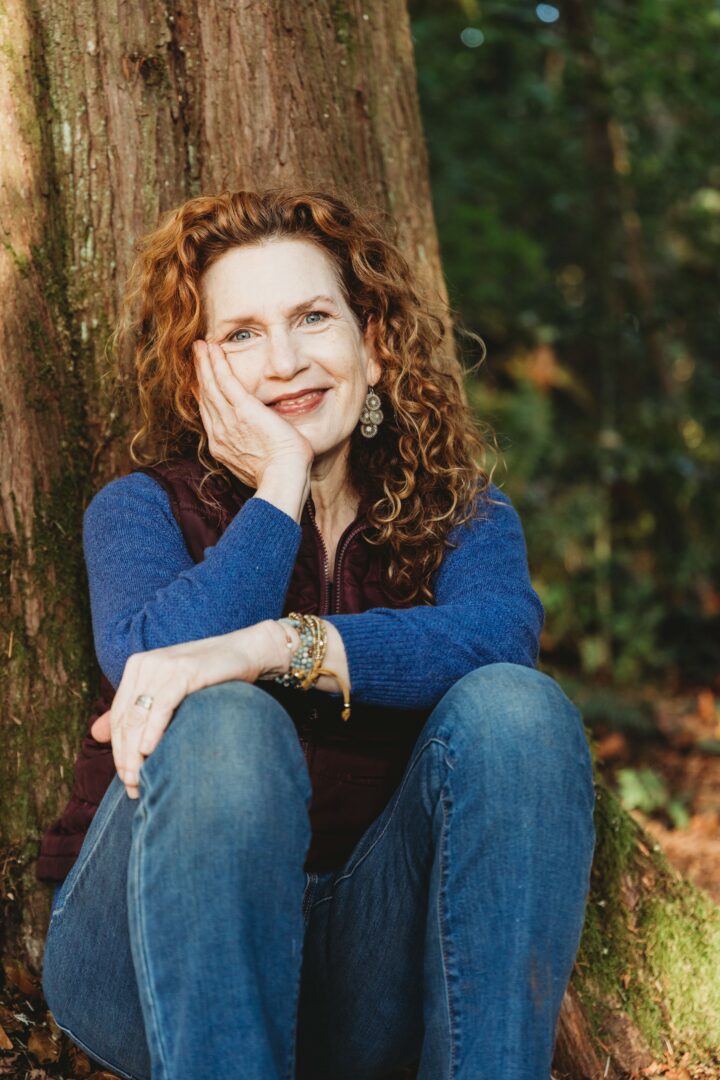

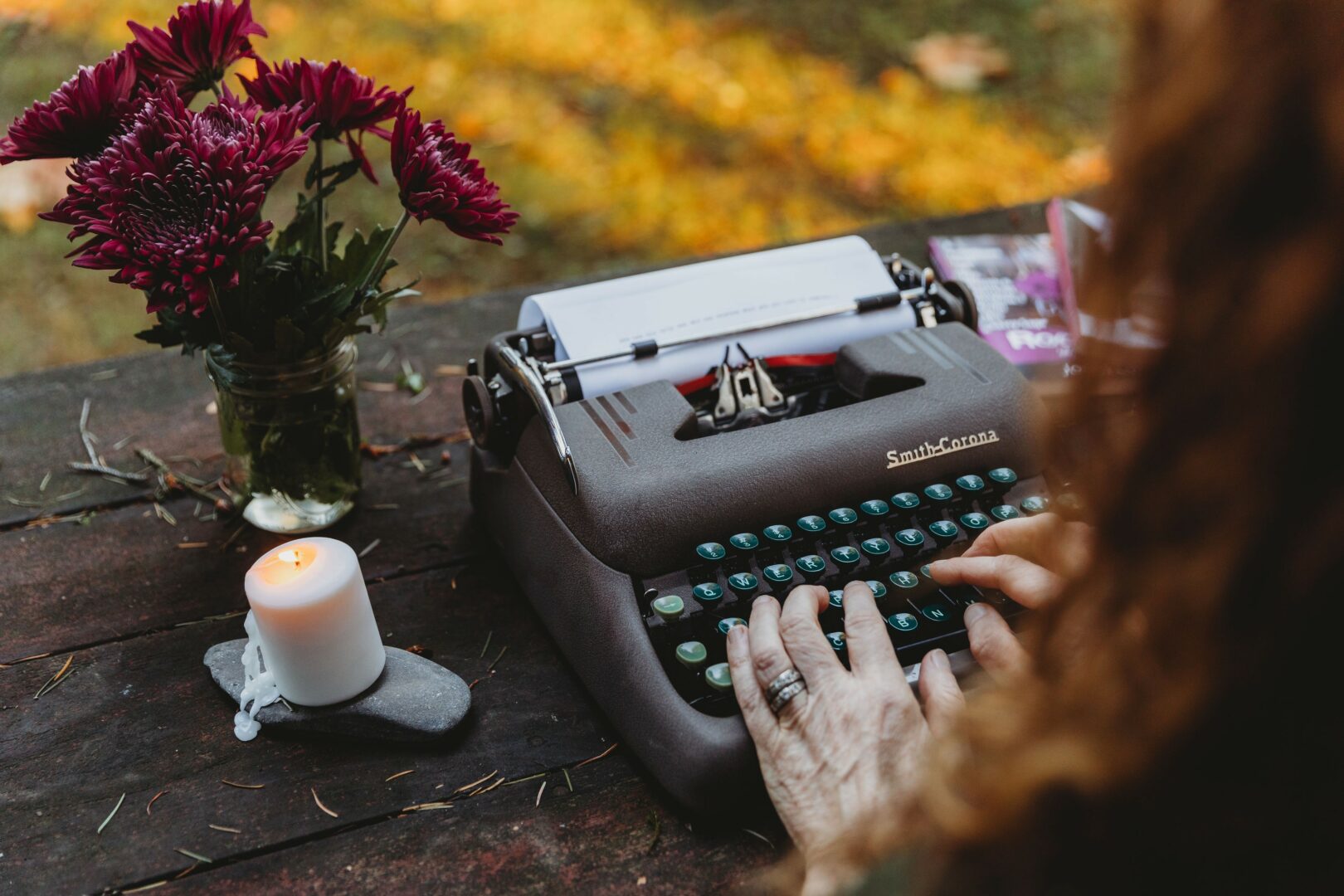

Image Credits
Photos by Tracy George.
so if you or someone you know deserves recognition please let us know here.