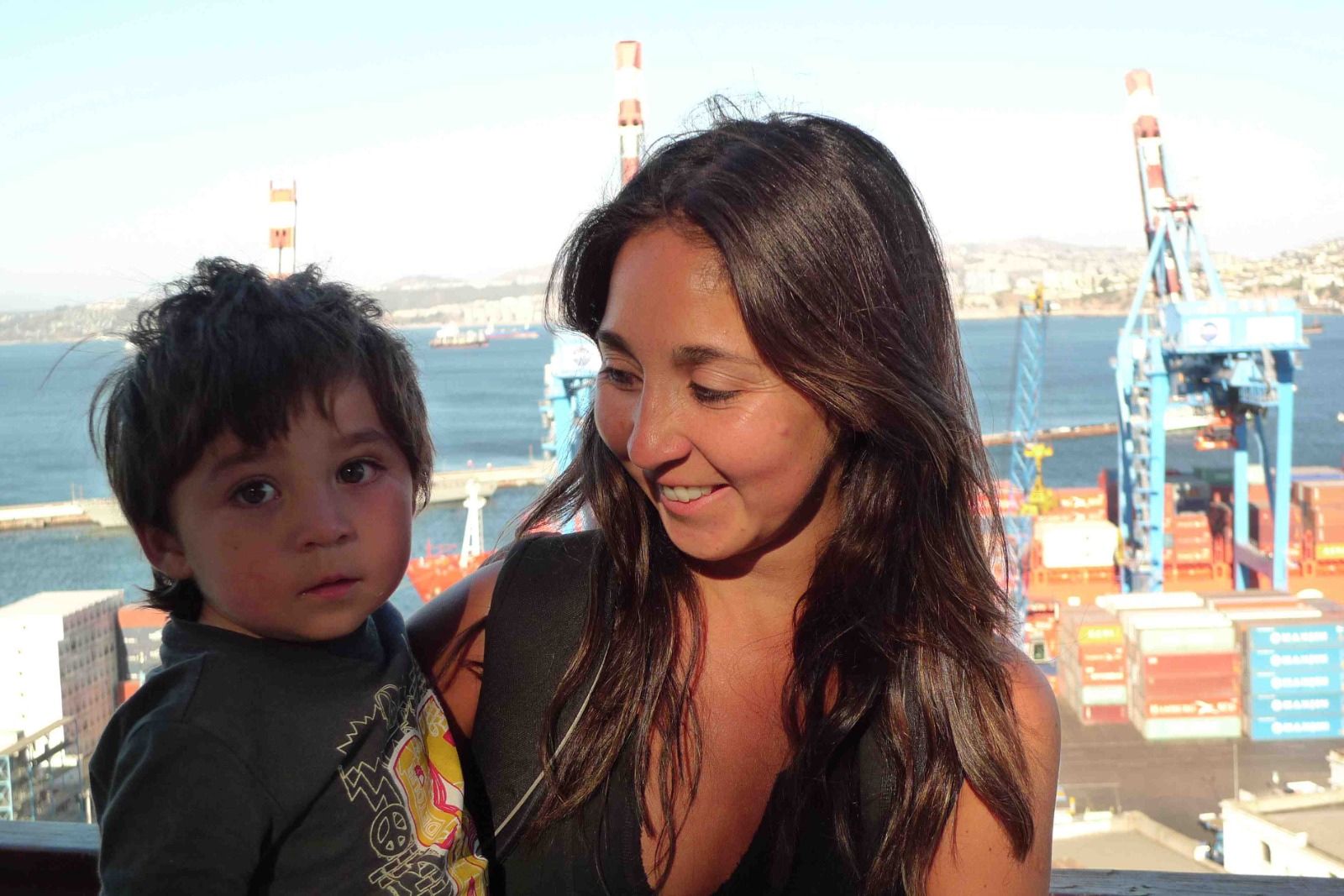
We’re excited to introduce you to the always interesting and insightful Constanza Carrasco. We hope you’ll enjoy our conversation with constanza below.
Hi Constanza, appreciate you sitting with us today to share your wisdom with our readers. So, let’s start with resilience – where do you get your resilience from?
It is important to first acknowledge that I am Chilean, and our country’s unique geography and history have forged a deeply resilient culture. Resilience is not just a concept here; it is an inherent part of our national essence.
In my personal history, one of my earliest significant experiences with resilience occurred at the age of eight. In 1985, I lived through one of the strongest earthquakes in our history. When you are a child, feeling your entire world move and shake violently, sounding like the end is imminent, is terrifying. Yet, the very next day, despite news coverage detailing the extensive damage, everything continued.
That experience taught me a profound lesson: life continues, and you must carry on without succumbing to despair.
As a designer and a mother of four, I came to understand that resilience is non-negotiable, particularly for my children, regardless of the circumstances.
In 2014, our third child was diagnosed with meningitis. It was caused by a new, highly resistant, and extremely harmful strain of bacteria not covered by standard vaccination programs. He was only three years old. Watching him in the hospital, surrounded by life-support machines, gave me a stark understanding of life’s fragility. It made me realize that you can neither control the future nor plan everything out, because in a single second, your entire life—and the way you see and live it—can be irrevocably altered.
He survived, but the illness caused him to lose his hearing. This survival marked a new era for us, forcing our family to embrace adaptation and a deeper sense of resilience as we navigated life with a new reality.
Facing a new life with a different form of communication, coupled with the discrimination a child suffers in ignorant social and school environments, forces you to draw strength from deep within to carry on.
It is hard to imagine everything we experienced after Amaru lost his hearing. The journey included very tough moments: from the lack of empathy shown by the doctor who diagnosed him with severe hearing loss, and the race against time to obtain and implant a cochlear implant in less than three months, to encountering unscrupulous doctors who viewed these operations as a business.
Nevertheless, we also found a team of loving and competent professionals who guided us through every step of the process. I must emphasize that, despite how terrible all of this may sound, the best has always happened within what seemed to be the worst.”
For this reason, nothing seems truly terrible now. I always say: life is like surfing a wave; you can never sit still on the board, because the next wave is already on its way. It’s about always staying in motion, adapting, and looking forward.
Thanks for sharing that. So, before we get any further into our conversation, can you tell our readers a bit about yourself and what you’re working on?
When my son fell ill, I was taking a square loom weaving course. After returning home post-meningitis, Amaru didn’t want to walk or play. I rearranged our home so he could be integrated into the center of the house: we had an open-concept kitchen, and the living room looked out onto a native forest that was part of our yard. I turned the terrace into my studio, where I did my weaving.
This weaving quickly became my personal therapy, as this technique truly helped me clear my mind and restructure myself. I focused and calmed down while simultaneously doing something productive. I remember a neighbor from Germany telling me how doctors had prescribed crafts or hobbies as an anti-depressant therapy for her. I definitely recommend it, too!
When I weave on the loom, I feel that contracted thoughts disperse, expand, and dissolve. That is why, after my son’s illness, I wove, wove, and wove, until I generated a significant stock of pieces with various designs and combinations. Since I am a designer, I understand concepts of color and construction, so the result was quite favorable.
I don’t know if it was to help me (because my acquaintances felt sorry for me) or because they genuinely liked what I was creating, but I started selling on a small scale. Then, a friend offered to sell my production at a large arts and crafts fair held in Santiago (at the time, I was living in the countryside near the sea).
She took everything I had and came back with nothing! All my production had sold out. The most remarkable thing was that the majority of the customers who bought were foreigners: French, Belgian, and German.
This is how I started Küimini, a name in Mapudungun that means ‘when the machi (Mapuche spiritual leader) takes possession of their art’ (where küimin means ‘to enter into ecstasy or trance’).
I developed the brand and the logo, and from there I began participating in more local and city fairs. I was even invited to take part in fashion shows with my creations, which helped me start gaining a small amount of recognition.
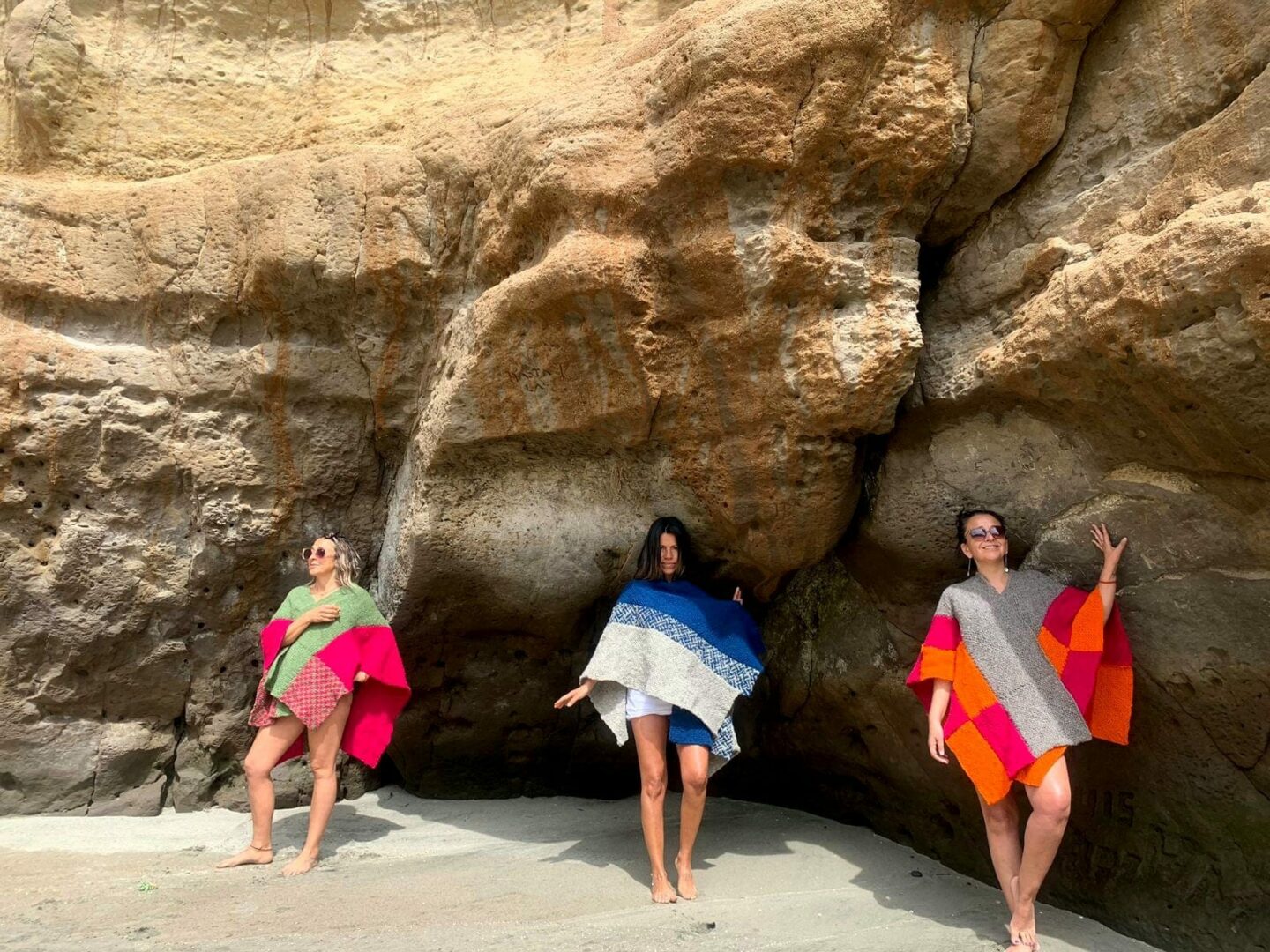
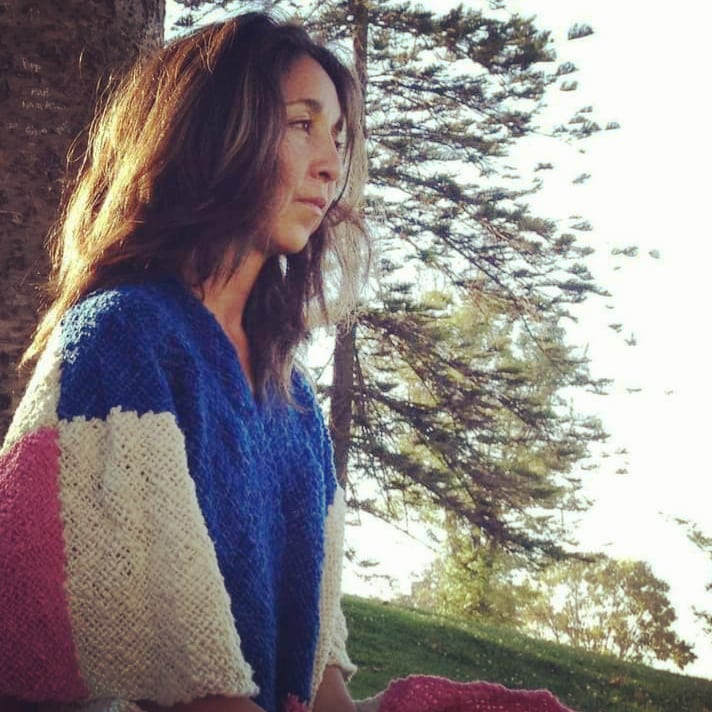
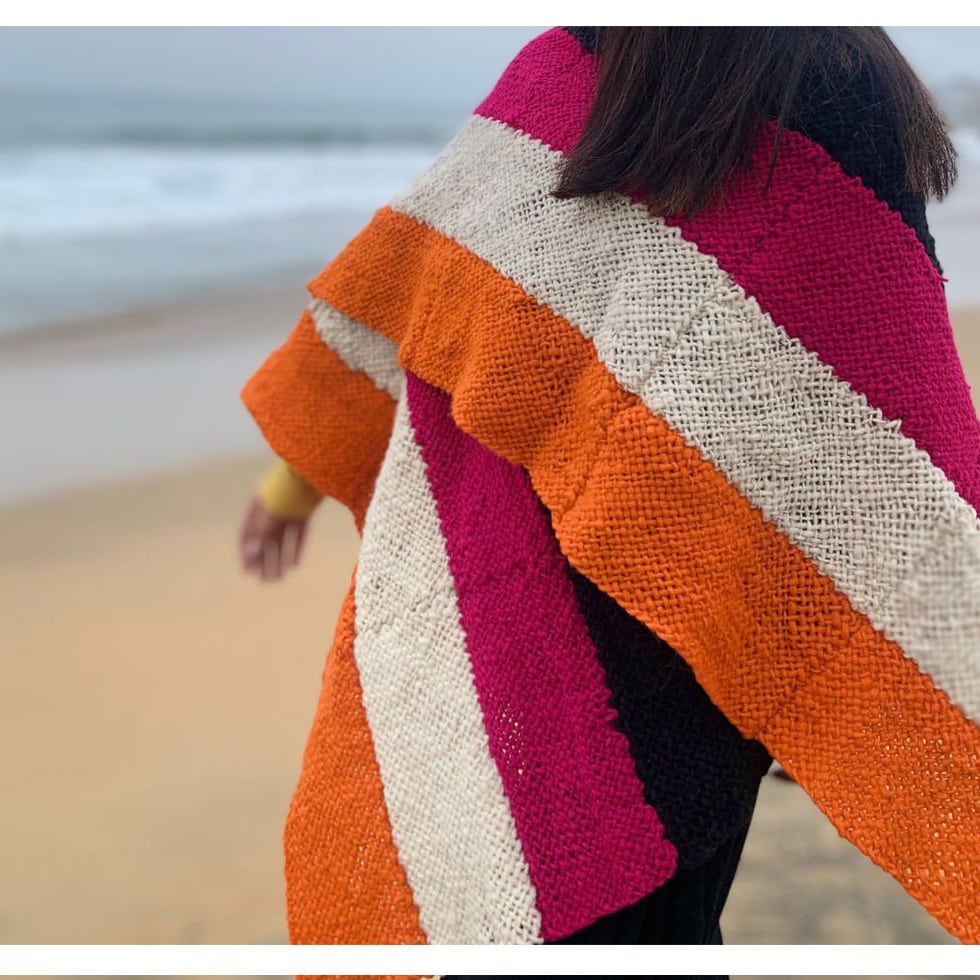
My designs are characterized by working primarily with the concept of the pixel, the square, and the rectangle—elements that I join together to create simple and basic constructions. My designs are neither elaborate nor pompous; they seek to emulate the first fabrications of the medieval ages, with a certain Japanese inspiration. I must admit that I always design the ruanas (ponchos/wraps) with kimonos or very simple, Zen-cut, yet colorful jackets in mind that play with contrasts.
Through my creations, I promote slow fashion and the use of a noble and efficient material like sheep wool—a durable, non-synthetic resource.
Simultaneously, I support local suppliers in southern Chile who are dedicated to sheep care and wool spinning. Therefore, we can affirm that my product is part of the local fair trade ecosystem.
Today, I maintain a constant presence at a neighborhood fair in Cerro Alegre, Valparaíso, where my designs—which people affectionately call ‘the Küiminis’—are primarily appreciated by the foreign public visiting the port. My biggest buyers come from the United States, Mexico, Italy, France, Germany, Russia, England, Belgium, and Australia.
My next major step is to develop my social media presence and boost online sales abroad. However, due to balancing motherhood and other duties—in addition to parallel projects like running workshops for the technique I use—I haven’t yet been able to dedicate the necessary energy to achieve that expansion.
Looking back, what do you think were the three qualities, skills, or areas of knowledge that were most impactful in your journey? What advice do you have for folks who are early in their journey in terms of how they can best develop or improve on these?
Looking back, the three qualities that were most impactful in shaping my journey and transitioning my personal crisis into the brand Küimini were: Adaptive Resilience, Strategic Design Thinking, and the Power of Therapeutic Focus.
Adaptive Resilience is the ability to not just bounce back, but to adjust your approach immediately when faced with a setback, viewing the unexpected as the required state of motion.
How can folks who want to work with you connect?
Absolutely. My project, Küimini, is at a crucial transition point, seeking to expand our digital reach to match the success we have seen at local fairs and with the foreign clientele in Valparaíso.
I am currently looking for two types of collaborators who share our ethics of slow fashion, noble materials, and local fair trade.
International E-commerce Experts: Individuals who understand the logistics of selling Chilean handcrafted textile products abroad (particularly the U.S. and Europe, where my largest customer base resides).
And stores, galleries, or boutiques that highlight craftsmanship, design, and sustainability, and that can distribute my products fairly.
Contact Info:
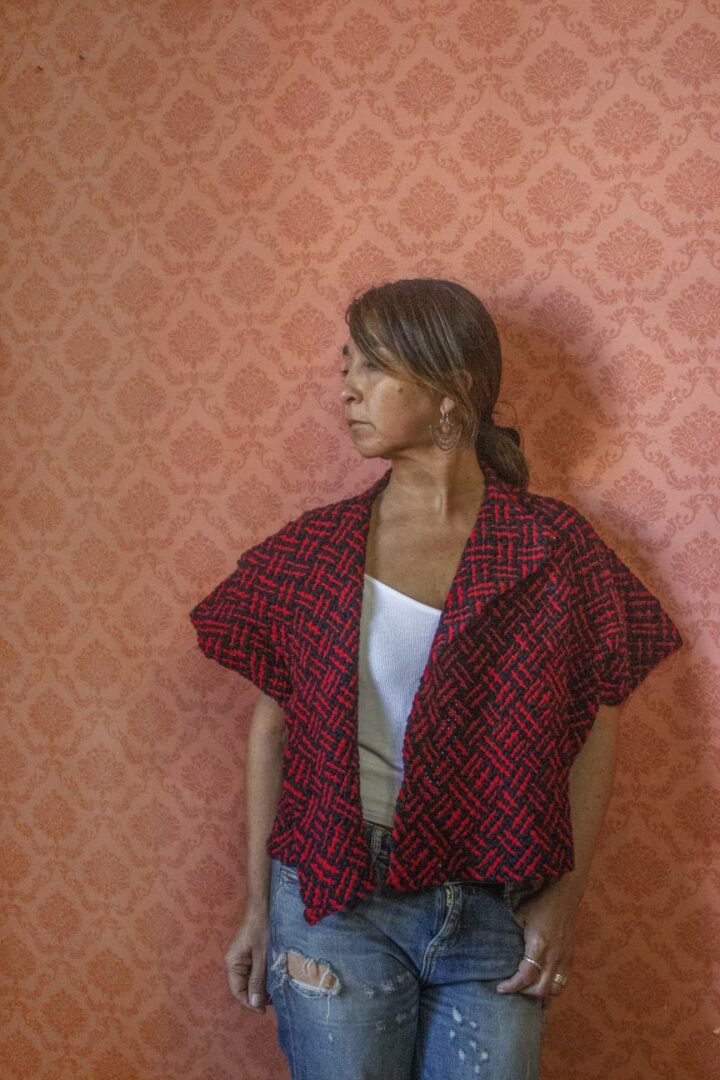
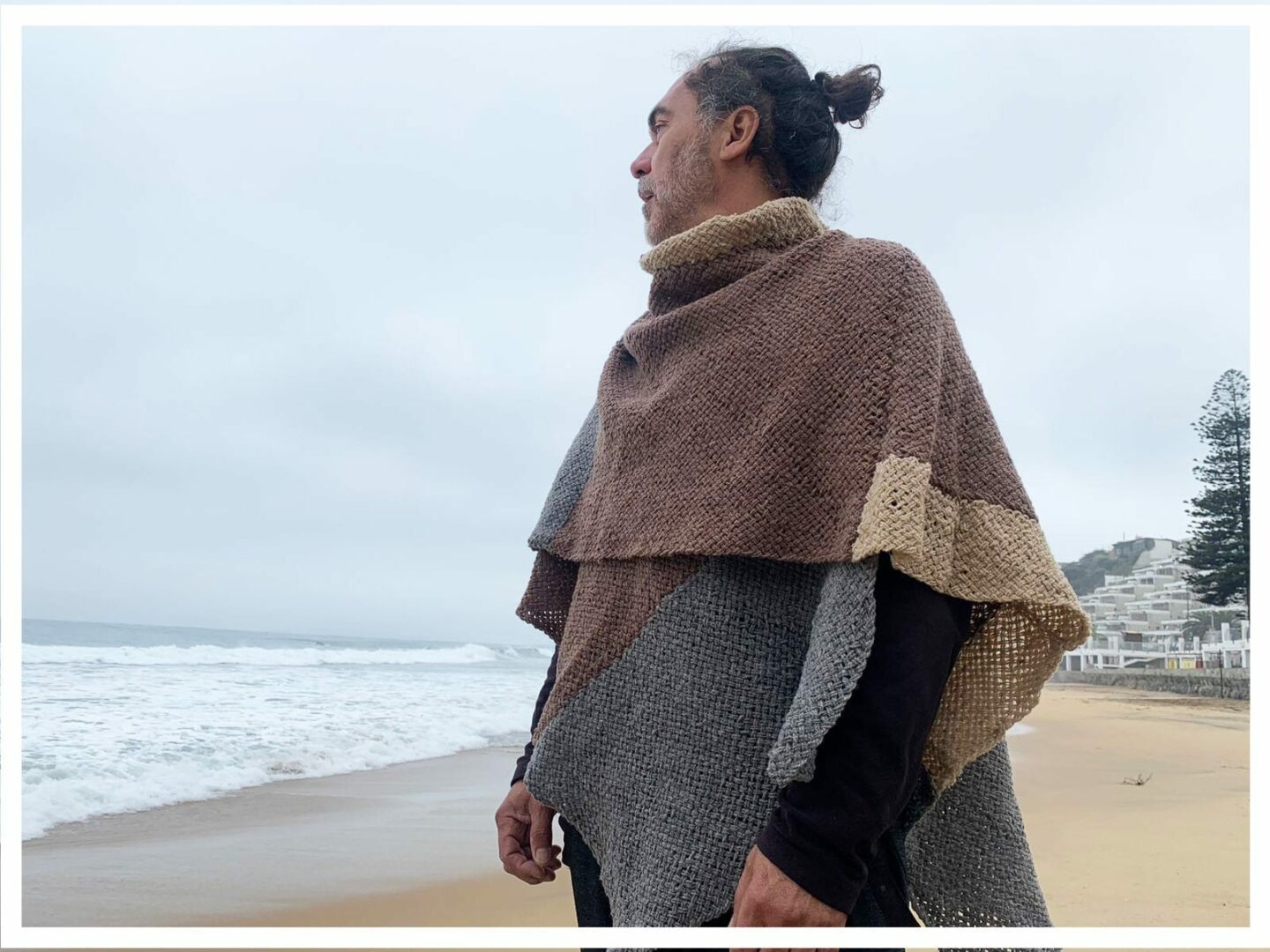
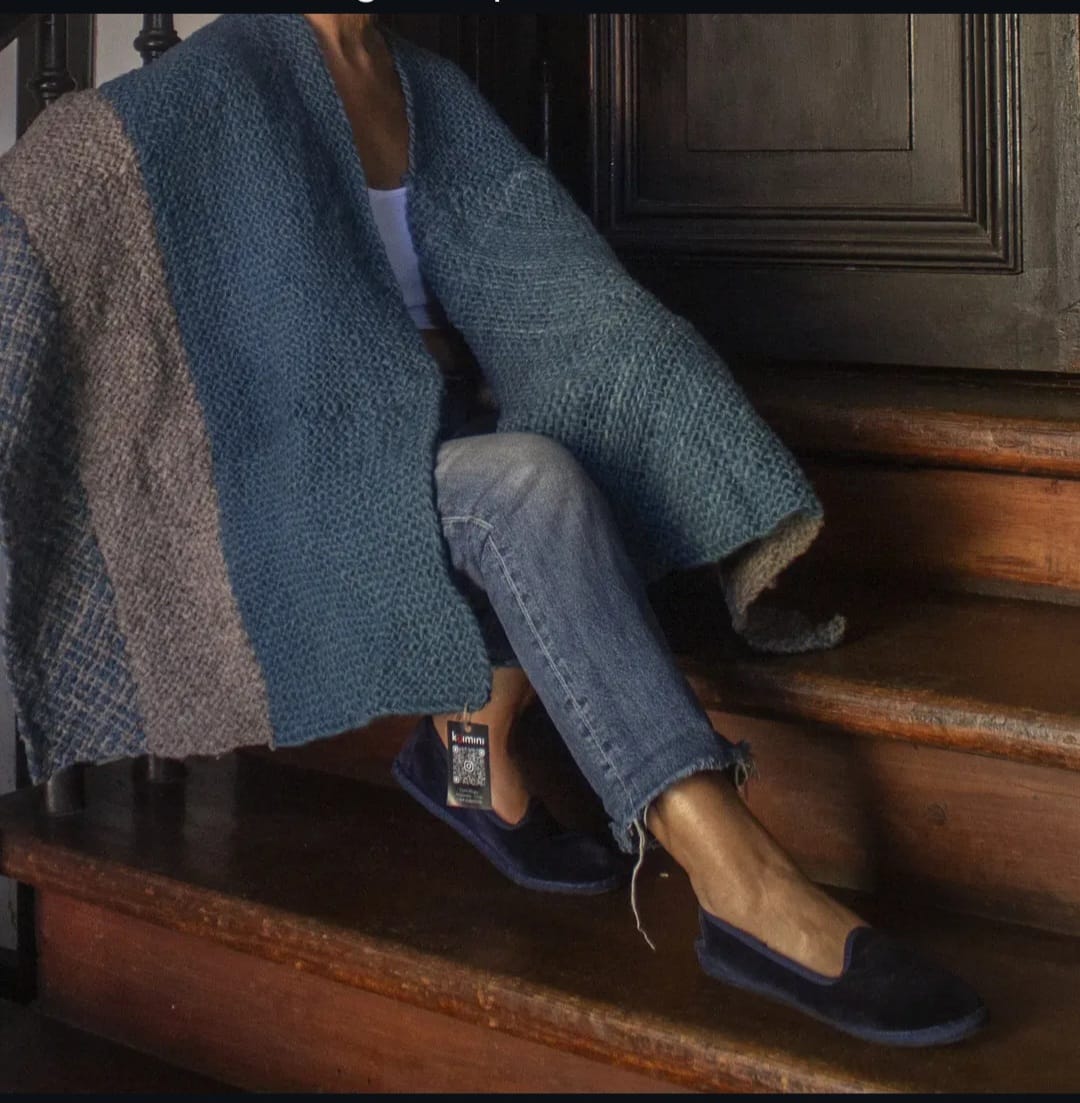

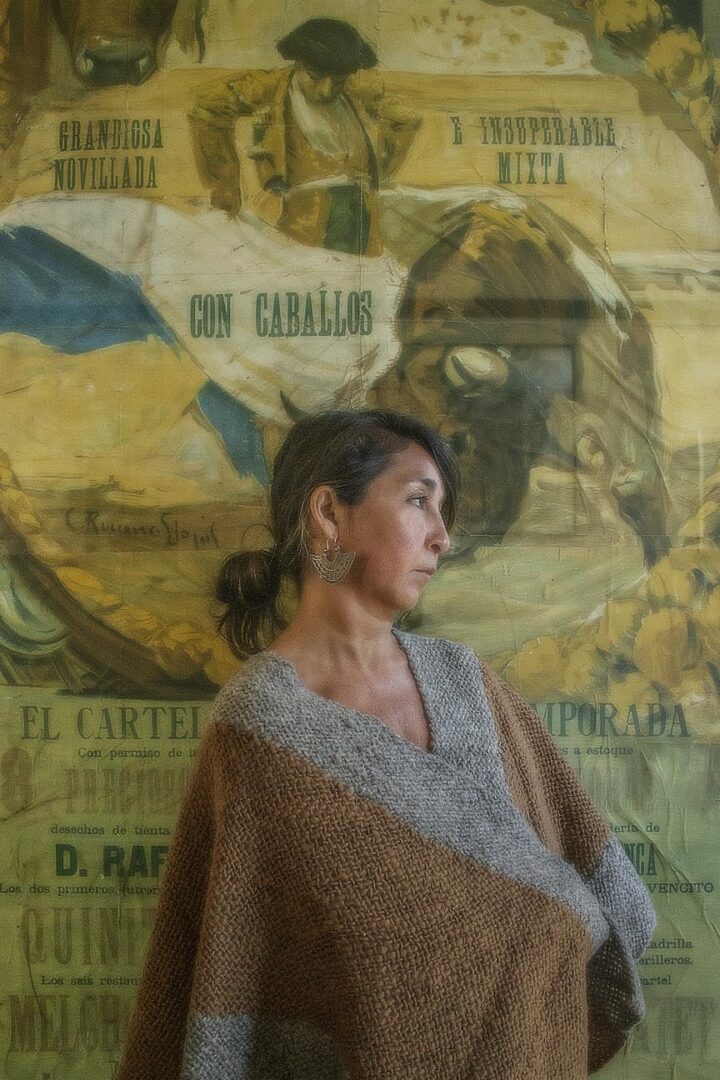
Image Credits
Constanza Carrasco
Itay Rojas
Sebastian Rojas
so if you or someone you know deserves recognition please let us know here.