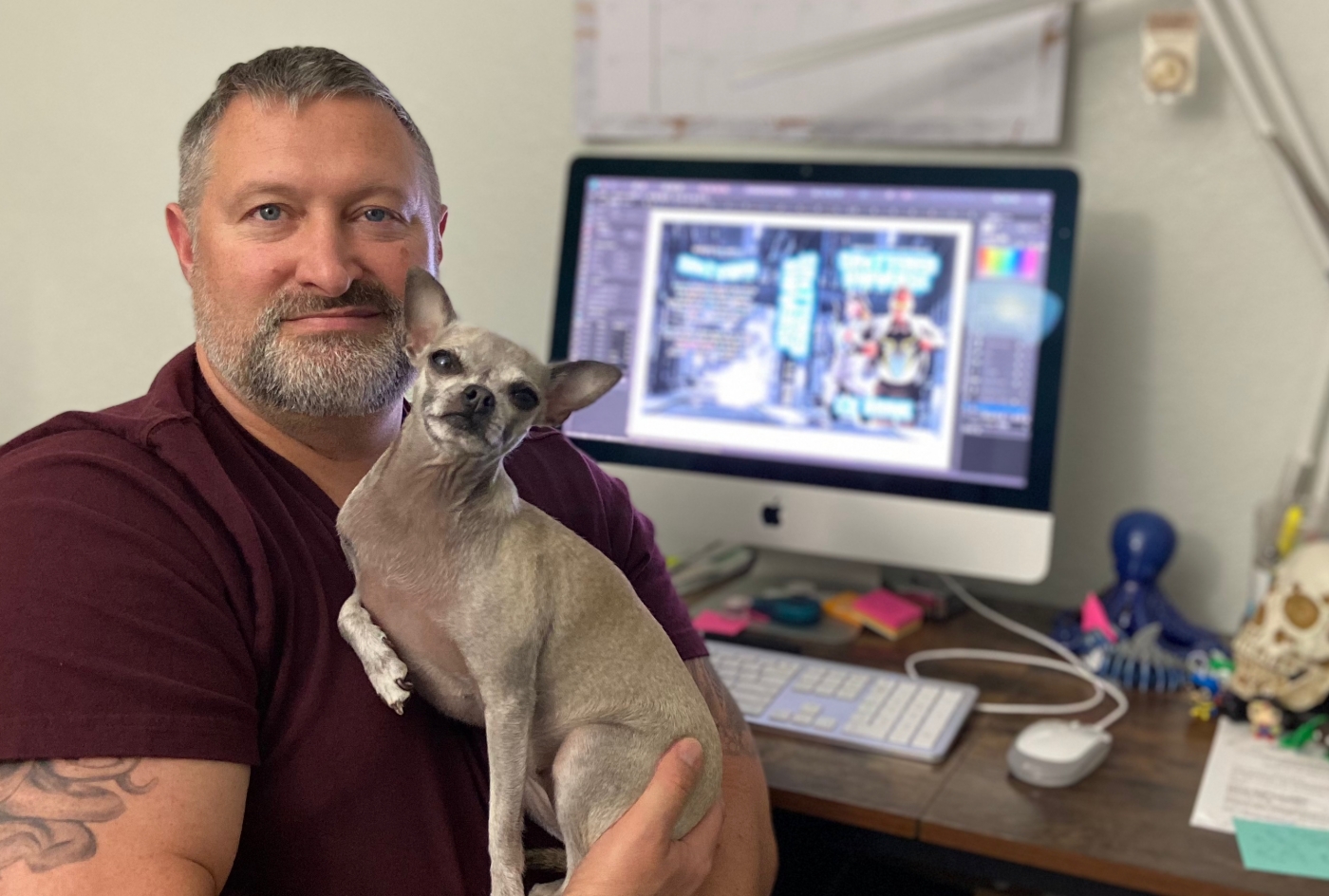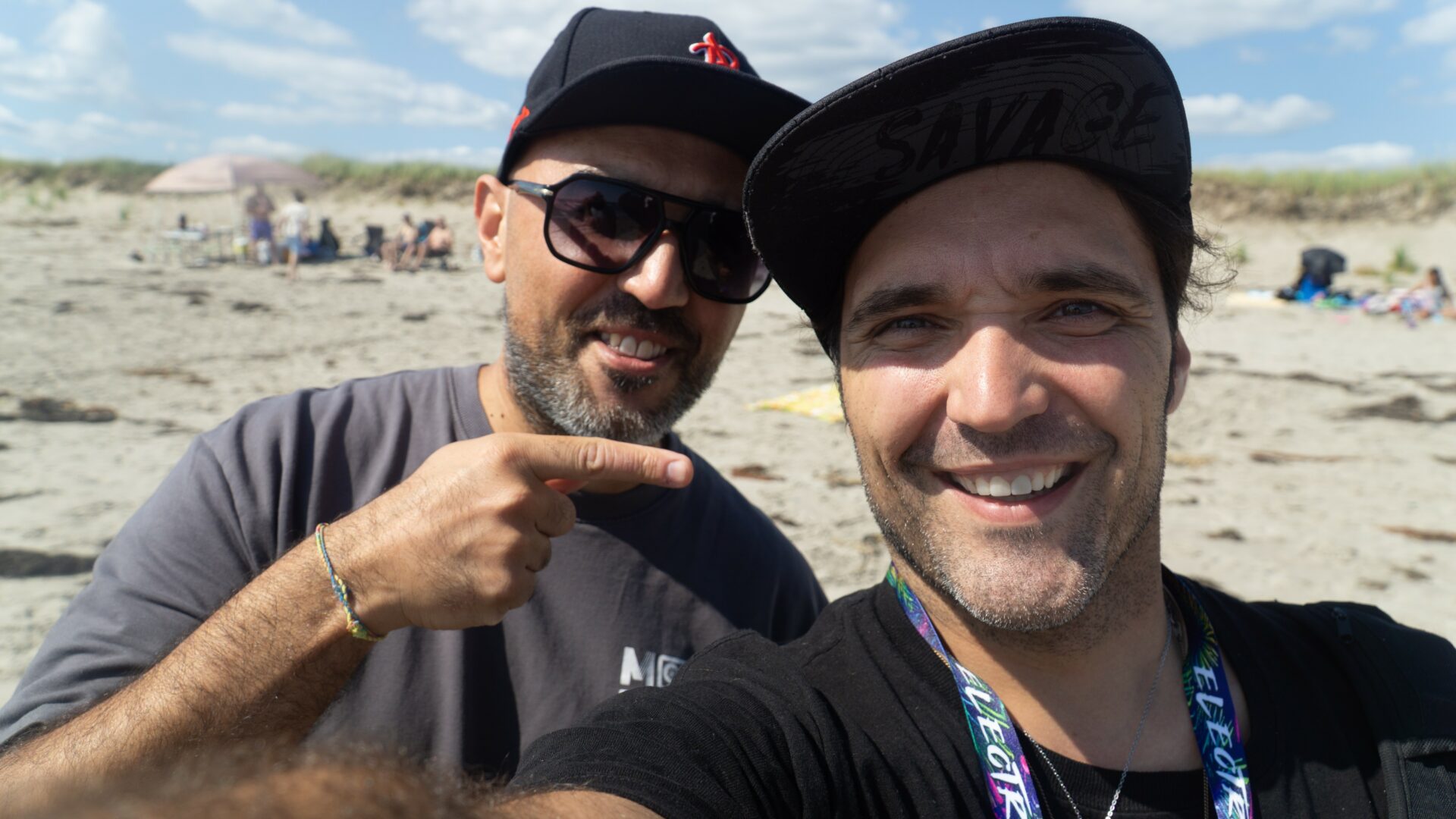
Alright – so today we’ve got the honor of introducing you to Lee Savage. We think you’ll enjoy our conversation, we’ve shared it below.
Lee, thank you so much for joining us today. Let’s jump right into something we’re really interested in hearing about from you – being the only one in the room. So many of us find ourselves as the only woman in the room, the only immigrant or the only artist in the room, etc. Can you talk to us about how you have learned to be effective and successful in situations where you are the only one in the room like you?
Being the only one in the room never intimidated me, it trained me. Some people walk into a space looking for mirrors. I walk in with the scars already telling my story, and the healing factor kicks in long before doubt ever does.
I didn’t earn confidence from applause.
I earned it from surviving things most people don’t talk about, heartbreak, disease, a body that betrayed me, and loss.
Those weren’t tragedies.
They were origin stories.
Every time life tried to kill a dream, I refused to die with it. That’s “Death to Dreams” in its rawest form, learning that sometimes dreams fall apart so you can grow into the person strong enough to build better ones.
So when I’m the only one in the room who looks like me, thinks like me, or carries my kind of past, I don’t shrink.
I sharpen.
Because I’m not there to blend in. I’m there to bring something no one else can.
Most people try to fit the room.
I elevate it.
I’m not performing. I’m not pretending.
I’m simply showing up as the version of me that chose survival over surrender, the version that turned trauma into muscle, pain into purpose, and silence into a weapon.
If I’m the only one who looks like me in the room?
Good.
That means I get to be the example instead of the echo.
And that’s where I thrive.
Appreciate the insights and wisdom. Before we dig deeper and ask you about the skills that matter and more, maybe you can tell our readers about yourself?
My work didn’t start as a business, it started as survival.
I didn’t set out to build a brand. I set out to rebuild myself after life tore everything familiar out from under me. Losing, fighting, navigating grief, and carrying the weight of my own body failing… They shaped the man I became.
That’s why my career today has a very human heartbeat.
Everything I create is born of perseverance and the choice to rise.
I’ve always identified with Wolverine, not because he’s invincible, but because his invincibility comes after the wound. He’s not untouched. He’s scarred, tempered, hardened. He heals because he has to. He keeps going because stopping would betray the people he could help.
That’s what I want my work to do.
Professionally, I’m focused on storytelling, and helping people reclaim themselves.
Death to Dreams Is a mix of memoir, psychology, and straight truth, a guide for when life cracked open and forced them to rebuild from inside out.
I don’t write from theory.
I write from scars.
From nights I didn’t think I would make it.
From the kind of pain you can’t “positive mindset” your way through.
And that’s what makes this work special to me.
I’m building a brand where people don’t have to pretend to be okay.
Where they don’t have to hide the trauma, the heartbreak, the self-doubt.
Where they can transform the darkness instead of denying it.
I’m also expanding into content, speaking, and creative projects that help people break and understand relationship dynamics, and rebuild identity with the kind of honesty we don’t see enough of.
What I want people to know is this:
I’m not here to be perfect. I’m here to be real.
My entire life has been one long experiment in healing, surviving, and rising stronger. And if sharing that helps someone else stand up a little taller, then every scar was worth it.
I’m not the hero who walks in shiny and untouched.
I’m the one who walks in after the storm, still standing, still choosing to fight and showing others they can too.
Looking back, what do you think were the three qualities, skills, or areas of knowledge that were most impactful in your journey? What advice do you have for folks who are early in their journey in terms of how they can best develop or improve on these?
When I look back at what shaped me, it wasn’t a single moment or one breakthrough; it was a series of qualities that kept surfacing every time life knocked me flat. The first was a kind of radical self-honesty that didn’t come softly. It showed up after heartbreak, after loss, after sitting alone with myself long enough to recognize the difference between who I truly was and who I had been pretending to be. It forced me to stop performing strength and actually build it. That honesty became my compass. It stripped away denial, ego, and the stories I used to hide behind. It gave me clarity, even when that clarity hurt.
The second was resilience, not the glossy motivational kind, but the Wolverine kind. The kind that only forms when life cuts you open and you have to heal in real time while still moving. I’ve lived through moments that could have ended me: cancer, grief, abandonment, being left to rebuild from almost nothing. But every wound taught me something about my ability to regenerate. Not to bounce back that’s too simple, but to grow back. Different. Deeper. Wiser. Stronger. Pain became a forge, not a prison. Healing became a discipline, not a miracle. And over time, resilience turned into a quiet confidence that doesn’t flinch when the world shifts.
The third was learning to see patterns, in myself, in others, in the dynamics that shape relationships and identity. When you’ve been hurt by people who claim to love you, or blindsided by manipulation you didn’t recognize until too late, you either stay blind or you start paying attention. I chose to pay attention. I learned to listen to what people show rather than what they say. I learned to track my own cycles: who I trusted, why I tolerated certain behaviors, where I abandoned myself to be chosen by someone else. That awareness changed everything. It taught me how to break loops instead of relive them. It taught me how to walk away sooner. It taught me how to rebuild without repeating the story.
All of these qualities came from experience, not theory. They weren’t chosen, they were earned. And when combined, they became the foundation of everything I am creating now: my brand, my voice, my book Death to Dreams. My work is built on the belief that the parts of us we think disqualify us are often the very things that shape us into something powerful. The honesty that exposes you. The resilience that rebuilds you. The awareness that frees you. Those are the elements that turn survival into direction.
And if there’s one thing that has stayed with me, it’s this:
what breaks you isn’t the end, it’s the beginning of who you’re meant to become.
The wounds aren’t the weakness; they’re the doorway. The healing isn’t the miracle; it’s the muscle. And the story isn’t about staying untouched, it’s about rising, scarred and sharpened, ready for whatever comes next.
We’ve all got limited resources, time, energy, focus etc – so if you had to choose between going all in on your strengths or working on areas where you aren’t as strong, what would you choose?
I’ve learned that most people spend their lives trying to fix the parts of themselves they think are broken, instead of amplifying the parts of themselves that are already powerful. I used to do the same. I chased balance, tried to become “well-rounded,” tried to smooth out every flaw. All it did was dilute me. It made me smaller, quieter, and less connected to who I actually was.
Life changed that for me.
When you’ve been through the kind of experiences that strip you bare, illness, heartbreak, sudden loss, the slow unraveling of a version of yourself you once depended on, the illusion of balance disappears. You’re left with one question: What do I actually have in me that can carry me through this?
My strengths answered first.
Resilience. Emotional depth. Pattern recognition. The ability to analyze people, motives, dynamics. Presence under pressure. The capacity to reinvent myself after every blow. These weren’t things I learned, they were things that survived. In the darkest seasons of my life, I didn’t rise because I had perfected my weak spots. I rose because I leaned into the abilities that were already wired into me.
Trying to force myself into being “well-rounded” had always felt like wearing a costume that didn’t fit. But when I stopped apologizing for being intense, perceptive, emotionally honest, and deeply analytical… everything shifted. Clarity arrived. Purpose sharpened. The right opportunities found me. The right people recognized me. I stopped feeling lost and started feeling aligned.
That doesn’t mean weaknesses get ignored. The parts of me that needed healing, communication, boundaries, self-worth, weren’t skills to improve, they were wounds that needed reconstruction. Healing is different from improvement. You don’t strengthen a wound by pretending it’s a skill gap; you strengthen it by acknowledging it and rebuilding from the inside out.
But the truth is this:
Your strengths are where your life actually expands.
Weaknesses teach you. Strengths elevate you.
Every major turning point in my life came from doubling down on what I naturally do well, not from trying to become everything I wasn’t. When your world shatters and you start picking up the pieces, you don’t search for new tools. You look for the ones that survived the collapse with you.
Those are the ones worth betting on.
Those are the ones that shape your identity.
And those are the ones that move your life forward with power, not pressure.
Contact Info:
- Website: https://Adrenalinefelicity.com
- Facebook: [email protected]
- Twitter: [email protected]
- Youtube: https://youtube.com/@thesavagelee?si=zshP_uycOIPqOwqu
- Soundcloud: https://on.soundcloud.com/YIgQb3wFROLc9qjjiq

Image Credits
Adrenaline & Felicity photography
Lee savage
Shadowscape pictures
so if you or someone you know deserves recognition please let us know here.