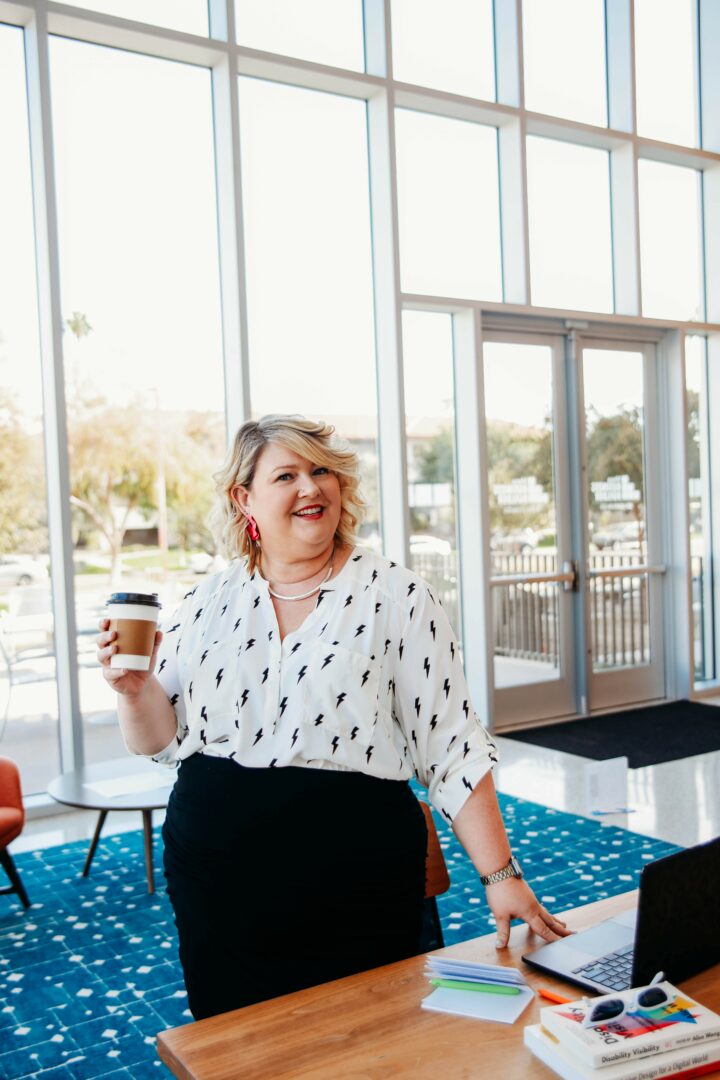
We were lucky to catch up with Christina Carrasquilla recently and have shared our conversation below.
Hi Christina, you’ve got such an interesting story, but before we jump into that, let’s first talk about a topic near and dear to us – generosity. We think success, happiness and wellbeing depends on authentic generosity and empathy and so we’d love to hear about how you become such a generous person – where do you think your generosity comes from?
Generosity by Design
Generosity, for me, doesn’t always look like grand gestures. Sometimes it’s staying on Zoom an extra twenty minutes after class because a student finally feels safe enough to ask for help. Sometimes it’s sending a note of encouragement to a colleague who’s doubting themselves. And sometimes it’s creating a space—virtual or physical—where people feel seen, heard, and supported.
As an academic, an entrepreneur, and an advocate in the design space, I’ve come to see generosity as a creative force. It’s not just about giving time or resources; it’s about sharing ideas, energy, and opportunities in ways that help others grow. I think of generosity as collaboration in motion—something that multiplies when you give it away.
When I look back, my generosity was shaped by so many people who modeled it first. My family instilled in me a sense of empathy and service through active participation in the Girl Scouts (who else’s mom was the Girl Scout leader?). The mentors who guided me early in my design career showed me that creativity thrives in community, not competition. And during my academic exchange experiences, I learned how openness and curiosity can connect people across cultures, disciplines, and time zones. Those lessons still guide me today.
Generosity shows up in my work in countless small ways. It’s in mentoring students at Arizona State University, where I teach and lead the Engineering School’s Graphic Information Technology program. It’s in helping them see their potential—to take creative risks, to build inclusive experiences, and to find their voice. It’s in collaborating with others—like serving as a partner for The Brand Girls’ Bakery, where creativity, business, and friendship blend into something that feeds not just us, but our communities as well.
Of course, generosity isn’t always effortless. There have been moments when I’ve given so much of my energy that I’ve had little left for myself. Over time, I’ve learned that generosity needs boundaries. Rest, self-compassion, and saying no when needed are part of the same practice. When I give myself grace, I am being generous to myself.
At its heart, generosity is a choice to believe in abundance—to trust that there’s enough creativity, kindness, and opportunity to go around. Every time I share what I know, open a door for someone else, or listen without judgment, I feel that abundance grow.
Generosity isn’t a one-time act—it’s by design. Every time we share knowledge, kindness, or courage, we help someone else live a little more boldly. And that, I think, is the real heart of this bold journey we’re all on.
Thanks, so before we move on maybe you can share a bit more about yourself?
Academic: Redefining Higher Education Through an Inclusive Polytecnique-Inspired Model
In my academic role at Arizona State University, I have the privilege of being nominated to participate in ASU’s Leadership Academy (LA)—a year-long program designed for faculty and staff who are emerging as leaders across the university. The Academy provides a transformative series of trainings focused on developing leadership skills, advancing impactful projects, and building a diverse and collaborative community of changemakers.
My project, Redefining Higher Education Through an Inclusive Polytechnique-Inspired Model, aims to reimagine traditional higher education by integrating a Polytechnique-style framework that fuses interdisciplinary excellence, public service, and experiential learning to develop future-ready graduates who lead with innovation, ethical responsibility, and civic-minded purpose.
This initiative reflects my belief that the future of higher education lies at the intersection of creativity, inclusivity, and real-world impact. I hope to contribute to a model that empowers both students and educators to shape a more connected, equitable, and innovative world.
Entrepreneur: Introducing Mix & Method
As an entrepreneur and partner at The Brand Girls, I’m thrilled to announce the upcoming launch of our new venture, Mix & Method—a go-to consultancy for crafting an accessible brand and digital systems with strategy baked in.
From WCAG audits to UX remediation and inclusive design, we blend creativity and compliance to deliver work that works—for everyone. Powered by The Brand Girls, Mix & Method doesn’t just follow best practices—we mix them into everything we do.
Our mission is to make accessibility not just a checklist, but a creative advantage. Whether we’re refining a digital experience or helping a brand reimagine its visual identity, we’re guided by the belief that inclusion and innovation rise together.
Advocate: Educating Small Businesses on Accessibility
As a passionate advocate for accessibility and inclusive design, I am a proud partner at The Brand Girls’ Bakery. As we move toward nonprofit status, our focus has sharpened: we now exclusively serve our community of small businesses and startups—the very creators and innovators who are often left out of the accessibility conversation.
From websites and branding to packaging and print, we help entrepreneurs understand how accessibility can elevate their impact and expand their audience in addition to compling to upcoming accessibility laws.
Through free or nearly free workshops, mentorship, and hands-on design accessibility support, The Brand Girls’ Bakery is bridging the gap between beautiful design and practical inclusivity—one small business at a time.
Looking back, what do you think were the three qualities, skills, or areas of knowledge that were most impactful in your journey? What advice do you have for folks who are early in their journey in terms of how they can best develop or improve on these?
When I look back on my journey, the three qualities that have shaped me most are honesty, authenticity, and generosity. They’ve guided not only how I work, but how I connect—with students, collaborators, and communities.
Honesty
Honesty is the foundation of growth. In design, in teaching, and in leadership, honesty means being transparent—with yourself and with others—about what’s working and what isn’t. It’s what allows us to learn, to recalibrate, and to create something better.
For anyone early in their journey, my advice is simple: practice self-awareness. Reflect on your strengths and your blind spots with honesty and compassion. The more clearly you see yourself, the more authentically you can lead and create.
Authenticity
Authenticity has been my compass. It’s what helps me show up fully—as a designer, educator, and human. Early in my career, I tried to fit into expectations of what a creative professional “should” be. But I found my real success when I started leading from who I truly am.
For those just starting out: don’t dilute your perspective to match someone else’s formula. Your individuality is your greatest creative asset. Stay curious, stay grounded, and let your work reflect your values—you’ll attract the opportunities that align with you.
Generosity
Generosity is where everything connects. It’s about sharing knowledge, giving credit freely, and creating space for others to grow. I’ve found that the more I give—whether it’s time, mentorship, or encouragement—the more meaningful my work becomes.
If you’re early in your journey, look for small ways to give. Support a peer. Share a resource. Offer feedback. Generosity builds community, and community builds careers. It’s how we all move forward—together.
Any advice for folks feeling overwhelmed?
It’s hard not to feel overwhelmed in the world we’re living in right now. Between constant change, endless digital noise, and the pressure to always be producing, overwhelm can creep in quickly—and for me, being neurodivergent amplifies that feeling even more.
When I get overwhelmed, my first step is simple: I step away. Sometimes that means switching to another project or moving to a different location to reset my environment. Other times, it means taking a real break—a walk, a nap, or just a few quiet minutes to breathe and reset.
I’ve learned that communicating my boundaries out loud is just as important as honoring them. When I tell my colleagues, “I’m overwhelmed and need to take a break,” it not only gives me permission to pause—it models something powerful. It shows others that it’s okay to advocate for themselves, to slow down, and to protect their mental space.
The same goes at home. My kids see me take breaks when I need them, and they learn that being overwhelmed isn’t a failure—it’s a signal. It’s your mind and body asking for care, not criticism.
My best advice is to listen to that signal. Step away when you need to. Communicate clearly. And remember that rest isn’t an interruption to your work—it’s what allows you to come back to it with clarity, creativity, and compassion.
Contact Info:
- Website: https://carrasquilla.design/
- Instagram: https://www.instagram.com/christina_carrasquilla/
- Linkedin: https://www.linkedin.com/in/carrasquilla/
- Other: https://thebrandgirls.co/
Image Credits
Claire Beuden, Alicia Samone
so if you or someone you know deserves recognition please let us know here.