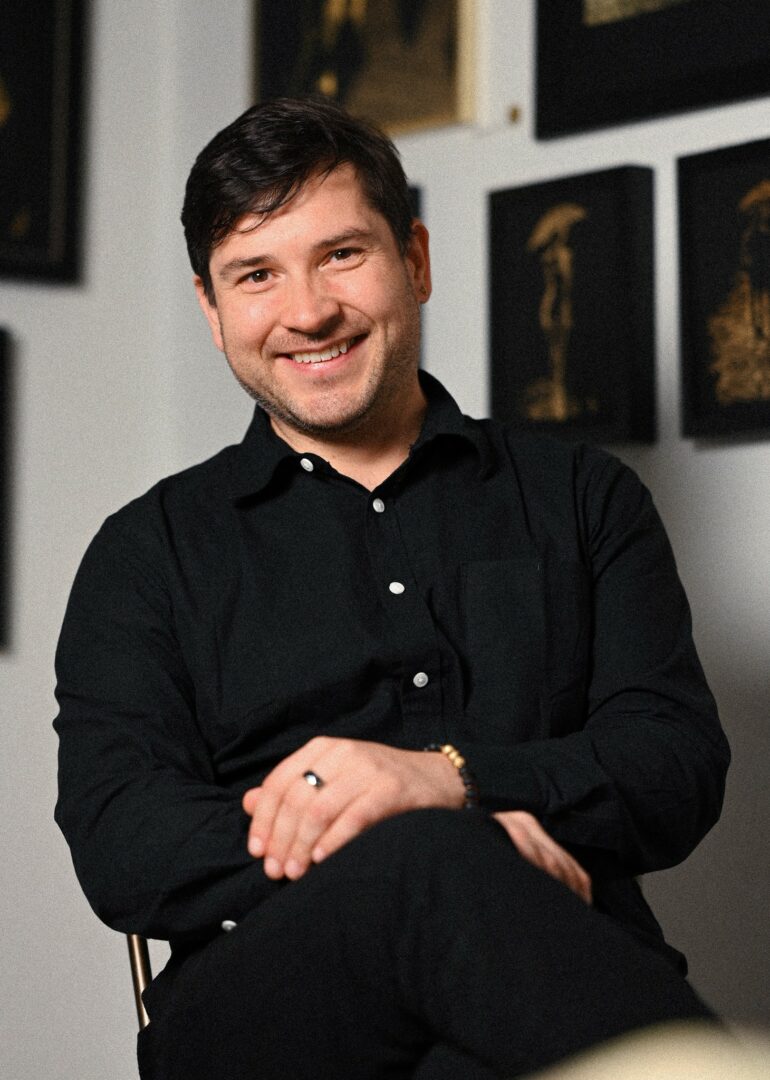
We were lucky to catch up with Victor Selin recently and have shared our conversation below.
Victor, we’re thrilled to have you on our platform and we think there is so much folks can learn from you and your story. Something that matters deeply to us is living a life and leading a career filled with purpose and so let’s start by chatting about how you found your purpose.
I did not wake up one morning with a clear sense of purpose. For a long time my life looked like two parallel tracks that refused to cross. In the daytime I was a materials scientist in labs and clean rooms, measuring how plastics breathe and how molecules move. At night I was sketching, writing in a private script, and playing Irish flute until the neighbors probably knew every tune. Whenever I used my own script, something inside me answered. It was quiet, almost like a small bell in the chest, but it was persistent. My advice is simple: pay attention to the things that keep calling you in that way. That signal is rarely loud, but it is usually honest.
Other people tried to solve the puzzle for me. At work I was “the engineer with a fun creative hobby.” At gigs in Dallas and weddings in Austin, everyone assumed I was a full time musician and they were shocked when I said I develop medical devices. During conferences colleagues were surprised that I knew the local traditional music scene and that I was building an art practice. It took time before I accepted that I did not have to choose one mask and abandon the others.
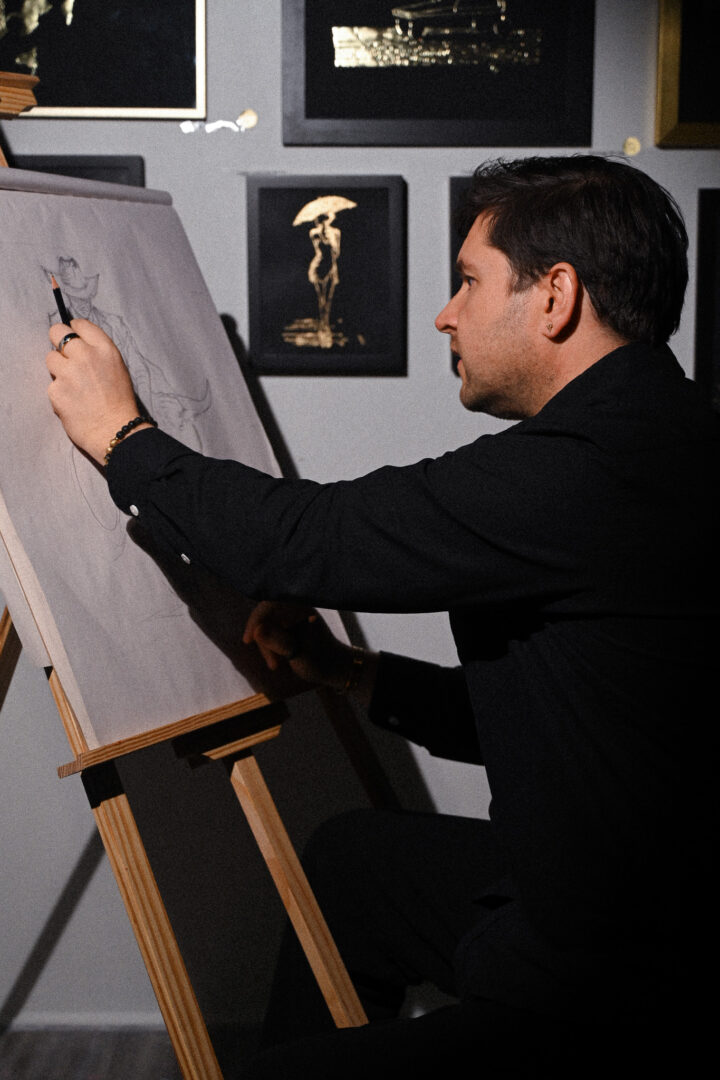
The turning point was not a dramatic crisis, more a slow accumulation. After enough years of chasing deadlines I realized I was treating my life like a stability study. I had numbers, schedules and reports, but no real story. So I began to treat my studio time as seriously as my lab time. I bought real gold leaf and deep black boards and started running experiments on beauty. I changed one variable at a time, type of gold, thickness of glue, texture of the ground, and measured the result with my own eyes, with the reactions of friends, with feedback from curators.
The first time I laid a sheet of gold onto black and watched it catch the light, something clicked. My science brain and my art heart finally faced the same direction. I understood that my purpose is to build a visual language from a few simple elements: gold, black, reflection and full absorbance. Everything I knew from physics, chemistry and music suddenly had a place inside that language.
Finding purpose for me was not one revelation. It felt like walking through a long corridor where you only see a few steps ahead. The path became visible only when I stopped waiting for perfect certainty and simply took the next small step, then another. Patient, repetitive work has its own quiet power. If you show up, move your hand even a millimeter each day and keep listening, the hardest questions soften and begin to answer themselves.
Great, so let’s take a few minutes and cover your story. What should folks know about you and what you do?
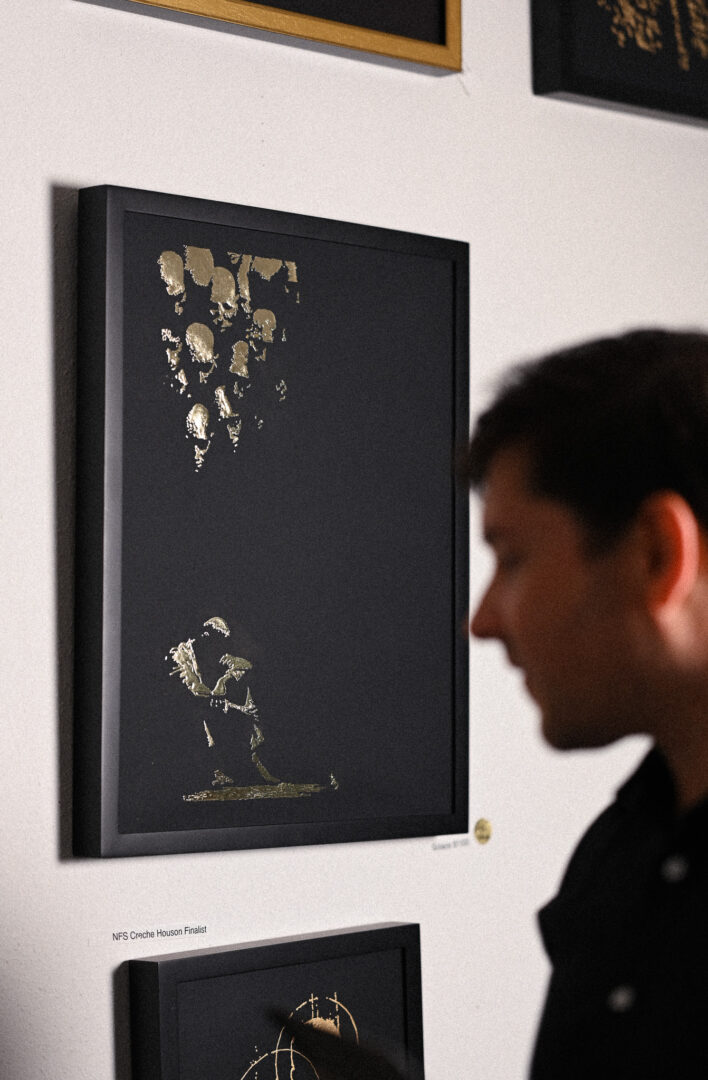
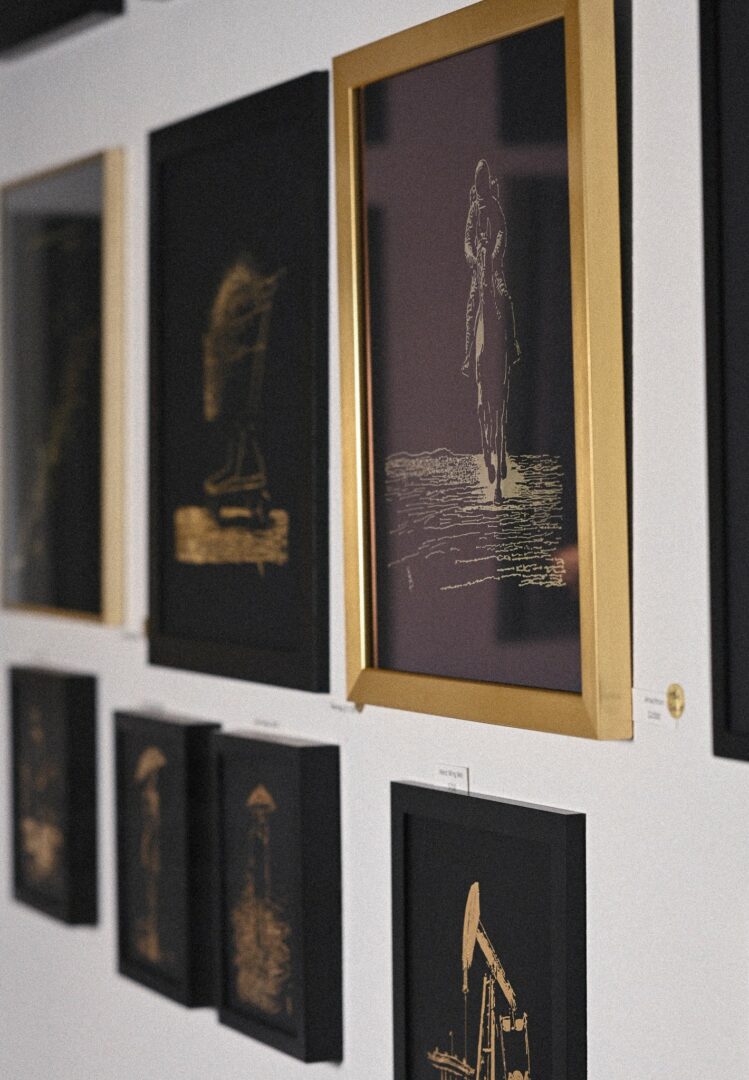
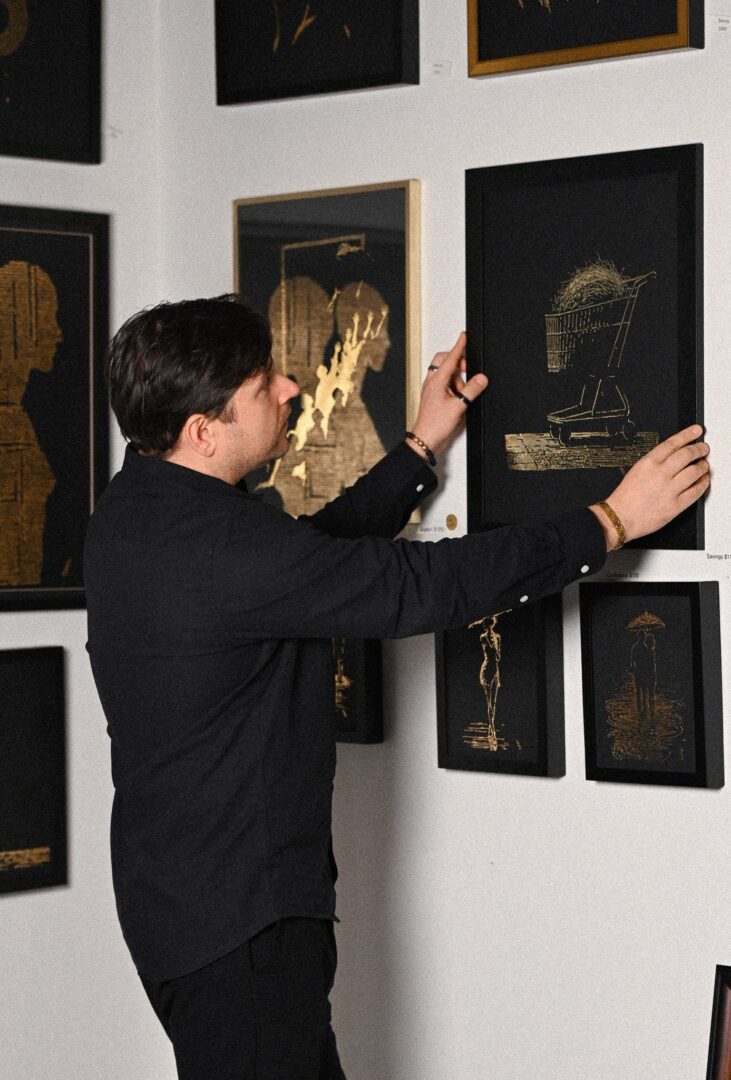
On paper I do something very simple. I put thin sheets of gold on deep black surfaces and draw with a private alphabet no one can read. In reality it is stranger than that. Gold on black is a classic luxury palette and many brands use it, but for me it is not a logo, it is an entire ecosystem. The same discipline runs through the work, the way I dress for shows in black and gold, and the way I want people to feel: focused, elegant, slightly on edge.
Behind the palette is an obsession with writing systems. People often assume my script is based on hieroglyphs. In fact I am more fascinated by Demotic, the fast cursive Egyptian script on papyrus that carried both everyday notes and sacred texts. My own writing behaves in a similar way. It changes character with direction, speed and pressure. Turn it one way and it feels closer to the Middle East. Reverse it and it suddenly reads like a medieval margin. The same line can feel like a quiet prayer, a technical diagram or a piece of street graffiti.
Color is another quiet lever. In early Greek poetry, color was often described through objects and effects, like the famous “wine dark sea,” which points more to mood and importance than to a precise spot on the spectrum. I chase a similar idea. In my work gold is not decoration. Gold and script become qualities of the thing depicted, so a road drawn in gold handwriting is not only a route, it carries memory, risk, promise.
Every piece is built like an experiment. I adjust the type of gold, glue, surface texture, engraving angle, letter size, then watch how the object behaves under light and in people’s hands. Many viewers first notice the work because gold on black photographs well, but they stay if the piece keeps talking to them after the first shine fades. My real capital is the small circle of people who come back to see the next chapter. Right now I work out of Studio T8 at Art Hub ATX in Austin, creating original panels, limited edition prints and new installations that let people not only look at the script, but feel surrounded by it.
If you had to pick three qualities that are most important to develop, which three would you say matter most?
Looking back, three things show up again and again in my story: deep curiosity about materials and writing, an experimental way of thinking, and stubborn patience with my own taste.
First, knowledge of materials and scripts. I spent years studying how fast molecules move inside materials, and in parallel I was obsessed with the emotional side of art, with writing systems and how they are created. If you are early in your journey, choose one thing to study far deeper than feels necessary, then pair it with something that seems unrelated. For example, ceramics with typography, or anatomy with sound design. When two distant fields start talking to each other in your head, you begin to generate ideas that are truly your own instead of recycled from other sources.
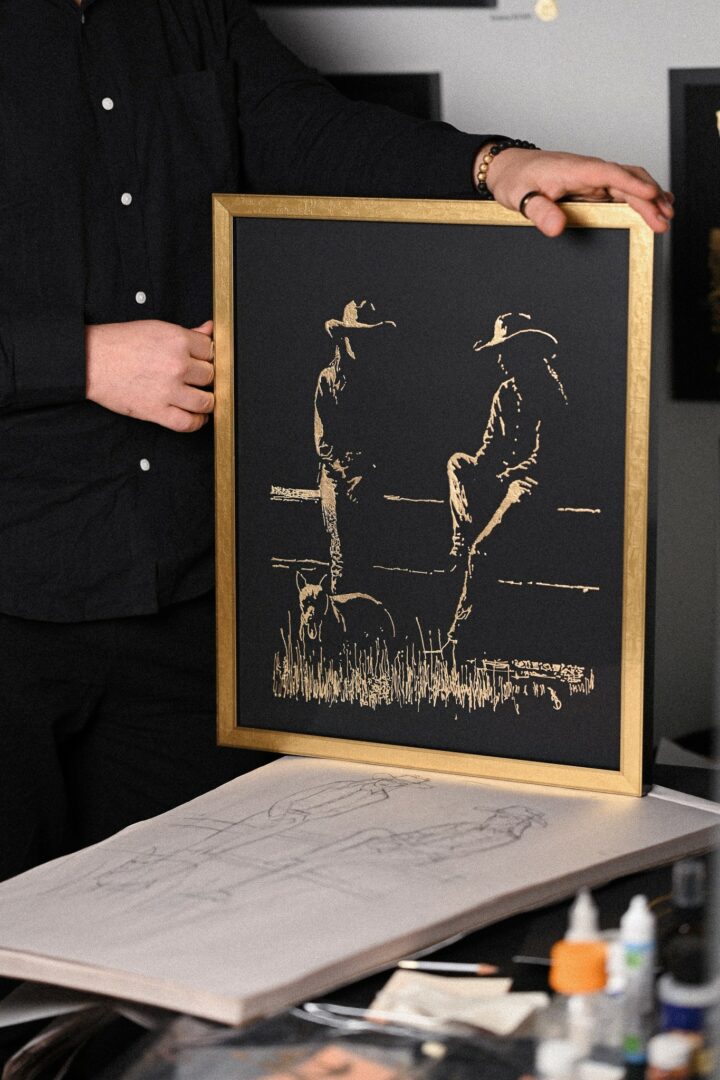
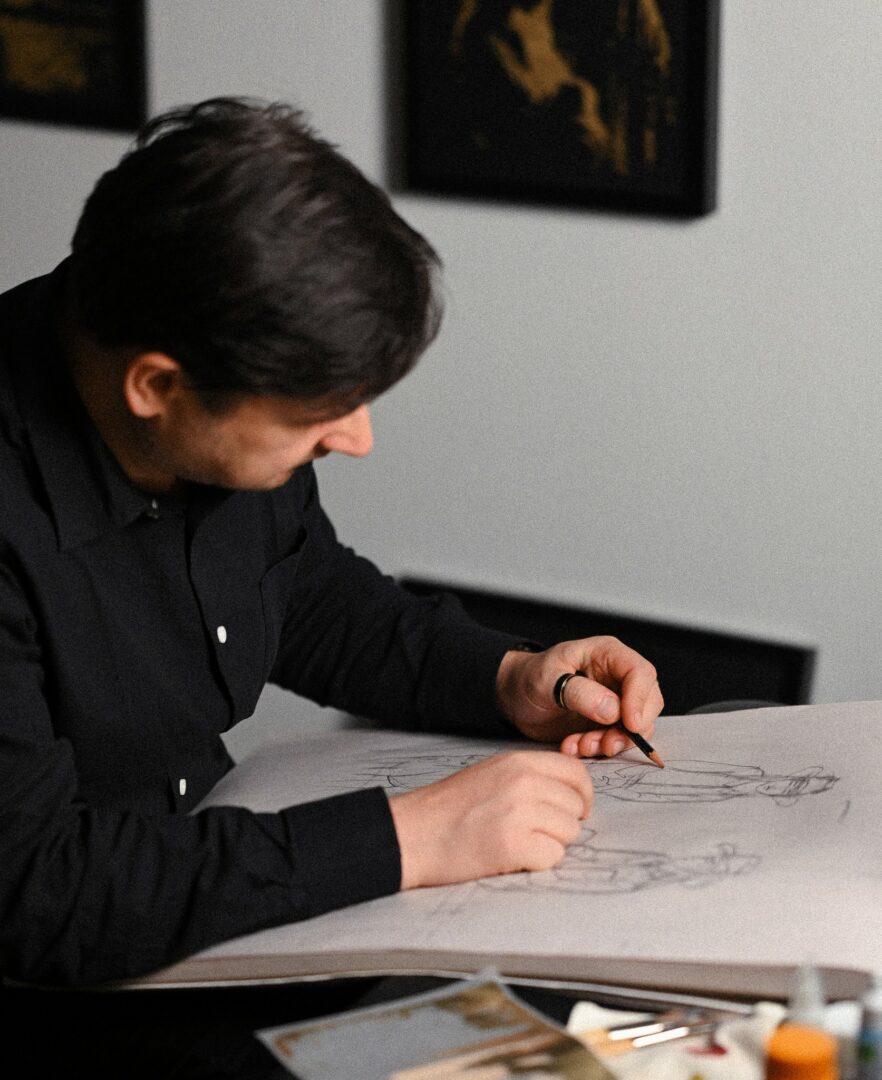
Second, an experimental habit. My art practice is basically a lab. I change one variable at a time: type of gold, glue, texture, pressure of the tool, scale of the script, and I watch what happens. I keep what works, I scrap what fails. You rarely pull anything worth keeping out of the pond without getting your hands wet and cold. For someone just starting, I would recommend setting up tiny experiments instead of chasing one huge breakthrough piece. Try three versions of the same idea on cheap material, write down what you see, then repeat. Repetition is boring only if you stop paying attention.
Third, stubborn patience and loyalty to your own taste. Progress in my case came slowly. Shows, collectors, galleries, all of that followed many quiet evenings of drawing lines that no one saw. Moving a little slower than your ego wants often takes you much further than you expect. My advice is to protect your taste and your energy. Spend time around a few people whose eyes you trust more than you trust trends. In the long run, a small circle of honest allies is worth more than any marketing budget. If you keep showing up, keep looking carefully at what you make, and keep adjusting by a millimeter at a time, your skills will grow into a path that actually belongs to you.
How would you describe your ideal client?
My ideal client cares about how a space feels before anything else. They are drawn to gold on black, to clear silhouettes and a touch of mystery, and they like the idea that art can quietly set the emotional temperature of a room. Some come to me for a small apartment, looking for a calm focal point to anchor a meditation corner or bedroom. Others choose a piece for a child’s room, to create a gentle, protective glow that feels like a secret alphabet on the wall. I have clients who are building a full gold themed home bar, or defining the identity of a larger living room, office, or lobby. The spaces can be tiny and soft or wide and cool, but in each case the client wants a consistent style, not random decoration. The best fit clients tell me how they use the room, what they want people to feel in the first ten seconds, and whether they imagine something intimate or bold. From there I can suggest an original, a commission, or a limited edition that fits both the mood and the architecture. They are curious about process, they respect good materials, and they enjoy that I handle the technical side of substrates, finishes, and framing so the work will last. If you read this and think, “I want my space to feel like that,” you are already very close to my ideal client.
Contact Info:
- Website: https://noirgold.art
- Instagram: https://www.instagram.com/noirgold.art/
- Other: https://www.etsy.com/shop/NoirGoldART
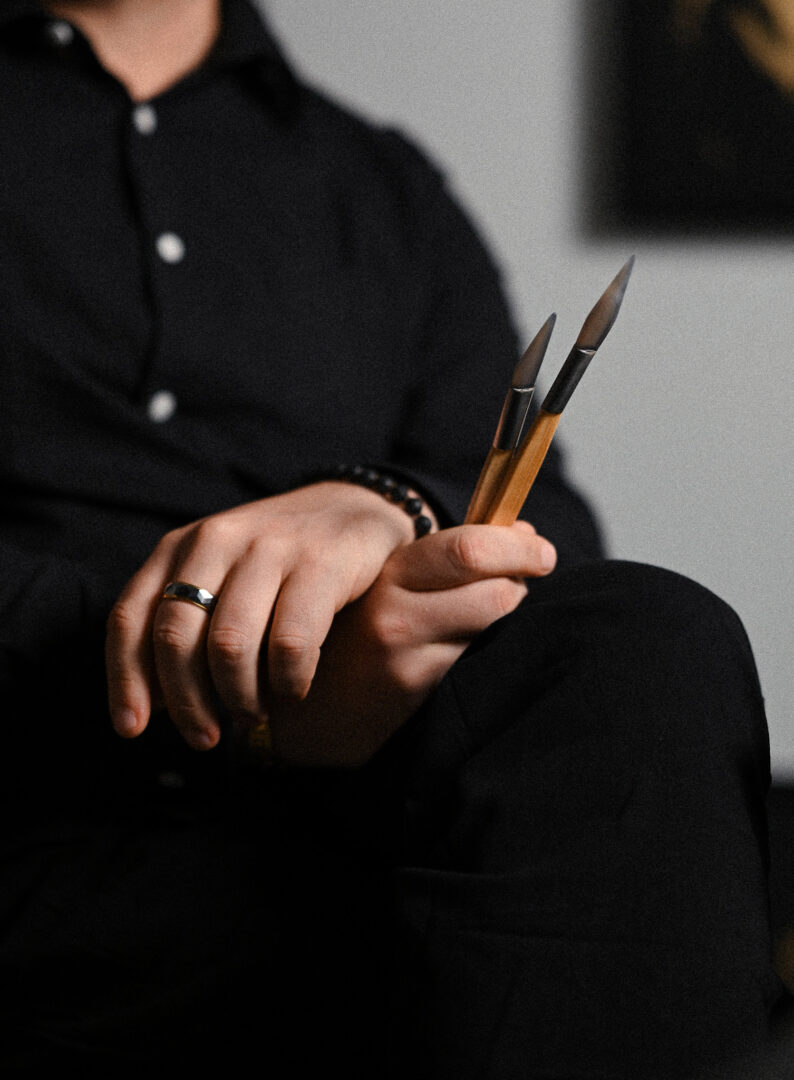
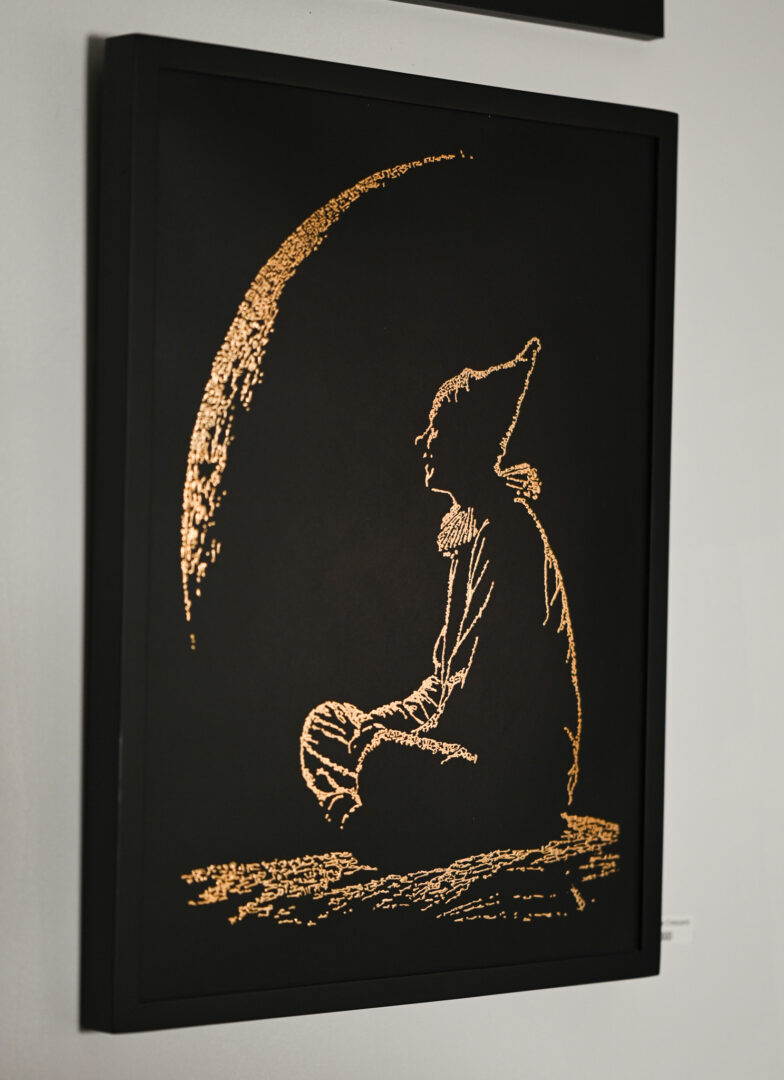
Image Credits
Anastasiya Ilinskaya
so if you or someone you know deserves recognition please let us know here.