We’re excited to introduce you to the always interesting and insightful Mikey Tableman. We hope you’ll enjoy our conversation with Mikey below.
Mikey , thank you so much for joining us today. Let’s jump right into something we’re really interested in hearing about from you – being the only one in the room. So many of us find ourselves as the only woman in the room, the only immigrant or the only artist in the room, etc. Can you talk to us about how you have learned to be effective and successful in situations where you are the only one in the room like you?
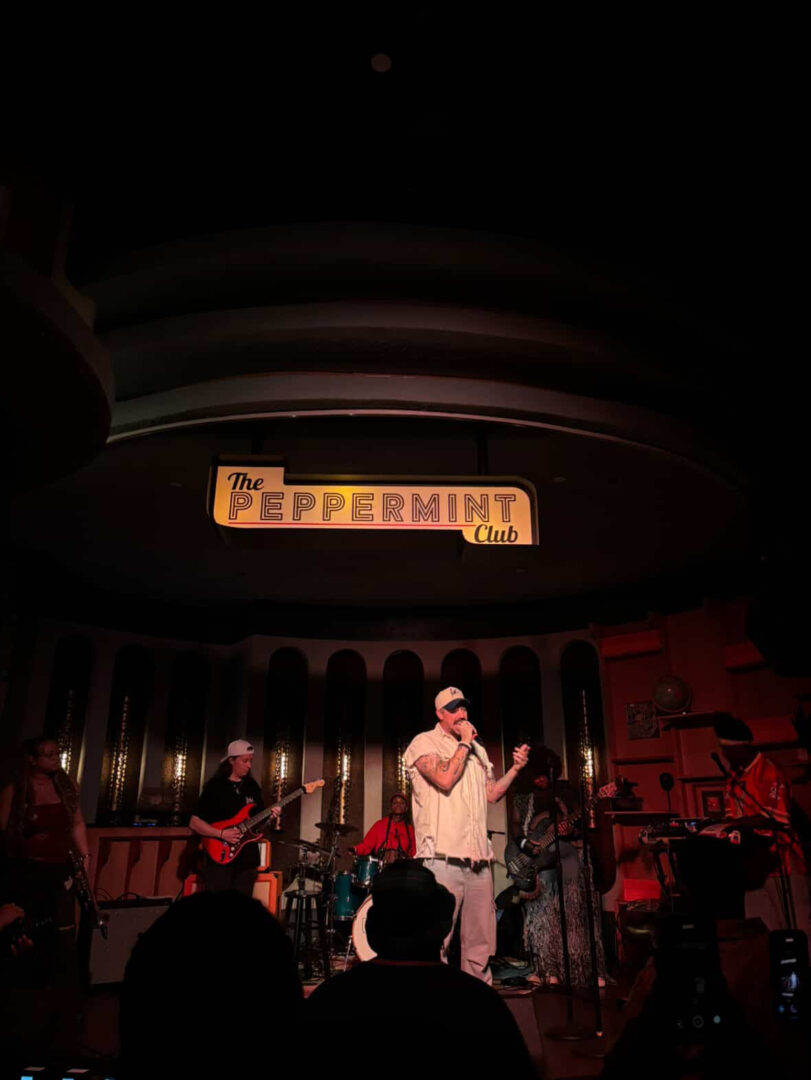
“Being the only one in the room” has never been about being the only one who looks like me, it’s about being the only one people consistently misinterpret at first glance. Because of how I carry myself, and because of the circles I move through, people assume I’ve never struggled. They see the highlight reel of my years in nightlife, the crazy parties, the exclusive access, the high-end events, the podcast, the stages I perform on, the storytelling, the creative work and they think my life has been nothing but momentum and good times. They see the exterior, the face I am putting on to cover the hurt. I show the fake confidence, mustered up charisma and the access I have that makes me look “cool” and “successful”. What they don’t see is the internal battle I am fighting everyday as soon as I wake up. The fire I walked through just to survive. So when I step into certain rooms, I’m often the only one whose pain isn’t expected, whose battles don’t match the image.
All of that used to make me feel like an outsider, like I had to explain my darkness to justify my light. Overtime, I have come to learn that I’m not responsible for people’s assumptions, and that I am responsible for my authenticity. I’ve learned that struggles don’t always show up in the way society expects. That success doesn’t erase pain, just as looking put together doesn’t mean you actually have it together. So instead of shrinking into the narrative that I put on myself or thought others were, I have begun to lean into what I feel is true. I can be part of nightlife but not get caught up in the toxic part of it. I can be surrounded by people, but at times, still feel alone, I can be strong and still have days where I just survive. My presence in those rooms isn’t to convince anyone that I’ve struggled, its to show that struggle wears many faces and usually the strongest ones hide it the best. Once I embraced that, I stopped being the “only one in the room” and became the one who gives everyone else permission to show up fully as they are, fully human.
Thanks for sharing that. So, before we get any further into our conversation, can you tell our readers a bit about yourself and what you’re working on?
My entire career has been built at the intersection of chaos, creativity, and healing. I started in nightlife and large-scale events running VIP operations, managing high-pressure environments, producing moments for celebrities and high-end clients; living in a world that never sleeps. From the outside, it looked glamorous: the access, the parties, the connections, the exclusive rooms I was navigating every night. But beneath all of that, I was slowly burning myself out. I was surrounded by people, but felt completely alone. I was succeeding professionally, while silently unraveling personally. That tension lead to a suicide attempt and a lot of things in between that eventually pushed me into the work I do today. I’m now the founder of A Mind’s Pursuit (AMP)- a nonprofit and creative ecosystem focused on transforming mental-health culture through storytelling, media, events, and honest conversation. Everything I create from poetry and podcasts to corporate programs, children’s content, and live experiences is rooted in one belief: If you tell the truth about what you’ve lived through, you give other people permission to heal. Professionally, I’m a poet, speaker, author, and producer. I use my lived experiences with burnout, addiction, rebuilding my identity, trauma, and resilience not only as a brand, but as a bridge. Through AMP, I get to create work that blends meaning with creativity; using art for advocacy to change the stigma surrounding mental health. We want to show people it is okay to struggle, it’s okay to not be okay and it IS okay to talk about it, and through our organization we are leading these tough conversations through example. What makes this work exciting to me is how human it is. I’m not coming from theory or textbooks. I’m coming from my own experience of knowing what it costs to stay silent, and what it takes to actually rebuild your life. I get to take everything I learned in nightlife, production, experiential design, and storytelling, to redirect energies toward mental health, healing, and making an impact.
Right now at A Mind’s Pursuit we are in a season of building and have so much we are rolling out starting in 2026 and beyond. Were developing verticals that are rooted in meaningful connections and storytelling. There are 4 major projects we are pouring into right now with the team at the moment:
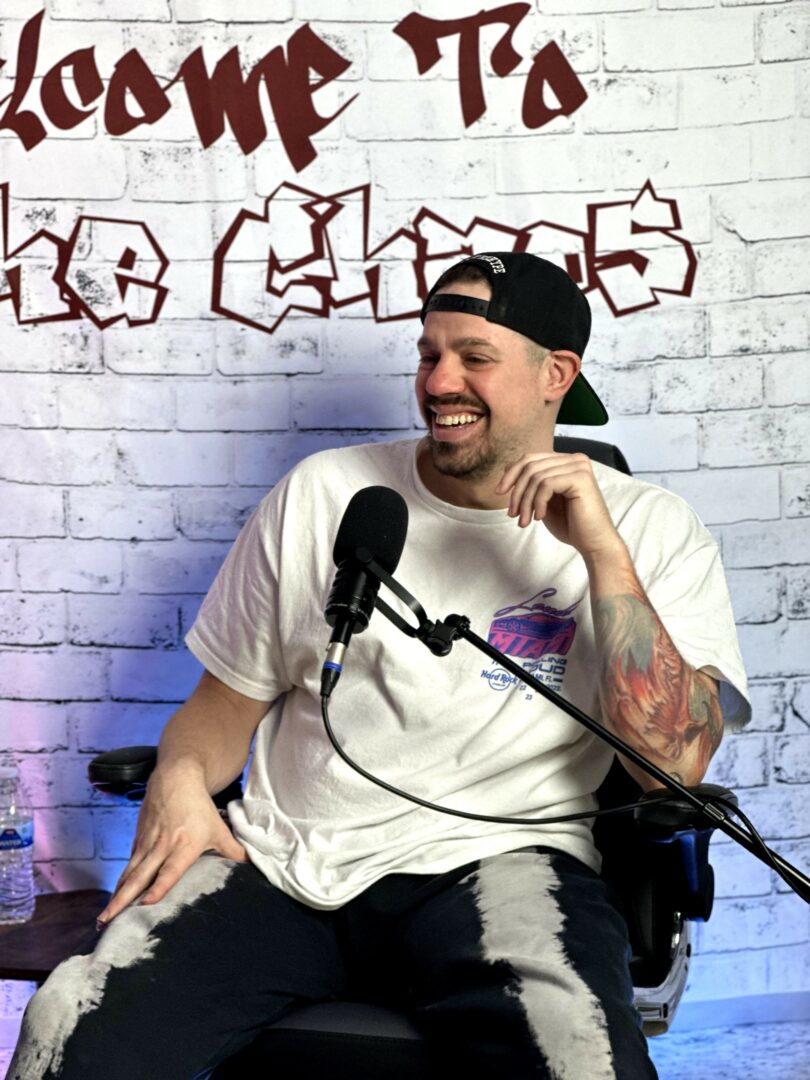
1. Conversation with the Boys- More than just a roundtable conversation, it’s a gateway into a movement focused on men that desperately need it. Most men grow up without learning the needed emotional tools to thrive, without a space to speak honestly, and without models of vulnerability that feel safe. Conversation with the Boys is aimed at changing that. It’s raw, real conversations between men on the things we’ve been conditioned to hide: pressure, purpose, heartbreak, trauma, masculinity, friendships, identity, and everything we carry but never name. The show is only the beginning, as we grow to build men’s support groups, host community meetups, live panels, and seminars that create face-to-face spaces for men to practice emotional openness. It’s about rewriting the idea that men can’t sit with men and be honest. It’s time we normalize vulnerability, not as weakness but as a bridge to healing, to connection, and to ourselves.
2. My Manic Maze; This is my most personal creation, a full flagship storytelling universe built from the chapters of my life I used to be afraid to talk about. It’s poetry, spoken word, music, film, live experience, and art all woven together into one project. My Manic Maze explores mental health, identity, addiction, anxiety, chaos, growth, and the complicated journey of coming back to yourself after you’ve fallen apart. It’s vulnerable, cinematic, immersive, and designed to help people see their own reflection in my story.
3. The Cost of Silence; This is our high-impact corporate and organizational program built to address one of the most universal issues no one talks about honestly, burnout. Co-developed with A Mind’s Pursuit COO Sheela Abdi, The Cost of Silence blends my lived experience in high-pressure environments with Sheela’s HR and leadership expertise. Together, we’re diving into work place atmospheres, helping companies understand the real cost of silence in the workplace emotionally, culturally, and financially. Through keynote talks, workshops, leadership training, and immersive sessions, we’re teaching teams how to create psychologically safe environments, support their people, and build healthier, more human-centered cultures. This is where my personal story meets systemic change.
4. Little Mikey in the World : On the opposite end of the emotional spectrum, I’m building Little Mikey in the World a children’s emotional wellness series designed to teach emotional literacy from a young age. It uses storytelling, illustrated characters, and simple language to help kids name their feelings, understand their emotions, and navigate the world with empathy. Through a book series, animation, live experiences, an interactive app Little Mikey comes to life to teach kids today the tools that could have changed the way I understood myself long before my adulthood struggles started.
If you had to pick three qualities that are most important to develop, which three would you say matter most?
When I look back at everything that brought me here, the burnout, the nightlife years, the healing, the rebuilding, the creative breakthroughs three qualities changed my life more than anything else: radical acceptance, empathy, and leaning into the uncomfortable:
1. Radical Acceptance is what saved me. It taught me to stop fighting reality and start working with it. Accepting my past, accepting my flaws, accepting the parts of myself I used to hide, and accepting the truth of where I actually was not where I pretended to be. Radical acceptance didn’t mean giving up; it meant finally meeting myself honestly so I could move forward without denial weighing me down.
2. Empathy for others and for myself. Empathy came naturally for other people, but it took me years to turn it inward. Learning to understand myself with compassion instead of criticism changed how I healed, how I created, and how I showed up for the people in my life. Empathy is what allows me to connect deeply in my work from my poetry to my nonprofit to the conversations I share publicly. It’s the bridge that makes people feel seen, and it’s also what reminds me that I deserve to be seen too.
3. Leaning Into the uncomfortable is when my entire life shifted the moment I stopped running from discomfort. Every breakthrough I’ve had started in a moment that felt inconvenient, painful, or terrifying: therapy, accountability, telling the truth, walking away from old environments, stepping into leadership, rebuilding my identity, sharing my story, launching new projects. Growth doesn’t happen in the safe zones, it happens when you sit in the places that stretch you.
If I could offer anything to someone at the beginning of their own path, it would be centered around these three qualities. Practice radical acceptance daily. Stop negotiating with reality. Accept where you are emotionally, financially, mentally, spiritually without judgment. Acceptance doesn’t mean you’re stuck. It means you’re honest enough to build from a real foundation instead of fantasy. Choose empathy over perfection, give yourself permission to be human. Talk to yourself the way you’d talk to someone you love. When you mess up, learn instead of punish. When you feel something big, allow it instead of shaming it. Empathy is what keeps you soft enough to heal and strong enough to grow. Finally, don’t run from the uncomfortable, walk towards It. The conversations you avoid, the emotions you suppress, the changes you delay those are usually the exact things that will unlock your next chapter. Discomfort is not a threat, it’s a compass. Follow it, and above all, you don’t have to be fearless to change your life, you just have to be willing.
Do you think it’s better to go all in on our strengths or to try to be more well-rounded by investing effort on improving areas you aren’t as strong in?
I’ve lived both extremes, and what I’ve learned is that you should absolutely lean into your strengths, but you cannot abandon the parts of yourself that need growth. Strengths create momentum, weaknesses create blind spots. If you ignore either, you end up unbalanced. For most of my life, I led with my strengths: charisma, connection, emotional intelligence. Those qualities got me into amazing rooms from nightlife to entertainment. and now into mental health spaces. Those traits have opened doors, created opportunities, and built the creative world I live in today. But the truth is, the areas I avoided, my patterns, my emotional wounds, my lack of boundaries, my inability to slow down, my coping mechanisms are the things that eventually caught up with me and still continue to present themselves. They’re the things that led to burnout, identity loss, and moments where I felt completely disconnected from myself. Your strengths can get you far, but your unaddressed, unhealed weakness will always catch up to you and stunt your growth.
In 2023, everything I’d been avoiding finally surfaced. I was overwhelmed in every direction emotionally, mentally, spiritually. I was carrying everyone else’s weight, trying to be strong for people who had no idea how much I was drowning. And because I didn’t know how to slow down or process my emotions, I turned to whatever would keep me numb: weed, pills, booze, anything to quiet the anxiety that was eating me alive. From the outside, I looked fine and inside, I was spiraling. My anxiety became unmanageable. My body started shutting down from the stress. I felt disconnected from myself, from my purpose, from everything that once felt grounding. I hit a point where pretending I was okay wasn’t an option anymore. It all culminated in a full-blown mental breakdown. In 2018 I tried to make my own life, I realized my issues but I didn’t fully work on them and I saw myself going down that dark road that the second time I traveled I would’t of come back from. I had to lean into the uncomfortable and face my emotional wounds. I checked myself into rehab because I knew if I didn’t get help, I wasn’t going to make it not mentally, not emotionally, not spiritually. Rehab wasn’t a place of weakness for me; it was the strongest decision I ever made. It forced me to look at the parts of myself I had been neglecting, the wounds I’d been covering with work and substances, and the patterns I kept repeating because they felt familiar. That’s where the lesson came from, your strengths can build your life but your ignored weaknesses can destroy it. Working on myself, the uncomfortable parts, the painful parts, the parts I used to avoid is what rebuilt my foundation. That’s what allowed me to truly heal, to reclaim my life, and to grow into the version of me who can now create, lead, help others, and speak openly about what I’ve lived through. So yes, go all-in on your strengths, but don’t abandon the parts of yourself that are quietly calling for your attention. Because those are the parts that ultimately determine your peace, your stability, and your future.
Contact Info:
- Website: https://www.amindspursuit.org/
- Instagram: https://www.instagram.com/mikeytableman/
- Youtube: https://www.youtube.com/@OfficialChaosControlled
- Other: https://www.instagram.com/officialchaoscontrolled/
Image Credits
Courtesy of Mikey Tableman
so if you or someone you know deserves recognition please let us know here.