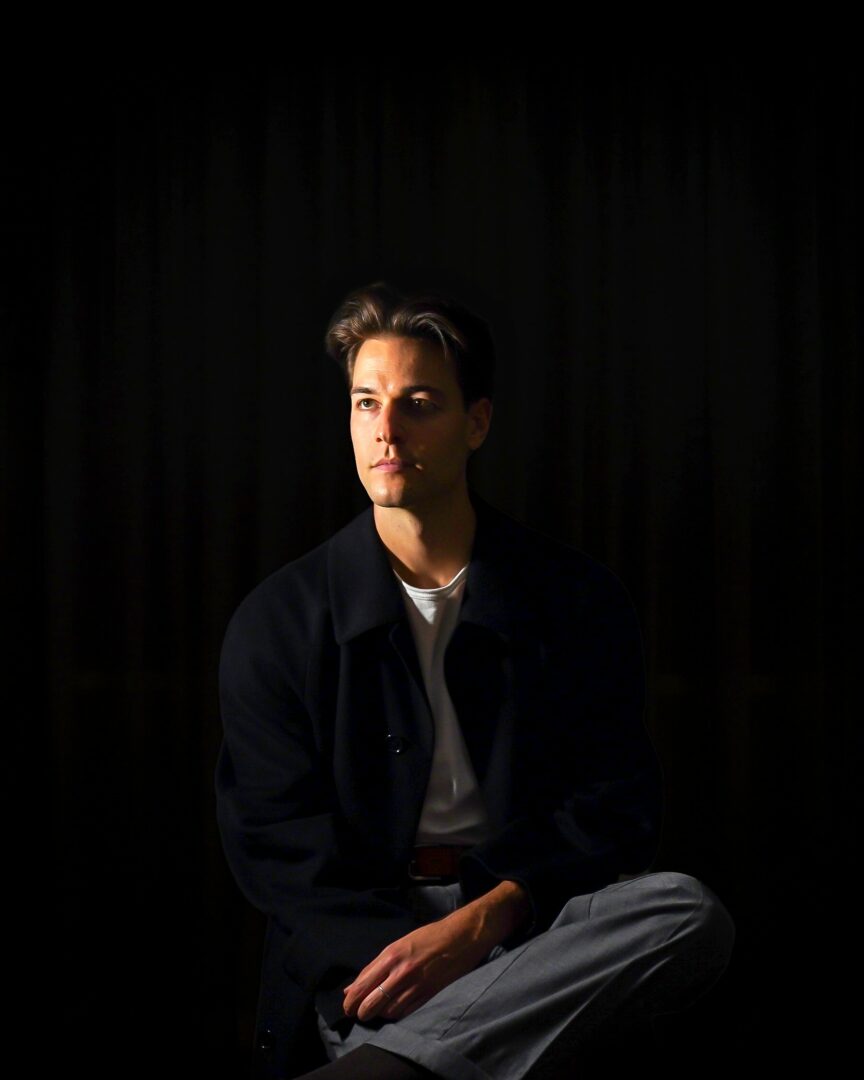
We were lucky to catch up with Giovanni Cordova recently and have shared our conversation below.
Giovanni, so good to have you with us today. We’ve always been impressed with folks who have a very clear sense of purpose and so maybe we can jump right in and talk about how you found your purpose?
I found my purpose naturally and gradually. My passion for music started when I was a kid and eventually grew stronger when I found myself holding multiple musical instruments. First sax, then guitar, which brought me into playing in bands in high school. Being from a small town, it was difficult to find band members, especially bass players, so I started programming bass-lines and various other elements with a DAW. That brought me into music production and the natural frustration of not being able to make tracks sound the way I wanted.
That frustration became the path forward. Looking back, I realise that what felt like an obstacle at the time was actually shaping my purpose. The struggle to achieve the sound I heard in my head pushed me deeper into understanding mixing. That’s where I found my true calling, not just in making music, but in helping others bridge the gap between their vision and reality. Now, when a client approaches me to discuss their sonic vision for a record, I recognise that same frustration I once felt. I’m grateful I can help them overcome it. There’s something meaningful about turning your own difficulty into a service for others.

Great, so let’s take a few minutes and cover your story. What should folks know about you and what you do?
Giovanni Cordova has been working in the sound and music industry for the last decade, supporting creatives as they find the best sonic profile for their art. Whether they’re music artists, producers and record labels, or sound designers and film composers, his role is to understand their vision and offer them the bridge to achieve it. Over the past decade, he’s contributed to the sound of more than 150 songs, published by independent artists as well as major labels like Sony and Warner Music. His global approach has allowed him to work with clients across five continents, helping him develop an unconventional and nomadic approach to mixing, relying on portable setups and in-ear monitoring.
In 2025, he engineered at what’s referred to as the most important studio in the world, Abbey Road in London, and more recently he mixed a song by the iconic Giorgio Moroder, the father of Electronic Music.
“what I’m most grateful for is being involved in truly unique projects from every corner of the globe. There’s something special and humbling in communicating with talented performers and artists on a daily basis, building friendships and long-lasting relationships that aren’t just simply business. These connections are sustained by a shared passion for the craft and the ambition of making it in this difficult industry. I’ve come to see my work not just as technical, but as a form of service using my skills to help others realise visions they can hear in their minds but can’t yet bring into the world on their own.
I recently attended the first night of an event called OOPS in Bressanone, Italy. I’m part of the team that created and finalised the scoring for the light-show by Spectaculaires. What made this event unique was the collaboration with UNICEF—a portion of each ticket goes to WASH, a program focused on improving access to water, sanitation, and hygiene for children and communities globally. It feels great not only to have contributed to such a sonically ambitious project but also to have been part of something truly life-changing. This is the power of music that’s often underestimated.”

Looking back, what do you think were the three qualities, skills, or areas of knowledge that were most impactful in your journey? What advice do you have for folks who are early in their journey in terms of how they can best develop or improve on these?
Looking back, I feel incredibly fortunate. I was raised by a family who empowered me to genuinely search for my own passion, rather than forcing me into a predefined path that simply wasn’t right for me.
I understand this wasn’t the easiest choice for them; as the saying goes, ‘The well-worn way is the least perilous.’ But I’ve come to believe that taking calculated risks in life, and following genuine curiosity, is what ultimately brings you to places you never thought possible.
If I had to point to three qualities that have shaped my journey, they’d be these:
The first is something I discovered just a couple of years ago. The power of perspective through understanding human experience. When you’re struggling with creative blocks, self-doubt, or the feeling that you’re not progressing fast enough, it’s easy to feel isolated in those challenges. But I found real comfort in recognising that these aren’t new problems. Humans across centuries have grappled with the same doubts, the same resistance, the same fear of not being good enough. There’s something deeply reassuring about understanding that your struggles are part of a larger pattern. It doesn’t make the challenges disappear, but it shifts how you relate to them. Instead of “Why is this happening to me?” it becomes “This is what the process looks like.” That shift in perspective has helped me stay grounded through difficult periods and trust that what feels impossible today is simply part of the journey.
The second quality I’d highlight is gratefulness paired with a willingness to seek discomfort, and not just openness to new ideas, but an active practice of seeking out uncomfortable things. That willingness to step outside my comfort zone is where I’ve found the greatest opportunities for growth. I’ve learned to treat discomfort not as something to avoid, but as a signal that I’m pushing into territory where real development happens. It’s a kind of training, really. The more you practice leaning into what challenges you, the more natural it becomes to recognise growth opportunities when they appear. Being grateful for where you are while simultaneously pushing yourself into unfamiliar territory creates this productive tension that drives real progress.
The third is something that’s become increasingly important: staying open to new tools and technologies, not just as consumer trends, but as genuine opportunities to expand what’s possible. In music and mixing, technology is constantly evolving, and it’s tempting to either chase every new thing or reject it entirely in favour of traditional methods. But I’ve found the sweet spot is in being curious and discerning. When a new technology emerges, I try to ask: “What does this make possible that wasn’t possible before?” Rather than seeing new tools as threats to craft or simply as shortcuts, I approach them as invitations to explore. This mindset of continuous learning keeps the work fresh and opens doors I wouldn’t have even known to look for. The landscape is always changing, and the willingness to adapt and integrate new possibilities is what keeps you relevant and excited about the work.
My advice to anyone early in their journey is this: don’t wait for your path to reveal itself in comfort. Learn from those who’ve walked similar paths before you: their struggles and breakthroughs can illuminate your own. Stay grateful for where you are while actively seeking what challenges you. And keep your eyes open to new possibilities, especially the ones that make you reconsider what you thought you knew. Get curious about what makes you uncomfortable, what you’re drawn to even when it feels uncertain. Pay attention to those pulls, even when, especially when, they lead somewhere unfamiliar. The well-worn way might feel safer, but it rarely leads anywhere you haven’t already been.

How can folks who want to work with you connect?
I’m very happy with the projects I’m working on at the moment. At the same time, I’m always open to meeting and collaborating with other creatives. The people I like to work with aren’t necessarily working in the same genre; quite the opposite, actually. I’ve always sought to explore and strengthen my skills across as many types of music and influences as possible. It’s also just more inspiring to draw from diverse sounds rather than focusing on a single type. It would be like cooking and eating the same dish forever.
But here’s what I’ve learnt over the years: there’s something profound that happens when you bring together different musical worlds. Each genre, each influence, each artist carries their own essence, and when those different elements come together in the studio, they don’t just coexist. They create something unified, something greater than the sum of its parts. That’s where the real magic lives.
The only characteristic I truly look for is the love, passion, and ambition in the eyes of those I work with. That fire tells me everything I need to know. It gives me a starting point for understanding what they want to capture and spread to the world. When someone has that spark, the genre doesn’t matter; the dedication to the craft does.
Contact Info:
- Website: https://giovannicordova.com/
- Instagram: https://www.instagram.com/giovicordova/
- Linkedin: https://www.linkedin.com/in/giovanni-cordova/
- Other: Giovanni Cordova Discography Spotify Playlist: https://open.spotify.com/playlist/5cFUYTfH0gHhYP8DsgptAU?si=b858a19062b94ea7

Image Credits
Main Image Credits: Matteo Vezzola
Studio Images Credits: Andreas Senoner and Mint Mediahouse
so if you or someone you know deserves recognition please let us know here.