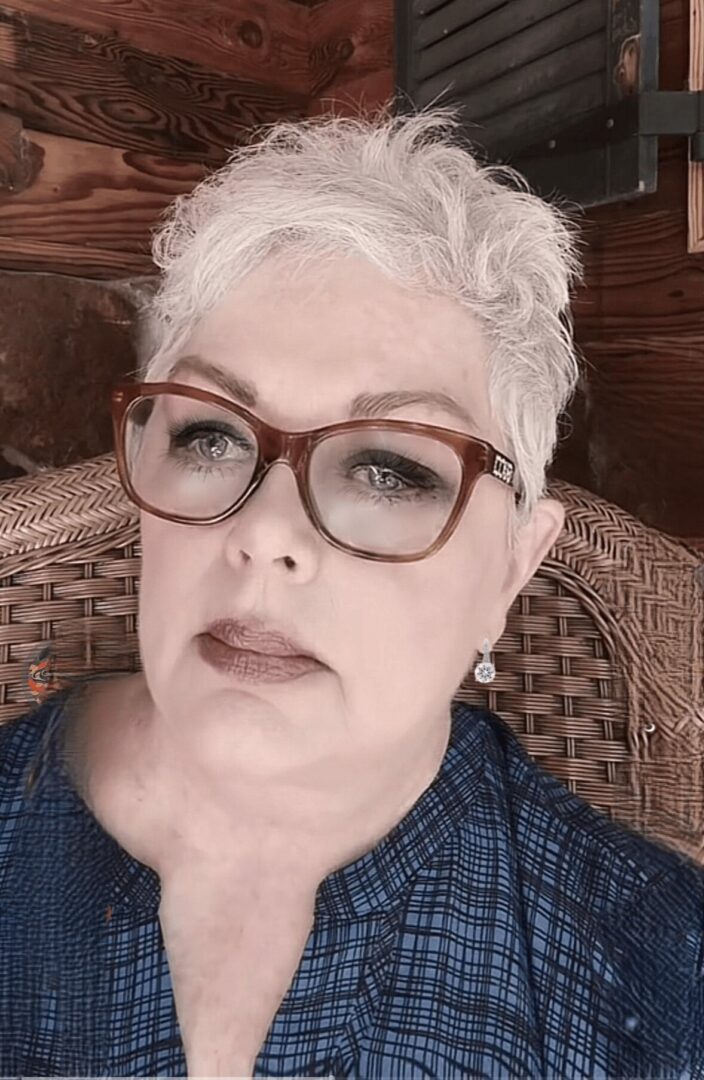
We were lucky to catch up with Jan Canty, Ph.D. recently and have shared our conversation below.
Hi Jan, really happy you were able to join us today and we’re looking forward to sharing your story and insights with our readers. Let’s start with the heart of it all – purpose. How did you find your purpose?
I didn’t understand my purpose until I was in my late sixties. Before that, I built a career as a psychologist and genuinely enjoyed my work. But nothing truly aligned until I launched my podcast, Domino Effect of Murder, and began speaking with other “homicide survivors.” For the first time in my life, I found “my tribe.” Until then, I hadn’t known a single person who had lived through the aftermath of homicide.
Their stories resonated with me—so deeply that they helped the dust settle in parts of my own life I hadn’t realized were still shifting. I began to understand that I stood in a rare intersection: a psychologist with lived experience of violent loss. That realization set everything else in motion. It led to three books and, now, to the first-ever national conference for those whose lives have been upended by homicide.

Great, so let’s take a few minutes and cover your story. What should folks know about you and what you do?
Outside of gardening, photography, and my professional practice, almost every free minute is spent advocating for others walking this same difficult path.
My first book, A Life Divided, is a true-crime memoir. The second, What Now? Navigating the Aftermath of Homicide and Suicide, is the reference book I desperately needed in 1985 and could not find. My most recent work, Rekindled: Healing Grief Through the Science and Experience of After-Death Communication, grew directly from my podcast interviews. In that book, I make two central arguments: that science is not wrong so much as it is incomplete, and that grief professionals must be informed—and open—when clients describe after-death communications. It is their ethical obligation to stay abreast of developments in the field. The research is clear: these experiences can be profoundly healing. I wasn’t sure if others were ready for such a conversation. But judging by the reviews and correspondence I’ve received, I can now say “It’s time.”
I am also active with the Innocence Project. As a homicide survivor, I want the person responsible to be found and held accountable—but only if the arrest is accurate. A wrongful conviction creates a second tragedy, not just for another family but for all taxpayers as well. As a society, we already have the tools to reduce wrongful convictions dramatically—we simply lack the will to use them. Several straightforward reforms would make an enormous difference.
First, every preliminary examination in a capital case should require DNA sampling at the State’s expense. The cost is negligible compared to the lifelong financial and human cost of a wrongful conviction. Second, we must hire more public defenders and pay them competitive salaries. Doing so would attract qualified candidates and reduce the crushing caseloads that undermine due process. Third, we need a national database tracking officials who abuse their authority in pursuit of convictions; patterns matter, and accountability saves lives. Fourth, race should be removed from detainee descriptions when detectives transfer cases to prosecutors to minimize implicit bias. And finally, prosecutors and investigators should incorporate modern scientific findings about the fallibility of eyewitness testimony—one of the most common contributors to wrongful convictions. (For a riveting true account of a wrongful conviction of a homicide survivor, I highly recommend reading “Getting Life” by Michael Morton.)

There is so much advice out there about all the different skills and qualities folks need to develop in order to succeed in today’s highly competitive environment and often it can feel overwhelming. So, if we had to break it down to just the three that matter most, which three skills or qualities would you focus on?
Three things have influenced me most. First, finding common ground with others whose lives were overturned by homicide. That sense of shared understanding changed everything.
Second, my volunteer work in low-resource communities across four continents. Those experiences permanently shifted my perspective. I returned home with gratitude for all the things I once assumed were universal—clean water, paved roads, dependable electricity, and schooling beyond sixth grade. I met people who had little hope of ever receiving medical care, much less legal protection from violence or corruption.
I would strongly recommend that others cast their nets broadly and venture off the beaten path. Travel widely or take a job overseas. You will come home with revelations about yourself and your own culture that are impossible to anticipate. Second, volunteer. It need not be an area directly related to your personal challenge. It could be with the environment, serving homeless street dogs, teaching an ESL class, or participating in the Special Olympics. Volunteering need not be a lengthy commitment. People are needed for short, unusual tasks like guerrilla-style beautification with seed-bombing or posting anti-trafficking hotline flyers in truck stop bathrooms. It’s imperative to get out of one’s routine, one’s comfort zone, to grow and thrive.

How would you spend the next decade if you somehow knew that it was your last?
You asked how I would spend my final decade if I knew that’s all the time I had. For me, this isn’t hypothetical. I am in my mid-70s, I have cancer, and I understand the finiteness of my time. There is always more to do than I will ever accomplish, so I’ve made it a point to mentor my replacement.
My days are divided among my clinical work, writing, gardening, and photographing rainforests, ruins, and the forgotten corners and details of the world. My sense of legacy is woven into everything I do—how I treat people (including strangers), the animals I adopt, the causes I financially support every month, (like K-9 For Warriors which helps to reunite military service dogs with their veteran), with my monthy overnight so-called “adventures” I plan with my granddaughter, my volunteer work as a Master Gardener, and my advocacy for homicide survivors.
The older I get, the more essential solitude in nature becomes. Each summer I sleep in a three-man tent on a wooden platform beneath an arching canopy of cherry laurels. I have a cot and a lamp, but no schedules, no expectations, and no electronics. Nights filled with owl calls and croaking frogs and mornings lit by sunbeams have become transformative for me.
All of it is meaningful. All of it is enough
There’s a book whose message I cherish, “Memento Mori” by J. Ebenstein. The title means “remember you must die.” It isn’t morbid—it’s a reminder. It means: “Don’t forget your mortality. Don’t waste your time.”
Contact Info:
- Website: https://jancantyphd.com
- Other: https://www.tiktok.com/@jancantyphd




so if you or someone you know deserves recognition please let us know here.