Darlene Sardinsky shared their story and experiences with us recently and you can find our conversation below.
Darlene, a huge thanks to you for investing the time to share your wisdom with those who are seeking it. We think it’s so important for us to share stories with our neighbors, friends and community because knowledge multiples when we share with each other. Let’s jump in: Who are you learning from right now?
As a lifelong learner, I’ve always felt there is an endless amount to discover in this lifetime. Learning comes to me in many forms, through nature, experience, people, animals, and life itself, but lately I’ve been especially drawn to the role curiosity plays in guiding me forward. In seeking a deeper connection, I joined a pottery studio and began hosting collage workshops at local libraries, hoping to find a creative community where I truly belonged. After years of searching, I feel I’ve finally reached that “sweet spot” of connection, one shaped by fellow artists whose presence, perspectives, and shared passions are teaching me in ways I never expected.
It has taken time to understand who I am and to feel confident enough to share that person with the world, but I’m proud to stand in my authentic self now. That openness has allowed me to form deep connections with the artists who have become my friends. They have taught me not only new artistic practices, but also the quiet strength of accepting help rather than always offering it, a different, more generous way of showing up. Through their creativity, vulnerability, and kindness, they continue to teach me what it means to be human in this confusing, joyful, beautiful world. I treasure what I’ve learned from them and eagerly look forward to the lessons still ahead.
Can you briefly introduce yourself and share what makes you or your brand unique?
My art practice is centered on collage, a medium that allows me to intuitively weave disparate elements, visual and emotional, into cohesive, layered compositions. While I also work with photography, pottery, and mixed media, collage remains my primary mode of expression because of its ability to hold contradiction, humor, memory, and truth simultaneously.
Technically, my process begins with gathering: I collect found papers, vintage imagery, personal photographs, natural materials, and small visual artifacts from daily life. From there, intuition guides me. I rarely start with a fixed plan; instead, I respond to the materials, allowing each piece to unfold organically. The female figure is always present in my work, sometimes central, sometimes subtle, but consistently serving as a symbol of strength, authenticity, irony, and vulnerability. I often incorporate textures, patterns, and natural imagery as grounding elements, and I use layering both as a formal device and as a metaphor for identity, memory, and cultural complexity.
Conceptually, my work explores what it means to be an authentic woman in a culture that is often patriarchal, performative, and consumer-driven. Humor, contradiction, and emotional honesty are central to my voice. My practice is deeply influenced by community, particularly the artists I teach and collaborate with locally and nationally, through organizations such as the Berkshire Art Center and Collage Lab. My lived experience has taught me to notice the quiet details and to find resonance in small, often overlooked moments. As an artist, I am interested in healing through making, storytelling through fragments, and creating work that invites viewers to see themselves in the layers.
Appreciate your sharing that. Let’s talk about your life, growing up and some of topics and learnings around that. Who were you before the world told you who you had to be?
When I think about who I was before the world told me who I had to be, my mind returns to childhood. My home life wasn’t always safe or predictable, and as the youngest of three daughters, much of the “big stuff” was kept from me, leaving a haze of confusion and a nervous system always on alert. That uncertainty shaped the way I experienced home, but it didn’t dim my sense of possibility in the wider world. Instead, it pushed me outward. I spent most of my childhood exploring, climbing trees, riding my bike for hours, sitting between my elderly neighbors on their patio swing, and lingering on front porches until the streetlights flickered on. I was a true tomboy with perpetually skinned knees, a fierce love for whiffle ball and kickball, and a spirit that refused to be contained. I was silly, carefree, open-minded, and curious, learning from the world simply by being in it.
The world started to feel bossy during my high school years. With my mom as my guide, I learned the unspoken rules of being compliant and “nice,” as if my wild, expressive side needed to be tucked away for others’ comfort. For a while, I believed that warped perception of being a woman in the world. But over time, I realized that part of myself, the quirky, creative, untamed part, was never meant to be contained. I’m grateful to say I’ve since set her free again. I’ve chosen to show up in the world as my full, artistic self, and the world, surprisingly and beautifully, has made room for her.
What did suffering teach you that success never could?
Suffering taught me what success never could: that love, loss, and the human spirit leave marks far deeper than achievement ever will.
I have suffered the loss of many family members, as well as my childhood best friend. These people shaped me, offered unconditional love, and challenged my resilience by asking me, directly or indirectly, to examine my own authenticity. Each one left an imprint on my heart, my mind, and my soul. I carry their strength, their flaws, their perseverance, and their lessons with me every day.
My best friend, a gay boy, then a man, living boldly in a world that punished him for being himself, remains one of the brightest spirits in my memory. Losing him after years apart carved a hole in my heart I once believed adulthood would somehow fill. Instead, it taught me the irreplaceability of certain people, and the privilege of having known them at all.
Loss also reshaped my understanding of time. When my oldest sister, my confidant and my “other mother”—died suddenly, it shifted the trajectory of my life. Her absence embedded in me a deep awareness of the fragility of each day. It sounds cliché, but when it becomes part of your internal fabric, it’s simply the truth. The day after she died, I went to the grocery store, trying to move through the world unnoticed. And it hit me with startling clarity: we cannot see the heaviness others carry. We respond to sharpness, impatience, or rudeness without ever considering the invisible weight behind it. That realization taught me compassion, not the performance of it, but the practice of it. Softness. Grace. Understanding before judgment.
My middle sister’s passing was slower, a long unraveling filled with its own lessons. She taught me humor as survival, perseverance as a daily act, and how to see beauty in small, ordinary details. Our “picture a day” challenges became a shared language of noticing. In her gradual loss, I learned patience, presence, and the quiet resilience required to sit with what cannot be fixed. My parents, grandmother, aunts, and uncles died later in life, at an age when loss is expected, but expectation does not soften grief. Their absence taught me what love looks like in practice: taking care of one another, showing up, and holding family close even in the simplest moments.
Success has given me pride, accomplishment, and forward motion, but suffering has given me everything else:
perspective, empathy, humility, gratitude, and the understanding that every person carries an unseen world within them. That is what suffering taught me; lessons success never could.
So a lot of these questions go deep, but if you are open to it, we’ve got a few more questions that we’d love to get your take on. What do you believe is true but cannot prove?
What I believe is true, but cannot prove, is that a force or energy is guiding the world around us. I am not a religious person; organized religion has never felt right for me. Still, I feel that life has an underlying order, a current that moves through people, places, and moments.
I call it the universe, or nature, and I believe this energy responds to us, not with miracles or guarantees, but with subtle currents that shift when we shift. That the thoughts we nurture, the openness we allow, the love we give shape the landscape around us in ways we may never fully understand. I believe we are capable of creating pockets of goodness, wonder, and joy even in the midst of chaos, hatred, and the dull weight of mediocrity. Not because life is kind, but because the energy we cultivate becomes its own kind of compass, drawing us toward alignment, clarity, or unexpected grace. That’s not to say that miracles do not exist; the mere creation of life or the slow pulsating bloom of a flower or the way the sun rises, from a sliver to a bright light each morning, proves that they do.
I turn to the universe for direction, not for answers carved in certainty, but for the quiet guidance that comes through intuition, synchronicity, or the stillness between thoughts. I believe in signs that appear when I’m paying attention, in the way the world seems to lean toward us when we lean toward it. I cannot prove any of this, nor can I measure or explain it, but it shapes how I move through the world. I feel it in the moments of calm that arrive without reason, in the way beauty shows up when I need it most, and in the gentle pull toward the life I’m meant to live.
Okay, we’ve made it essentially to the end. One last question before you go. When do you feel most at peace?
I crave and seek out peace, and I make a point to carve out time for it each day. When I think about when I feel most at peace, two places come to mind: nature and my art studios, and sometimes, when I combine the two, it feels like true bliss.
Being in nature, among trees, bodies of water, mushrooms, flowers, or the quiet hum of critters, gives me a sense of connection to something larger than myself. Standing next to a redwood or gazing at the vastness of the ocean, it’s impossible not to feel both small and part of something greater. I love to engage all of my senses in these moments: to breathe in the air, to feel the texture of bark or moss beneath my fingers, to hear the wind rustle or water lap. Experiencing the world this way grounds me, reminding me that I am a part of a living, breathing landscape.
Art offers a similar kind of peace. Whether I’m working in collage, pottery, or photography, creating allows me to tune out the rest of the world. It gives me the rare freedom to simply “be” in the moment, fully absorbed, without thinking, worrying, or questioning. In those hours, I am entirely present, and the act of creation becomes a meditation, a quiet space where time slows and clarity emerges.
For me, peace is found in these intersections: in the attention and care I give to the natural world, and in the focus and presence I bring to creation. Both remind me to slow down, to breathe, and to simply exist.
Contact Info:
- Instagram: @mindtocanvas
- Linkedin: Darlene Sardinsky
- Facebook: Mindtocanvas
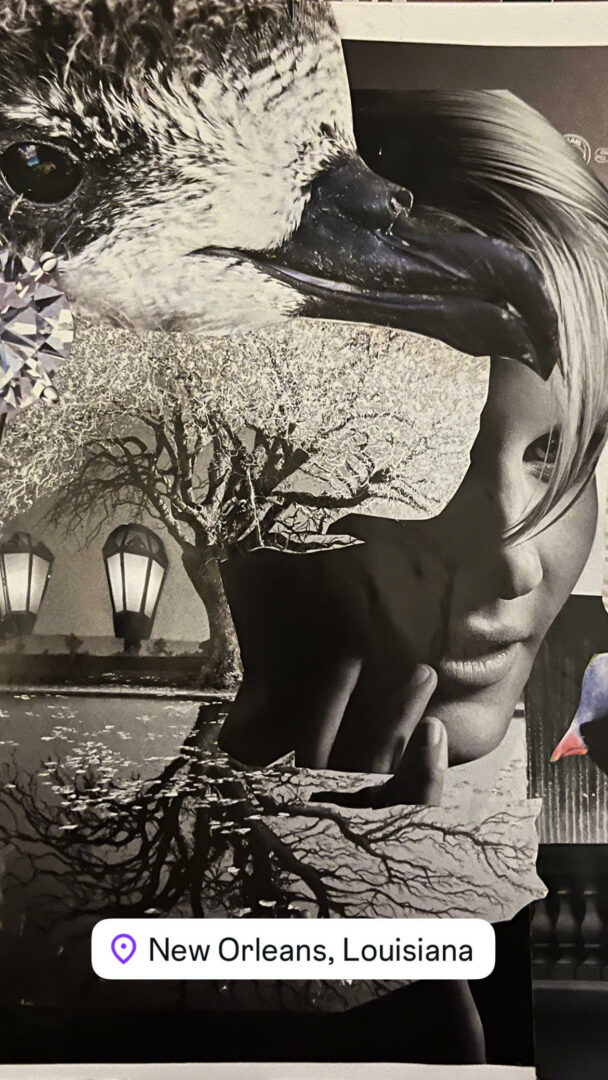
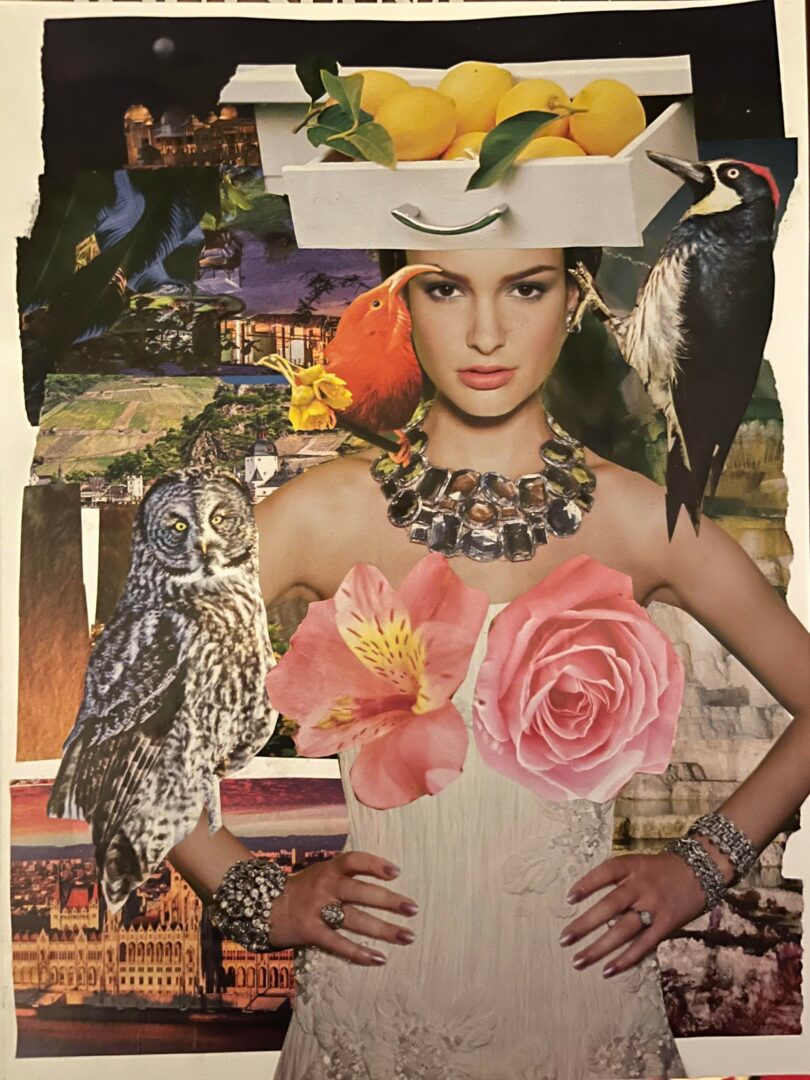
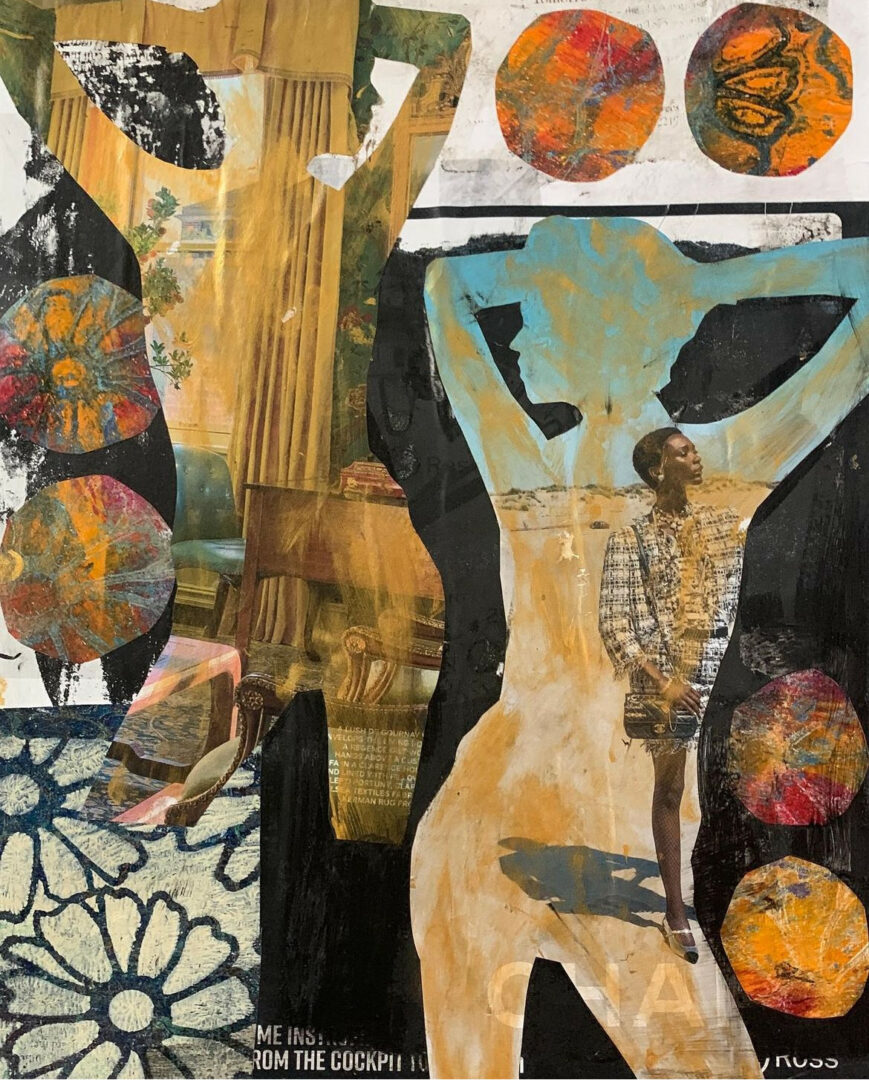
Image Credits
None
so if you or someone you know deserves recognition please let us know here.