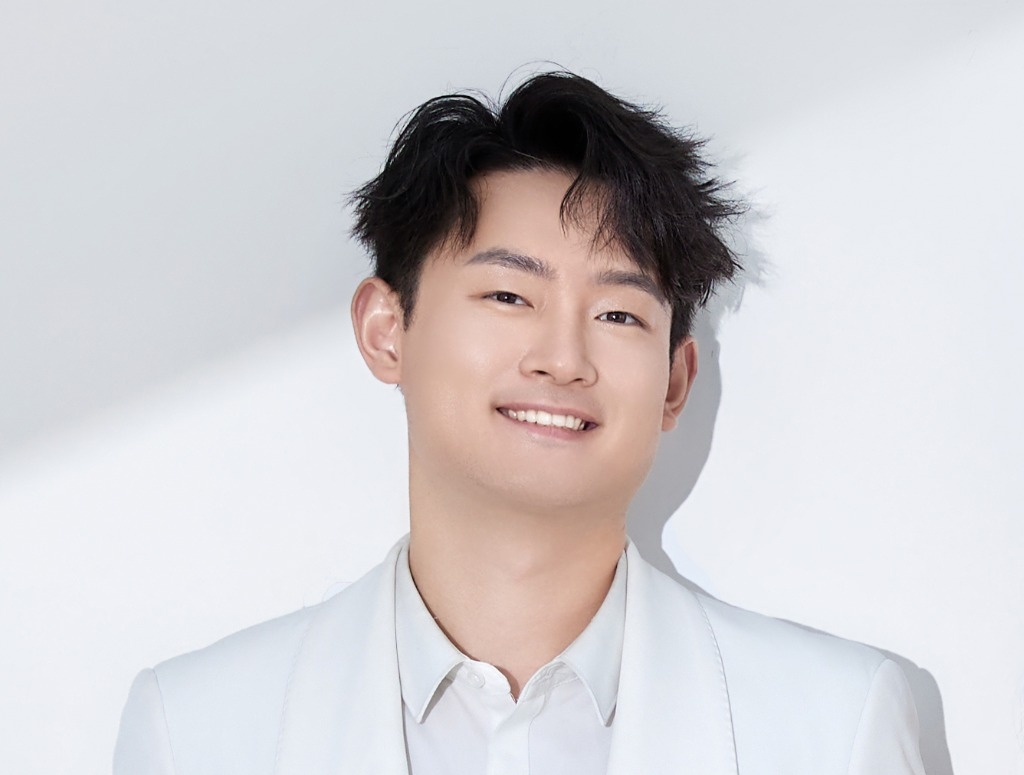
We’re looking forward to introducing you to Bo Li. Check out our conversation below.
Bo, so good to connect and we’re excited to share your story and insights with our audience. There’s a ton to learn from your story, but let’s start with a warm up before we get into the heart of the interview. Who are you learning from right now?
I used AI for polishing my writing:
That’s a very interesting question. I think I’m always learning from the people around me. I have this personal theory: when we’re born, we come into the world in different shapes — that’s how we look — and inside, we hold different colors. Everyone we meet, intentionally or unintentionally, shares a bit of their color with us. Over time, those colors blend and shape who we become.
So my “cup” is always open.
As a professor, I learn the most from my students. They’re energetic, creative young artists who constantly remind me of my younger self. Their imagination and enthusiasm are endlessly inspiring and make my work joyful.
I also learn from my colleagues — not only from their expertise and the work they do, but also from how they handle challenges and crises with calmness and grace. I truly admire and feel proud to work alongside them.
From my family, I learn warmth, empathy, and the values that ground me as a person — how to treat others with kindness and patience.
And recently, I’ve even started learning from AI. It fascinates me — this vast, ever-growing pool of knowledge. Of course, AI can make mistakes, but I find joy in how rational and professional it tends to be. That kind of calm and clear-headed attitude is something I think is valuable for all of us, especially in the workplace.
Can you briefly introduce yourself and share what makes you or your brand unique?
in here I will use my bio:
Bo Li is assistant professor of music in music production: audio engineering at the Indiana University Jacobs School of Music.He is an audio professional whose life is defined by the emotional power of sound. His musical journey began at the age of nine when he first performed on an erhu, and his passion led him to pursue a B.F.A. in Recording Arts. Later, the California Institute of the Arts awarded him a $120,000 three-year full Lillian Disney Scholarship to further his studies in the M.F.A. in Sound Design program.
Li was sound supervisor for the film Unforgotten, winning a gold medal at the Student Academy Awards, his sound design also contributed other film projects to winning the best-film awards at Oscar-qualifying festivals such as Cinequest. He has worked on immersive 360-degree soundscapes as an assistant sound designer and collaborated with top game companies such as Tencent and Electronic Arts for commercials.
Notably, he has received the Gold Award Statue for Acoustic Electronic Music at the Denver International Festival of Arts & Technology, Chunhui Cup Award in Audio Technology from China’s Ministry of Education, Silver Award at the China Sound Academy Award, third prize at the Berlin International Sound Design Competition, and second prize at the Beijing International Electronic Music Festival. Li served as a distinguished judge for the Berlin Sound Design Competition and beta-tested audio industry-standard software Pro Tools and Vocoflex AI.
Bo was a clinical assistant professor at Arizona State University, he built and managed Dolby Atmos studios, at Jacobs School of Music, Indiana University, Bo is currently serving for IUB flagship KIX Lab with 150+ speakers immersive sound space, and mentored students who advanced to renowned institutions such as the Peabody Institute at Johns Hopkins, Savannah College of Art and Design, and Boston University with full scholarships.
He has employed AI-generated sound in time-based media, and his project “Until We Meet Again,” created in collaboration with Illumination Entertainment director Momo Wang and sponsored by Kling AI, premiered at the China National Film Museum. Li’s ongoing research in VR/XR, spatial audio, ambisonics, interactive media, experimental composition, and sonic arts invites open discussion at the crossroads of humanity and engineering.
Thanks for sharing that. Would love to go back in time and hear about how your past might have impacted who you are today. Who taught you the most about work?
AI polished:
At different stages of my life, I’ve had different mentors — each of them taught me something unique about both work and life. I truly believe that who we become is a reflection of the people we meet along the way — each person pours a little of their “water” into our cup, shaping the color of who we are.
In my current position, my most recent mentor, John, has been especially influential. He’s not only shared practical knowledge but also helped me understand the deeper mechanisms of our field — how people, systems, and ideas actually connect. Through him, I’ve learned about the realities of the market, the subtleties of collaboration, and the importance of generosity in professional relationships.
He once said something that stayed with me: “Savoir faire, savoir être.” It’s a French phrase that means “knowing how to do, and knowing how to be.” The first part — savoir faire — is about skill, competence, and craftsmanship. But the second — savoir être — is about character, empathy, and the way you move through the world. That balance, between doing and being, is something I keep close to my heart.
Looking back, I realize every mentor I’ve had has shaped me in that way — not just by teaching me what to do, but by showing me how to exist meaningfully in my work. It’s a lifelong process of learning, unlearning, and rediscovering what “work” really means.
If you could say one kind thing to your younger self, what would it be?
AI Polished:
I would tell my younger self:
It’s okay to slow down. You don’t have to be the best. You don’t always need to prove yourself.
When I was younger, I believed that excellence was the only path to happiness — that if I worked hard enough, people would see my value. I now understand that life isn’t a race to perfection; it’s a process of discovery. Mistakes are part of the journey, not signs of failure.
I’d tell myself that it’s okay to be silly sometimes, to rest, to enjoy the moment. You don’t need to carry the world’s expectations on your shoulders. The most meaningful growth comes when you accept not only your strengths but also your uncertainties and imperfections.
If I had understood that earlier — that kindness to myself is just as important as hard work — I think I would have found joy more easily along the way.
So, the kind thing I’d say is simple: You are enough, just as you are. Keep learning, but don’t forget to love yourself in the process.
So a lot of these questions go deep, but if you are open to it, we’ve got a few more questions that we’d love to get your take on. Where are smart people getting it totally wrong today?
AI polished:
I think the definition of “smart” is very subjective. Someone might be smart in one aspect, but not in another. A person can seem brilliant in one moment and confused in the next. So it’s hard for me to say exactly what a “smart person” even means. But if we’re speaking generally, I think I understand the spirit of the question.
As human beings, I’m not sure I’m qualified to judge, but it seems that we’ve been putting a tremendous amount of effort into developing technology—and not enough into developing ourselves as a species. When we look back through history, we can see the same patterns repeating: conflicts over resources, cycles of growth and destruction. We’ve evolved in tools, but not always in wisdom.
Maybe it’s time to pause and think more deeply about our existence—what it means to be human, and what we truly value. With the pace of technology today, it’s easy to lose the very qualities that make us proud to be human: empathy, humility, and a sense of connection to nature.
There’s an idea in ancient Asian philosophy that resonates with me: that our existence itself fulfills a mission, and that respecting nature—living in balance with it—is already a very smart act. Maybe that’s where our intelligence should return to: not to control, but to understand; not to dominate, but to coexist.
Okay, so before we go, let’s tackle one more area. If you knew you had 10 years left, what would you stop doing immediately?
Before answering this question, I thought about it in many different ways — trying to imagine what “10 years left” would actually feel like. And honestly, without truly being in that moment, it’s hard to say for certain what I’d stop doing. But if I had to answer, I think the first thing I’d stop is working for someone else.
Even though my current position isn’t purely that — it allows me to do research and creative work I care about — it’s still a salary-based job. I think if I only had 10 years left, I’d want to experience life in a freer, more personal way. I’d focus on the people who have crossed paths with me, spend more time with my family, and learn about others’ lives.
I’d also want to stop what I call “the circle.” From kindergarten to primary school, then to middle school, high school, university — it’s like moving from one circle to another, always rolling forward like a small boat in the middle of the ocean without ever stopping to look at the stars. I’ve been following that rhythm for most of my life, carried by momentum.
If I knew I had 10 years left, I think I would finally stop that motion — just pause, breathe, and take time to understand myself again. Maybe I’d still follow the flow, maybe I’d find something entirely new. But what I’d stop immediately is the constant forward push — the pressure to keep rolling without asking why. I’d want to live those years fully, not just efficiently.
Contact Info:
- Website: http://www.bolisound.com
- Instagram: https://www.instagram.com/bolisound/
- Linkedin: https://www.linkedin.com/in/bolisound/
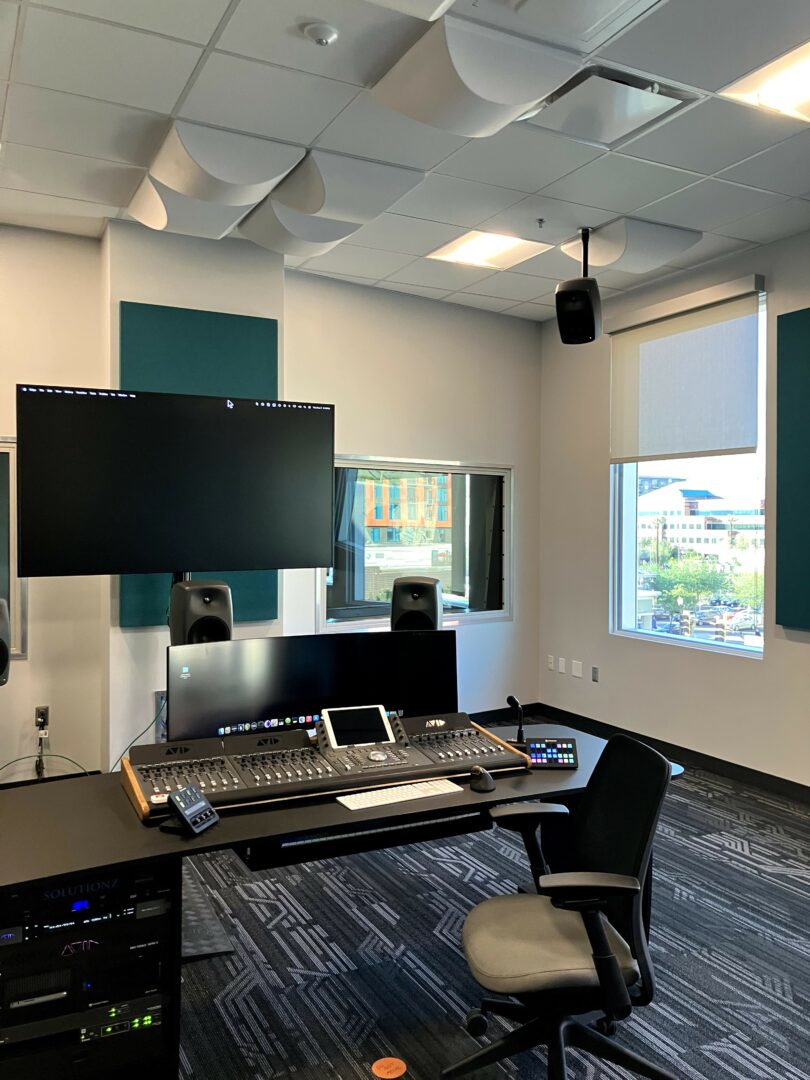
Image Credits
Bo Li
so if you or someone you know deserves recognition please let us know here.