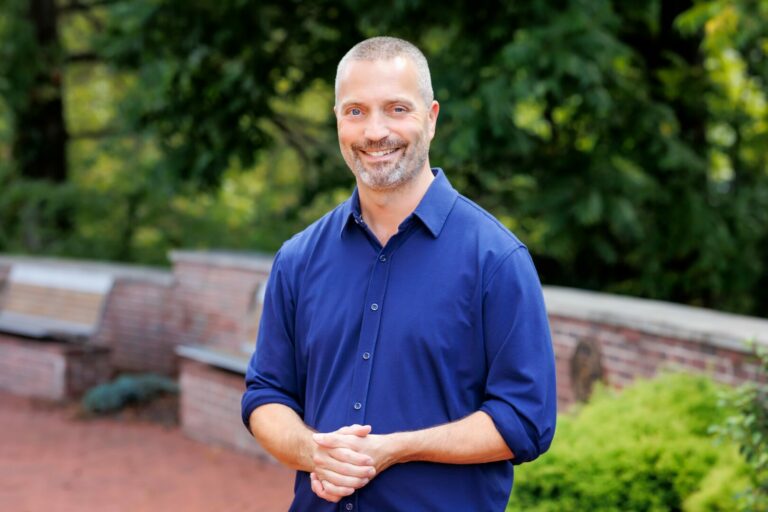
We recently had the chance to connect with Bo Li and have shared our conversation below.
Good morning Bo, it’s such a great way to kick off the day – I think our readers will love hearing your stories, experiences and about how you think about life and work. Let’s jump right in? What do the first 90 minutes of your day look like?
It really depends, but generally, my mornings are a mix of structure and curiosity. I’m currently work for the Indiana University Jacobs School of Music, so the day often begins with checking my inbox, replying to students, catching up on questions, and clearing administrative tasks, these are very musical experience! Then I read the news, like The New York Times, The Wall Street Journal, and a few other sources from other major media in another country, to see what’s happening in the world, and how different perspective they have, especially any surprising or thought-provoking stories.
As I read, certain headlines or topics stay in my mind. After that, I usually head out to exercise, and that’s when I start having conversations with my AI assistant. I’ll bring up those stories or questions that caught my attention and dig deeper into them while I’m moving. It’s a way of turning my workout into a kind of mobile research session, so I feel like I’m using my time twice as effectively.
Can you briefly introduce yourself and share what makes you or your brand unique?
just thought of using my bio here:
Bo Li is assistant professor of music in music production: audio engineering at the Indiana University Jacobs School of Music.He is an audio professional whose life is defined by the emotional power of sound. His musical journey began at the age of nine when he first performed on an erhu, and his passion led him to pursue a B.F.A. in Recording Arts. Later, the California Institute of the Arts awarded him a $120,000 three-year full Lillian Disney Scholarship to further his studies in the M.F.A. in Sound Design program.
Li was sound supervisor for the film Unforgotten, winning a gold medal at the Student Academy Awards, his sound design also contributed other film projects to winning the best-film awards at Oscar-qualifying festivals such as Cinequest. He has worked on immersive 360-degree soundscapes as an assistant sound designer and collaborated with top game companies such as Tencent and Electronic Arts for commercials.
Notably, he has received the Gold Award Statue for Acoustic Electronic Music at the Denver International Festival of Arts & Technology, Chunhui Cup Award in Audio Technology from China’s Ministry of Education, Silver Award at the China Sound Academy Award, third prize at the Berlin International Sound Design Competition, and second prize at the Beijing International Electronic Music Festival. Li served as a distinguished judge for the Berlin Sound Design Competition and beta-tested audio industry-standard software Pro Tools and Vocoflex AI.
Bo was a clinical assistant professor at Arizona State University, he built and managed Dolby Atmos studios, at Jacobs School of Music, Indiana University, Bo is currently serving for IUB flagship KIX Lab with 150+ speakers immersive sound space, and mentored students who advanced to renowned institutions such as the Peabody Institute at Johns Hopkins, Savannah College of Art and Design, and Boston University with full scholarships.
He has employed AI-generated sound in time-based media, and he worked on AI animation “Until We Meet Again,” created in collaboration with Illumination Entertainment creative director Momo Wang and sponsored by Kling AI, premiered at the China National Film Museum. Li’s ongoing research in VR/XR, spatial audio, ambisonics, interactive media, experimental composition, and sonic arts invites open discussion at the crossroads of humanity and engineering.
Amazing, so let’s take a moment to go back in time. What did you believe about yourself as a child that you no longer believe?
here I used AI for make it looks good:
That’s a very interesting question. I think of a human being as a cup of water. We’re all born with our own shape — that’s our nature — and over time, as we grow up and meet different people, everyone we encounter pours a bit of their own coloe of water into our cup, intentionally or not. The person we become is this collective mixture — a reflection of everyone who has influenced us along the way. But ultimately, we are still the ones who decide what to believe, how to believe, and which colors to keep in our water.
When I was younger, I believed that working hard would always lead to good results. That hard work alone could guarantee success or happiness. I don’t believe that anymore — at least, not in such a simple way. I still value hard work deeply; it shaped who I am today. But I’ve learned that working hard is only one part of the equation.
Where I grew up, there was an overemphasis on effort — on the aesthetic of hardship — as if pushing yourself endlessly would always pay off. Over time, I realized that working smart and caring for your emotional well-being are just as important. When I was young, I was full of energy and willing to make mistakes. But as I grew older, I found that repeating the same mistakes isn’t noble — it’s just exhausting. So I became more protective of my time and emotions.
Now, I try to be generous, warm, and kind, but also more selective and intentional — about my research, the people I spend time with, and the directions I pursue. Working hard still matters, but I’ve learned that it must be balanced with clarity, purpose, and care for myself and others.
In my current role, there are tasks that demand attention but don’t always align with my core interests. That’s part of any job. But I’ve learned to carve out time for what truly inspires me — my research, my creative work, and my family. That balance, I think, is a more mature and sustainable form of hard work.
If you could say one kind thing to your younger self, what would it be?
I grew up in an environment where education and family emphasized that working hard and being excellent would always lead to success. I don’t reject that idea — it’s still a valuable principle. But over time, I’ve realized that it can also create pressure and self-doubt.
So, I’d tell my younger self: It’s okay to make mistakes. It’s okay to be a little silly sometimes. Because accepting not just the excellent parts of myself, but also the imperfect and playful ones, would have made me much happier and more at peace.
When I look back on all the events I joined — some I won, some I didn’t — I realize that I often didn’t fully enjoy the process. I was too focused on outcomes, on proving something. Now I understand that real fulfillment comes from embracing the whole version of yourself — the capable, the uncertain, the curious, the flawed.
So that’s what I’d say: Be kind to yourself. You’re already enough, even when you’re not perfect.
Next, maybe we can discuss some of your foundational philosophies and views? Is the public version of you the real you?
I don’t think anyone’s public version is ever their full, real self. If you’re referring to social media, then yes — what I share there is an authentic part of me, but it’s not the whole picture.
I don’t use social media very often. When I do, I mainly post about my research activities or creative projects. I intentionally avoid sharing much about my personal life. There are a few reasons for that. One is practical — a close friend of mine is a cybersecurity expert, and he taught me that the less personal data you put online, the safer you are. When I was younger, I used to share more openly, thinking it helped me connect with people. But after experiencing a few hacking incidents, I realized how real those risks are.
So now, the public version of me focuses on my work and professional interests. That’s genuine — it’s a true side of who I am — but it’s not the complete story. My personal life stays private. I believe that’s a healthy boundary, especially as a professor working in a public institution. We all come from different backgrounds; we all “taste the water” differently. I understand that sharing certain personal opinions could unintentionally hurt others or create misunderstandings, and I’d rather avoid that.
So, to answer simply — yes, the public version of me is real, but it’s only one part of me. And I like it that way. It allows me to protect myself, respect others, and maintain a balanced relationship between my inner life and the outside world.
Before we go, we’d love to hear your thoughts on some longer-run, legacy type questions. What will you regret not doing?
I think it might still be a little early in my life to talk about regrets, but if there’s one thing I truly wish I had done more of, it’s expressing love to my family.
Even as I say this, I still feel a little shy saying, “I love you, Mom,” or “I love you, Dad.” Maybe that comes from cultural roots — in many Asian families, love is often shown through actions rather than words. We understand each other deeply, even without saying it aloud. But as I’ve grown older, I’ve realized that saying it, or even giving a hug, is not a bad thing at all. It might feel awkward at first, but no parent would ever reject that warmth.
For a long time, I carried the belief that love didn’t need to be spoken — that our connection was enough. But I’ve learned that silence, even when filled with care, can still leave something missing.
As I’ve matured, I’ve come to cherish my family far more than my work or achievements. I’ve realized that nothing is more precious than those relationships. Looking back, I think I spent too much time chasing things that other people valued — goals, recognition, accomplishments — rather than what I truly valued.
Recently, I made a conscious decision to change that. I’m learning to find balance between my research, my creative work, and my family. If there’s one lesson in this, it’s that expressing love — simply, openly — is never a weakness. It’s something I wish I had done earlier, and something I’ll keep doing from now on.
Contact Info:
- Website: http://www.bolisound.com
- Instagram: https://www.instagram.com/bolisound/
- Linkedin: https://www.linkedin.com/in/bolisound/
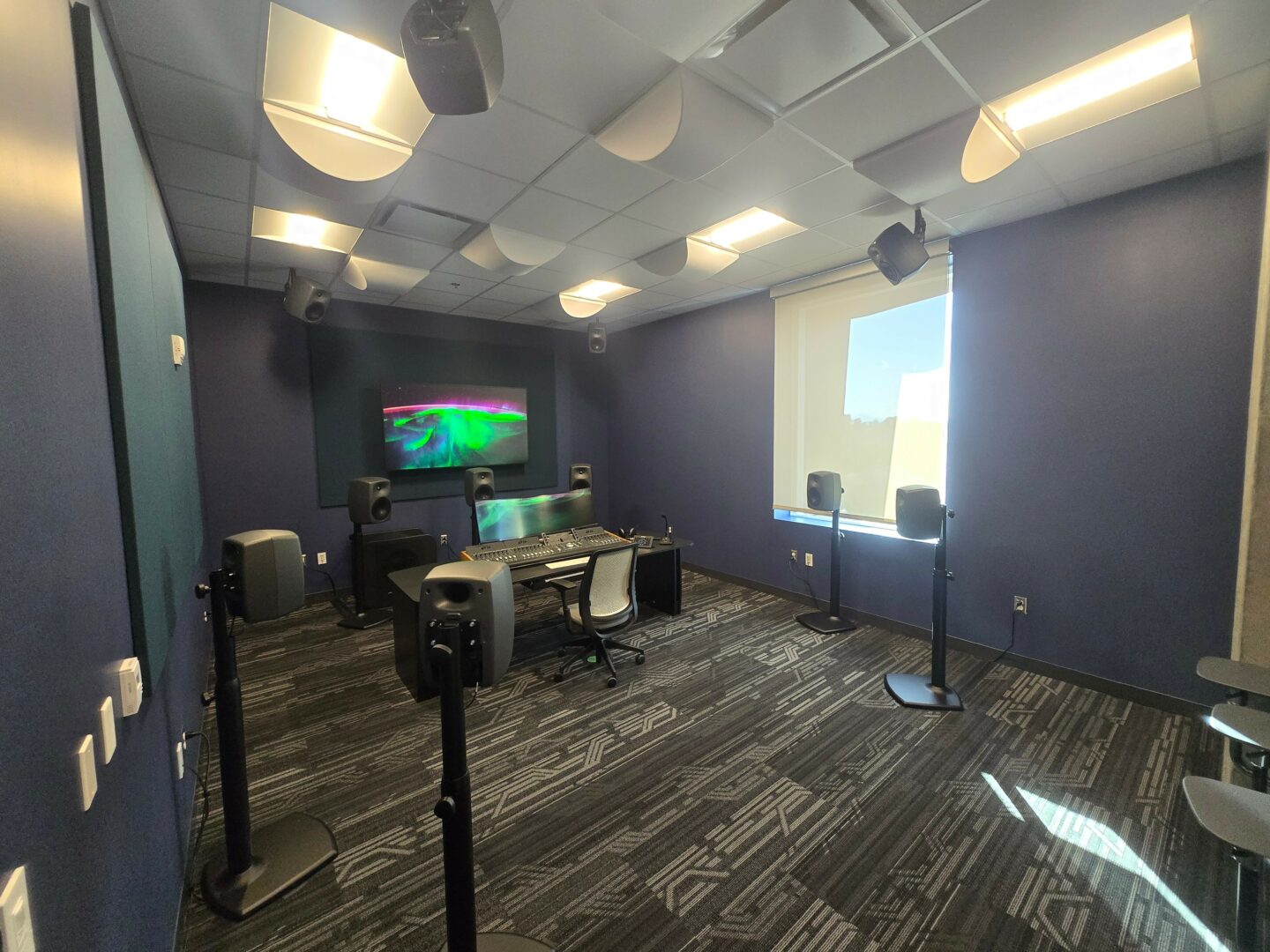
Image Credits
LiangPinYingHua LLC
so if you or someone you know deserves recognition please let us know here.