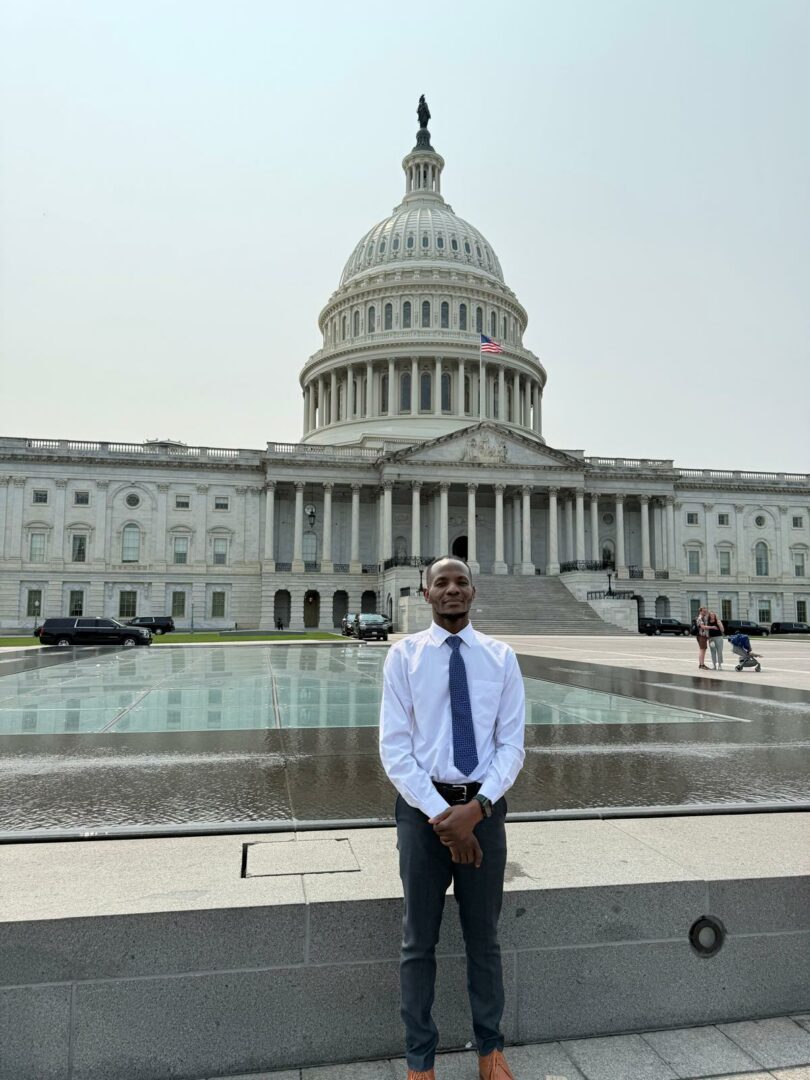
We recently had the chance to connect with Steven Muleme and have shared our conversation below.
Hi Steven, thank you so much for joining us today. We’re thrilled to learn more about your journey, values and what you are currently working on. Let’s start with an ice breaker: Have you stood up for someone when it cost you something?
Yes. My activism has always required standing up for LGBTQ+ people even when the cost was personal. In Uganda, speaking publicly cost me my safety and ultimately my home. But what has shaped me even more are the private acts of support, helping queer refugees in camps, finding someone shelter for the night, or quietly covering food, medicine, and emotional support when no system existed for them.
I’ve supported people globally, often through my own resources or with help from trusted allies. And although I’ve been betrayed at times by some I stood up for, it has never deterred me. Those moments taught me that helping others cannot be transactional. I don’t serve people because they will be grateful, I serve because I understand what it feels like to have no one.
Standing up has cost me safety, finances, and emotional peace at times, but it continues to ground me in the kind of leader I strive to be, one who prioritizes compassion over convenience, and community over comfort.
Can you briefly introduce yourself and share what makes you or your brand unique?
I’m Steven Muleme, a storyteller, activist, and bridge between many queer worlds. My journey began in Uganda, where founding VEHRA taught me that advocacy is not only about protest, but about presence, showing up for queer people in moments when hope feels distant. That early work shaped my global perspective and introduced me to the quiet, everyday acts of care that hold our community together.
Today, living in New York, my work continues across continents and identities. I support queer people in crisis, whether they are navigating displacement, facing family rejection, struggling with mental health, or simply needing someone to affirm their worth. Sometimes it’s helping someone find shelter or food; other times, it’s writing a recommendation letter that opens a door, or offering the emotional support that makes survival possible.
I founded African Queer Voices (AQV) to uplift the stories that often go unheard, stories of resilience, creativity, and the universal desire to be seen. My work is both creative and communal, rooted in lived experience and guided by a belief that every queer person’s story, whether in Uganda, New York, or a refugee camp, deserves dignity and amplification.
Amazing, so let’s take a moment to go back in time. Who were you before the world told you who you had to be?
Before the world tried to define me, I was a soft-hearted, curious boy who believed that everyone deserved to belong. I didn’t have language for queerness or activism yet. I just knew I felt things deeply and wanted others to feel safe around me. As I grew older, society began to place walls around that softness, telling me what a ‘real man’ should be, what parts of myself I needed to hide, and who it was acceptable to love.
But the truth is, the work I do today is simply a return to who I was before fear and expectation stepped in. The part of me that wanted to comfort others, that wanted fairness, that wanted people to feel seen, that child is still guiding me. Activism didn’t create me; it reminded me of who I’ve always been.
What have been the defining wounds of your life—and how have you healed them?
Some of the deepest wounds of my life have come from places I trusted most, loved ones, friends, and people I once opened my heart and home to. Betrayal has shaped me more than success ever has. There are stories I’ve never told publicly, not because they aren’t important, but because I learned early that not everyone wants to hold your truth with care.
Growing up queer in Uganda, safety often depended on secrecy. That meant I learned to carry pain privately. Even now, when the world sees my leadership, my awards, or my global advocacy, they don’t see the nights I’ve cried alone in a dark room, trying to counsel myself through another disappointment, another loss, or another person I believed in who walked away.
Family struggles, financial instability, the pressure to be “strong” even when I’m exhausted, they’ve all left marks that don’t fade easily. And the truth is, I’m still healing. My healing isn’t a finished chapter; it’s a quiet process. It’s choosing softness even after being hurt. It’s choosing to keep supporting others generously, even when some have used me, misunderstood me, or taken advantage of my kindness.
If there is one thing these wounds have taught me, it’s this: resilience is not loud. Sometimes it looks like surviving in silence. Sometimes it looks like continuing to uplift others while carrying your own weight. And sometimes it looks like allowing the world to see your vulnerability without letting it define your destiny.
I haven’t healed completely, but I’m learning. I’m learning to trust myself more deeply, to allow joy back into my life, and to hold boundaries without losing compassion. And every person whose life has been changed through my work reminds me that even wounded people can be healers.
Next, maybe we can discuss some of your foundational philosophies and views? What truths are so foundational in your life that you rarely articulate them?
One foundational truth that shapes everything I do is that community saves us long before institutions ever do. I rarely say it out loud, but it has guided every chapter of my life, from building VEHRA in Uganda, to supporting queer people privately and quietly, to now shaping African Queer Voices in the United States.
I have learned that even in the harshest environments, people become lifelines for one another. Many of the people I’ve helped were not just “beneficiaries”, they were mirrors reminding me that dignity is non-negotiable. Long before funding arrives, before policies change, and before someone becomes a headline, there are invisible networks of care keeping people alive.
Another truth I hold is that the struggles we carry privately are often heavier than the world imagines. I’ve learned that leadership is not measured by titles but by how consistently you show up for others, even when your own world feels uncertain. This truth keeps me grounded: healing, justice, and liberation begin with small acts of courage we extend to one another when nobody is watching.
These truths shape how I advocate, create, and lead, and why I remain committed to building communities rooted in empathy, dignity, and shared humanity.
Before we go, we’d love to hear your thoughts on some longer-run, legacy type questions. What is the story you hope people tell about you when you’re gone?
I hope people say that I lived a life that made others’ lives lighter. Not because I had the most resources, but because I used whatever I had, my voice, my time, my heart, my courage, to lift people who had been pushed into the shadows. I hope they say I showed up even when I was exhausted, that I stood with people long after the world stopped watching, and that I turned my own pain into a bridge for someone else’s survival.
My legacy, I pray, is not tied to titles or recognition but to the quiet impact, someone who received a meal or critical medical help because I made a call at midnight, someone who felt seen because I listened without judgment, someone who dared to dream again because I believed in them before they believed in themselves.
If people remember me as a person who cared deeply, fiercely, and consistently, even when my own life was breaking, I’ll feel I lived well.
Contact Info:
- Instagram: https://www.instagram.com/stevenmuleme?igsh=Mmp6dWJta2JicDBv&utm_source=qr
- Linkedin: https://www.linkedin.com/in/steven-muleme-a4302214b
- Twitter: https://x.com/krestlear2?s=21
- Facebook: https://www.facebook.com/share/1BTtmF4BmX/?mibextid=wwXIfr
so if you or someone you know deserves recognition please let us know here.