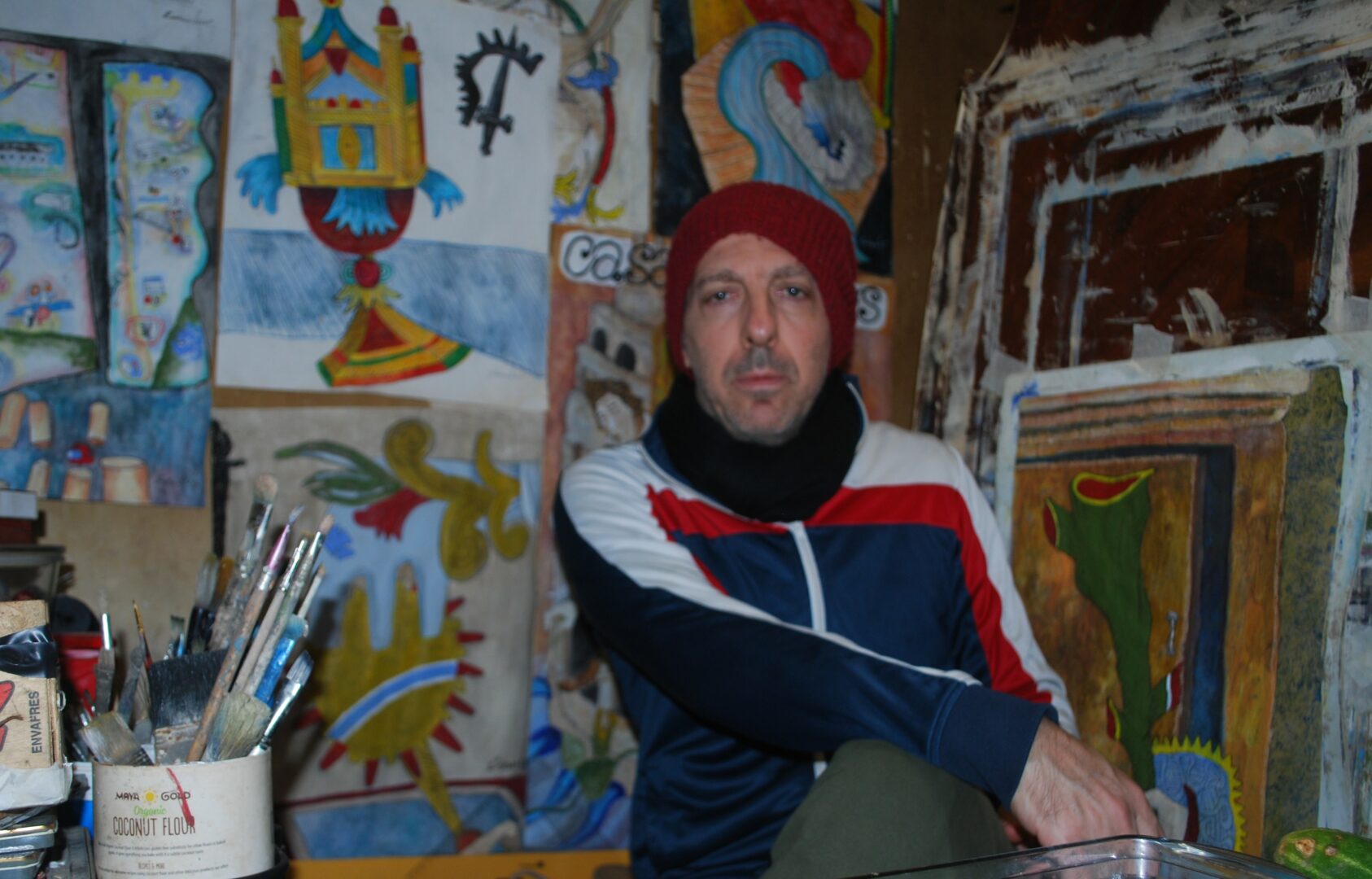
We’re looking forward to introducing you to Enrico Napoletano. Check out our conversation below.
Enrico , a huge thanks to you for investing the time to share your wisdom with those who are seeking it. We think it’s so important for us to share stories with our neighbors, friends and community because knowledge multiples when we share with each other. Let’s jump in: What are you most proud of building — that nobody sees?
Well, before answering, I should clarify that, by nature, I’m someone who finds it hard to feel proud of what I do, because it almost never feels enough. Maybe it’s something I need to work on; I’m not sure if it’s a flaw or a gift, hahaha! Still, there is something I can truly feel proud of, even if no one sees it: the side of my heart that quietly helps the people I encounter along my path. When I notice someone struggling with a problem that saddens them, I listen, offer words of encouragement, and try to say what I feel could do them good internally, or awaken something in them that guides them back to hope or happiness.
Can you briefly introduce yourself and share what makes you or your brand unique?
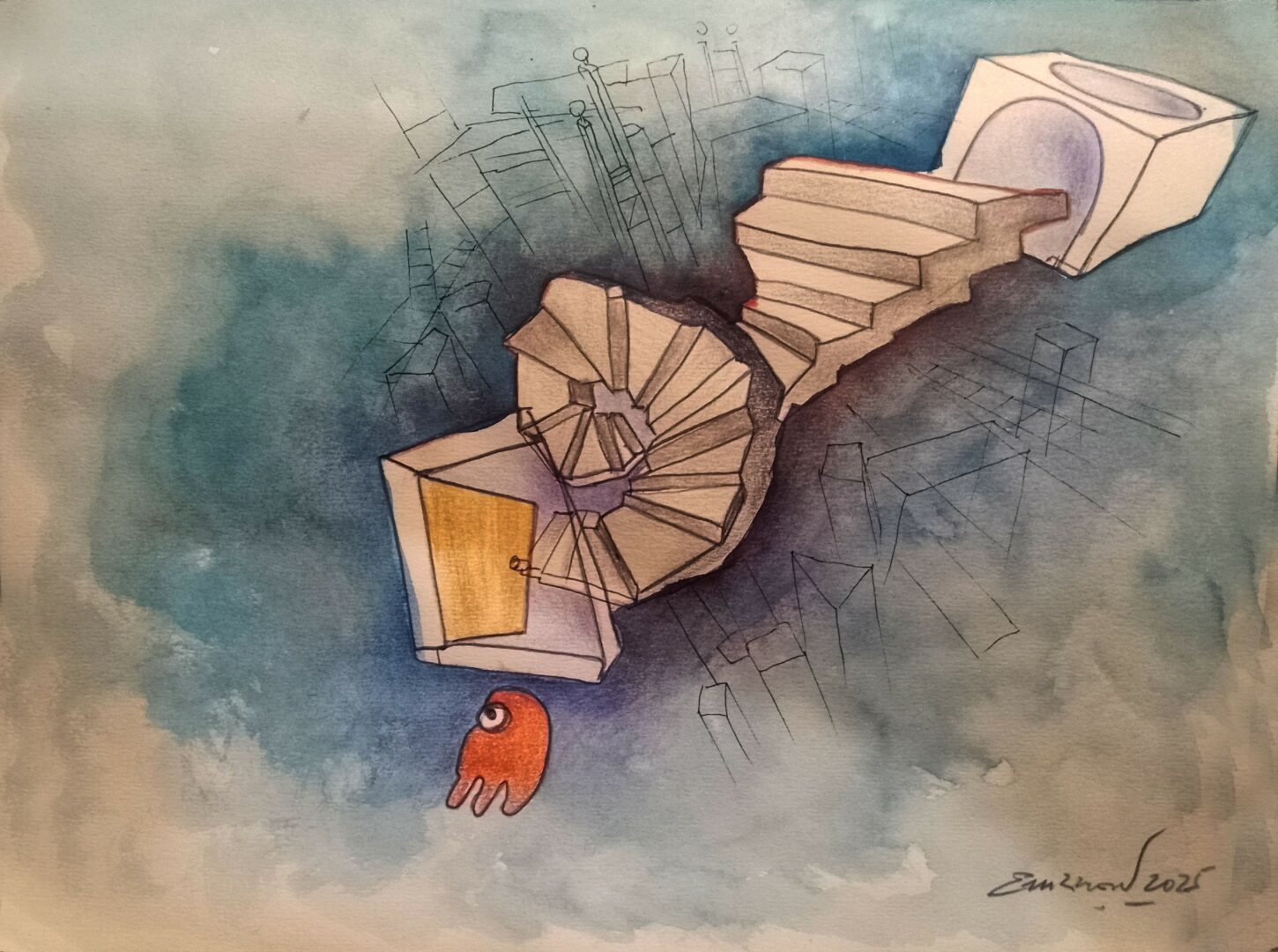
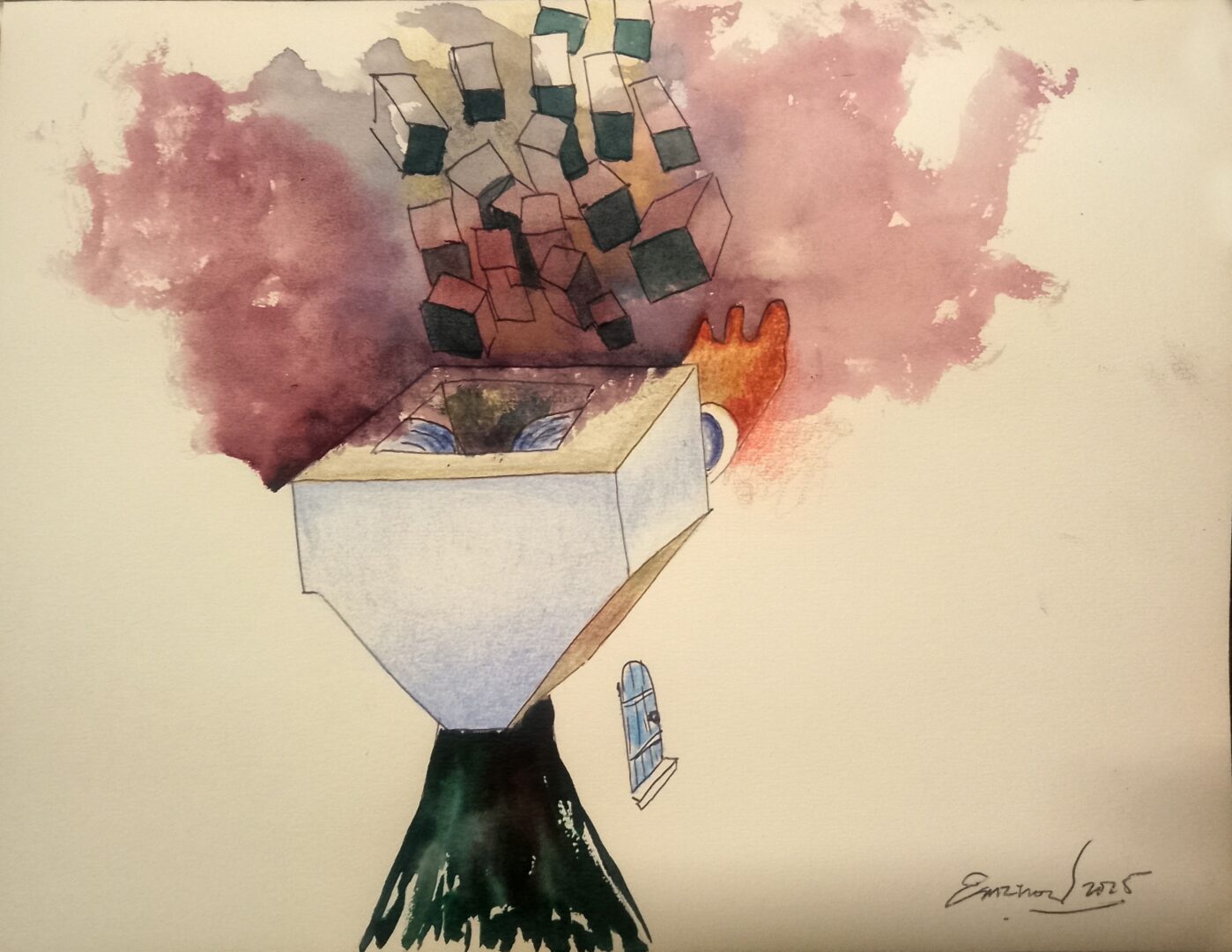
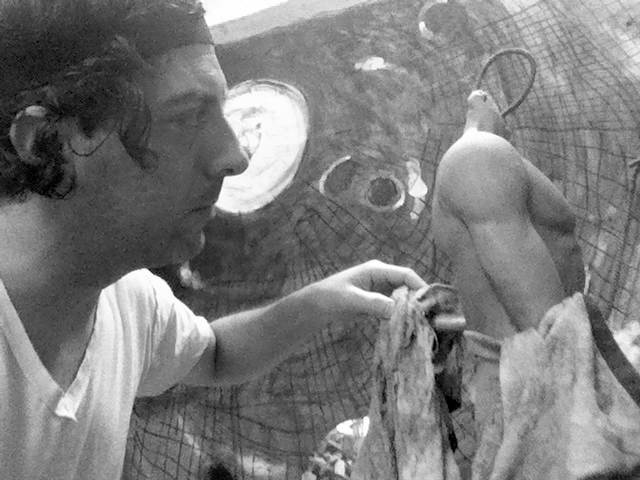
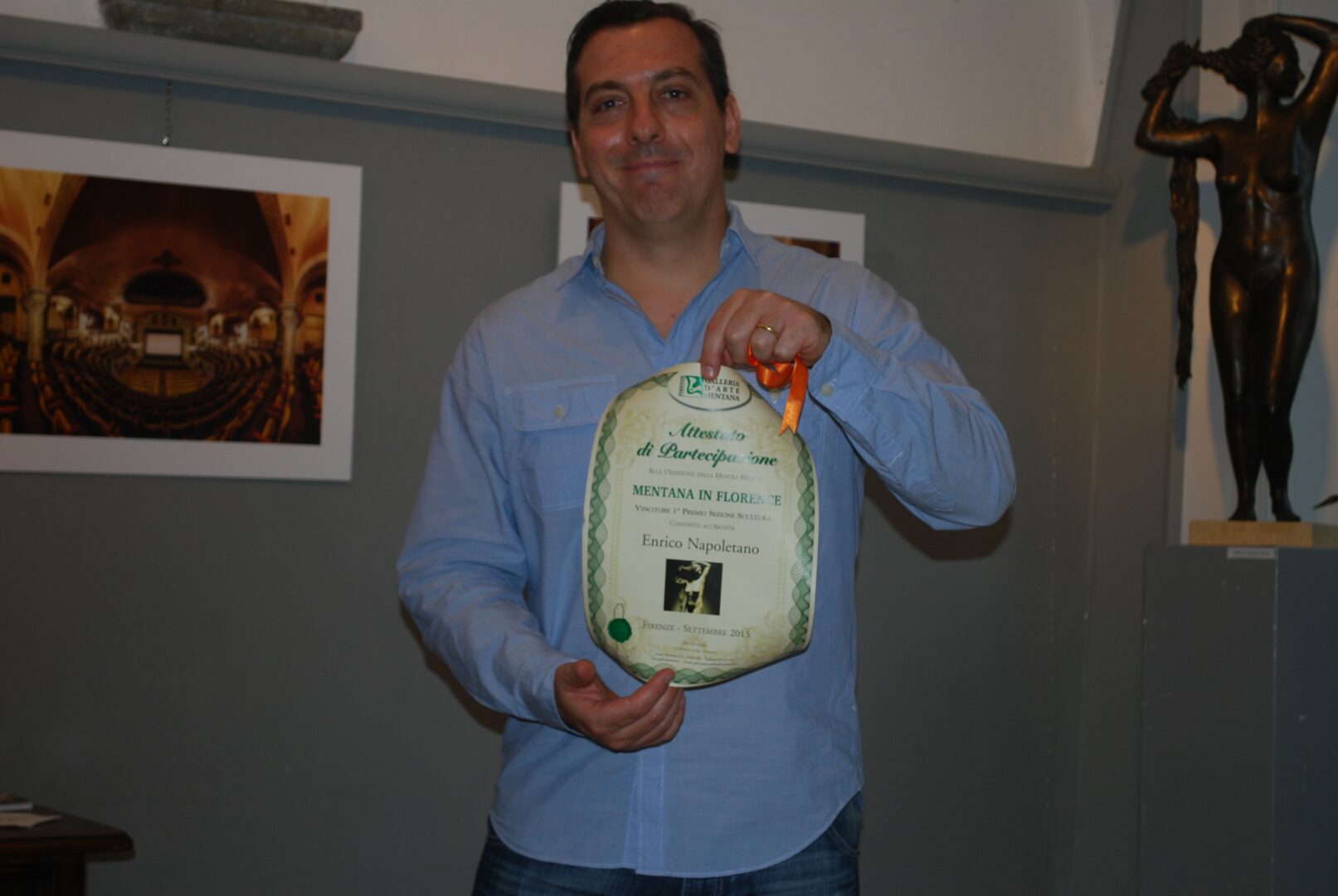
Hello, I’m Enrico Napoletano, an architect and philosopher by profession. I formally began my career as a visual artist in 1998, and I continue to pursue it to this day. I am currently expanding both internationally through exhibitions and personally, delving deeper each day into the core of my soul and expressing myself through a language that is fully authentic and aligned with my will.
Interestingly, I’ve undergone a significant shift in my work that coincides with a process I began just over two years ago, studying energy healing, archetype-based healing, and everything related to the relationship between our mind and external reality, grounded in studies of quantum mechanics, among other things.
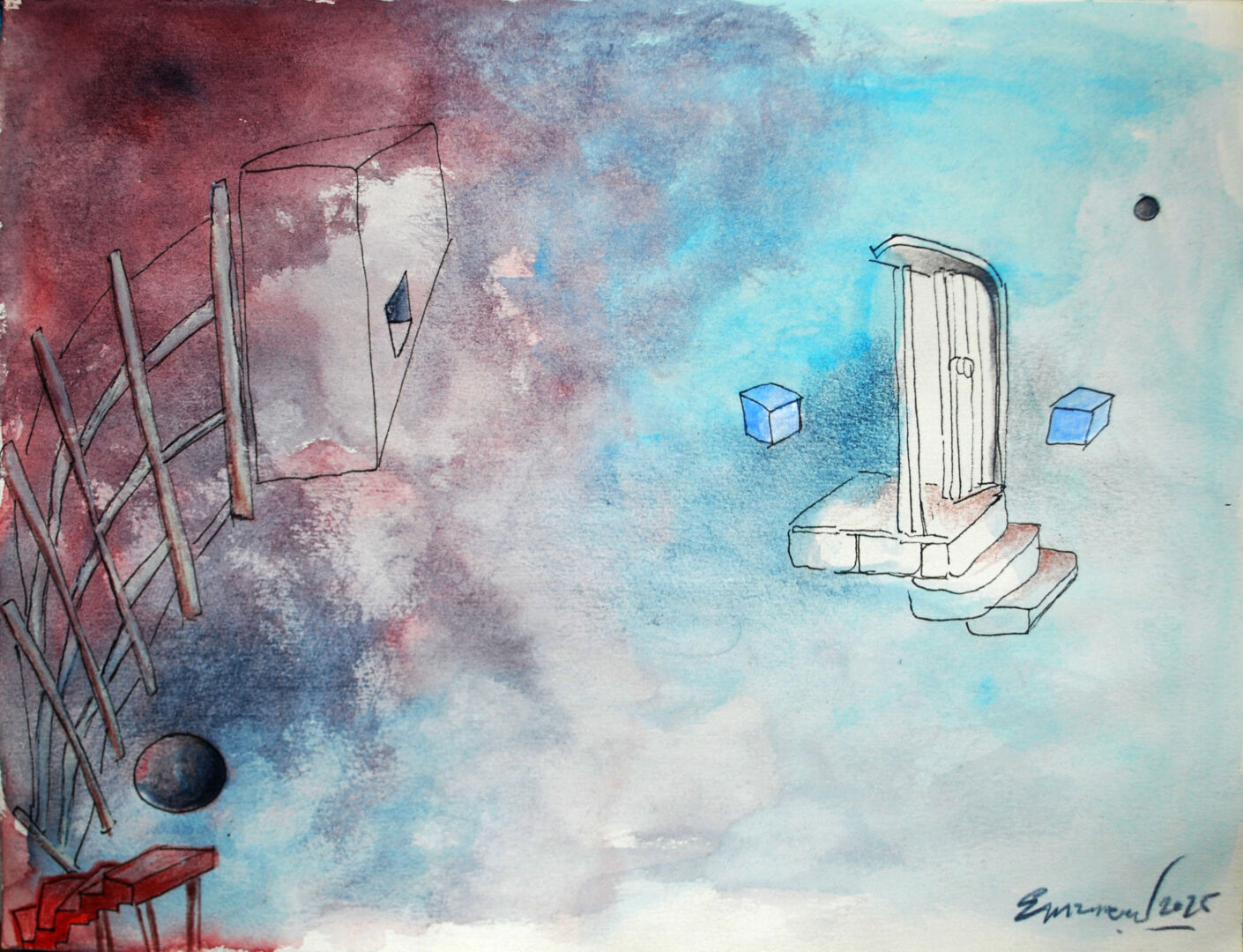
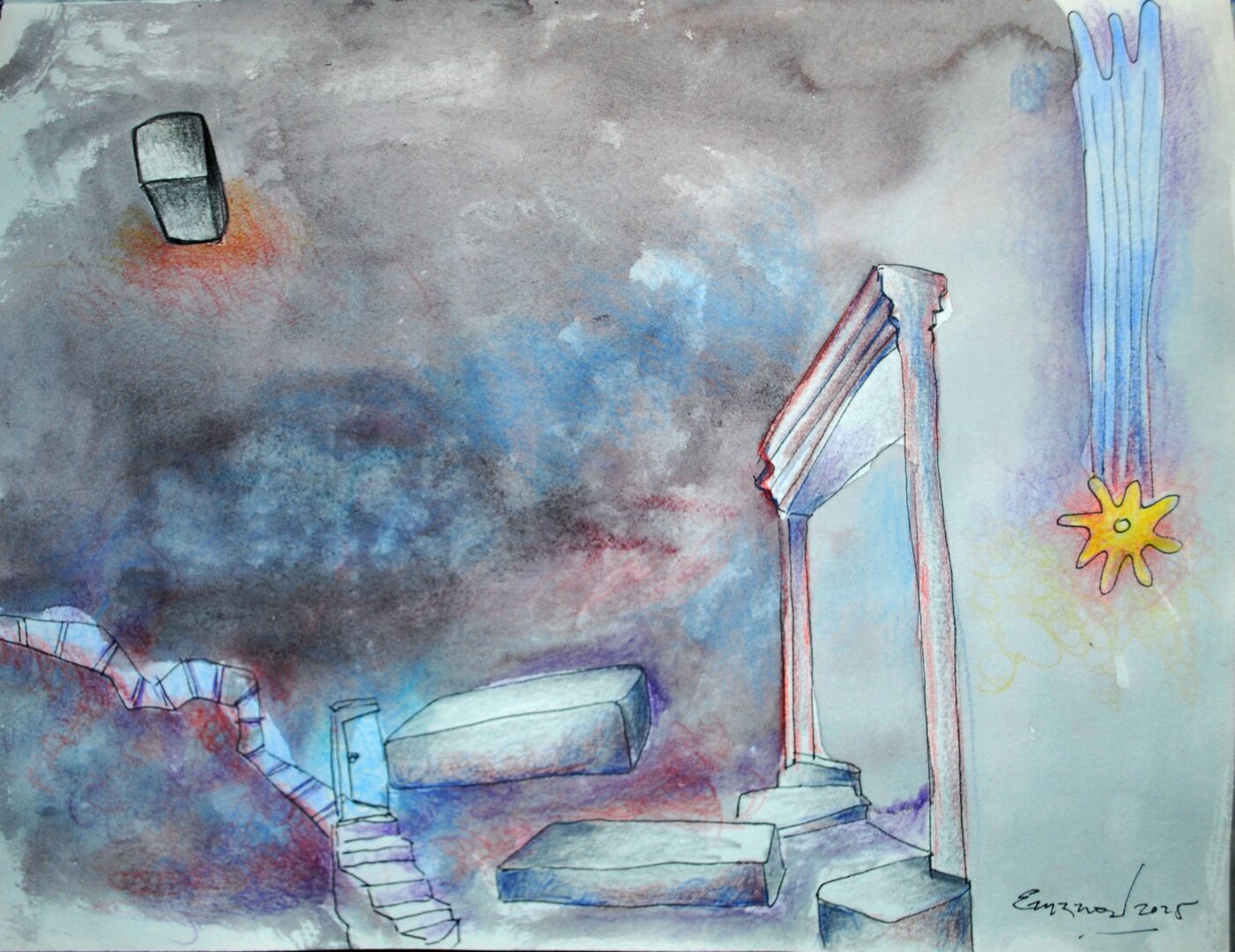
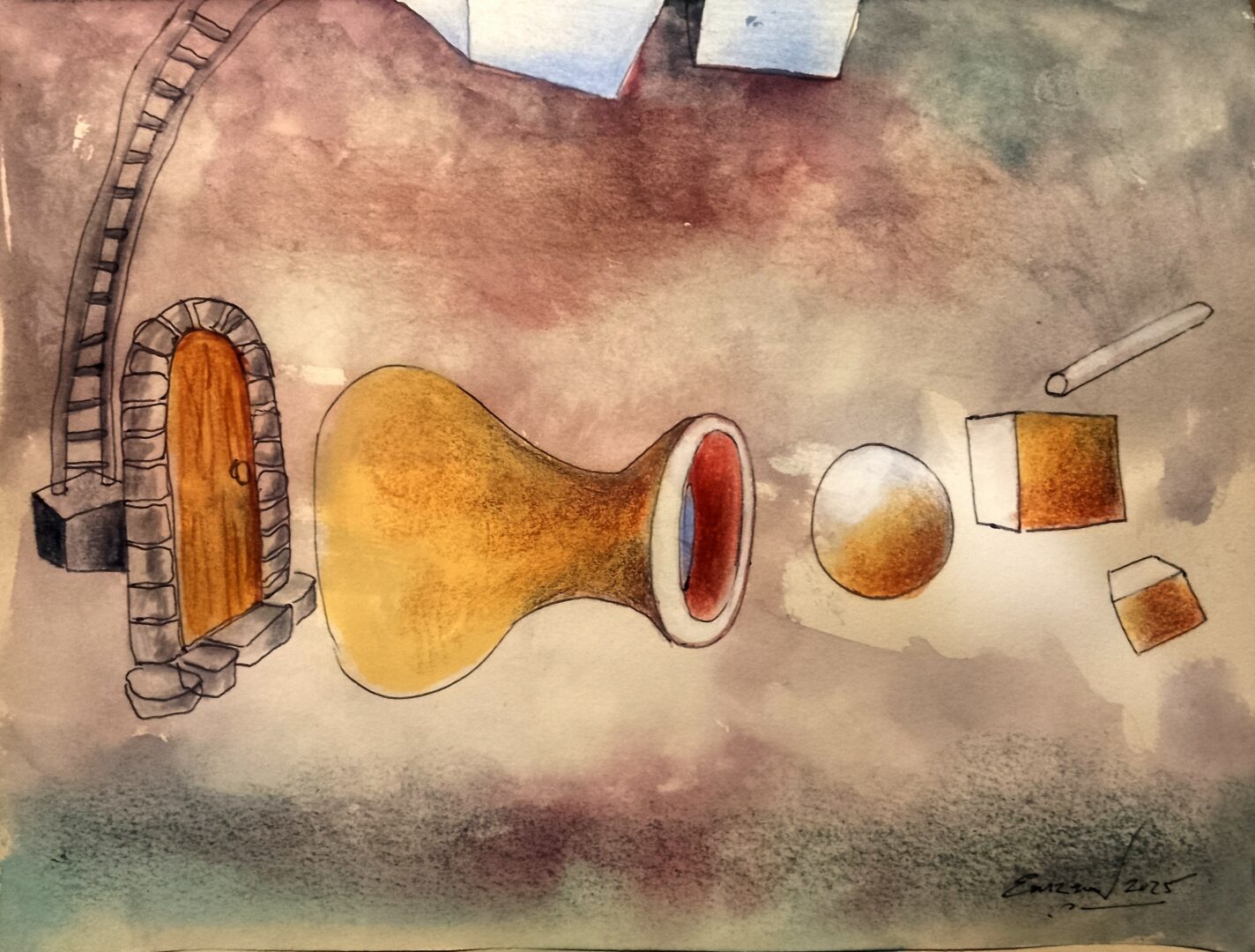
This is directly reflected in my latest series, which I believe caught the attention of Bold Journey, called Quantum Simulacra. People are drawn to these works; they write to me saying things like, “I’ve felt that too.” My goal and purpose are to explain and share, as clearly and accessibly as possible, the insights I’ve gained over time: how the relationship between subject and object—or simply put, how the mind—can influence and create reality. I refer to how we can collapse coherent wave frequencies and, essentially, create realities through the coherence that resides within us.
I hold firm in my belief that it is possible to create more and better realities through the coherence of our mind and the synchrony of our body, mind, and heart.
Great, so let’s dive into your journey a bit more. Who taught you the most about work?
In reality, I believe I have been mostly self-taught, the ruler of my own artistic work, while still leaving space to absorb technical knowledge. I’ve intentionally avoided formal art schools—not out of disapproval, but to preserve a part of my own essence in the process.
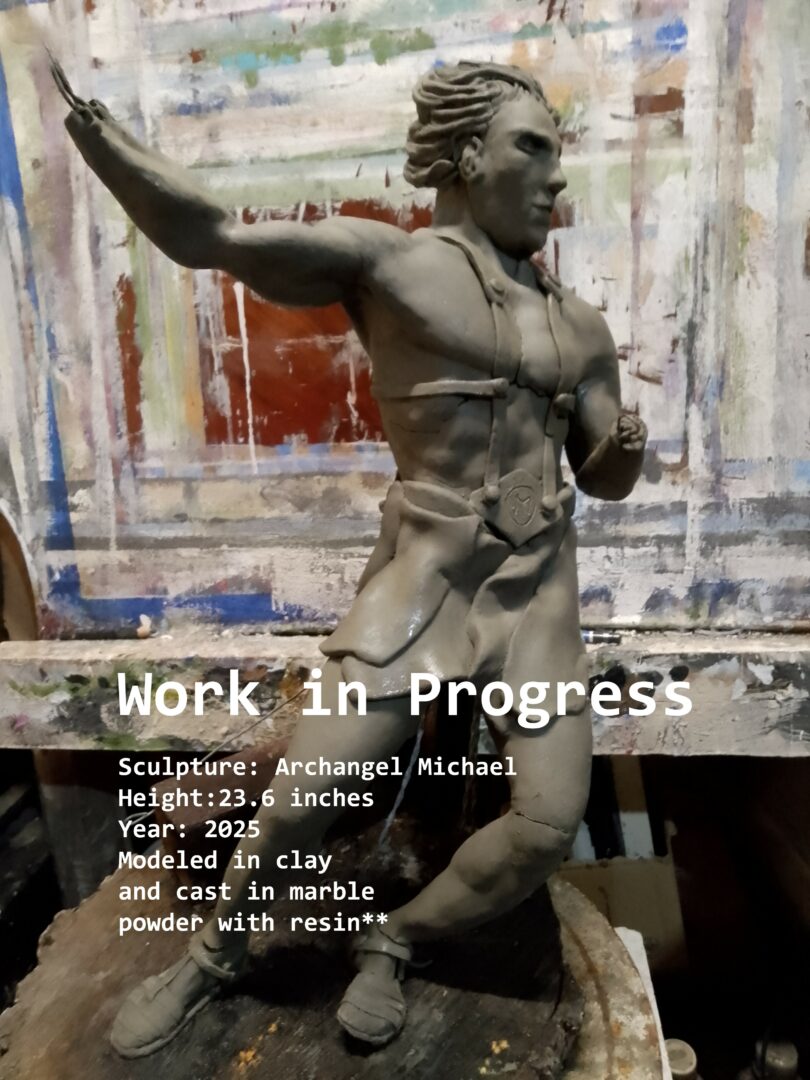
Nevertheless, I’ve had the fortune to attend courses at some of the most prestigious illustration schools in Italy, specifically in Sarmede at Štĕpán Zavřel’s school. In sculpture, I took an introductory modeling course, mainly to learn how casting is done, how molds are built, and how to demold, studying under professors from the renowned Cristóbal Rojas Academy in Caracas, Venezuela. I’ve also taken courses in ceramic techniques, like raku, always with the purpose of absorbing elements that I could later transform into my own artistic language.
It’s important to note that formal courses are not always what truly shapes an artist internally. Sometimes, it only takes hearing a few words from someone in the field. For instance, I remember an interview with the master Alberto Giacometti; his words resonated deeply within me, registering a lesson that I gradually digested over time, and that surely influenced my work positively. He said that what matters is not just mastering technique—because that can be learned through repetition—but something more. I completely agree with him: you can create a technically perfect piece, yet it might lack a soul. It’s about something beyond technique, something that doesn’t necessarily lie in a middle ground; we use both reason and heart to execute a work, and it’s about mastering that state of trance.
What did suffering teach you that success never could?
Thank you for asking me this question; I believe it is key to human development. I also hope that anyone reading this interview can take away even a small grain of positivity for their soul, their life, and their personal journey.
Yes, suffering acts like a press, tightening and shaping us until we reach the point where we transform from a state, let’s say, of carbon into pure diamond. Let me explain: suffering serves as a vector that pushes us to search, to explore, to go further. In that process —so to speak— we transcend the situation, uncovering layers of our consciousness. It allows us to see things from new perspectives.
For this to happen, we must accompany the process with patience, intelligence, and will; we must embrace it, no matter how painful, because in the midst of the whirlwind, we know we are here for a fleeting moment, and in that moment, we must act. We know there is something valuable inside us that must be preserved, no matter what. Sometimes we need to discover it, and other times we must silence our ego or those internal voices that prevent us from moving forward.
Suffering has led me to dive deep into my being, to pause. Like when we slow our breath and, in that silence, begin to hear the inner workings of our body—its heartbeat, inhalations and exhalations, its rhythm. It teaches us to stop, to see with the soul, to perceive another reality, to escape the illusions laid before us, to observe with microscopic vision.
I’ll tell you this: success often points outward, while suffering transports us inward. Of course, this depends on the nature of success and the purity of each person; in some cases, success can also serve as recognition of your value and effort, allowing you to reflect, and that too is deeply meaningful.
Next, maybe we can discuss some of your foundational philosophies and views? What important truth do very few people agree with you on?
Well, the sense of the transcendent. For as long as I can remember, I’ve felt that the most important thing in my life —or rather, the only thing that truly matters— is to develop my being, my essence, my spirit. Whatever the medium may be —music, poetry, painting, sculpture, the arts in general… or even through the simplest of acts, like treating others with kindness, not being selfish by nature, and acting with common sense— it is within that sense of universality where the transcendent truly resides.
Perhaps not many people would agree with me on this; however, to be honest, I believe that deep down, most people know it. The thing is, many prefer to take the easier path —the one that doesn’t force them to confront their own depth.
Still, I must say that I feel a collective awakening taking place in the human consciousness. I believe things are changing. It’s true that, on one hand, the devaluation of what is essential seems to have grown stronger, but on the other hand, more and more people are beginning to awaken that sense of transcendence that has long been dormant within them.
Okay, so before we go, let’s tackle one more area. What is the story you hope people tell about you when you’re gone?
What a beautiful question — and, coincidentally, I was reflecting on something very similar just yesterday. I would like those who remember me to hold on to the joyful part of who I am, my simplicity, and my way of projecting beauty even in what seems fleeting. I hope they remember the smile that comes from the heart, the gestures that ennoble life — and, of course, that all of this remains coherent with my work, because every piece of art reflects the character, the essential being of its creator. Each one carries an energy field that can be felt — even if you don’t understand art, **you can feel it**.
Perhaps this very question will inspire new projects, new ideas to share with others, because I deeply believe that **to nourish oneself is also to nourish others**. In our connection with one another lies wholeness. Everything is a flow of giving and receiving, like the waves of the sea dancing in their eternal rhythm of coming and going. What we give returns, and so the cycle continues.
That breath of fresh air — that vibration of life — is what I wish to leave behind: in my works, in my poems, in the streets, in conversations… in every little thing one can do throughout this existence.
Contact Info:
- Website: https://enriconapoletanoart.wixsite.com/enriconapoletanoart/registration
- Instagram: https://www.instagram.com/enriconapoletanoart/
- Linkedin: https://www.linkedin.com/in/enrico-napoletano-a57a1026/
- Twitter: https://twitter.com/fantasticando_
- Facebook: https://www.facebook.com/enriconapoletanoart
- Youtube: https://www.youtube.com/@arte_enlasvenas
so if you or someone you know deserves recognition please let us know here.