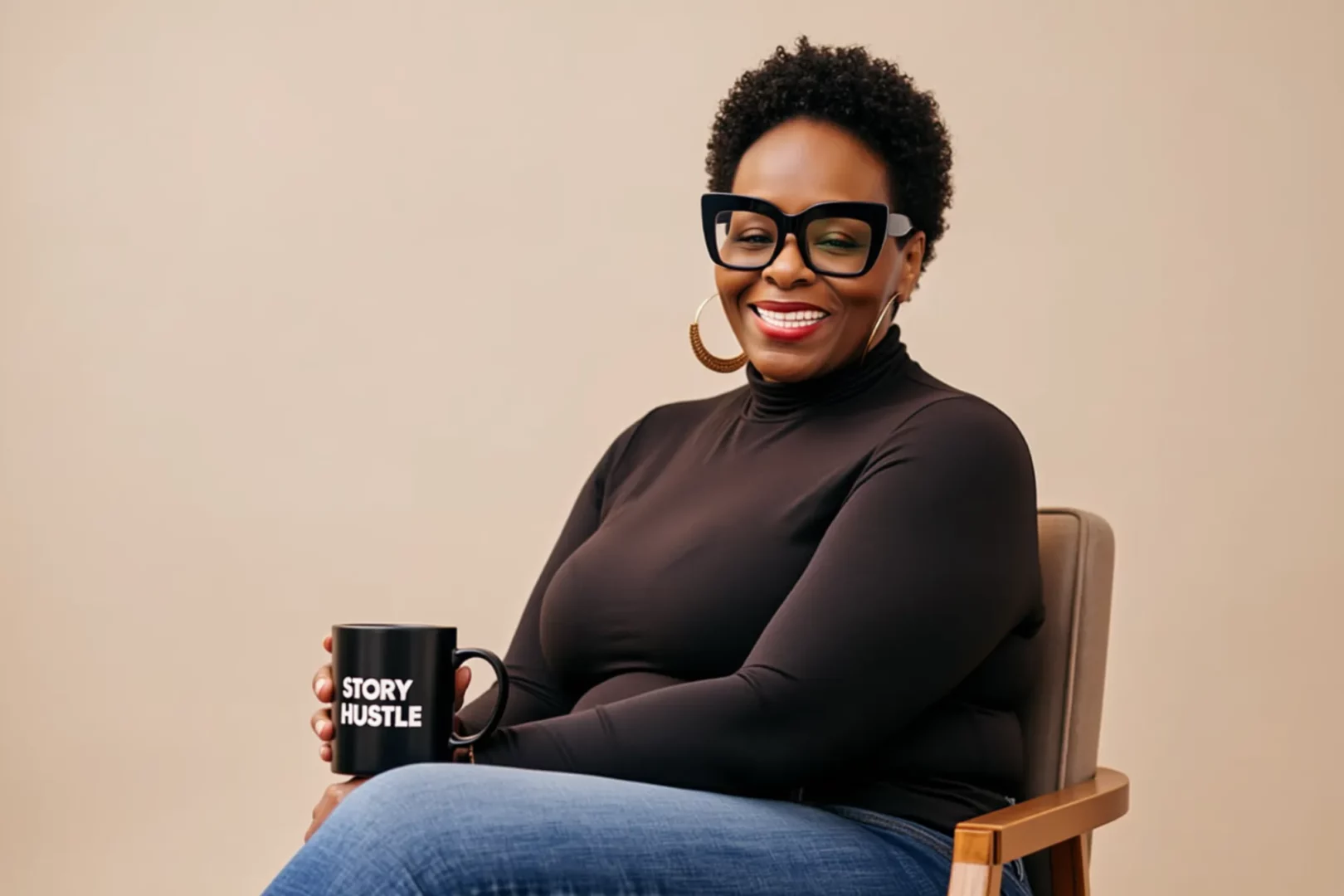
We’re looking forward to introducing you to Paula Banks. Check out our conversation below.
Paula , a huge thanks to you for investing the time to share your wisdom with those who are seeking it. We think it’s so important for us to share stories with our neighbors, friends and community because knowledge multiples when we share with each other. Let’s jump in: What are you being called to do now, that you may have been afraid of before?
I’m being called to step into the kind of visibility I used to run from. For a long time, it felt easier to stand behind the work — build the programs, write the books, support the kids and the parents without ever putting me on the front line.
Now the doors opening in my life aren’t giving me that option anymore. They’re pushing me to speak up, lead from the front, and take up room in spaces I once thought weren’t for me.
It’s stretching me, no question. But it also feels like God is nudging me in a way that’s gentle and firm at the same time. Almost like, “You prayed for this. Don’t back away from it now.”
So I’m learning to move with less fear and more faith. To trust that if God brought me to this moment, He already prepared me for it even on the days I still feel a little shaky.
Can you briefly introduce yourself and share what makes you or your brand unique?
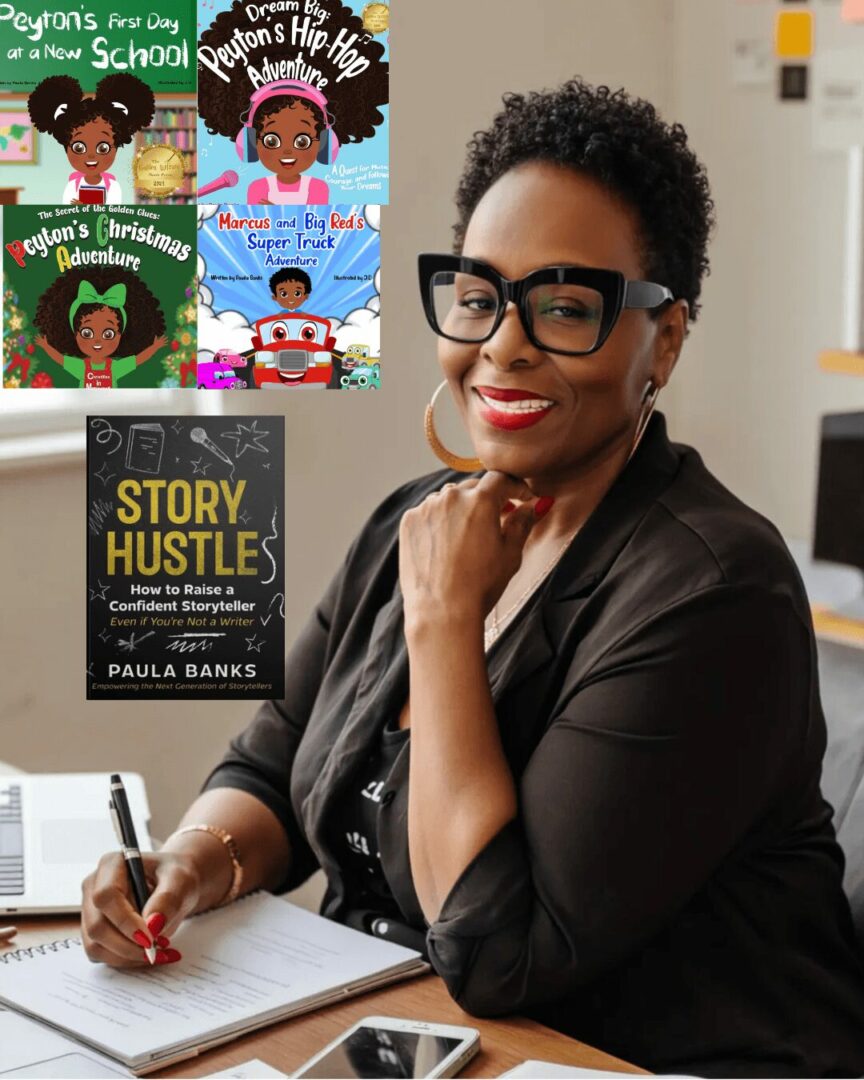
I’m Paula Banks, the author and creative educator behind Story Hustle, LitKids Create, and EION Books Publishing. My work centers on helping families raise confident storytellers, not by turning parents into writing teachers, but by making creativity feel natural and doable at home.
My passion comes from growing up loving stories but rarely seeing myself in the books around me. That experience sits at the heart of everything I create. Through Story Hustle, LitKids Create workshops, and the books we publish at EION Books Publishing, I focus on helping children feel seen, heard, and supported in their creative journey.
I recently released my book, Story Hustle: How to Raise a Confident Storyteller (Even If You’re Not a Writer), and I’m continuing to expand that mission through new resources for parents and deeper school partnerships.
Everything I build from courses to videos to community work is designed to help families rewrite what storytelling looks like at home and give kids the confidence to share the stories they’ve been holding inside.
Appreciate your sharing that. Let’s talk about your life, growing up and some of topics and learnings around that. What did you believe about yourself as a child that you no longer believe?
When I was a child, I honestly didn’t see myself as someone who could take up space. I moved through life like I had to tuck myself into the corners, be quiet, be helpful, be the one who never asks for too much. I didn’t think my presence carried any real value.
That stayed with me for a long time. Even as an adult, I would walk into rooms and immediately try to make myself smaller, like blending in was the only safe option. It became a habit, a survival skill I didn’t even realize I’d built.
But that’s not where I am anymore. Through healing, growth, faith, and a whole lot of unlearning, I’ve realized I was never meant to hide. I was meant to show up. I was meant to stand in who I am, not squeeze myself into whatever makes other people comfortable.
That’s a big part of why I do this work with kids and parents. I don’t want children growing up feeling like they have to earn space. I want them to know from the beginning what took me years to figure out their ideas, their creativity, their presence all hold weight.
That’s the belief I let go of and it changed everything.
If you could say one kind thing to your younger self, what would it be?
I’d tell her she never had to make herself small to be loved. She didn’t have to hold everything together, or stay quiet, or pretend she wasn’t hurting just to keep the peace. She was worthy of care, comfort, and room to grow long before she ever proved anything.
I’d tell her she was allowed to take up space and nothing about her story disqualified her from becoming who she is now.
Next, maybe we can discuss some of your foundational philosophies and views? What are the biggest lies your industry tells itself?
Traditional education loves to tell itself a few lies that simply aren’t true.
The first lie is that creativity is optional, something you sprinkle in when there’s extra time. That mindset is one of the quickest ways to shut a child down. Creativity isn’t a bonus It’s the foundation of how kids think, communicate, problem-solve, and understand their own ideas.
Another lie is that learning only “counts” when it’s neat, structured, and fits inside a rubric. Kids don’t grow in straight lines. They don’t discover their voice through worksheets. They learn by imagining, experimenting, and telling stories in their own way. Traditional education keeps trying to make everything measurable, and in the process, it ignores what’s meaningful.
There’s also a lie that only people with degrees or certifications know how to support a child’s creativity. That one couldn’t be further from the truth. A parent who listens, encourages curiosity, and creates a safe space at home can build more confidence in a child than any standardized curriculum ever will. Traditional education hides behind credentials because it’s easier than admitting the system needs a reboot.
Here’s the one that frustrates me the most: the belief that representation is “nice but not necessary.” If a child never sees themselves in stories or lessons, the system can stop pretending it cares about confidence or belonging.
Let me say it louder for the people in the back: if traditional education keeps ignoring imagination, cultural relevance, and a child’s natural storytelling ability, we’re not developing thinkers. We’re developing rule-followers who are afraid to take risks. That’s not the work I’m here to continue — I’m here to change it
Before we go, we’d love to hear your thoughts on some longer-run, legacy type questions. What do you think people will most misunderstand about your legacy?
I think some people will look at my work and assume it’s only about books or creativity. They’ll see the writing programs, the workshops, the Story Hustle movement, and think my legacy is just about teaching kids how to tell stories.
But that’s the surface.
What I’m really doing is helping families rebuild confidence, connection, and belonging at home. I’m trying to interrupt patterns the silence, the shrinking, the “stay in your place” messages so many of us grew up with. I’m using storytelling as the doorway, but the work is deeper than that.
People might misunderstand that my legacy isn’t just about children becoming better writers. It’s about children becoming more grounded in who they are. It’s about parents seeing their kids with fresh eyes. It’s about healing some of the gaps we grew up with so the next generation doesn’t have to carry the same weight.
My legacy won’t be the books I published. It’ll be the homes that feel different because of them homes where kids feel safe to speak, safe to imagine, safe to take up space.
That’s the part people won’t fully see on the outside, but it’s the part that matters most to me.
Contact Info:
- Website: https://eionbooks.com/
- Instagram: https://www.instagram.com/litkidscreate
- Youtube: https://www.youtube.com/@StoryHustleTV
so if you or someone you know deserves recognition please let us know here.