We recently had the chance to connect with Ann Anaebere-Aneke and have shared our conversation below.
Hi Ann, thank you so much for joining us today. We’re thrilled to learn more about your journey, values and what you are currently working on. Let’s start with an ice breaker: Are you walking a path—or wandering?
I would say that I am walking a path. That’s not to say I am always 100% aware of every step I will take or how each idea will be carried out, but there are general principles I stay true to that provide me with the guidance I need to stay on course.
As it relates to our community service group’s goal, I love a good saying or phrase. Phrases like “move the needle forward,” “just get started,” and “daily effort adds up” inspire me to get started and stay consistent in making small, positive touches in my community. These reminders keep me focused on contributing to and staying on the side of progress, no matter how incremental.
Can you briefly introduce yourself and share what makes you or your brand unique?
Sure, our Community Service Group, Omenala Service Learning Collaborative (OSLC), seeks to encourage everyday acts of family-centered service and collaborative giving. The term “Omenala” refers to the daily life, customs and cultural practices of the Igbo people of Nigeria. As we reflected on our Igbo heritage, with all its nuances, we felt especially drawn to aspects that can encourage community and collective responsibility. It was with this in mind that we chose to incorporate the word “Omenala” into our service group’s name. As we further engaged with a few organizations, we were further inspired to create OSLC as a way for us to cultivate a culture of community service in our own lives. It provides a space for our family to consistently participate in service together, fostering both personal and familial growth while supporting our community.
Currently, OSLC is organized into three main arms: our OSLC Writers Group, OSLC Quarterly Highlights, and OSLC Giving Circle. Through the OSLC Writers Group, we seek to write and donate select resources that we hope will offer encouragement and hope. Whether in the form of devotionals, articles, journals, or other written materials, our aim is to give back by sharing these written resources with communities such as women’s groups and Christian ministries. We have also engaged in youth-friendly writing activities, such as composing cards and sending messages of encouragement to those facing illness, as well as sharing notes of gratitude with veterans.
Next, through OSLC Quarterly Highlights, we feature the online service activities we’ve participated in, and we share ideas about how families can incorporate service into their own routines. Finally, the OSLC Giving Circle hosted the launch and continues, alongside my siblings, to support the Anthony Ihedoha Anaebere, Sr. Memorial Scholarship. My siblings and I established the scholarship after the passing of our father in 2015. For each scholarship cycle, we award a $1,000 scholarship to a Nigerian-born or first-generation Nigerian American student pursuing engineering studies in the United States. For information about this 2025-2026 scholarship cycle, please feel free to visit: https://aiascholarship.com/.
At the heart of OSLC, our goal is to engage in family-centered community service. We also aim to show how service can be embraced by families and truly by anyone through simple, meaningful actions that can positively impact the community. I completed my Bachelor of Arts in Psychology and Master of Arts in African Studies at UCLA before earning my Bachelor of Science in Nursing from Mount St. Mary’s University. After becoming a registered nurse, I pursued a Master of Science in Nursing and later obtained my Ph.D. from UCLA School of Nursing in their Health Disparities and Vulnerable Populations Research Program. I would say my personal and professional interests have always been drawn to public health service, civic engagement, and identifying practical opportunities to improve my community. It’s been rewarding to bring some of my interests into our family’s service activities.
Appreciate your sharing that. Let’s talk about your life, growing up and some of topics and learnings around that. Who taught you the most about work?
I would say my father and mother taught me most about the meaning of work. They taught me how to balance career ambitions with the importance of family life, how to prioritize what truly matters, and how to evolve within each season of life. One of the most valuable lessons they instilled in me was the idea of work as stewardship. They taught me that it’s about managing resources, time, and the energy we are given in a way that allows you to make a living, but that also provides meaning to your life and serves those around you.
My parents encouraged me to find my niche and pursue an area where I would thrive, but they always reminded me to never be too proud to do the work that needs to be done. They taught me that some work will be ordinary and may not be very exciting, but if that is where you are needed, then serve there. Alongside this, they encouraged me to connect with opportunities that enrich my life, even if there is no monetary gain.
I also learned that while it’s important to focus on professional growth and seizing opportunities when they come, it’s also vital to strike a balance in life. They taught me that it is just as important to prioritize family, your health, and your spiritual life. They also taught me that the type of work a person will do over the course of their lifetime will evolve and is not static, and to stay committed to personal development and learning along the journey.
If you could say one kind thing to your younger self, what would it be?
I would probably say: “You don’t always have to have everything figured out before moving forward.” I often thought that any time I had a problem or concern come up, it had to be fully resolved before I could move forward. As I’ve gotten older, I’ve learned that while there are times when finding a clear solution is necessary to take the next step, there are also situations where you have to keep moving forward, even with an unresolved issue. I’ve realized that unresolved problems don’t cancel out purpose or calling. In fact, there are times when some of those issues are there to help guide us to where we’re meant to be. I have learned that sometimes, despite an unresolved difficulty, you have to press forward even while carrying the weight of an unsolved challenge.
Recognizing this has been a huge shift for me. Life can be complicated, but the worst thing you can do is stay stuck. Overcorrection is real, and trying to undo or redo every single thing that has not gone well can leave you stagnant. Some things can’t be undone, and in those instances, the best thing to do is to learn the lesson and keep moving forward. That even may mean accepting what’s been lost or forfeited due to past decisions and acknowledging the real consequences. But it also means trusting and walking in the grace that God provides, knowing that as long as we move forward and really do our part, whatever God has promised to accomplish in our lives as He sees fit, He will accomplish.
So a lot of these questions go deep, but if you are open to it, we’ve got a few more questions that we’d love to get your take on. What’s a belief you used to hold tightly but now think was naive or wrong?
One idea that comes to mind is regarding “experience as the best teacher.” I wouldn’t say I have changed my mind about the fact that experience can be a powerful teacher, but I would say that I have refined that principle for myself a bit. Experience is undoubtedly a wonderful teacher, but it’s not always the best one without proper guidance, structure, or boundaries alongside it. Certainly, trial and error and the experience of a situation can teach us valuable lessons. However, there are some experiences that can be so ensnaring that we can spend years trying to move forward or even a lifetime trying to recover from them.
I know we don’t always have the ability to do this, but whenever possible, I believe it’s important to identify the boundaries needed as we move through an experience, so we can get the most from it in a healthy way. I also believe it’s important not to be open to just anything and everything for the sake of gaining experience. Having guardrails alongside any experience is helpful because some experiences can be incredibly hard to bounce back from. I believe that experience is the best teacher when it is alongside boundaries and even the support of trusted people who have your best interests at heart.
Okay, so let’s keep going with one more question that means a lot to us: How do you know when you’re out of your depth?
I may feel out of my depth when I can’t contribute to move things forward in a helpful way, or when I’m simply not able to feel comfortable in or about a situation. When I find myself in that position, I often try to take a step back, regroup, and figure out a new approach.
Contact Info:
- Website: https://omenalaservice.weebly.com/
- Facebook: https://www.facebook.com/omenalaserve.learningcollab
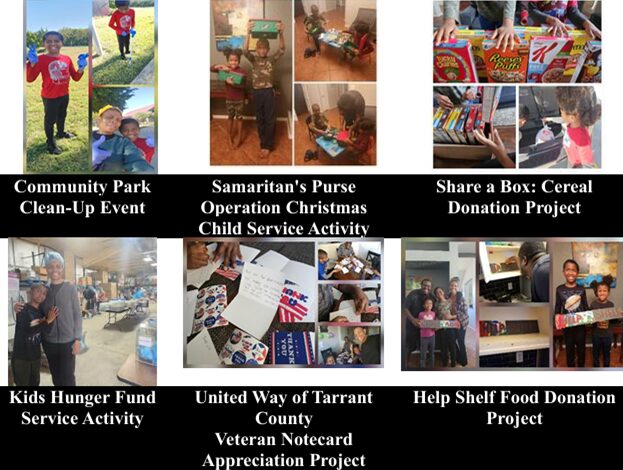
Image Credits
Onyeka Christopher Aneke
so if you or someone you know deserves recognition please let us know here.