
We’re looking forward to introducing you to Matthew Cossolotto. Check out our conversation below.
Hi Matthew, thank you so much for joining us today. We’re thrilled to learn more about your journey, values and what you are currently working on. Let’s start with an ice breaker: What are you being called to do now, that you may have been afraid of before?
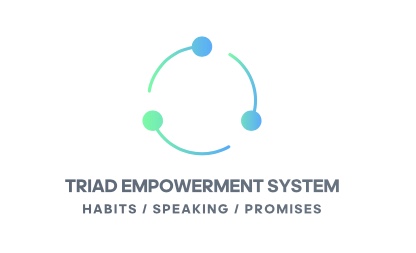
Great question. My answer is somewhat convoluted, so I hope you’ll bear with me. I feel more committed today than in years past to pull together all the strands of what I call my Triad Empowerment System, which highlights three essential “power tools” — Habits, Speaking, and Promises. I’m sharing a graphic depicting this Triad. I’m also sharing my PEPTalks logo — my Personal Empowerment Programs. These programs guide audiences and clients in replacing disempowering habits of thought with empowering mindsets,
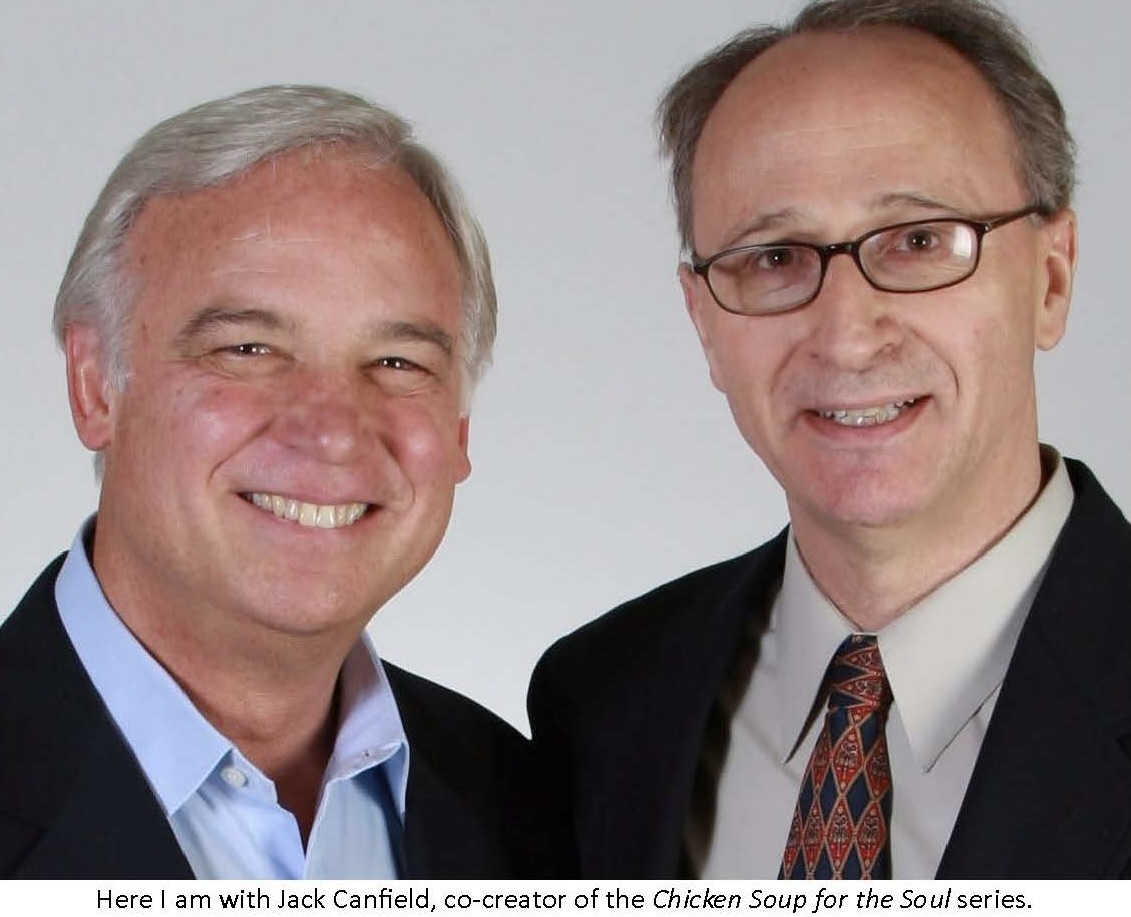
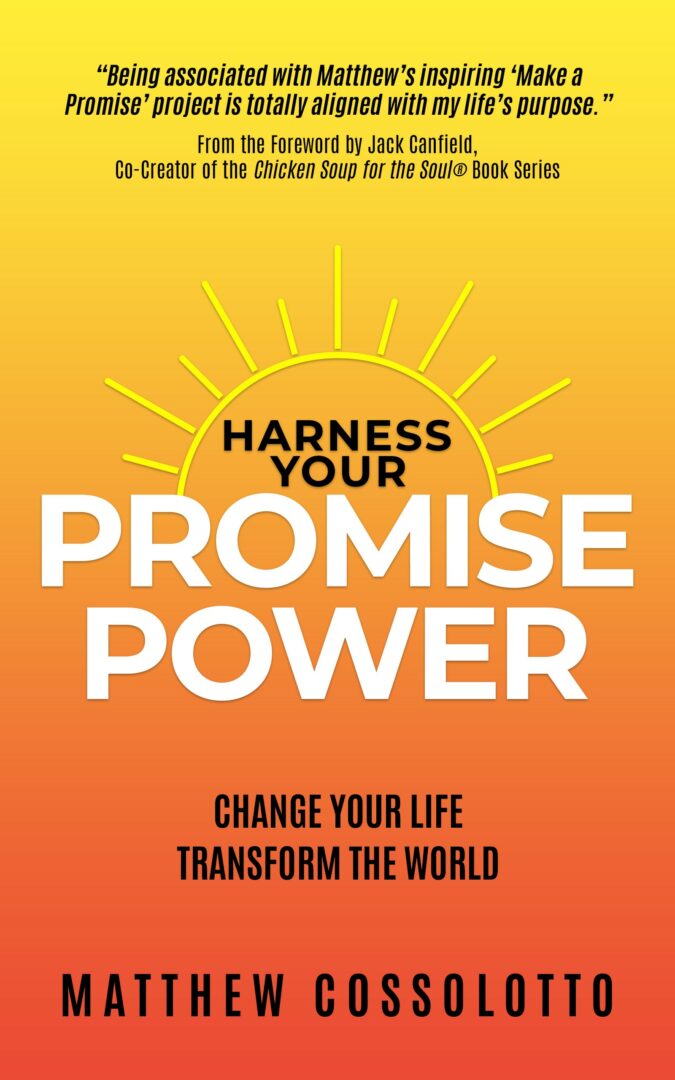
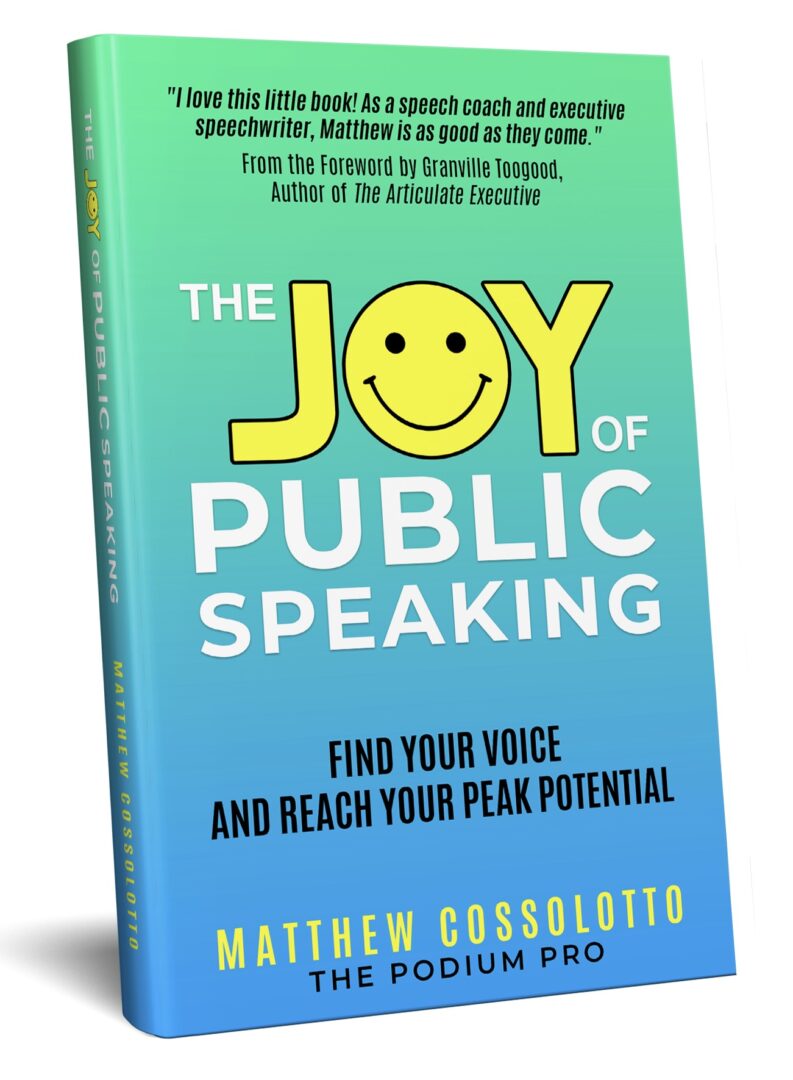
This Triad and these PEPTalks are based on the three books I’ve been working on and talking about for several years. The Joy of Public Speaking is the first book in my personal empowerment trilogy. Two more books will be published soon: Harness Your HabitForce highlights the seven habits of FAILURE and SUCCESS. These are two, side-by-side, easy-to-remember, seven-letter acronyms featuring these two powerful words in our culture. The third book in my trilogy — Harness Your PromisePower — is set for publication in late 2025. This PromisePower book features an extensive and revealing foreword by Jack Canfield, author of The Success Principles and co-creator of the Chicken Soup for the Soul® series. Here’s the PromisePower book cover, along with a photo of me with Jack Canfield that was taken a few years back.
I’m sure I’ll have more to say about all three of these books as this interview moves along. For now, I want to finish answering this icebreaker question. I feel called to pull these ideas together — these personal empowerment ideas — because I think they are essential for anybody who wants to reach their peak potential. I think I’m unusual in stressing the personal empowerment aspects of public speaking. I have always thought of speaking — a particularly important form of self-expression — as a personal empowerment tool or skill. I’ve always considered it especially tragic that so many people — surveys show that some two-thirds of all people — suffer from some degree of disempowering stage fright — some level of trepidation, anxiety, or fear of public speaking. That’s why I like to take my audiences and clients on a journey — from stage fright to stage delight. You’ll also see the cover of my book — The Joy of Public Speaking — on these pages so you’re familiar with some of my work on this topic.
Even though I’ve been talking and writing about speaking, habits, and promises for many years, I haven’t managed to pull together these three books. I’m very close to doing that now. I’m not the reason for this delay had to do with “fear” — as suggested in the question. I don’t think I was “afraid” to write the books or launch the Triad Empowerment System per se. But, for various reasons that I not sure I can explain, I don’t think I was quite ready to take this leap until now. At this point, I’m eager to do so. Today, I’m motivated to see all three of these books published and to spread the word about the crucial role public speaking, empowering SUCCESS habits, and harnessing the power of promises can play in changing lives and transforming the world in wondrous ways.
Can you briefly introduce yourself and share what makes you or your brand unique?
Over the years, I have travelled what can only be described as a long and winding road to reach the stage where I’m now on the verge of launching my personal empowerment trilogy of books and promoting myself as a speaker and coach on these topics.
The key word I would focus on here is “empowerment.” Specifically, personal empowerment. As I just mentioned, my Triad Empowerment System offers a unique combination of three different strands — three different “power tools”: Speaking, Habits, and Promises.
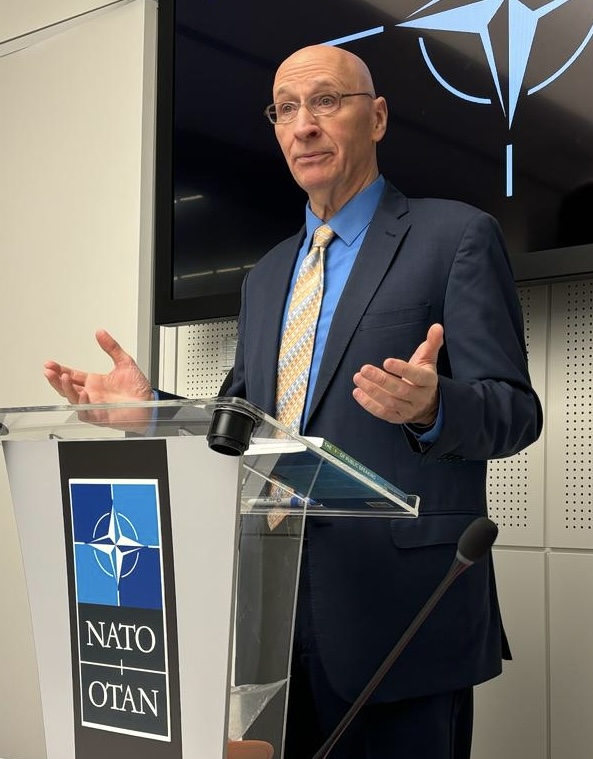
My career trajectory captures some of my story and might be worth recounting briefly. I’m a former aide to Congressman Leon Panetta. That was my first job right out of college. I studied political science at the University of California at Berkeley. Having grown up the San Francisco Bay Area, earning Bachelor’s degree at Berkeley was a natural step. My career on Capitol Hill also included a few years working as a speechwriter for House Speaker Jim Wright.. More recently, I served as speechwriter for the Secretary General and other top officials at NATO headquarters in Brussels, Belgium. Along the way, I have coached and penned speeches for senior executives at UCLA, PepsiCo, MasterCard, GTE (now Verizon), and many other organizations. As a guest speaker, workshop leader, and speech coach, I have shared my ideas and expertise with a wide range of domestic and international audiences, including corporations, associations, government agencies, conferences, schools, community groups, and nonprofits/NGOs.
Thanks for sharing that. Would love to go back in time and hear about how your past might have impacted who you are today. Who saw you clearly before you could see yourself?
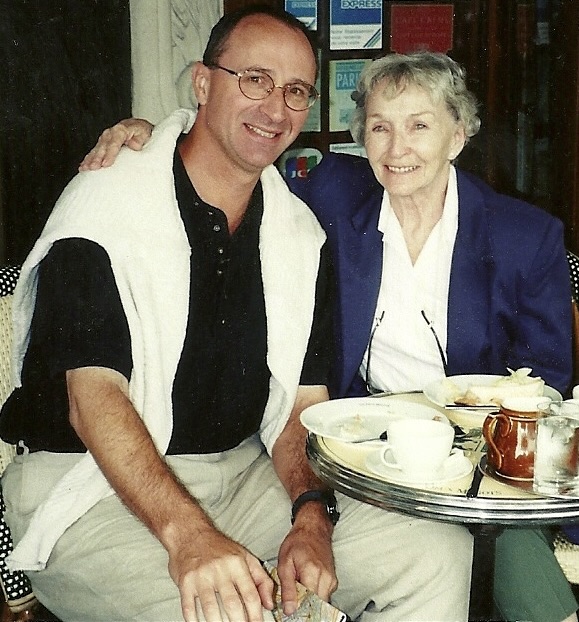
I’d have to say my mother. So I’m sharing a photo of me with Mom at a sidewalk café in Paris. This cherished photo shows us at Les Deux Magots, the famous Paris café on Boulevard Saint-Germain. We had walked for hours that day through the city’s beautiful streets and parks. We were exhausted by the time we sat down for coffee and a few late afternoon pastries. Not that you’d know it from our smiling faces in this photo. We were having a great time together. To this day, I’m amazed at how much energy Mom had during that trip. She was in her late 70s and still “full of vim and vigor,” as she would have put it.
This was the first and only time Mom visited Paris. Sadly, within a year of that trip she was diagnosed with cancer and passed away. That was in the year 2000. So this year marks the 25th anniversary of her passing. All of this is fresh in my memory at the moment because my book — Harness Your PromisePower — will be published very soon. I’m timing the publication of the book to commemorate the promise I made to my mother a few weeks before she passed away 25 years ago.
The scene is indelibly etched in my memory. Sitting beside the bed in her dimly lit room, I searched for the right words. Holding her frail hand gently, I said, “Mom, you remember that book idea we’ve been talking about, the one about the habits of failure and success?”
“Yes,” she nodded.
“Well,” I said, “I decided to make you a promise. I promise to finish writing the book… and dedicate it to your memory.”
Choking up with emotion, I could barely get the words out. I had uttered those two magic words: I Promise. I watched her face intently, to make sure my words had registered. There was a long silence – I remember hearing the rushing sounds of the nearby Smith River – and then I noticed Mom was blinking back tears. I’ll never forget the look on my mother’s face. Her eyes lit up and she smiled brightly, despite the terrible pain she was in. And somehow, fighting through fatigue and weariness, she raised her hand and jabbed an index finger in my direction.
“You do that, Matthew!” she said, her face an expression of steely determination. “You do that!” she repeated and then whispered: “This makes me very happy.”
We both fought back tears. We were both acutely aware that she would not live long enough to see the book published or read my dedication to her. When it came time to leave, I leaned over her and gave her a kiss on her forehead and a long goodbye hug. I knew this was our last goodbye, yet I left uplifted knowing that the promise I made had brought her some measure of happiness.
I knew right away that failure was not an option. I’m proud to say I kept that my word. And doing so changed my life. It helped me find my voice and my true purpose in life. It launched me on my current path as a personal empowerment speaker and author. And it even led, indirectly, to this interview today.
But, truth be told, keeping my promise wasn’t easy. In part because I promised to finish writing a self-help book and, at that time, I did not think of myself as a self-help author. Looking back over the past 25 years — and more — I realize that my mother knew something about me that I didn’t know about myself. She clearly saw me as someone who would write and speak about personal empowerment topics.
I told Jack Canfield the details of my promise to my mother when he and I first met, and Jack included a reference to my promise in his foreword to my book. But Jack was not aware of exactly when I made the promise. It has occurred to me in recent years that publishing this book to commemorate the 25th anniversary of the promise would underscore the importance I place on the power of that original promise. It truly is amazing to me to think that I made the promise 25 years ago. To this day, I’m not exactly sure what prompted me to make the promise. The decision was spontaneous. It just felt like the right thing to do at that moment. I knew I was about to spend a few minutes alone with Mom, precious moments that we both knew would be the last time we would be together. And it just hit me that I wanted to give her something meaningful, something that would perhaps bring her a measure of happiness at that terrible time.
I could not have imagined at the time my books and speaking programs would all be rooted in a heartfelt promise I made 25 years ago. Nor did I realize then that my mother seemed to have seen something in me that I did not realize about myself. It’s funny how perceptive moms can be.
What’s something you changed your mind about after failing hard?
I learned an invaluable lesson after suffering a massive failure. The lesson has to do with monitoring and transforming negative thoughts. Thoughts are powerful and, ultimately, we become what we think about. Thoughts truly are self-fulfilling prophesies.
I learned that lesson the hard way after failing to launch what I called “Comedy TV.” It’s a long story. And I won’t impose all of the gory details on you and your readers. This Comedy TV story relates directly to the promise I made to my mother about writing a self-help book on the habits of FAILURE and SUCCESS. I’ll do my best to tell the story briefly.
At some point in the late 1990s, I explained to my mother… in one of our long-distance phone calls… that I had read Stephen Covey’s bestseller “The 7 Habits of Highly Effective People”. And I found myself wondering: If there are seven habits of highly effective people, there must also be seven habits of highly ineffective people. She got a kick out of that. She said it was a clever idea to focus on the opposite of Covey’s seven effective habits. I began to think of these as the seven habits that hold people back from achieving their goals and dreams. I talked to my mother about this on several occasions, and she completely “got it.” Which made it great to brainstorm with her about it.
One day it struck me that habits that hold people back could be called “failure” habits and suddenly I realized that the world “failure” has seven letters. That was my first epiphany. But then I had another epiphany. “Failure” habits would be the opposite of “success” habits, right? And that’s when it hit me: The word “success” also has seven letters. The creative light bulbs were flashing. I wondered aloud to my mother whether I might be able to create two side-by-side, seven-letter acronyms (actually “acrostics,” but I’ve decided not to fight that losing battle). I envisioned each letter in the word FAILURE standing for a failure habit and each letter in SUCCESS representing a corresponding habit of success. An equal but opposite habit. Wow! I thought. How strange that these two powerful words in the English language, these two polar opposites – FAILURE and SUCCESS – should both contain seven letters.
I began talking with a few friends about some of these ideas. I recall specifically suggesting to others that I just might be the first person in history to notice that these two yin-yang words in our culture – failure and success – both have seven letters, and that perhaps two side-by-side acronyms could be created to help people recognize and remember these habits of SUCCESS and FAILURE.
One word was empowering, the other disempowering. The pieces of the puzzle were beginning to come together… in theory. But I doubted that I would be able to come up with an acronym for the seven habits of FAILURE and another acronym for seven habits of SUCCESS. The idea of doing so was intriguing but challenging. I was convinced that these two, side-by-side acronyms could serve as a handy mnemonic device that would help people make the shift from failure habits to habits of success. That was the basic idea.
I shared these concepts with my mother during our frequent brainstorming conversations. She loved it so much that she said I should write a book about it! Aren’t mothers great? This was a wonderful thing about Mom: She had great faith in my abilities. By then I’d moved on from working in the Speaker’s Office on Capitol Hill to a career as a speechwriter and corporate communications executive, and I had written a couple of books about European politics, so I knew a thing or two about writing. But the thought of writing a self-help book about the habits of SUCCESS and FAILURE was distinctly outside my comfort zone.
In the interest of full disclosure, I should come clean about something. As I pondered these ideas about the seven habits of success and their failure counterparts, my ruminations weren’t altogether a mere intellectual exercise. Nor was I wondering only about other people’s habits. I was thinking, at least in part, about my own habits and mindsets. Some that helped me succeed in achieving my goals, and others that weren’t quite as helpful — to put it mildly. One episode, in fact, was still haunting me at the time, nearly 10 years after it occurred. That situation concerned my failure to launch Comedy TV. I describe this unfortunate episode in much more detail in my book HabitForce! and in the updated edition Harness Your HabitForce… which I expect to publish in a few months.
I later became aware that during this Comedy TV episode I was struggling against a force — a very real and very negative force: the force of my old, ingrained mindsets, behavior patterns, and habits of thought. In effect, I undermined my own success with negative self-talk. I remember saying things to myself along these lines: “Who do you think you are? You don’t know how to launch and run a cable television channel. This idea is way beyond your ability. Don’t be an idiot. Don’t waste your time on this pipe dream. You’re going to look foolish if you try to do this and fall flat on your face.” These were the kinds of disempowering thoughts that were running through my mind during this Comedy TV episode.
I can sum up what happened in a few words: I blew it cuz I didn’t pursue it. Sure, I felt badly about dropping the ball on what I thought was a great idea, but I pushed those feelings of regret away. I told myself it didn’t really matter, that it probably wasn’t going to work anyway. That disheartening experience prompted me to embark upon a personal quest to learn more about what separates people who succeed from those who fail or just muddle through. The difference between those who start and lead successful businesses and those who just talk about doing so. That quest led me to Covey’s book and those long conversations with my mother about habits of success and their opposite habits of failure.
I think our readers would appreciate hearing more about your values and what you think matters in life and career, etc. So our next question is along those lines. What’s a belief or project you’re committed to, no matter how long it takes?
I started out talking about my Triad Empowerment System. The project I’m committed to deals with this. It’s the “empowerment” word I mentioned before. Empowering others. I’ve been doing that for many years – off and on, sporadically. I think I’ve only scratched the surface of what I can contribute on this front. So, I’m dedicated to launching my trilogy of books that focus on speaking, habits, and promises. Not only am I committed to doing so, I’ve made a promise to myself that I will finish writing these books, get them published, and promote myself as a speaker and coach to spread these empowering ideas to as many people as possible around the world. I envision spreading these empowering concepts to millions of people through books, speaking, workshops, podcasts and media interviews like this one — and just about any other venue or platform I can find.
Okay, so before we go, let’s tackle one more area. What is the story you hope people tell about you when you’re gone?
I hope people will tell others about the promise I made and kept to my mother. And how making and keeping that promise changed my life in so many unpredictable ways.
This “legacy” question opens up lots of interesting thoughts and ideas. It’s actually a topic I have been talking and writing about for years. It’s a unique and powerful way to set goals. It’s what I like to call The Ebenezer Effect, invoking the first name of the great Dickens character, Ebenezer Scrooge, in “A Christmas Carol.”
I’ve thought for a long time that we can all learn several invaluable lessons from that memorable miser, Ebenezer Scrooge. In fact, Scrooge gets a bum rap. The name if often used pejoratively, with disapproval. But I have come to regard Scrooge as a great role model for personal change. In A Christmas Carol, Scrooge comes face-to-face with the effects of his lifetime of negative habits and attitudes when a series of ghosts or spirits show him the past, present and potential future. After Scrooge encounters disturbing scenes in the Past and the Present, the ghost of Christmas-Yet-To-Come transports him to a time just after his own funeral. He is forced to endure the painful, unvarnished truth of what people really think of him. It’s an alarming but valuable wake up call for Scrooge. Facing his own mortality, Scrooge exclaims to the Spirit: “I am not the man I was. I will not be that wretched creature any longer.” And he changes overnight. He wakes up the next morning, Christmas Day, a changed man. “I am as light as a feather,” he exclaims. “I am as merry as a schoolboy!” That’s the power of the “Ebenezer Effect.” Personal transformation can happen quickly, even overnight, if you believe it can and if you have the right motivation.
Another life-changing lesson is that we all have the ability to project ourselves into the future and imagine what people are likely to say about us after we’re gone. Scrooge almost waited until it was too late. The good news is you don’t have to wait. You can take this journey anytime you want through the power of your own imagination. That’s where writing your own eulogy comes in. Sit down, grab a pen and notepad, and write your own eulogy. To some this may sound a bit morbid, but I assure you it’s an extremely enlightening, worthwhile and motivating process. Writing your own eulogy will help you jumpstart and sustain positive change in your life by establishing a clear blueprint for what you want to accomplish, what kind of person you aspire to be, and how you want to be remembered. That’s the gist of this question, right? What’s my legacy going to be? What will people say about me when I’m gone? Powerful questions.
By writing your own eulogy, you set long-term goals and create a concrete picture of the kind of person you want to be. We all have an opportunity to fast-forward to our imaginary funeral and compile a list our most important goals and dreams as if they have already happened. For me, keeping that promise to my mother stands out as a defining moment, a crystalizing accomplishment, because it changed my life, and I hope in the process I have helped to change the lives of many others in positive ways. Every time I give one of my PEPTalks, I think about the promise to my mother. And I imagine how proud she must be to know that I am fulfilling the purpose she saw in me long before I realized it myself.
Contact Info:
- Website: https://www.MatthewCossolotto.com
- Linkedin: https://www.linkedin.com/in/matthew-cossolotto-the-podium-pro/
- Other: Links to recent podcast interviews with Matthew:
“Get Authentic with Marques Ogden”:
“Achieving Success with Olivia Atkin”: https://www.youtube.com/watch?v=Z89LRjOGu6E
The Douglas Coleman Show: https://www.youtube.com/watch?v=zbUooONXN3c
The Unfiltered by G’ade: https://open.spotify.com/episode/4376CLE0dzQjltcwKL8pWQ
Selected Press Releases:
https://www.prlog.org/13106231-matthew-cossolotto-author-of-the-joy-of-public-speaking-appears-on-get-authentic-with-marques-ogden-and-achieving-success-with-olivia-atkin.html
https://www.prlog.org/13057325-matthew-cossolottos-the-joy-of-public-speaking-helping-readers-move-from-stage-fright-to-stage-delight-wins-2024-maincrest-media-book-award.html
https://www.prlog.org/12974143-matthew-cossolotto-former-speechwriter-for-top-nato-leaders-and-the-speaker-of-the-us-house-of-representatives-launches-new-speaking-business.html
so if you or someone you know deserves recognition please let us know here.