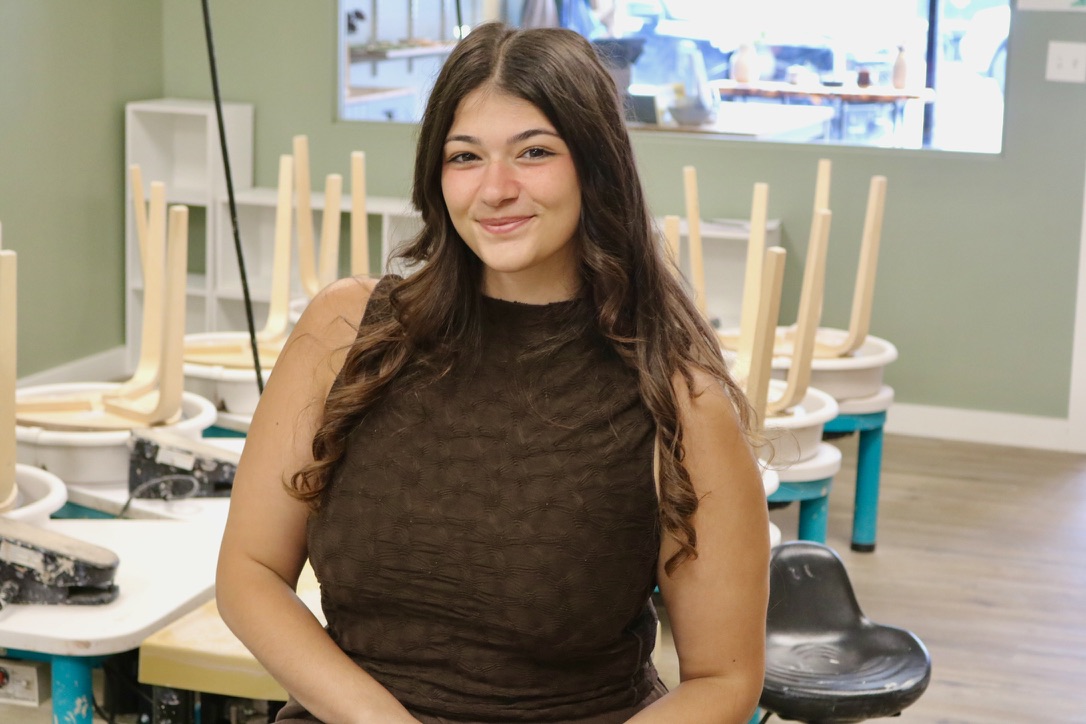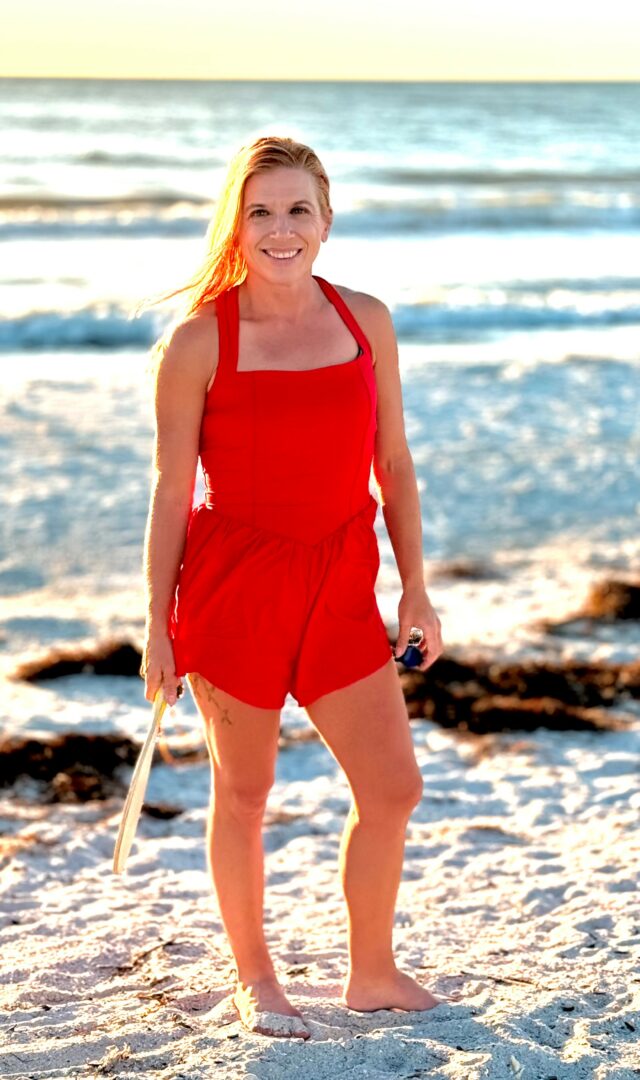
We recently had the chance to connect with Krystal White PhD and have shared our conversation below.
Good morning Krystal, we’re so happy to have you here with us and we’d love to explore your story and how you think about life and legacy and so much more. So let’s start with a question we often ask: What do you think others are secretly struggling with—but never say?
I’m a psychologist, so many things come to mind. Just one of them: Many kind-hearted people out there struggle with repressed, unrealized or concealed anger.
-Sexless couples drowning in boredom.
-Underpaid stewards and educators teaching with resentment.
-Users of dating apps raging against ghosting, phishing and life.
-Adult children blaming their parents for not being emotionally available.
-Parents critiquing their children for being over-entitled.
Boredom, apathy and sarcasm all are expressions of anger—combine them with annoyance, irritation, resentment, and moral outrage and suddenly we’re all mired in a quicksand that no steady stream of mindfulness will cure.
Our own anger are the weapons of mass destruction that they never located.
Anger is inherently relational. Most of the destruction we live with, arises from relational incompetence.
We lack mastery handling when others are upset with us, and we lack maturity honoring our own anger.
Many people hide anger, and stuff down all the little truths that make them feel messy or unacceptable. They suck in their cheeks when they want to scream, delay a response when they want to say no, and laugh when they feel hurt. People secretly hoard it, trying to off-load it with little consequence:
on our bodies, on anonymous posts, in too tight boundaries in new situations.
Unless we learn to stop hiding and start moving on from our anger, and through our fear, it’s going to burst out in ways we don’t even recognize OR we’re going to be so thin-skinned we vilify any anger we encounter out there that is about us.
Can you briefly introduce yourself and share what makes you or your brand unique?
Like so many people, I wear many hats. I have two businesses and a 5013c I lead, and a technicolor social life.
I recently launched Resolutionarys.com, which centers agreement making as a spreadable skill. Humanity is at the most peaceful we’ve ever been, AND we also are the most aware of conflict and potential violence. It is a curious social predicament.
It’s time we commit deeply to caring for the best interests of others while equally honoring our individual needs. The only way forward is to learn how to make, iterate, and promote mutually beneficial agreements with one another.
Ideally, we’d create such agreements when we begin relating, which we rarely do. Most often, we only consider agreement-making when the old ones have failed. Then, if we experience hiccups in agreements when we’re already tired or hurt, people tend to placate, ghost, block, retaliate, slander, or chase their own version of “justice” instead.
Imagine how much stronger our connections would be if we could undo every “yes” or “no” made out of fear, guilt, ignorance or misplaced idealism—how much more honesty, energy, and openness we’d enjoy.
We need more people who are capable and willing to resolve endings with integrity and responsibility.
Our interactions—especially with those we disagree with—can be tools for renewal, not control. We help people practice these new skills liberally, ensuring resolution not just for the conflict at hand; but also for those yet to come. This business focuses on Coparenting Mediation and agreements, structured conscious uncoupling programs, and transformative conflict resolution. We guarantee mindful momentum during endings that serves the well-being of all involved.
We don’t just reach resolution—we become it.
I continue to lead The Executive Shaman, an organizational leadership firm. For decades, I’ve served as a leadership psychologist specializing in men.
I’ve been emphasizing comprehensive assessments lately—inkblot projection tests, hormone and biomarker analysis, supplements and nutritional use, and no-holding back interviews with partners, staff, mentors and former colleagues. Sometimes people go into therapy or coaching with misguided notions of where to focus their resources. I give leaders data and a written plan outlining what they need and explicitly stating what would be “nice but not necessary” in terms of their holistic wellness. I provide consultation and feedback through the process of securing providers that offer those necessary services.
You wouldn’t go on a 34 mile run while training for a marathon, nor would you go keto. But that’s how we sometimes approach our therapies— doing what we “feel” is best or worked for others. The “healthcare” and wellness industry benefits egregiously from this approach.
I can’t NOT mention my work with the very disruptive, social capital generating 5013c FreeLeadership.Org. We want to help convince people that true leadership isn’t elected or assigned—it’s a mindset we choose in every interaction. Our best leaders often are our friends. We’re expanding our Board of Directors so that we can innovate how we serve in 2026. If there’s someone with a pulse still reading after this rant, who wants to disrupt the status quo and provide strategic insight, please reach out.
Appreciate your sharing that. Let’s talk about your life, growing up and some of topics and learnings around that. What’s a moment that really shaped how you see the world?
I had a wild upbringing, and several encounters with life and death from an early age. I think a lot of us, whether we realize it or not, have held death—or witnessed or caused an ending, and how you see everything changes after that.
For me, it was on a mission in Kenya, where I witnessed and encountered death more than at any other time in my life. I went there just a month after filing for divorce, convinced I’d won the prize for heartbreak and failed wife of the year. The death of my marriage shattered so many illusions.
Back then, I believed that if I was “good,” that if I worked hard enough….good things were guaranteed; [I had a] Caring for Plants for Dummies philosophy of “the good life.”
It wasn’t until I paid my dues to the continent that excels in composting heartbreak and hunger that I moved past this phase. A moment there showed me how randomly the earth decides what lives and what doesn’t. The short story is this: During a home visit, a woman generously offered me the last of her tea and cookies. She had four children of her own and had recently adopted an infant she found lying on its dead mother’s chest. She brought that baby over to me. She placed it gently in my arms.
Have you ever been handed something that doesn’t belong to you, and suddenly, ALL you want to do is keep it safe?
The woman who had found that baby was one of the holiest people I’ve ever met. But as she spoke, all I could focus on was if that baby was going to take its last breath in my arms. I just couldn’t let that happen on my watch.
Yet, that’s exactly what happened.
Since that moment, I’ve understood that loss is part of the bargain of being alive. Strangely, in our society, we need up-close, personal encounters with death to provoke more aliveness.
I often think about what it was like to be that woman who adopted the baby—and what it was like to be that baby itself. As an adopted child, I didn’t realize until that moment how randomly lucky I was: the time I was born, the race I was born into, the place I was born in.
We often think we’ve earned the good things in our lives, and that we’ve been victims of the bad.
But—Chaos kisses order.
I now revere the randomness of life.
Our pain is often random.
Our insight is often random.
The strangers who become acquaintances, who become heroes or friends, who sometimes become the great loves of our lives—
they are often random.
But our joy doesn’t have to be.
When did you last change your mind about something important?
I think one of the sexiest things in a human is the willingness to change their mind.
“Changing minds” is my bread and butter. LOL.
A few times a year, I end up fully flipping a core belief like a pancake.
Recently, I let go of one of my big ones–the idea that every person has a specific purpose in their lifetime. THAT was a seismic shift for me. I wrote my clinical dissertation on a sense of purpose in boys, have guided leaders to build mission-driven leadership brands, and wake up most mornings with the drive of a caffeinated squirrel.
Purpose IS essential—the protein of our inner diet-plan.
But what I no longer subscribe to is that its SPECIFIC and we find our purpose like we’re winning a cosmic game of Clue.
You know the one — the game where you collect hints, venture across contexts, make wild guesses, and suddenly declare, “Aha! Miss Scarlet! in the conservatory! with the candlestick!”
A lot of us — especially those born after the ‘70s — caught the “need-to-be-special” bacteria. And the “find your specific purpose” game feeds it.
For example: Maybe you thought your purpose was nursing. But five years deep into the fluids, fur, and fury of humanity, you realize: “Nope. Wrong place.” So you go hunting for the right thing.
We treat purpose like a pot of gold at the end of a rainbow — something we’ll chase after while a trickster leprechaun-god showers down situations and signs for us.
I used to say things like: “This is a sign I shouldn’t be here.”
Cute, but also convenient.
Thinking that way let me outsource my responsibility, or skip feeling my actual feelings.
Sometimes rejection wasn’t cosmic at all. It was feedback that I’d misread the room. Othertimes, it was an invitation to tighten a boundary….or loosen one.
It’s easier to believe we were made for something than to take full ownership of what we chose to make.
Instead of playing the “clue” game,we can simply BECOME the sign — of who we want to be, and where.
I’ve seen countless people, myself included, decide to change how they show up in the world — simply because they wanted to. Did we have a purpose? We’d probably tell you that we did, if you asked us afterward. Haha.
BUT: You don’t need a grand cosmic assignment to become the person you want to be.
You don’t have to keep running yourself through sadistic obstacle courses of potential.
Choosing to become her is enough.*
Today, I encourage those around me to rebel against potential.
Spending too much energy on potential turns it into a sneaky little squatter in the back of our minds who ironically makes such a ruckus that we never get the security deposit back.
Forget chasing after a pre-fabricated fairy tale purpose. We’re alive to create and liberate as indicated.
Forge your own adventure instead.
*To Become Her is my 6th book, out in 2026. I promise: it’s not a memoir.
I think our readers would appreciate hearing more about your values and what you think matters in life and career, etc. So our next question is along those lines. What’s a belief or project you’re committed to, no matter how long it takes?
Becoming a Friend.
Okay, we’ve made it essentially to the end. One last question before you go. What light inside you have you been dimming?
For the record, I just want to assure you that I am not a 7/11. I am definitely NOT open 24 hours a day, lights on, ready to radiate, on demand.
Haha.
But, I am the type of person who historically has burned the candle at both ends. I require gentle bullying from others who care for me to rest.
I also live in a culture where I interpret your question as saying that dimming means something is “wrong!”
Being “on” and “visible” has become one more way we compare ourselves to others and measure our value. We have this culture that tells us that if our work isn’t shared on social media or we’re not at every networking opportunity, we’re going to wither into irrelevance.
If we don’t CHOOSE to dim down consistently, our true light will be drained from us.
I’ve been dimming my lights lately in a few big ways: not going to events with the agenda to “network” and not having any social media presence related to Resolutionarys, the new mediation firm I launched. I also dim myself by holding back at select times. When I walk into any room, I want to be able to manage how I show up in that room. I might intentionally stay quiet. I might not chime in even though I have something to say (which I always do. I didn’t get the gene for napping, but I did get one for yapping. Haha).
That could be seen as dimming my light.
I’m a physically small person with high-watt-mode encoded into my DNA.
I have never been the most popular person in a room, but sometimes I am the most memorable. That’s not something I’m proud about, btw. I’ve been a jerk and I’ve too verbose. Dimming creates space. Sometimes, in that space, people step up and contribute something brilliant. Sometimes, in that space, people we see wider, more cleanly. Sometimes, in that space, people bore themselves and others to tears.
All those moments are playgrounds for me.
I learned to dim my lights as a way to be more civil, which I briefly share about in last book I released, Uncivilized Thoughts. But I ALSO dim myself to create space, to honor a natural cycle, to let darkness do the heavy lifting, to disrupt my own status quo and, to fool around.
Every time I allow myself some darkness, some dimness, I rebel against my addiction to eternal sunshine.
Each moment I dim my lights, I shake a world that worships busy-goodness.
Plus, who doesn’t find dimmable lights beautifully functional in their dwelling space?
More of those, please.
Contact Info:
- Website: https://Resolutionarys.com
- Linkedin: https://www.linkedin.com/company/free-leadership-inc
- Other: FreeLeadership.org
Theexecutiveshaman.com
so if you or someone you know deserves recognition please let us know here.