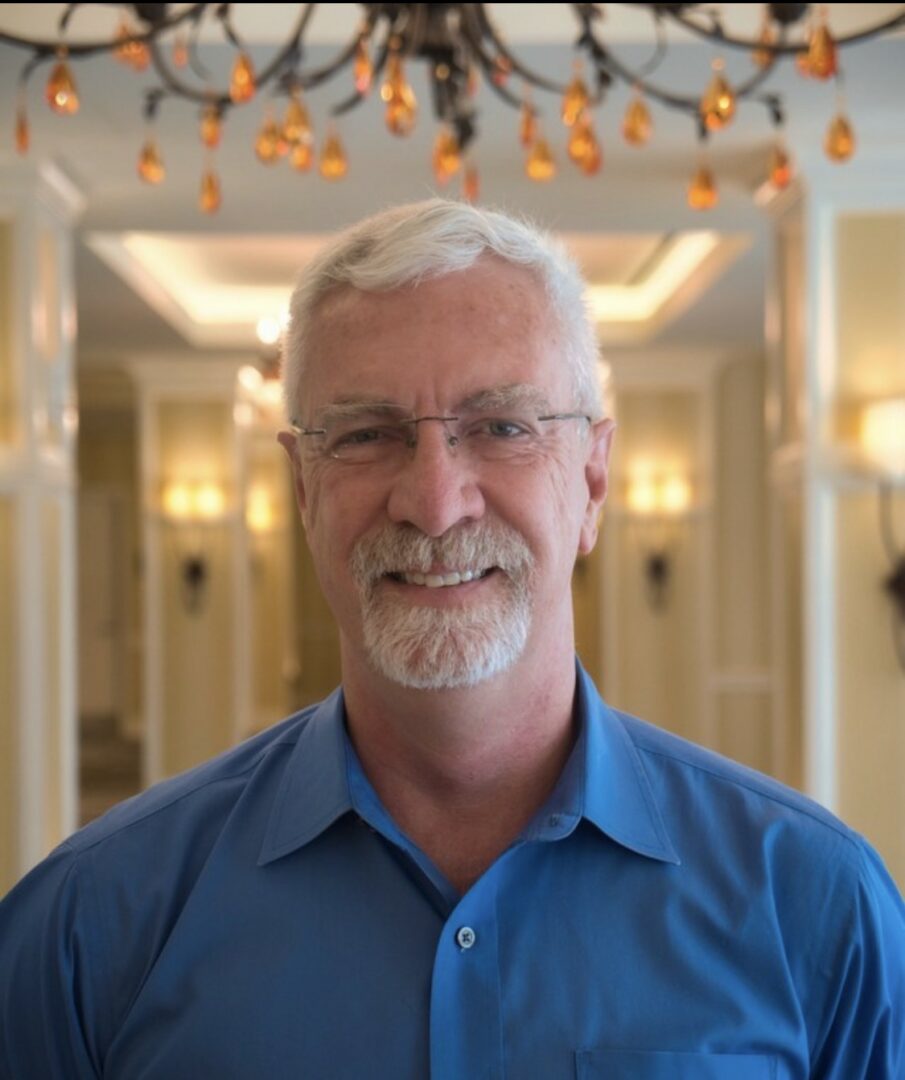
B Alan Bourgeois shared their story and experiences with us recently and you can find our conversation below.
B Alan, really appreciate you sharing your stories and insights with us. The world would have so much more understanding and empathy if we all were a bit more open about our stories and how they have helped shaped our journey and worldview. Let’s jump in with a fun one: Have you stood up for someone when it cost you something?
In my world, standing up for people is the job description. I advocate not just for the creators I know personally, but for tens of thousands I will never meet. When people talk about the “creative arts,” they tend to picture music, theatre, or visual art. Authors are usually the last group at the table—and they get the least support from city, state, and federal governments. Yes, we have libraries, but there are fewer of them than there are stages or galleries, and they’re under pressure too.
Right now, writers and authors are under attack from multiple directions. We’re seeing book bans, laws that restrict what can be written or read, and a flood of fake, AI-generated books that devalue real human work. That’s where I plant my flag. My daily work is fighting for authors to have the right to exist, publish, and be taken seriously.
The cost has been real. When COVID hit, I lost everything we had built. I’ve been rebuilding from the ground up ever since—not for my ego, but so the 50,000 authors I fight for don’t have to live in fear of being silenced, erased, or economically pushed out of their own profession. My goal is simple: to give them a future where they can write great books and actually have a shot at being seen, heard, and supported.
Can you briefly introduce yourself and share what makes you or your brand unique?
I’m an author, philanthropist, and stubbornly persistent troublemaker on behalf of writers. I’ve been writing for fifty years, and somewhere along the way I realized my own books weren’t enough. Texas was full of talented authors who were invisible in their own state, and there was no real infrastructure designed to help them survive, much less thrive. So instead of just adding one more book to the pile, I started building an ecosystem.
That ecosystem is now the Texas Authors Museum and Institute of History (TAMIH) and its related programs. At its heart, TAMIH is about one big idea: authors deserve the same cultural respect and support as musicians, visual artists, and performers. We’re creating the first museum dedicated to Texas authors and their legacy, while the Texas Authors Success Center focuses on the living, breathing careers of today’s writers—offering education, marketing support, and community. Around that core we’ve built programs like Texas Bookshelf (our Texas-only bookstore), the Lone Star Festival and world record reading events, and a series of tools that protect and elevate authors: ReadSafe Ratings, True Voice Reviews, the Verified Texas Author Program, and Human Author Verification.
What makes this work unique is scope and intent. I’m not interested in one-off “services” or feel-good slogans. I’m building a long-term support system that helps authors from their first draft to their final legacy—whether that’s better marketing, protection from AI-generated fakes, credible reviews, or simply having their work remembered in a physical museum instead of disappearing in a digital void. Right now, I’m focused on securing the permanent home for the Texas Authors Museum, growing the Success Center, and expanding our verification and rating programs globally.
If there’s a thread that ties it all together, it’s this: I’m using my crazy great journey as a writer to make sure other authors don’t have to fight quite as hard or quite as alone as I did.
Great, so let’s dive into your journey a bit more. What’s a moment that really shaped how you see the world?
I grew up in the ’60s and ’70s, watching the world crack open in real time—school integration, civil rights, gay rights, and a long list of other “issues” that were really people’s lives on the line. For me, it was never just one moment that shaped how I see the world; it was a constant drumbeat of change happening right in front of me.
I was raised in a poor family, while most of my aunts, uncles, and cousins lived what we’d now call a “white privilege” life—long before any of us had that language. I went to school with kids from both sides of the tracks, from different races and backgrounds. Sitting in those classrooms, it became painfully obvious that the basics were the same for all of us: we eat, we breathe, we want a decent life. But it was just as clear that the path could be made easier or brutally harder depending on your skin color, your gender, or who you loved.
Being surrounded by that contrast for years forced me to pay attention. It pushed me toward what I hope is a grounded kind of common sense: if the system is tilted, you either ignore it or you work to level it. I started choosing the second option at age 12, when I began volunteering and “giving work,” and I never really stopped. Through high school and for the next 50 years, that experience has been the engine behind everything I do—whether it’s fighting for authors, building institutions, or creating opportunities that wouldn’t exist otherwise.
So the short answer is this: growing up poor, watching privilege up close, and sharing classrooms with kids whose lives were both very different and exactly the same taught me that equality doesn’t happen by accident. You have to build it, day after day. That realization still drives me.
What did suffering teach you that success never could?
Growing up poor, you don’t have to be taught what you don’t have—it’s paraded in front of you every day. You see what others get to enjoy, and something in you starts to grind: the hunger to have more, to be more, to succeed. That hunger can be useful. It pushes you forward.
But what suffering taught me—especially losing everything after I’d already “made it” a few times—is that success is fragile. You can build something over years and watch it disappear almost overnight. When that happens, you have a choice: lose your mind and collapse into despair, or do what I’ve had to do more times than I’d like to count—stand up, start again, and rebuild from the rubble.
I’m not going to pretend I always bounce back with a smile. I take my hits. I sit with the despair, the ego damage, the anger. But I’ve learned I can’t live there. Wallowing isn’t who I am, and it’s not what I’m here to do.
Success never taught me that. Success feels good, but it can lie to you. It can whisper that you’ve arrived, that you’re safe, that it will always be this way. Suffering tells the truth: nothing is guaranteed. Money, status, structures—any of it can be taken away. What can’t be taken is who you decide to be when it all falls apart.
Suffering taught me to ask the hard question: when everything is stripped from you, do you become smaller, or do you become sharper? Do you drown in self-pity, or do you get up, learn, adapt, and become more dangerous—in the best sense of the word—the next time?
It also gave me a different lens on other people’s pain. I understand why some folks never make it back. I see them on the streets, I hear their stories in the news when someone decides they can’t go on. I’ve brushed up against that edge myself. The difference is that, in those moments, something inside me insists: you are more than this pain, and you still have work to do.
That’s what suffering taught me that success never could: resilience isn’t a slogan, it’s a decision you make in your worst hour. And the reason I keep getting back up is simple—I still have more to give than I’ve lost.
Alright, so if you are open to it, let’s explore some philosophical questions that touch on your values and worldview. Is the public version of you the real you?
No. Without a doubt, no.
The public version of me is a slice of who I am, not the whole person. No one on this planet can honestly say they know all of me—and I intend to keep it that way. Over the years I’ve learned that there are parts of myself I need to hold back, not out of shame, but to stay grounded in who I know I am, not who other people decide I should be.
People project all kinds of stories onto me: the activist, the troublemaker, the do-gooder, the “saint,” the difficult one. There are so many versions of me in other people’s heads that I couldn’t keep track of them if I tried—and I have zero interest in doing so. By keeping certain experiences, thoughts, and truths just for myself, I protect my own sense of worth, value, and identity.
I actually think everyone should have a private core like that. Let the world create its own narratives. If someone is disappointed that I don’t match the version they invented, that disappointment belongs to them, not me. I don’t claim to be anyone special, more important, or better than anyone else. I’m simply human—good, bad, and ugly, like anyone.
The difference is this:
I know me.
They can keep guessing.
Before we go, we’d love to hear your thoughts on some longer-run, legacy type questions. What do you understand deeply that most people don’t?
Empathy.
It’s a simple word that’s been twisted into something toxic in today’s political climate—treated like weakness, or worse, a punchline. But people who have lost everything, buried the love of their life, or watched their world collapse in an instant know better. When you’ve lived through that kind of pain, empathy stops being an abstract concept and becomes a lived, physical reality. You don’t just “believe” in it—you feel it.
What I understand, and what a lot of people in power clearly don’t, is that empathy is not the enemy of strength; it’s the foundation of it. Too many politicians stand on a pedestal and talk about “the people” as if empathy is just a code word to test with their base. In some circles, it’s even become a slur. But the truth is, empathy is the one thing that could actually pull this country back from the edge and begin to heal the divide.
Real empathy isn’t performative. It’s building great schools instead of gutting them. It’s funding the arts, feeding your neighbor, protecting the vulnerable, and recognizing that policy isn’t theory—it’s impact on real human lives. Those in power who have never truly lost anything of deep value often lack that perspective. Until you’ve been broken open, it’s very easy to treat other people’s suffering as data instead of reality.
My work with authors comes directly out of this understanding. I know what it feels like to lose everything, to be dismissed, to be invisible. So I build systems, institutions, and opportunities that give writers a real chance to succeed. And when authors succeed, they’re not just winning for themselves—they’re in a better position to lift others up, to model generosity, and to pass that empathy forward, whether through their stories or their actions.
That’s what I understand deeply: empathy is not a soft extra. It’s the engine for any future worth fighting for.
Contact Info:
- Website: https://BourgeoisMedia.com
- Instagram: https://www.instagram.com/balanbourgeois/
- Linkedin: https://www.linkedin.com/in/b-alan-bourgeois-35425a18/
- Twitter: https://x.com/BAlanBourgeois
- Facebook: https://www.facebook.com/misterbourgeois/

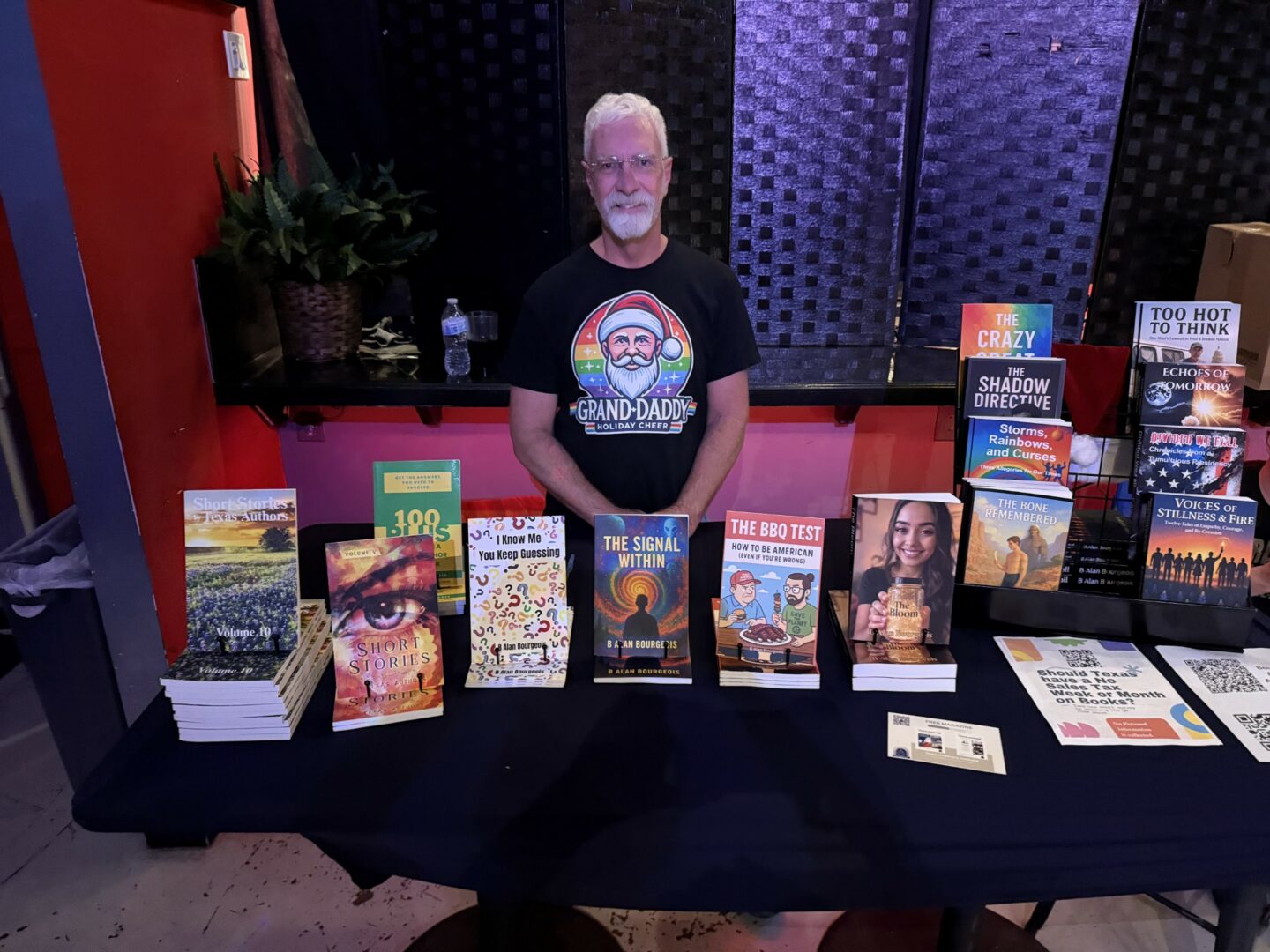
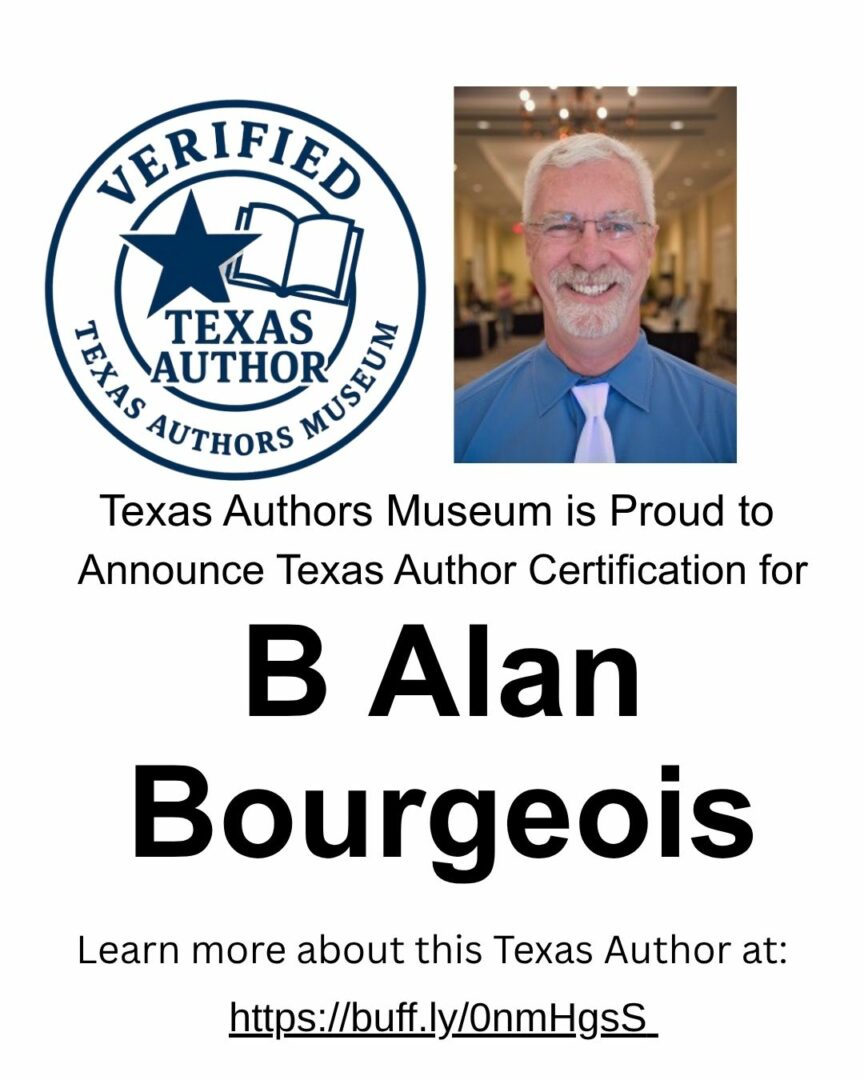
Image Credits
All credits are mine.
so if you or someone you know deserves recognition please let us know here.