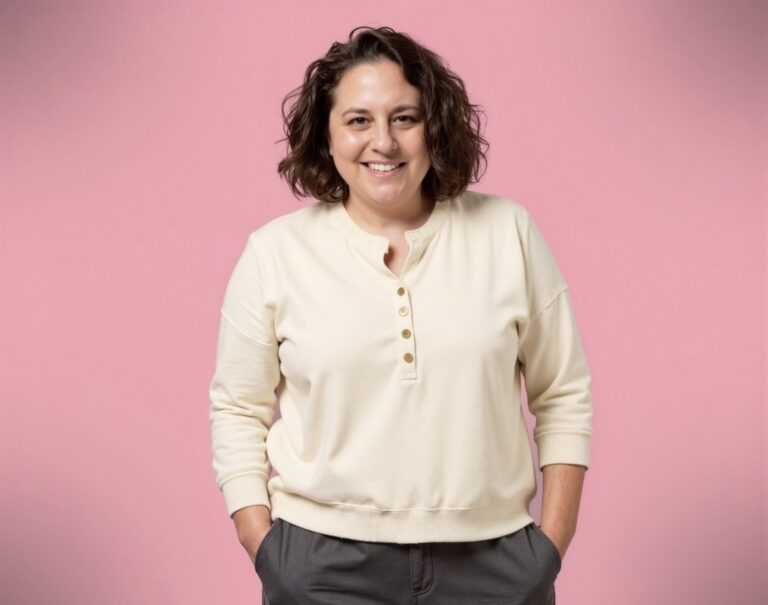
Alright – so today we’ve got the honor of introducing you to Saundra Mitchell. We think you’ll enjoy our conversation, we’ve shared it below.
Hi Saundra, so happy you were able to devote some time to sharing your thoughts and wisdom with our community. So, we’ve always admired how you have seemingly never let nay-sayers or haters keep you down. Can you talk to us about how to persist despite the negative energy that so often is thrown at folks trying to do something special with their lives?
Sometimes, you grow up as the weird kid. Sometimes, you grow up hard. Sometimes you grow up both, and you have to learn to keep going in spite of a world that seems to hate you, personally, in particular. By the time I was eighteen, I had survived an abduction and rape at 7, a physically and emotionally abusive relationship between the ages of 12 and 14, my parents’ divorce and father’s abandonment at 13, and my brother’s suicide at 16 (two years after my attempt.) I was poor, I was traumatized, and I was The One people talked about in hushed voices, and mocking tones– both in school, and out. I didn’t have aspirations then; I didn’t know I *could*. Instead, what I had was this well of grasping need– to write, to tell stories, to be *more* than a collection of terrible events.
What choice did I have, but to keep going? The alternative was to lay down and die. I had learned the hard way the blast, and the rubble, and the remains a suicide leaves behind… so I told myself I could feel it all I wanted, but I couldn’t do it. And as I became a young mother, then a young divorcee, I had to keep moving because now I had a child whose life I wanted to turn out so much better than mine. I had to wake up every day, and keep moving for her. Soon, adulthood had a rhythm– all the things I had to do, endless lists of dinners and laundry, birthday parties and doctors’ appointments– I made a new clock with it. Obligation and duty and *desire*, to give my children a *childhood*.
And in the cracks between numbers, between jobs, between all the things that needed to be done and would never stop needing to be done, I wrote. Stories and screenplays and poems and essays. I published, using what little pin money I had to myself to pay for postage. I scratched and clawed spaces into my life, where I could pour all the desire to be MORE THAN. Sometimes, I moved forward, in spite of an obstacle. Sometimes, I moved forward out of my own spite– to prove to the world that a traumatized weird kid with no college education could still make a mark in the world.
Now at 50, I survey my own mark. Two incredible children, overflowing with empathy and creativity. And twenty books– some novels, some anthologies, some non-fiction– all written by me, on the shelves of the library, forever and ever. Some 450 short films produced, as the screenwriter, and an executive producer. I learned early on that the world would persist in telling me no. So I had to refuse to take no for an answer.
On my shelf, by my desk, I have a sign. A saying, shared between me and my best friend– another hard-knock kid, in a hard-knock world. It says, “Dumpster Rats Always Rise.” We haven’t forgotten where we came from; we’ve immortalized it. Yes, I’m the weird one, the tragic one, the strange one, but I’m resilient. I don’t like getting knocked down, but I have no choice but to get up again.
I can keep going, or I can lay down and die… and I don’t plan to do the latter for a long, long time.
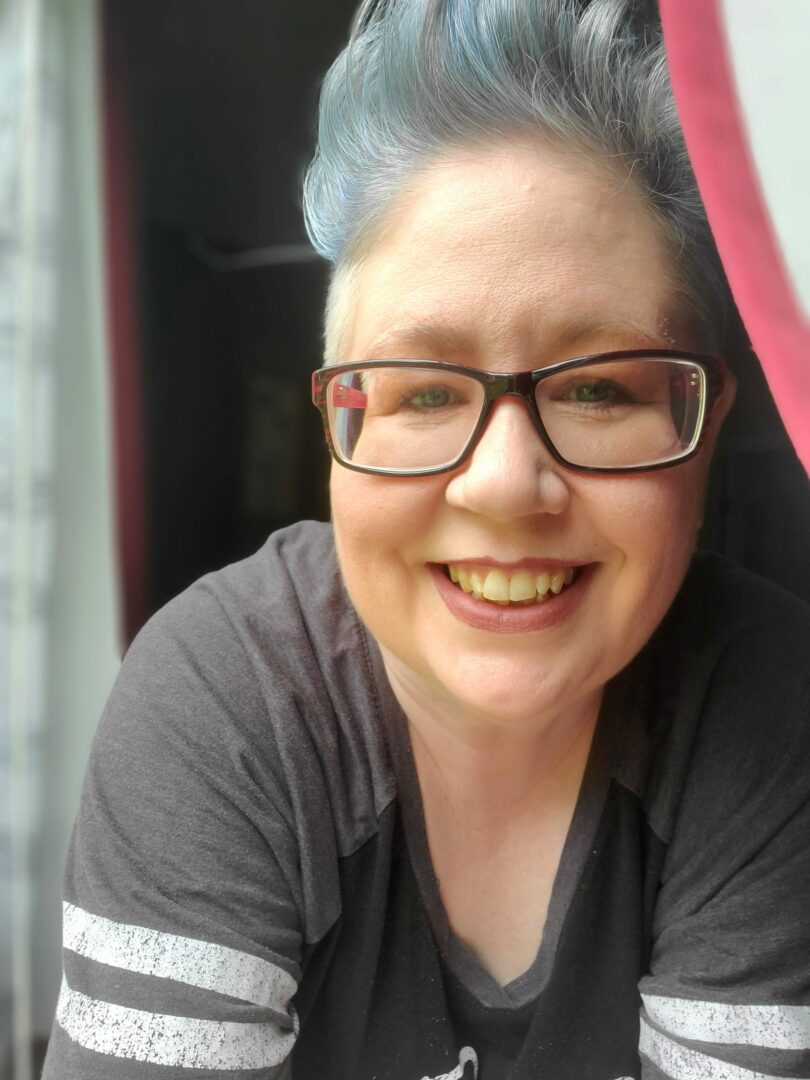
Great, so let’s take a few minutes and cover your story. What should folks know about you and what you do?
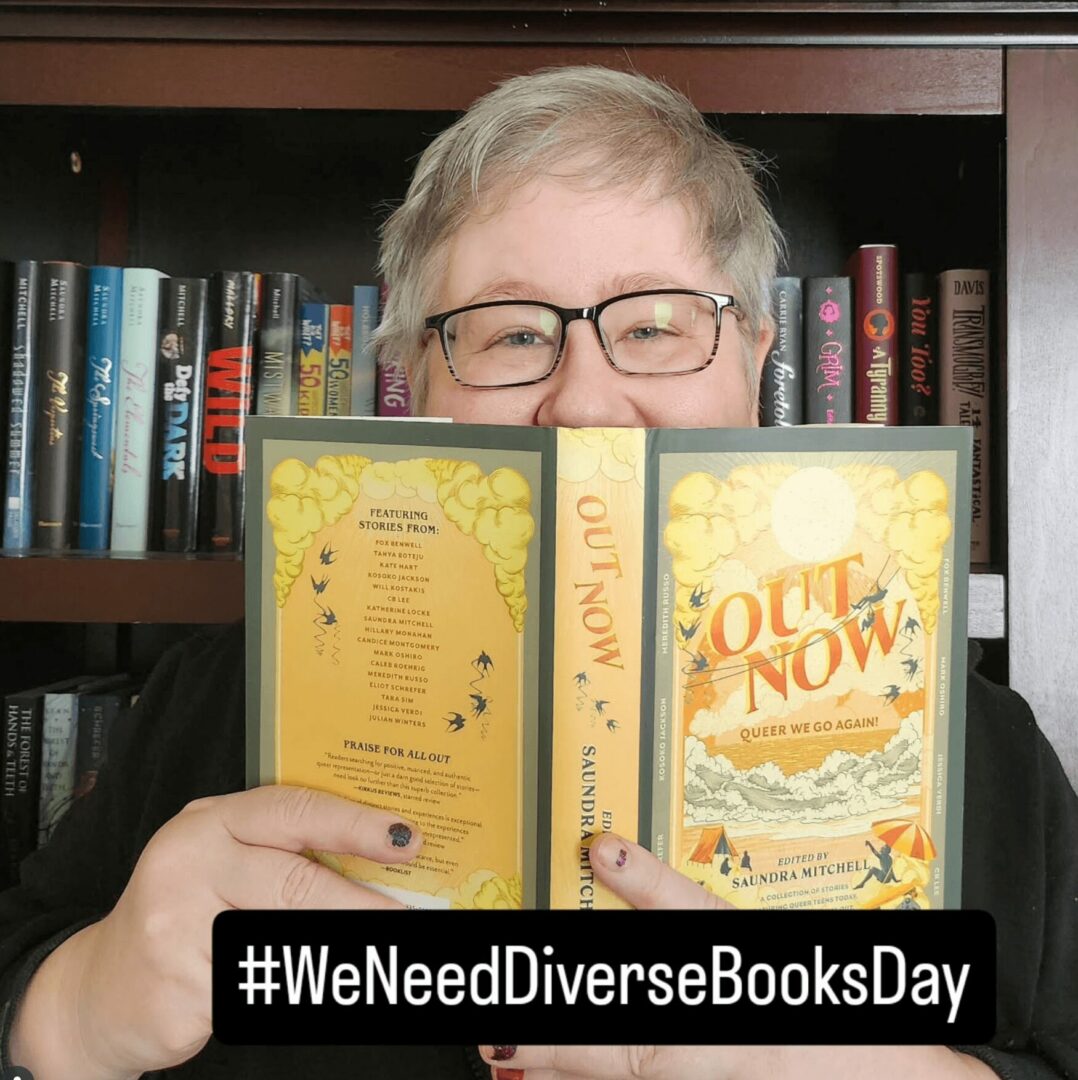
I’m lucky enough to write for a living. I sometimes joke that I get to play with my imaginary friends for a living, but I feel like what I truly do ask questions. The stories I tell give me the chance to examine a situation from every angle– to imagine who could do horrific things and why, but also to imagine amazing things and how they happen.
The stories that I tell are frequently the stories I needed when I was younger. There has long been this idea that books for children- including teens- should teach lessons and impart morals. But for me– books were my friends, when I had none. Books were my refuge, when I felt unsafe. And books were the way I came to understand myself, and the things that had happened to me.
I wish we lived in a world, where I could say, fortunately now, kids don’t have to suffer like that. But they do. Every single day. I wish I were the last child who experienced what I did, but I’m not. So when I write, I’m writing the stories I wish I’d had, for whatever stage in life. And this makes it sound like I’m spending every day in grim determination, but I’m really not.
Instead, I’m spending my days going to another world, experiencing their lives, capturing it all on paper in the hopes that it will mean something to someone.
And though I primarily write for teens, I have my first two adult novels coming out in 2026, and 2027– and these books capture things I’m experiencing now at this age– getting older, but not feeling old; moving across the country after living in the same place for 48 of my 50, what it was like to fall in love with procedurals, but then fall out of love with a lot of things those procedurals represent in real life.
Looking back, what do you think were the three qualities, skills, or areas of knowledge that were most impactful in your journey? What advice do you have for folks who are early in their journey in terms of how they can best develop or improve on these?
The love of reading is my foundation. I have a reading family; as a child, I had plenty of books of my own, my grandmother took me out to garage sales to find dime novels, the 4th of July meant lazing in the sun in my grandmother’s back yard, with my mother, my aunt and of course, grandmother, all reading their own paperbacks. Books were traded like gold among the adults around me.
My mother took me to the library every Saturday; I was allowed to read anything I liked. And I felt *rich*, being able to take home a stack of books each visit. It really cemented for me the realization that everything we have ever known as human beings could be found in books. (Even if some of those books have since been lost.)
Reading stories, knowing how they made me feel, it made me want to work that magic myself. In fact, the first novel I ever wrote, I wrote it after I read “How I Live Now” by Meg Rosoff and “Looking for Alaska” by John Green in short succession, and I knew, that’s what I wanted to do. It was never about being a bestseller, or famous, or rich. It was about telling a story that was so real, that people could live in it, if they needed.
I never had the money to take writing classes. I didn’t go to schools that could afford author visits or special programs. Everything I have ever learned about writing stories, writing books– I learned by reading stories, and reading books. I don’t have a college education– I couldn’t afford it. But I’ve read thousands of books. And I refused to take no for an answer; I collected rejection letters and stapled them to my walls. I had hundreds… and I took them all down the day I sold my first novel.
My advice to the writers coming up behind me is that– you don’t need the MFA. You don’t need the retreat. You don’t need the classes and conferences and workshops. If you can afford them, great! They’re great resources! But if you can’t afford those, in time, or energy, or money– you can still do this. The door is right in front of you! Your creativity and perseverance are the key.
Is there a particular challenge you are currently facing?
Book ban are my number one challenge right now. I write about uncomfortable topics: rape, suicide, broken systems, trauma. And I’m queer, so I write about queer teens. And the combination of those things puts a target on my work. Even when my books have no cursing, no sex on the page, no violence– people still call them inappropriate. Because they think, if their kids never read about queer people, if they never read about suicide or rape or systemic violence– that it will never happen to them. And it’s simply not true.
Six of my books have been banned in more than 17 states at this point, and on all military base school libraries. The number one reason is the existence of queer people in them. And the number two reason is the conflation of rape with sex. It infuriates me, because they’re not the same thing, but our society still wants to paint them as the same. And this means that victims and survivors are traumatized over and over again. We saw it through the Kavanaugh confirmation, through #MeToo and the backlash to it, and we’re seeing it now as certain pundits want to claim that adults predating on 15 year old children is somehow acceptable.
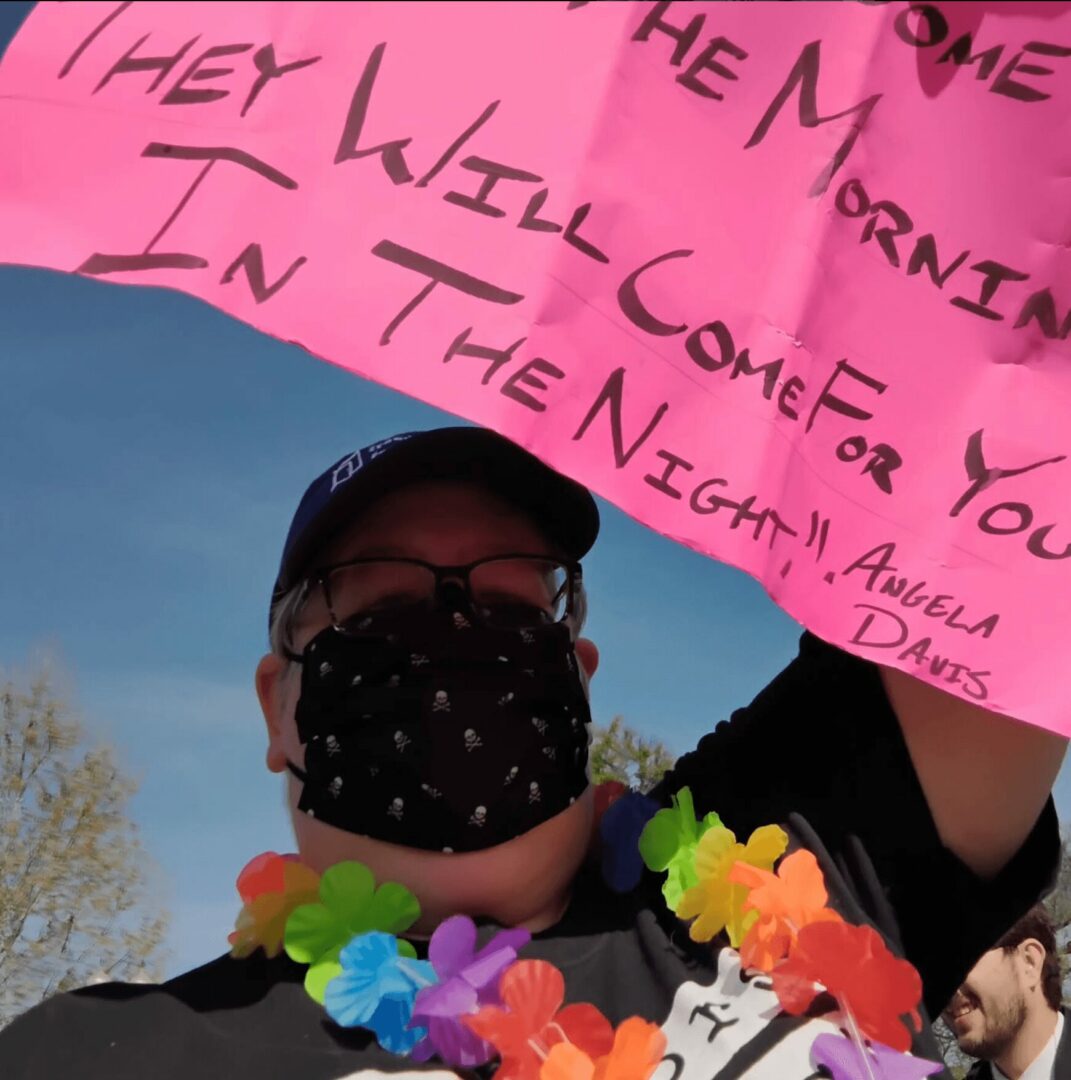
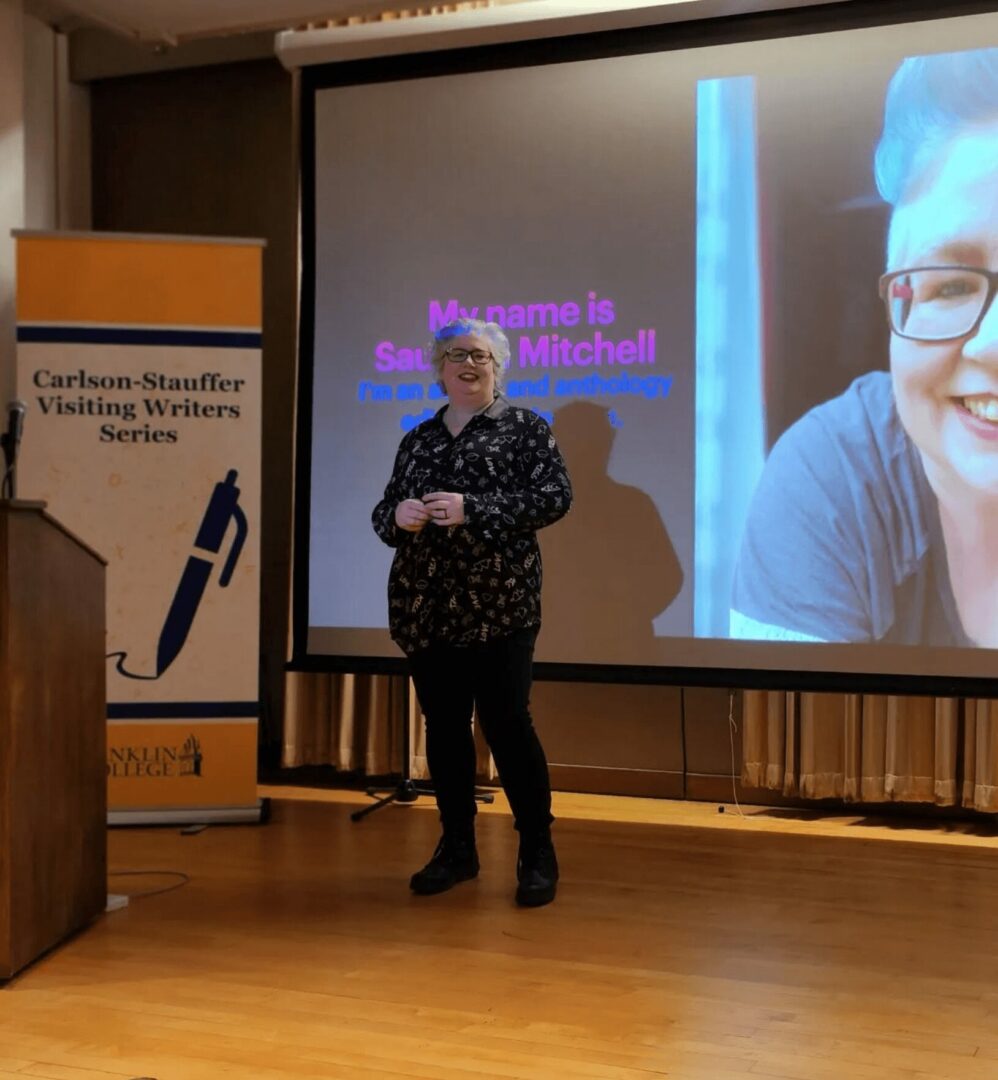
So what I do? I keep writing books that upset people. And I tell the truth when I give talks about book banning and the erosion of our free speech. I put myself out there, and speak up, and– well, as my mother says– put the target on my back. Because fascism grows in silence. Because victims are buried by the privilege of the powerful. Because I *can* do it. I stand up. I show up. I never shut up. Because you know what? Dumpster rats always rise.
Contact Info:
- Website: http://www.saundramitchell.com
- Instagram: smitchellbooks
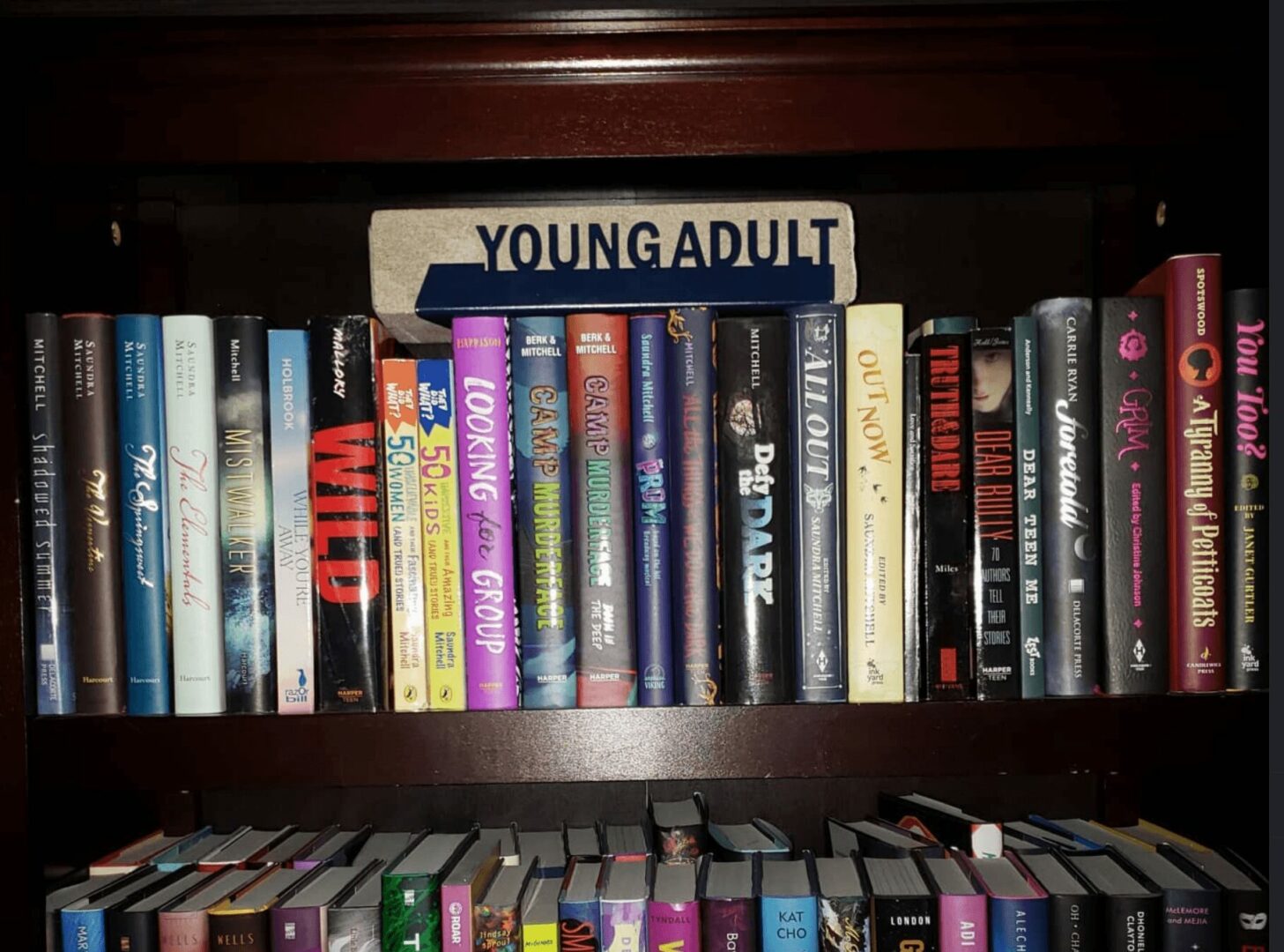
Image Credits
All images (C) Saundra Mitchell.
so if you or someone you know deserves recognition please let us know here.