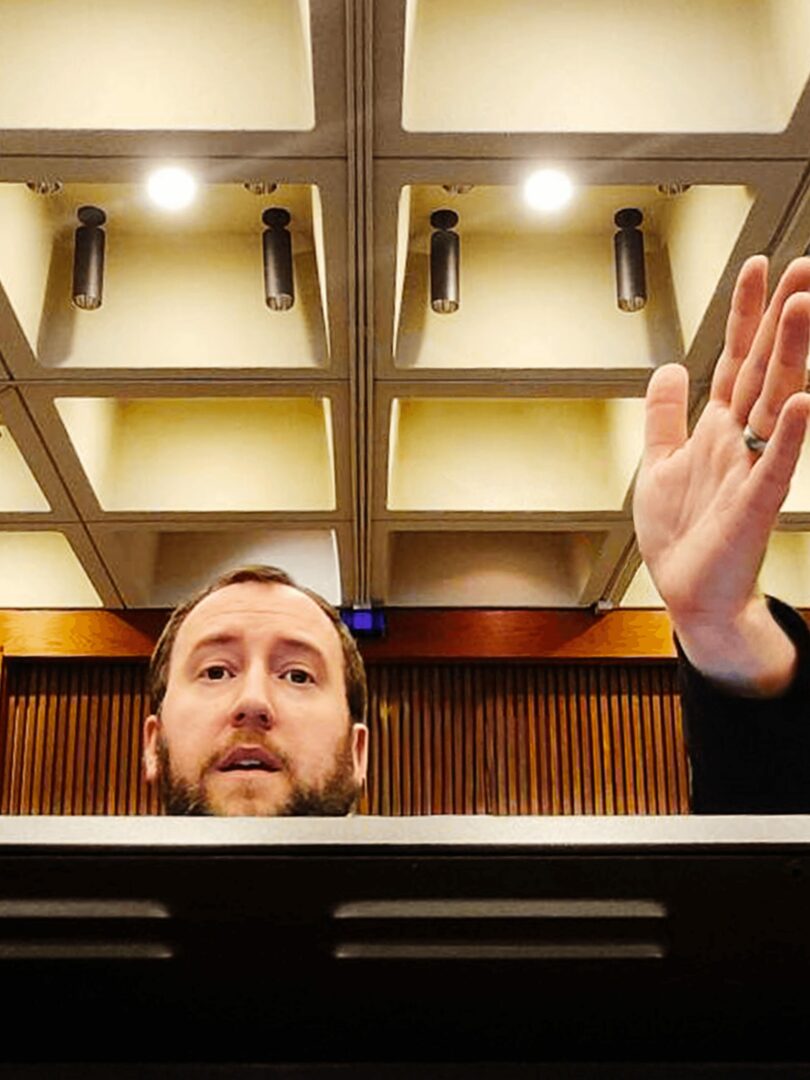
We’re excited to introduce you to the always interesting and insightful Zachary Clary. We hope you’ll enjoy our conversation with Zachary below.
Zachary, thanks so much for taking the time to share your insights and lessons with us today. We’re particularly interested in hearing about how you became such a resilient person. Where do you get your resilience from?
Resilience did not come to me in one dramatic moment. It arrived the way most truths do: quietly, after a series of doors that never opened.
I was born in Texas, raised across the state, and spent parts of my life in places far from home. Early on, I was surrounded by people with very different expectations of what success should look like, and I believed I understood the path ahead of me. I would work hard, earn the degrees, enter public service at any level, starting wherever the work was needed most, and contribute to work that reached people with the least. I had the grades. I had stellar interviews. I had ideas supported by data, strategy and intention. I placed myself in the right rooms and around the right people, trusting that preparation would become opportunity. You can do everything right, yet nothing moves.
What never arrived was the opening. There is a kind of silence that comes when effort goes nowhere. It does not defeat you; it reshapes you.
So, with public sector doors seemingly closed, I went to where the doors were unlocked. The private sector was never part of the plan, but what began as shadowing a Fortune 25 CEO became an impromptu presentation to the very person I was meant to observe. It was the first time I understood that life doesn’t honor your script.
What I walked into was not comfortable. It was pressure. Expectations shifted overnight. Systems cracked under their own momentum. Rooms needed someone calm enough to hold everything in place when uncertainty became the only constant. I learned resilience one meeting at a time. Not the loud kind people like to celebrate, but the quiet kind, the kind that keeps you steady when the blueprint dissolves and everyone is looking for someone who will not flinch.
There was a moment early on when a project unraveled faster than anyone could fix it. The plans were gone, and the confidence went with them. Without thinking, I stepped into the space that uncertainty created. I did not have all the answers, but someone needed to steady the room long enough for the next step to appear.
That was the moment I understood something important: resilience is not surviving the storm; it is learning to read the wind well enough to keep moving.
Years later, when I entered public administration, the stakes shifted. Decisions were no longer abstract. They reached people I would never meet. Progress moved slowly; responsibility moved quickly. The weight was not new to me. I had carried it before. What changed was whose lives it landed on.
With that shift, patience changed. It no longer lived in urgency or pressure. It lived in clarity, steadiness and the discipline to stay with complexity until the truth came into view.
People often treat leadership and resilience as separate ideas, but they are not separate at all. Leadership is the hand people see. Resilience is the muscle that keeps it steady.
So, where does my resilience come from? Resilience, for me, was never learned in a single moment.
• Closed doors taught humility.
• Detours forced reinvention.
• Pressure demanded clarity long before certainty appeared.
• Watching others advance on reputation alone pushed me to build what they inherited.
• Moments where calm was the only steady thing in the room gave the rest its shape.
All of it became a quiet kind of brute strength, the discipline to stay when things get difficult, and to move only when the path forward is real.
Let’s take a small detour – maybe you can share a bit about yourself before we dive back into some of the other questions we had for you?
I work in environments where decisions ripple outward and touch people I may never meet. My focus is simple: to understand what’s happening beneath the surface. That includes places where a process strains, where a system hesitates or where a person gets lost in the noise. My job is to bring enough definition to help things work the way they’re meant to. What I find meaningful is how small changes can reshape an entire experience: a cleaner workflow, a smoother handoff, a moment when someone doesn’t have to wait, guess or struggle. Most people look at a process and see steps. I look at it and see the moment a person hopes the system will work for them. In doing so, I’m providing a service that directly and indirectly benefits a wide range of people. That’s what keeps me invested.
What ties all of this together is how I approach leadership. I’m committed to the kind that stays calm, listens closely and doesn’t disappear when the room gets complicated. Resilience isn’t separate from that work; it’s the foundation of it. Every improvement I’ve helped build and every problem I’ve unraveled came from staying with the issue long enough to understand what it was really asking for. Right now, I’m sharpening my craft through work that challenges the way I think. If I had to name what my work ultimately serves, it would be this: helping people and systems work better together in a way that feels human, honest and steady.
If you had to pick three qualities that are most important to develop, which three would you say matter most?
When I look back at my journey, the qualities that defined it weren’t the ones people normally celebrate. They weren’t loud. They weren’t shiny. They were the kind you develop under pressure, in silence and in the moments that test who you are when no one is watching.
<b>1. The ability to see what isn’t being said.</b>
In systems work, the truth rarely walks in the front door. It shows up in hesitation: the process that keeps stalling, the question someone avoids answering, the moment a person stops trusting the system meant to serve them. Most people look at data or workflows and see what’s printed. Real insight comes from seeing what’s missing. Early on, I learned that the difference between a failing workflow and a functioning one is often a single signal no one else bothered to notice. The ability to read the silence as clearly as the noise shaped every decision I’ve made since.
<i>For those starting out:
</i>
• Don’t rush to fill the silence. Listen to it.
• Pay attention to contradictions, patterns that appear once and disappear, and the things people choose not to say.
• Most problems announce themselves quietly long before they break.
<b>2. The discipline to stay with complexity long enough to understand it.
</b>People crave simple answers, quick fixes and neat conclusions; however, complexity doesn’t reward speed. It rewards endurance. The toughest problems I’ve faced didn’t crack because I was the smartest person in the room; they cracked because I refused to walk away when the work became uncomfortable. There’s a point in every project where the path forward disappears. Most people pivot too quickly. The discipline is in staying with the uncertainty long enough for the real pattern to emerge. The ability to remain steady while things are unclear became one of the most important tools I have.
<i>For those starting out:
</i>
• Don’t mistake motion for progress or clarity for certainty.
• Sit with the problem until it starts telling the truth.
• The answer usually shows up right after most people quit looking.
<b>3. The ability to tell the difference between connection and credibility.</b>
People say networking solves everything. It doesn’t. Proximity isn’t trust, and charisma isn’t competence. I’ve met plenty of people who could make an introduction, but far fewer who could stand steady when the work got hard. Early in my career, I learned that relationships built on convenience disappear under pressure, while the quiet, reliable ones are the reason projects survive. That distinction became essential. In Decision Intelligence and systems work, you can’t afford to confuse familiarity for trust. The stakes reach too far.
<i>For those starting out:
</i>• Meet people; build relationships; stay curious but pay close attention to who follows through when no one is watching.
• A network can open a door, but character determines whether it stays open.
• If you’re going to invest in people, choose those who hold up under pressure, not just those who show well at a social function.
What would you advise – going all in on your strengths or investing on areas where you aren’t as strong to be more well-rounded?
I don’t think growth is a choice between strengths and weaknesses. It’s a question of judgment. Some weaknesses deserve your time; others only demand your ego. Knowing the difference is the real work.
Early in my career, I tried to fix everything: every gap, every rough edge, every place I didn’t feel fully prepared. That kind of effort looks noble, but it spreads you thin. Over time, I learned that not every weakness is a liability; some are simply parts of the landscape. What matters is identifying the few that stand in the way of clarity, trust or momentum and addressing those with intention.
Strengths are similar. People like to talk about “doubling down” on them, but strengths aren’t static. They’re pressure tested. They get sharper when the stakes rise, when the room goes quiet, when the decision in front of you affects someone who may never know or care to know your name. A strength you’ve never tested isn’t a strength yet; it’s potential dressed in confidence.
What resilience taught me is this: your strengths should carry the work forward, and your weaknesses should never pull it off course. The art is in knowing which is which.
For anyone early in their journey, my advice is simple: listen for the moments that make you hesitate. Pay attention to the patterns that show up under pressure. That’s where your work really begins. Let the work decide what deserves your attention, and improve what your future self will need. Don’t waste time polishing something that only matters on paper. Growth isn’t about becoming everything; it’s about becoming the right things, at the right moments, for the right reasons.
Contact Info: