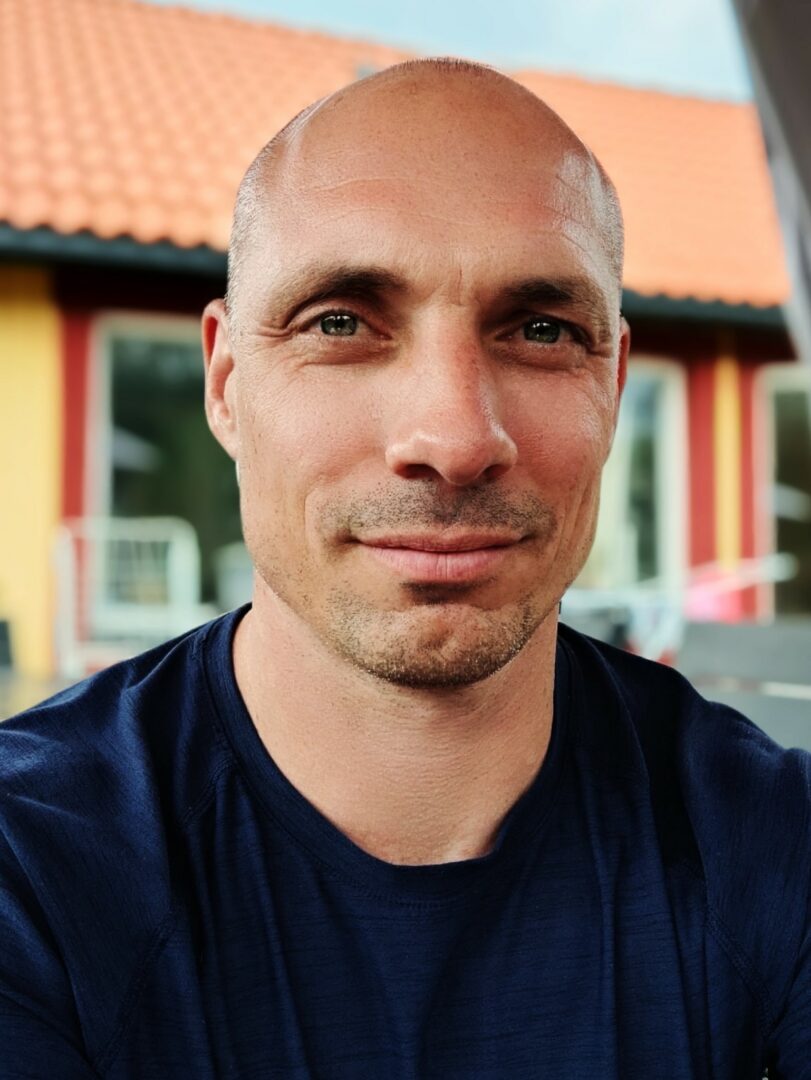
We recently connected with Lars Gustafson and have shared our conversation below.
Lars, looking forward to learning from your journey. You’ve got an amazing story and before we dive into that, let’s start with an important building block. Where do you get your work ethic from?
I think there are multiple things that affected me in developing my work ethic. Firstly, I would define work ethic as being determined to work hard at something, even if that something is not what you really want to do but you know it will lead to something.
Watching my parents work nonstop unless they were seriously ill showed me what commitment looked like. I didn’t appreciate it as a kid—I was pretty lazy—but the example stuck. During my teenage years, things got better and when I started to play football my last year in high-school things started to happen.
My work ethic really began to bloom during my military service. Now it was less about being inspired by my parents or teammates to work hard, it became a necessity for survival. Also, being in the company of some really tough individuals forces you rise to their level and once you see that you are able meet that standard – you will.

Appreciate the insights and wisdom. Before we dig deeper and ask you about the skills that matter and more, maybe you can tell our readers about yourself?
I was never supposed to be a film editor. I had grand old plans of working with marketing out of college and at first it looked really promising. However, progression was slow and the work was stifled by red-tape. I was bored to tears and not even my work ethic was able to change anything.
During my time in college, I had picked up some extra work over the summers for my sister who worked as a line producer for a prestigious film production company in Stockholm, Sweden. It was mostly PA stuff but also grip, spark, props, production design etc. I liked it a lot and when my marketing career was grinding to a halt, I felt that maybe I was meant to do something else, something involving film.
I left the corporate world and transitioned fully into commercial film production. Over time, my interest in editing began to take shape. I had experimented with it earlier on, but never considered it a viable career path. However, the highly creative nature of editing—and its significant influence on the final product—drew me into the editing suite. For the past 25 years, I have been fully immersed in this craft and feel fortunate to have worked across a wide range of formats, including commercials, short films, scripted television, and feature films.
I can’t decide if I like features more than scripted TV but I will jump on to either if opportunity arises. My goal is always the same: honor the enormous amount of work people put into their films and help make them look extraordinary. Seeing a project succeed—knowing I was part of that—means everything to me.
If you had to pick three qualities that are most important to develop, which three would you say matter most?
I think that if you want to be a good editor you need to possess a few skills and qualities. You need to be curious first and foremost. How that translates in the editing room is that there is almost always something else you can try in order to find the film. Editors often talk about finding the performance, finding the film, finding the arc, etc. Curiosity pushes you to explore deeper, while reminding you there is always more to learn.
Curiosity also serves you well when learning how, technically, to edit. Investigating how you can make your workflow faster and with less mess ups is paramount. Researching what is the quickest way, in which, you can get to a result so that you can get to a review-phase. This means finding the best software or combination of software for the job, shortcuts within said software and the most robust infrastructure. Being curious about the technical aspect of editing helps to improve your ability to tell stories because you are able to understand how things can be “fixed in post.”
Secondly, you need to involve yourself with music in some capacity. Whether it is playing an instrument or just listening to a ton of different music, it doesn’t matter. Editing and music goes hand in hand – always. The visual and the music creates something that is very unique and feeds off each other, wants to flow together. Ultimately, editing wants to move towards the properties of music by tempo, pitch and harmony. I never learned how to play an instrument, but I can DJ and the skill of mixing music has really been an asset to me in my work.
Thirdly, you need to experience life outside of the editing room. Editing is about being able to understand thoughts and emotions from interaction with real people from all walks of life. I feel very fortunate that I found editing fairly late at 26 years old. Which gave me a solid foundation of “life lived” to draw from when editing. I had gone from a small island in the archipelago of Sweden, to a suburban life as a teenager, to start working when I was 14 at a local grocery store, to run merchandizing for 8 box stores by age of 19, to being a Amphibious Battalion Combat Boat Pilot and Navigator in the Swedish Military, to college football player and honor student in the panhandle of Texas, to selling insurance door-to-door in Dallas, to working with business information in Sweden. And that is only a fraction of the things I did. All of that goes into the edit. The more life you bring with you, the richer your understanding of story and emotion becomes.

Okay, so before we go, is there anyone you’d like to shoutout for the role they’ve played in helping you develop the essential skills or overcome challenges along the way?
Two people has had the most impact on me as a film editor. Robin Siwe got me my first long-term assistant gig on the documentary “I’m going to tell you a secret” by Jonas Åkerlund, which chronicled Madonna during the Re-Invention Tour that followed the release of her American Life album.
It was Robin who got me into finding the fastest possible way to edit. And then we edited. It started out in 8 hour shifts on three assistant for a couple of months straight and then two of them dropped off, leaving me and Robin to put the work of three editors and one editing director in Jonas. Speed mattered more than anything, and the constant search for efficiency became part of my DNA.
The second person is the magnificent editor Malin Lindström, who I assisted on many occasions. For most of those projects, I worked the night shift. I would get the material from the lab and then log and sync and organize it for her to work on the next day. When I was done, I edited that material myself into scenes and the next night I would pull up her versions and compare and contrast her work to mine, analyzing her ways of doing things. It helped tremendously to be able to see how an experienced editor shaped scenes.
Contact Info:
- Website: https://www.thelarsgustafson.com
- Instagram: https://www.instagram.com/the_lars_gustafson/
- Linkedin: https://www.linkedin.com/in/lars-gustafson-ace-4102871b/
so if you or someone you know deserves recognition please let us know here.