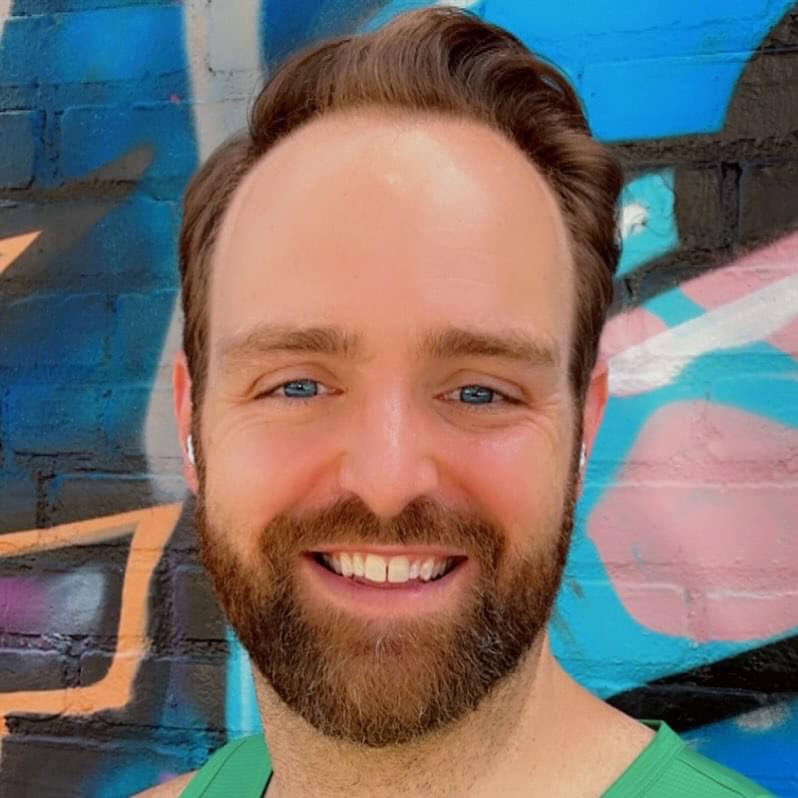
We’re excited to introduce you to the always interesting and insightful David Clarke. We hope you’ll enjoy our conversation with David below.
David, so great to have you sharing your thoughts and wisdom with our readers and so let’s jump right into one of our favorite topics – empathy. We think a lack of empathy is at the heart of so many issues the world is struggling with and so our hope is to contribute to an environment that fosters the development of empathy. Along those lines, we’d love to hear your thoughts around where your empathy comes from?
Empathy wasn’t something I set out to develop. It was something life insisted on teaching me early and often. I grew up in poor-to-working-class neighborhoods, surrounded by people whose lives, families, and challenges looked very different from one another. They were also different from the tidy narratives we’re often sold about success or worth. At the same time, I was bullied for my apparent queerness starting around age eight, which forced an early awareness of how quickly difference can be weaponized and how deeply words and exclusion can wound. Those experiences made it impossible for me to move through the world assuming everyone starts from the same place.
Theater also played a formative role. From the age of three, performing arts taught me to listen closely, to inhabit perspectives beyond my own, and to understand that the most powerful ideas in a room don’t always come from the loudest voice or the person with the most status. As I got older, particularly durning my mid-thirties, I began to more fully recognize how being white and cisgender afforded me access and opportunities many of my peers, especially women and people of color, were denied. That reckoning didn’t negate my own marginalization as a gay man, but it deepened my responsibility to listen, learn, and advocate. Empathy, for me, has been shaped by survival, curiosity, accountability, and a lifelong belief that every person carries a story worth taking seriously.

Appreciate the insights and wisdom. Before we dig deeper and ask you about the skills that matter and more, maybe you can tell our readers about yourself?
Professionally, I’m a storyteller at heart. Whether that’s through journalism, cultural commentary, or strategic communications. I write about the arts, entertainment, and culture for outlets like OutSmart Magazine and BroadwayWorld, where I get to spotlight theatre, performance, and queer community narratives that might otherwise be overlooked. My work ranges from interviewing artists, politicians, and everyday people to exploring big cultural moments, always with my signature focus on connection, nuance, and humanity.
At the same time, I’m deeply rooted in communications and public relations. I currently serve as the Lead Communications Manager for Oh Hello Agency, helping our clients with their thought leadership profiles and brand visibility. I have also served as the Deputy Press Secretary for New York City Public Schools, one of the largest school districts in the country, where I helped share stories that matter to students, families, and educators. Before that, I worked in publicity and audience engagement across performing arts, cultural, and non-profit institutions, from Lincoln Center for the Performing Arts to The WNET Group, National Sawdust, and NYC Pride | Heritage of Pride, Inc., which enriched my ability to bridge audiences and the arts in meaningful ways.
What’s most exciting about what I do is the blend of advocacy and artistry. I get to celebrate voices and stories, whether through a deeply moving theatrical piece or a community moment of resilience, and I get to do it in spaces that value diversity and visibility. Being able to help people see themselves in the stories we tell—on stage, in print, and in public discourse—is both a privilege and a responsibility I take seriously.
Right now, I’m focused on expanding that work even further. I’m committed to creating more opportunities for underrepresented artists to be seen, elevating critical conversations around identity and culture, and continuing to use every platform I have to challenge assumptions and open up space for empathy. Whether it’s an upcoming feature, a public engagement initiative, or a new collaboration with artists and organizers, what drives me is the belief that honest, compassionate storytelling can transform how we understand each other.

There is so much advice out there about all the different skills and qualities folks need to develop in order to succeed in today’s highly competitive environment and often it can feel overwhelming. So, if we had to break it down to just the three that matter most, which three skills or qualities would you focus on?
Looking back, three things have been most impactful in my journey: learning how to listen deeply, learning how to tell a story with intention, and learning how to hold complexity without rushing to tidy conclusions.
First, listening. Real listening is not just waiting for your turn to speak. That has shaped everything I do. Whether I’m interviewing an artist, working with a client, or navigating a crisis moment, the most meaningful insights come from creating space for people to be fully heard. My advice to folks early in their journey is to get curious and stay humble. Ask better questions. Pay attention to what’s being said and what isn’t. Listening well is a skill that compounds over time and builds trust faster than almost anything else.
Second, storytelling. I’ve learned that facts matter, but how you frame them determines whether anyone actually cares. Writing for outlets like OutSmart Magazine and BroadwayWorld, and working in communications more broadly, taught me that strong storytelling is about clarity, empathy, and purpose. It’s never about not showing off how clever you are. For anyone starting out I suggest writing constantly, reading widely, and don’t be afraid of revision. Your voice doesn’t arrive fully formed. It’s built through repetition, feedback, and a willingness to be edited.
Third, the ability to sit with complexity. Life, culture, and people are rarely clean or binary, and early on I felt pressure to have definitive answers. Over time, I’ve learned that credibility often comes from acknowledging nuance and uncertainty. For folks early in their careers, my advice is to resist the urge to oversimplify, especially online. Let yourself evolve. Be willing to say, “I’m still learning.” Growth happens when you allow your thinking to expand rather than harden.
If there’s a throughline, it’s that curiosity, care, and patience will take you further than certainty ever will. The goal isn’t to arrive as quickly as possible. It’s to build something honest, sustainable, and rooted in respect for your work and for the people it touches.

Any advice for folks feeling overwhelmed?
When I feel overwhelmed, the first thing I try to do is interrupt the spiral before it convinces me that powering through is the only option. I step away. That might mean getting up from my desk, going for a walk, walking my dog, or doing something creative that has nothing to do with productivity such as drawing, taking photos, editing something for Instagram, writing a poem, singing a song. Giving my brain permission to rest, even briefly, almost always helps me return to the work clearer, calmer, and more capable than if I had stayed frozen in place.
I also remind myself to ask for help. Overwhelm thrives in isolation, and it’s easy to forget that most problems don’t actually need to be solved alone. Reaching out to a colleague, a friend, or a collaborator often brings fresh perspective, practical solutions, or simply reassurance that I’m not failing for needing support. No one builds meaningful work in a vacuum, even if it sometimes looks that way from the outside.
Finally, I’ve learned to get comfortable saying, “I don’t know yet, but I’ll find out.” Early in my career, not having an immediate answer felt like a weakness. Now, I understand it as honesty and professionalism. Struggling in silence or pretending certainty only adds pressure. Naming uncertainty creates space for learning and forward movement. Overwhelm doesn’t mean you’re incapable. In fact, it usually means you care. The key is giving yourself grace, support, and room to regroup so you can keep going.
Contact Info:
- Facebook: https://www.facebook.com/david.e.clarke
- Linkedin: https://www.linkedin.com/in/davideclarke/
- Twitter: https://x.com/writerclarke


so if you or someone you know deserves recognition please let us know here.