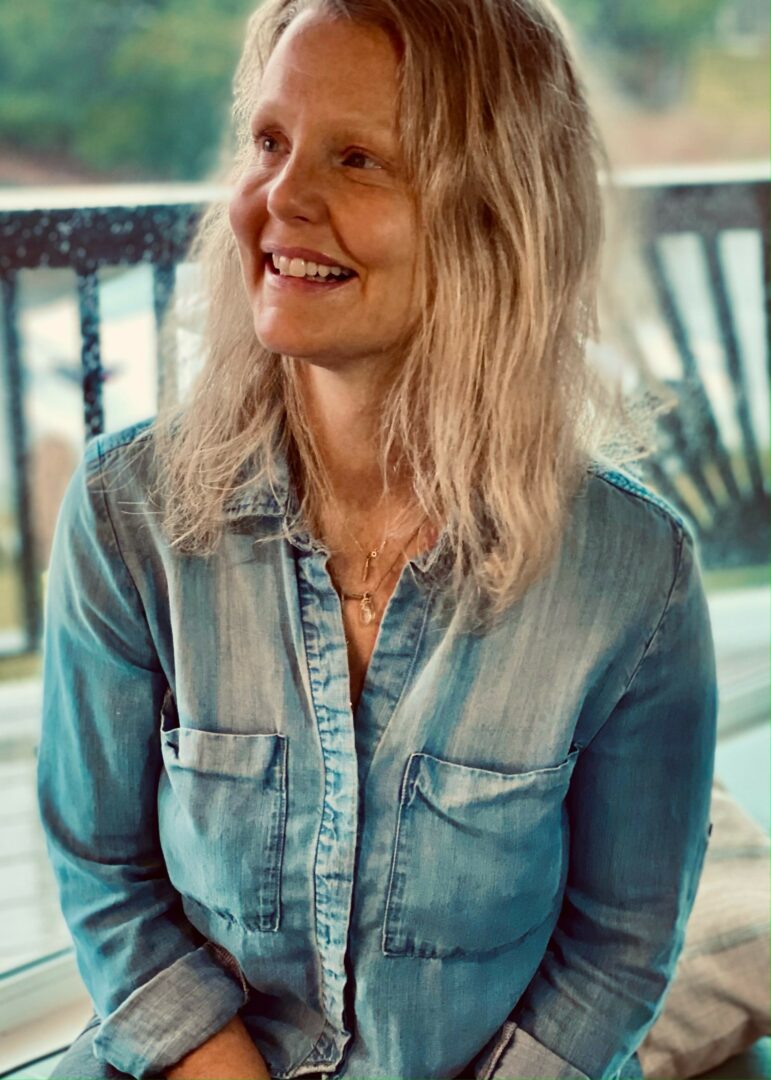
We’re looking forward to introducing you to Jodie Snyder. Check out our conversation below.
Hi Jodie, thank you so much for taking time out of your busy day to share your story, experiences and insights with our readers. Let’s jump right in with an interesting one: What makes you lose track of time—and find yourself again?
Deep conversation and any form of soul work. When someone is speaking from an honest, vulnerable place—or when I’m guiding someone into a part of themselves they haven’t met yet—time becomes very fluid for me.
I also lose track of time when I’m writing, creating retreat material, or spending time in nature on the beautiful islands of Hawaii where I live. Anything that connects me to a sense of purpose or presence tends to dissolve the clock.
Can you briefly introduce yourself and share what makes you or your brand unique?
If you had met me years ago, you would have found someone who was often holding space for others—friends, family, students—long before I understood that it could be a vocation. I’ve always been drawn to the quiet places in people—their fears, their longings, the parts of them they didn’t know how to name. I think that’s because I’ve spent so much of my own life learning how to listen to those places inside myself.
My work now is really an extension of that journey. I’m a therapist and an Ayurvedic healing practitioner, but those words only scratch the surface. What I actually do is help people come back into relationship with themselves. Over the years my path has led me through somatic work, the Yogic sciences including Ayurveda, and a spiritual awakening that reshaped how I understand healing altogether. Each of these threads has woven into the way I hold space: slower, deeper, more attuned to the wisdom the body carries.
I run a small, intimate retreat space called Hina Hale on the east shores of Oahu, Hawaii where I work with individuals often at a threshold—when something old is dissolving and something new hasn’t quite taken shape yet. They come to me when they’re tired of performing strength, when their nervous systems are frayed, when they’re ready to meet the truth beneath the symptoms. My role is part guide, part mirror, part protector of the sacred work they’re doing.
Today I’m building offerings that reflect this fuller expression of my work: retreats, embodiment practices, and experiences that help people untangle from who they were told to be and step into a more honest version of themselves.
My story is still being written, but if there’s one thread that runs through everything I create, it’s this: I’m here to help people remember who they are—slowly, gently, and in a way that brings them back home to their bodies, their intuition, and their lives.
Great, so let’s dive into your journey a bit more. What relationship most shaped how you see yourself?
The relationship that has shaped me the most is the one I’ve built with myself over time. It didn’t start out as a gentle or easy relationship. For years, I related to myself through responsibility and the unspoken belief that my value came from holding everything together for everyone else.
But as I moved deeper into my own healing work—I began to meet the parts of myself I had pushed away. The anxious parts, the tender parts, the fiery parts, the exhausted parts. Learning to sit with them, understand them, and honor them reshaped something fundamental in me. Of course, there were relationships along the way that acted as catalysts. Certain people mirrored back both my strength and my blind spots. Some relationships broke me open; others showed me what safety feels like. But all of them ultimately guided me back to the same place: toward a deeper relationship with my own truth.
That inner relationship is the one that has changed how I show up in the world, how I do my work, and how I hold space for others. It’s also the relationship I’m most committed to tending—because everything else grows from there.
When did you stop hiding your pain and start using it as power?
For a long time, I carried my pain quietly, like so many people do. I was the strong one, the reliable one, the person who could hold anything for anyone. And in that role, I learned how to tuck my own hurt into the corners of my life where no one could see it, including me.
The shift began when I realized that the parts of myself I was hiding were the very parts that allowed me to connect most deeply with others. It was a very painful realization at first because it meant leaving a marriage and a tidal wave of changes that followed. However, something powerful happened when I stop running from myself. My pain became less of a secret and more of a compass. It softened me, but it also clarified me. It showed me what I value, what I will no longer tolerate, and where my boundaries truly are.
I think the moment I really began using my pain as power was the moment I stopped seeing it as a flaw and started seeing it as a source of wisdom. Not the kind of power that dominates, but the kind that liberates—first me, and then the people I work with. My pain made me a better therapist, a more present mother, and a more honest version of myself. It didn’t disappear; it transformed. And in that transformation, I found one of the most authentic forms of strength I’ve ever known.
Sure, so let’s go deeper into your values and how you think. Is the public version of you the real you?
Yes—but it’s a slice of me, not the whole story. The version of me people see publicly is real, but it’s intentionally shaped by the work I do. I show up with presence, attunement, and clarity because that’s the energy I want to model and the space I know how to hold. But like anyone, I’m still human. I have days where I feel stretched thin, days where my own patterns get loud, days where I need to retreat and recalibrate. Those parts live in my private world, where I can be tender without translating it for anyone else.
I think of it this way: my public self is the most aligned version of me—truthful, grounded, and connected to purpose. But the deeper layers, the ones that are messy and in-process, those are held in a smaller circle. Not out of hiding, but out of care.
So yes, the public me is real. It’s just not the entire me. The parts I reserve for my closest people are the ones that keep me rooted, humbled, and whole. And I think preserving that inner sanctuary is part of what allows me to show up so authentically in the spaces where I serve.
Before we go, we’d love to hear your thoughts on some longer-run, legacy type questions. If you knew you had 10 years left, what would you stop doing immediately?
If I knew I had ten years left, I would immediately stop participating in anything that pulls me back into the 3-D matrix—the grind, the pressure to produce, the subtle ways our culture measures worth through output, hustle, and profit.
For a long time, I tried to do deeply spiritual, soul-centered work inside a business framework that wasn’t built for it. It was like trying to channel higher-frequency healing through a system that runs on urgency and scarcity. And the cost of that—energetically, spiritually, physically—is real.
With ten years left, I would let go of all the places where I compress myself to “fit” into something that was never meant to hold my work. I’d stop contorting the depth of what I do into marketable boxes, stop managing my intuition through productivity, and stop feeding any structure that drains more life than it gives. I’d devote my time to presence, to service that feels organic, to the people and pathways where connection is reciprocal and alive. I’d allow my work to live fully in the realm it belongs to—the spiritual, the somatic, the intuitive—without forcing it through a matrix that flattens it.
And honestly, I’m already moving in that direction. Ten years left would just accelerate the shedding. It would be a deeper permission to live and work in alignment with the frequency I’m here to hold.
Contact Info:
- Website: https://www.hinahale.com
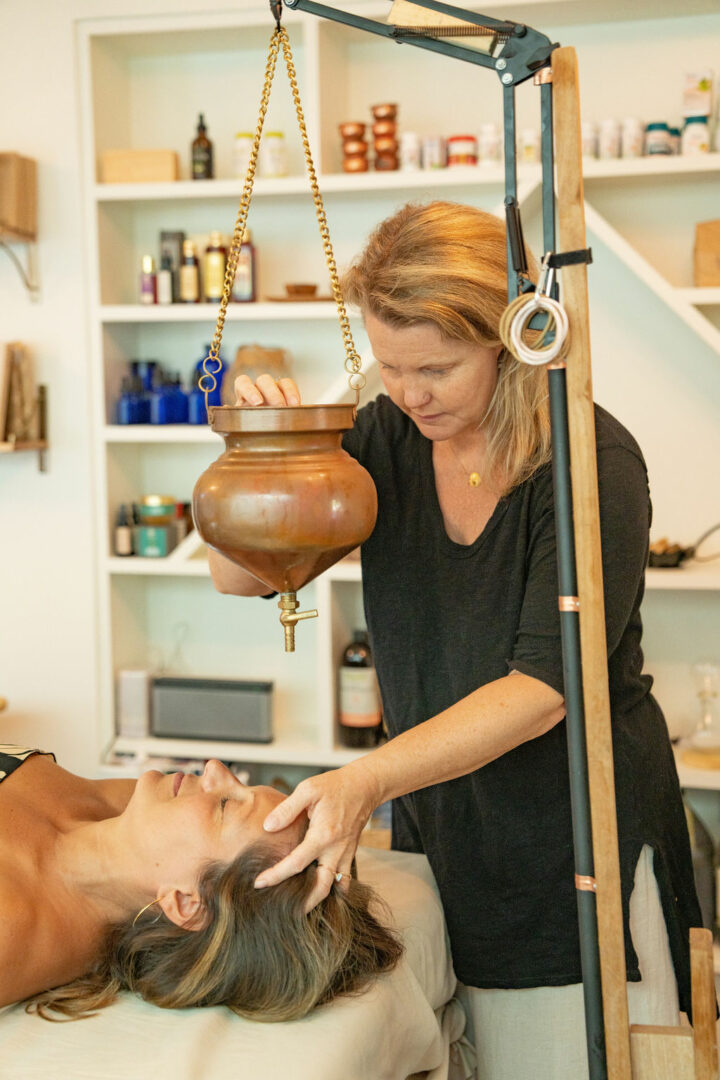




Image Credits
Makayla Beasley
so if you or someone you know deserves recognition please let us know here.