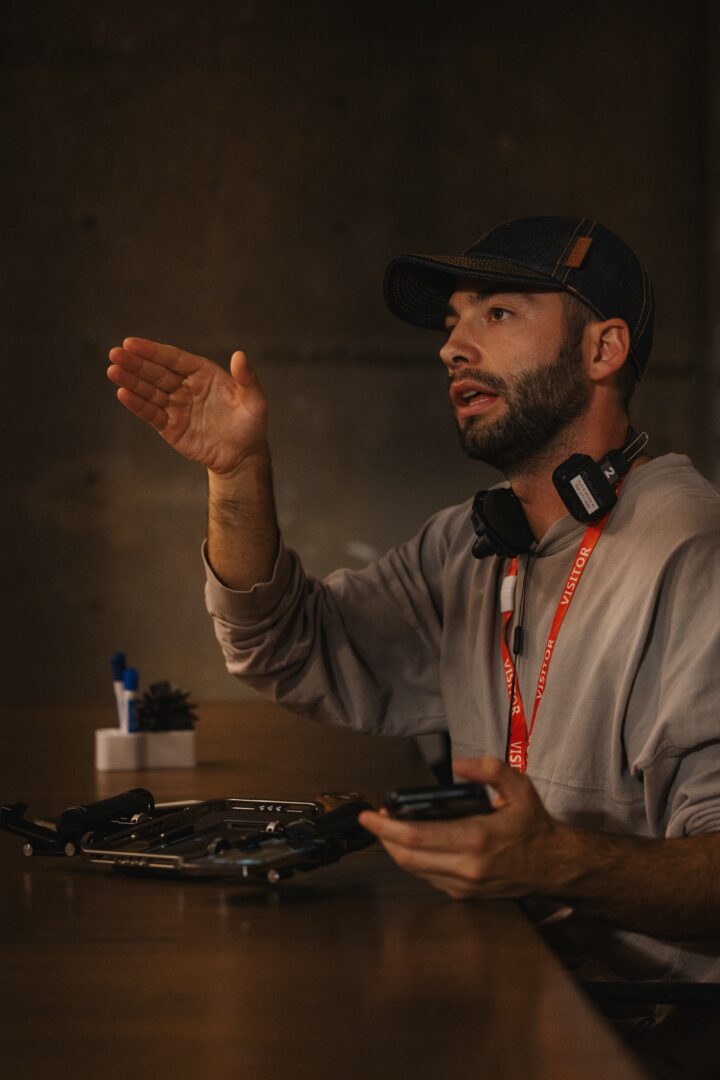
We’re looking forward to introducing you to Pablo Riesgo Almonacid. Check out our conversation below.
Hi Pablo, thank you for taking the time to reflect back on your journey with us. I think our readers are in for a real treat. There is so much we can all learn from each other and so thank you again for opening up with us. Let’s get into it: Are you walking a path—or wandering?
I’d say I’m doing a healthy mix of walking and wandering. I know the general direction I want my career to go—directing the features I write, telling stories that actually mean something to me and (hopefully) entertain other humans—but I’ve also learned how little control we really have over anything. The industry shifts, people react however they react, and sometimes the best you can do is take a breath and look around instead of sprinting forward like a maniac.
Right now, I’m in one of those “look around” moments. I’m reassessing what I actually want to say as a filmmaker, instead of just charging ahead at full speed. And at the same time, I’ve been lucky to ride this new wave of vertical filmmaking. The stories aren’t mine, but directing every day—literally practicing the craft nonstop—has been a gift. It’s not where I thought I’d go right after school (I imagined I’d only make my films, obviously), but this detour has taught me a lot and brought me a weird amount of joy… even if everything is suddenly 9:16.
So yes, I’m on the path. But I’m also wandering. And honestly, you kind of have to. If you only stare straight ahead, you miss all the views on the sides—and sometimes those views turn out to be the whole point.
Can you briefly introduce yourself and share what makes you or your brand unique?
My name is Pablo Riesgo. I’m a writer–director and the founder of Cine De Riesgo, my production company with one foot in Spain, one foot in the U.S., and—if all goes well—another foot stepping into Mexico next year.
Traditionally, my work has lived in the world of deeply personal stories, but lately I’ve been shifting toward larger, more ambitious genres—mainly science fiction. Those were the films that blew my mind as a kid: The Matrix, Blade Runner, Lord of the Rings… worlds so big and imaginative they let you talk about things much larger than yourself. I’m trying to bring that same sense of scale and meaning into my own projects.
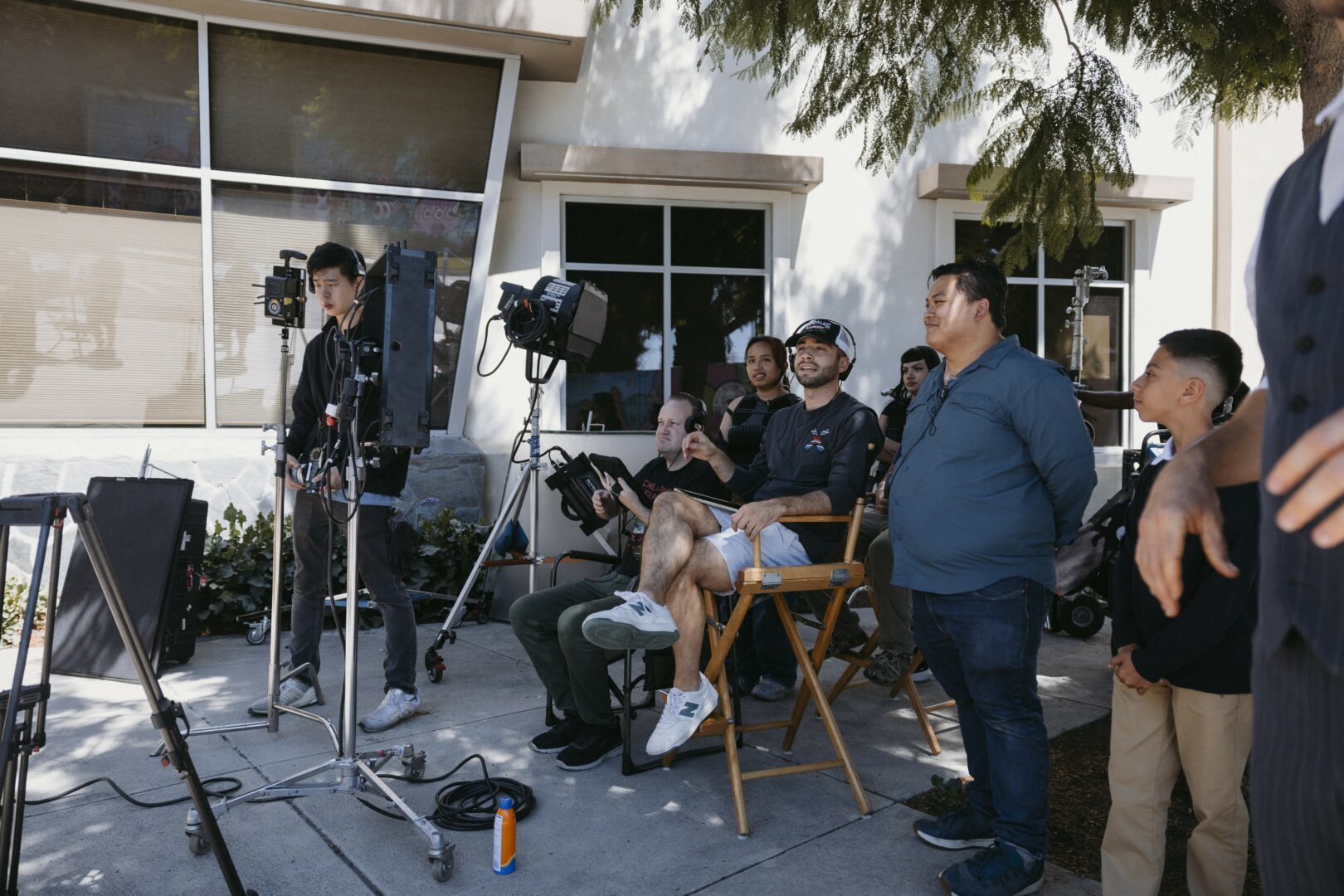
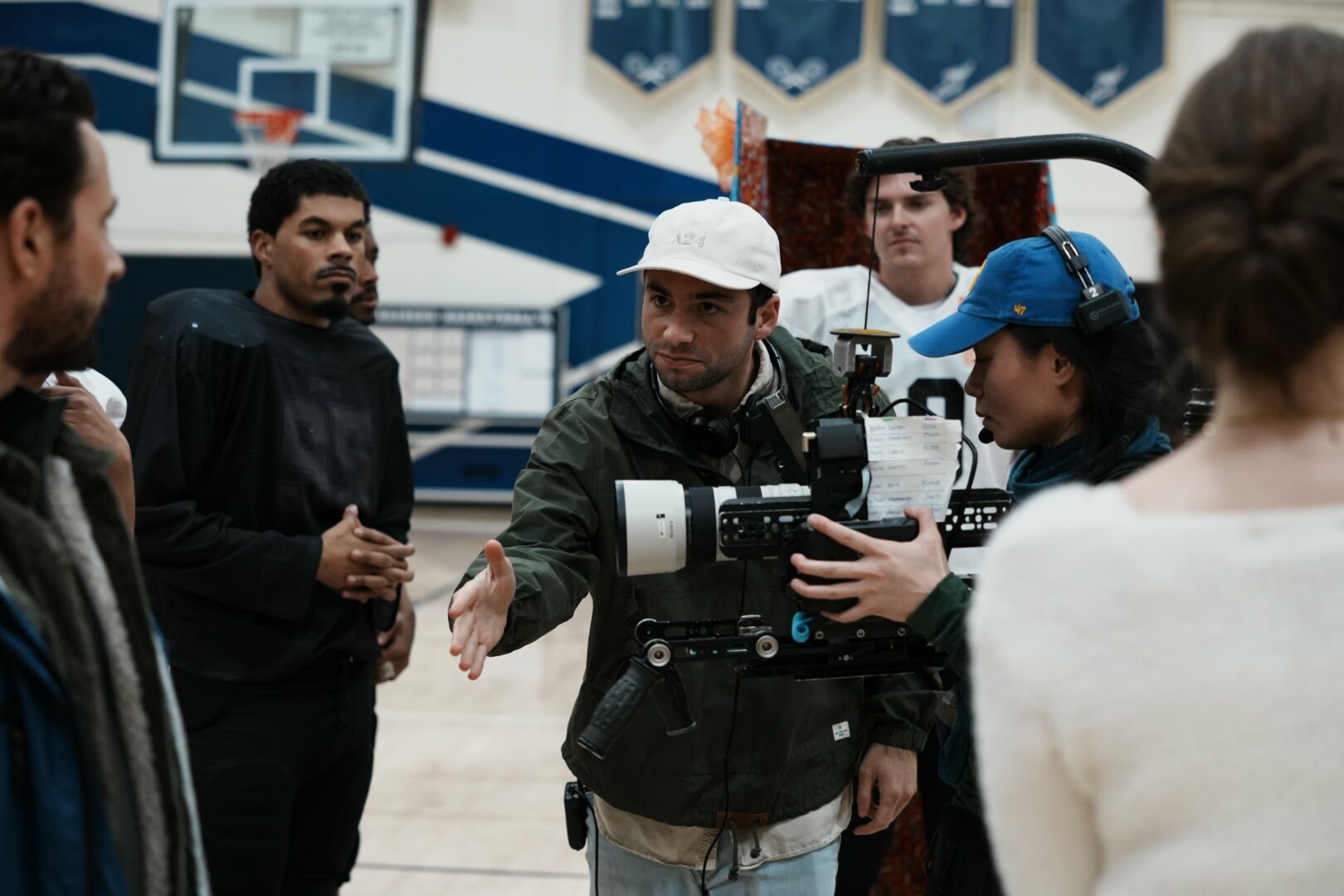
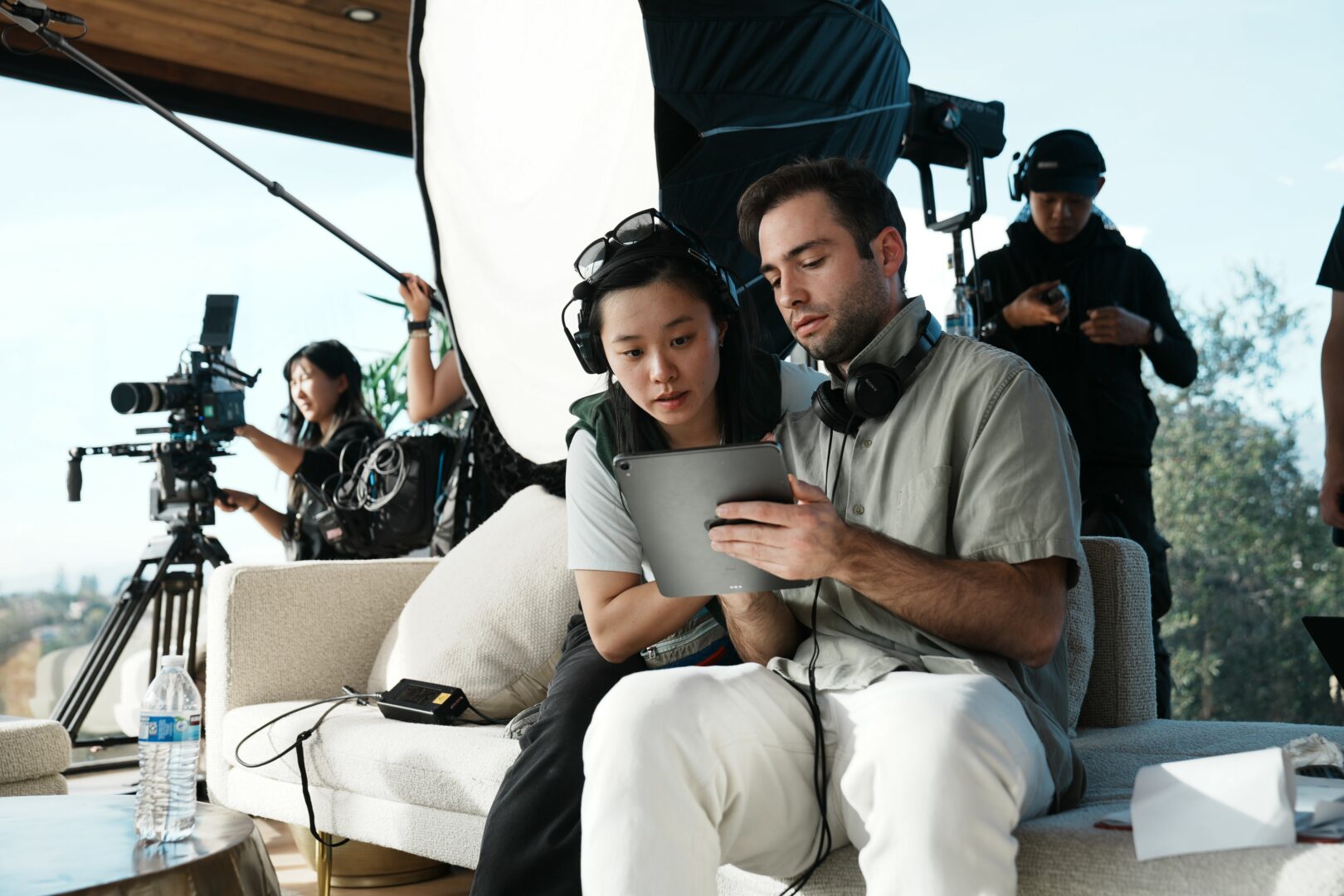
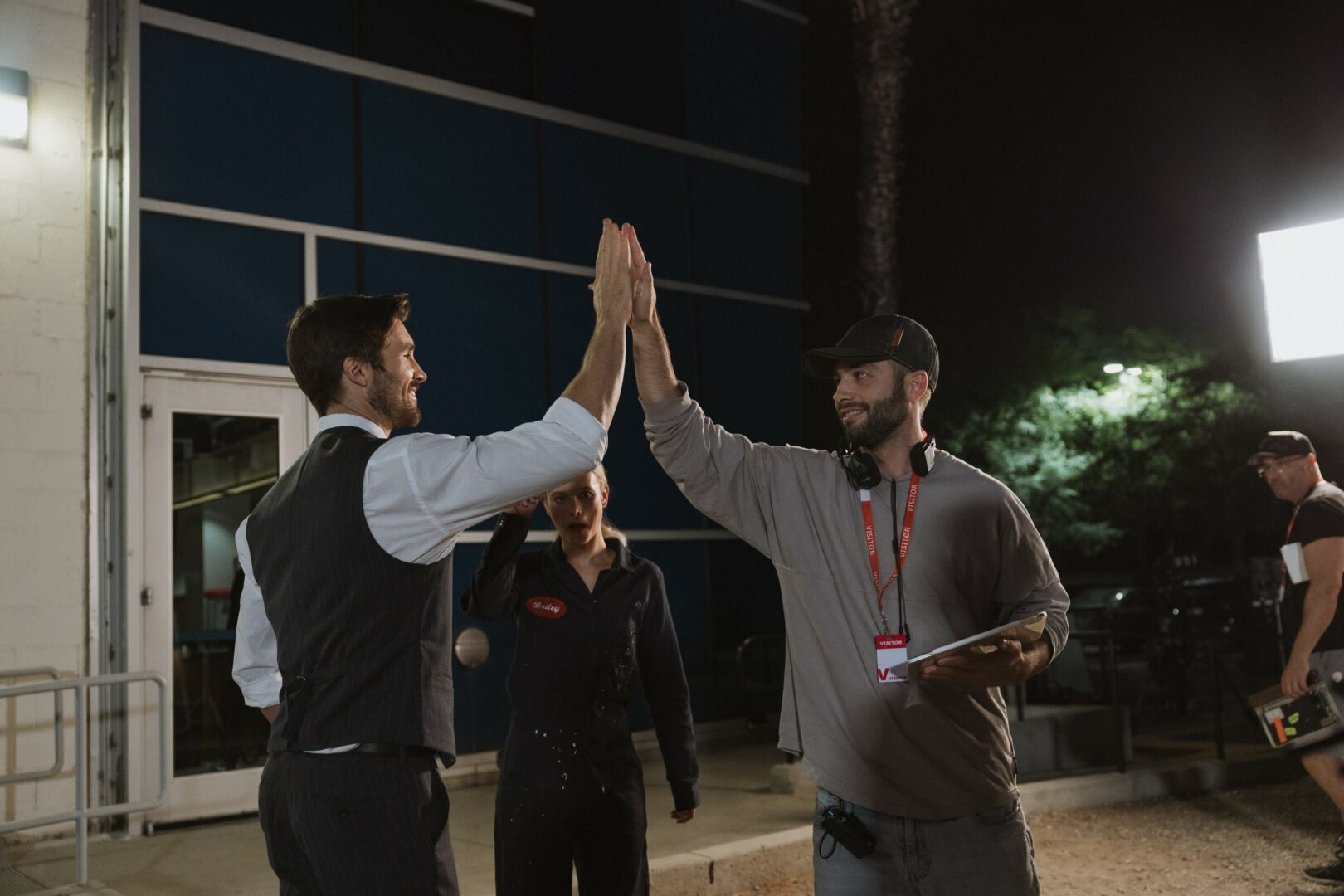
At the same time, I’ve been directing in the vertical filmmaking space, working exclusively with Reel Shorts, who have been incredibly supportive. The stories aren’t mine, but getting to direct constantly—experiment, try things, mess up safely—is a gift. It’s kept the stakes low, the learning high, and honestly, it’s just fun. That’s part of what makes this stage of my career special.
With Cine De Riesgo, I’m now expanding the company into a full production vendor for vertical content because, well… it’s booming. And on the more traditional side, I’m developing three feature films while also celebrating a project we just produced: Me After You, directed by Rubén Navarro. I truly believe it’s going to be one of those indie gems people discover and hold onto.
So that’s me—somewhere between personal storytelling, sci-fi worldbuilding, and the wonderfully chaotic universe of vertical cinema.
Appreciate your sharing that. Let’s talk about your life, growing up and some of topics and learnings around that. What part of you has served its purpose and must now be released?
The part of me that needs to be released is the part that tries to control absolutely everything. I used to believe that if I just worked hard enough, thought far enough ahead, or planned every detail, I could shape the world exactly the way I wanted. That’s not the way it works.
The truth is, I’ve learned slowly that I have very little control over most things—how people receive my work, what the industry decides to do next, or even how others perceive me. For a long time, I tried to write the stories I thought people wanted from me, help people who didn’t actually want help, and constantly strategize how to “get ahead.” In the process, I drifted away from what I genuinely wanted to say.
Releasing that version of myself has been freeing. I’m now trying to surrender a bit more to the universe—trusting that if I focus on what I love, the rest will sort itself out, or at least won’t torment me as much. When I left film school, I assumed the industry worked like the 1990s: you write a great script, someone buys it, you make your first feature, festivals love you, boom—career. Obviously, that’s not the world we live in for one, or that great script hasn’t come either. And I can’t resent that. I just have to adapt.
Same thing in my personal life: I can’t control what people think of me, or how friends and colleagues feel about my choices. All I can do is make the decisions that bring me joy and hopefully bring joy to the people around me. If they don’t… well, that’s outside my jurisdiction.
I’m still working on it. But at least now I know what I need to let go of—and honestly, it’s already made life a lot lighter.
Was there ever a time you almost gave up?
Yes—absolutely. And embarrassingly, it happened right at the beginning of my career. I had just graduated with my master’s degree, my debut feature had premiered in theaters in Spain, and I’d been selected for a grant supporting Hispanic and Latino filmmakers. On paper, it looked like I was flying. In reality… not so much.
The film’s release was nothing like what I’d imagined. I spent weeks traveling alone around Spain doing Q&As in almost-empty theaters. It was humbling, surreal, and honestly a little heartbreaking. And then the grant I’d received stirred up backlash because I’m a white Hispanic, which created a whole separate storm of criticism and politics—something I had zero interest in navigating. Combine all that with some personal struggles, and I fell into a really dark headspace.
I genuinely wondered if filmmaking was worth it. The emotional toll, the financial toll, the feeling of being punished by the very opportunities that were supposed to help me… it all hit at once. I even interviewed for jobs outside the industry just to see if I could picture myself doing something else.
But people always say: don’t make big life decisions in the middle of a storm. So I waited. I kept my head down, kept writing, kept making short films, kept working as a First AD to pay the bills, and eventually the storm passed. One opportunity led to another, then another—and now 2025 has been my first year directing almost full-time. Sixteen projects in one year, new collaborators, new energy… honestly, I’m glad I didn’t quit. I came very close. But sticking it out turned out to be the right call.
Next, maybe we can discuss some of your foundational philosophies and views? What are the biggest lies your industry tells itself?
I think the entertainment industry is in a very strange, transitional moment. Between giant mergers—Netflix with Warner Bros., Paramount with Skydance, and so on—it feels like everything is slowly becoming one big company wearing different hats. Add the rapid rise of AI, with companies like Disney openly partnering with OpenAI to let people remix their IP, and the fact that audiences are consuming more content on their phones than in theaters… it’s a lot. It’s a whole tectonic shift happening in real time.
And in the middle of all that, the industry keeps telling itself a few lies:
1. “Audiences will come back to theaters if we just make something mind-blowing.”
I don’t think that’s true anymore. Younger audiences live on their phones. Their entertainment landscape is vertical, mobile, immediate. Unless something massive happens—Barbie-level or Oppenheimer-level—most people simply aren’t leaving their homes. We don’t get to choose where audiences spend their time. The industry pretending otherwise is like shouting at a tide to go back. If audiences are on phones, AR glasses, or whatever comes next, then that’s where storytellers should be.
2. “We’re in the business of politics, not entertainment.”
Somewhere along the way, studios started believing they were think tanks instead of entertainment companies. There’s a place for political films, of course, but when the industry prioritizes messaging over making something genuinely entertaining, audiences tune out—because the numbers don’t lie. Art should provoke and challenge, yes, but entertainment should also entertain, and that balance has been lost in a lot of mainstream content.
3. “These mergers won’t hurt anyone.”
They will. They already do. Fewer studios means fewer projects, fewer jobs, fewer chances for different kinds of stories to be made. When there was real competition, a project that didn’t land at one studio might’ve thrived somewhere else. Competition gave artists leverage; now, artists are becoming another line item.
4. “Our diversity and inclusion efforts are solving the problem.”
This one is tough to say out loud, but a lot of inclusion programs feel more like PR than real change. If the industry actually wants to be inclusive, it has to start with paying people enough to live. Assistants and entry-level workers make $17–$25 an hour in cities where rent alone laughs in your face. Meanwhile, executives make millions. You can’t claim inclusion if only people from privileged backgrounds can afford to even enter the industry. Otherwise, filmmaking becomes like tennis or Formula One: great if you’re born into the right circumstances, nearly impossible if you’re not.
So yes—there are quite a lot of lies floating around. But the good news is that every time the industry goes through this kind of chaos, something new and exciting eventually emerges. I just hope we don’t lose too many artists in the process.
Okay, so let’s keep going with one more question that means a lot to us: Have you ever gotten what you wanted, and found it did not satisfy you?
Absolutely. The most striking moment for me was the premiere of my feature film in Madrid. It was the culmination of three years of nonstop work—scraping together resources, fighting for every shooting day, and trying to make this tiny independent film feel big enough to deserve a screen. And somehow, there it was: opening night, sold-out theater, my movie on the big screen in my home country. It should’ve been perfect.
I was nervous, of course, but I had been fantasizing about that night for years. In my mind, this was the moment every filmmaker dreams of—the moment you walk into a theater and see a room full of people watching something you bled for. It felt like the finish line.
And then the film ended… and I felt nothing. No euphoria, no triumphant “I made it,” not even relief. Just emptiness. And that scared me. I thought that moment was supposed to validate everything—the work, the struggle, the doubt. Instead, it left me wondering what I had missed.
Only later did I understand it. I had been so focused on getting the film to the big screen that I didn’t enjoy the journey of making it. I didn’t appreciate the collaborators who became friends, the small victories on set, the weird chaos that happens when you’re making something you care about. I was so fixated on the destination that I forgot the destination is the least interesting part.
That premiere taught me that the result doesn’t matter nearly as much as the path—the joy of the work, the people you share it with, the fun you manage to have while everything’s on fire. If I can make a project where the team is happy, where I’m happy, where we’re all creatively alive, then that is the success. The screen at the end is just a bonus.
Contact Info:
- Website: https://www.cinederiesgo.com
- Instagram: @pabloriesgo
- Linkedin: https://www.linkedin.com/in/pablo-riesgo-703b3098/
so if you or someone you know deserves recognition please let us know here.