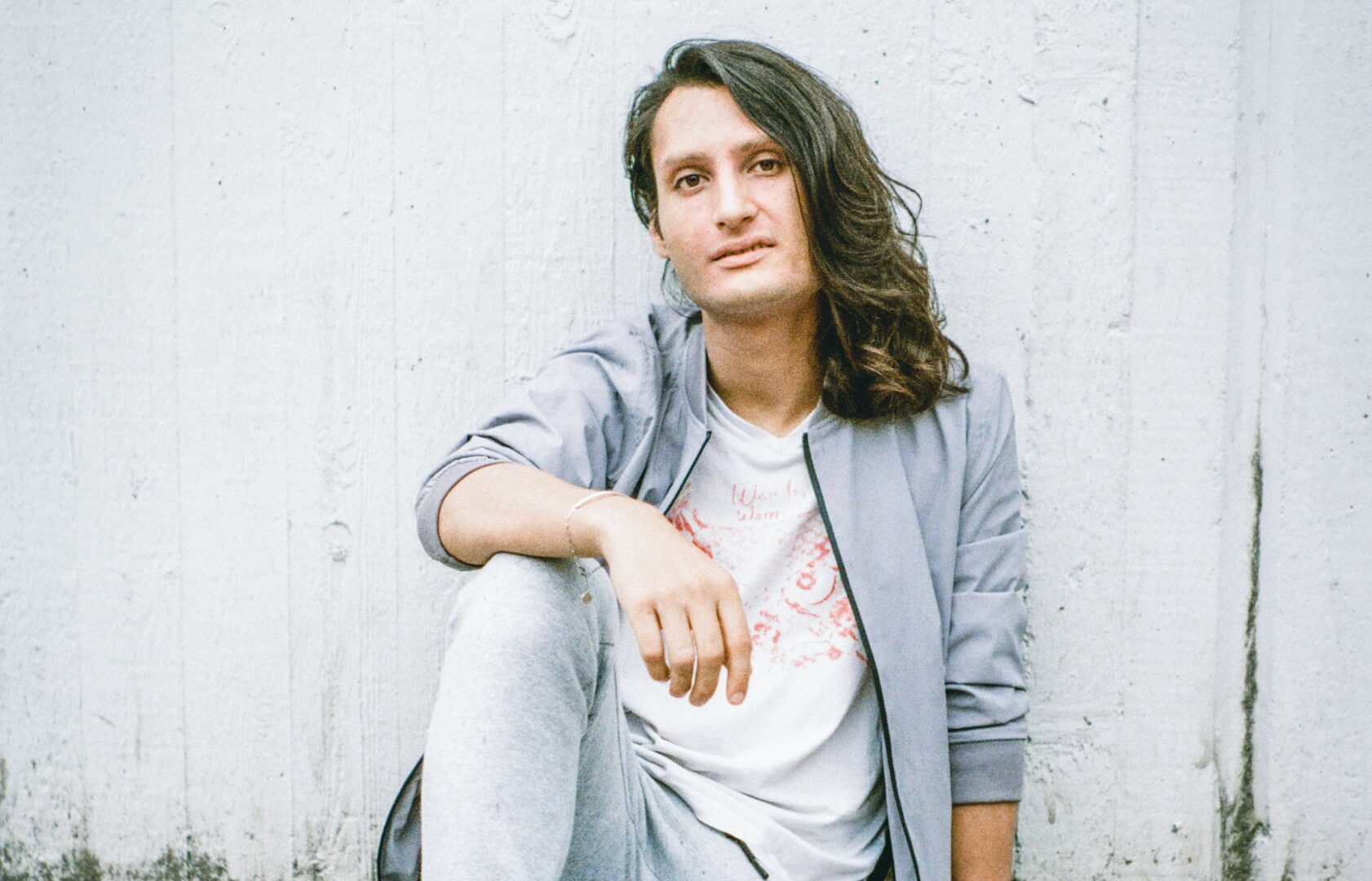
Zygmund de Somogyi shared their story and experiences with us recently and you can find our conversation below.
Good morning Zygmund, we’re so happy to have you here with us and we’d love to explore your story and how you think about life and legacy and so much more. So let’s start with a question we often ask: What are you being called to do now, that you may have been afraid of before?
I’m being pulled towards making more deliberate, authentic, and responsible creative choices as of late. Thinking much more about the “why” of the music that I’m writing, and the journalism and advocacy work I’m doing — how can what I create provide real, tangible benefit to the people and spaces around me, rather than just the “can I do this and make it good?”.
I started feeling this way around spring of this year, around the premiere of my latest large-scale work ‘IN THE EVENT THAT YOU STAY’ — a trio for flute, cello, and piano, that my good friends Temporal Harmonies, Inc. performed at Wigmore Hall and then at Harpa, Reykjavik, over the summer. That piece was probably the first I’ve ever written that truly felt 100% like “me”, musically; capturing the essence of how I’m feeling now (/at the time), and being able to communicate that through the notes I’m writing. I think as composers, we have a duty to write music that reflects the times we’re living in — and I think that’s driving my “calling” as of late.
Both as a composer and as the artistic director of PRXLUDES, I’ve been immensely lucky. I only started doing both seriously just over five years ago, and already (promise you this isn’t a flex) I’ve had some incredible professional opportunities, performances in renowned national and international venues, grants from some promiment funding organisations, and close collaborations with amazing humans who I feel privileged to call some of my best friends. But with that opportunity comes responsibility. If you’re passed the proverbial torch of professional opportunities, commissions, schemes, that is a privilege — and like any privilege, you have a responsibility to use that privilege to give back to the communities around you. There is no excuse.
Maybe some classical music institutions don’t want us to know this — maybe it’s in some organisations’ best interests to keep composers divided, or create artificial scarcity or competition between us — but I truly believe there can be enough to go around; if we’re comfortable sharing our connections, our resources, our potential for collective action, and we actively work to create that environment together. I strive to give back as much as I can, in whatever way that I can, in everything that I do.
Can you briefly introduce yourself and share what makes you or your brand unique?
I’m a composer, interdisciplinary artist, and music journalist based in London, UK. Since 2020, I’ve been the artistic director of PRXLUDES: a contemporary music magazine focused on promoting and celebrating music by emerging and early-career composers, both here in the UK and across the world.
As a composer, I try to employ a stylistically irreverent and eclectic approach to music-making; drawing from my background playing in punk rock bands, as well as electronic music, digital folklore, and immersive theatre as much as classical and contemporary music canons. What excites me the most about making music is its potential for worldbuilding and storytelling: my favourite artists and composers are those that craft intricate, vibrant universes with their work. I was a Royal Philharmonic Society composer of 2025, resulting in my largest-scale project to date: a co-curated concert and 24-minute long piano trio at Wigmore Hall with good friends of mine, Temporal Harmonies, Inc., which we then took to Harpa — Iceland’s national concert venue and possibly the coolest building I’ve ever been in.
Since 2022, I’ve recently discovered a love for opera and vocal music; having written two operas — my most recent being URSA MINOR with librettist Alexia Peniguel, which premiered at the Guildhall School of Music and Drama in 2024 — and currently in the R+D stages of a new “punk-rock cabaret opera” I’m writing with librettist David Bottomley, singer Alaric Green, and pianist Xiaowen Shang. I’m also currently drafting a song cycle for soprano Hannah Dienes-Williams, which I’m incredibly excited about. Other recent and upcoming projects of mine include a piece for bass clarinet and percussion, which is being premiered in Athens, Greece in January 2026; and a string quartet commissioned by the Jasmine Quartet, premiering in London next spring.
As a music journalist, I’ve been running contemporary music magazine and promotional organisation PRXLUDES for the past five years, alongside creative director Patrick Ellis and a team of contributors including Georgie West, Sofia Jen Ouyang, and Finn Mattingly. As an organisation, we have a “by composers, for composers” ethos: all of us are composers and artists in our own right, and (I can’t speak on the others, but at least for me) the two can often feel inseparable. So far, we’ve interviewed and platformed over 130 composers from across the UK and abroad — and we’re now expanding into live events! We’re incredibly lucky to have received a multi-year funding partnership from The Hinrichsen Foundation, building upon our foundations as a publication to establish a new concert, touring, and commissioning series here in the UK.
Appreciate your sharing that. Let’s talk about your life, growing up and some of topics and learnings around that. Who taught you the most about work?
I have three answers to this (though I imagine these will keep changing — if you ask me again, I might have three totally different answers!)
The first would probably be fanfiction writer and online personality Dragonfree. Since I discovered her work as a young teenager in the late 2000’s, her writing’s been one of the few constants in my life that I consistently go back to: her large-scale fanfic The Quest for the Legends is both a “comfort novel” for me, even now, and its extensive worldbuilding has served as a huge point of inspiration for how I view my art. She’s also curated a wonderful community around her work through her website and forums. As Dragonfree is Icelandic, when I was out in Reykjavik this summer with Temporal Harmonies, Inc., I had the immense privilege of meeting her — and being able to tell her, in-person, how much her work means to me. I absolutely would not be the artist I am today — maybe not even an artist at all — if it wasn’t for her.
The second would be my old band’s label manager, and someone I would very much consider a “punk mentor” of sorts: Mark Bartlett, from punk rock label INiiT Records. I first came across Mark while performing in my old punk rock trio, High Visions, in the late 2010s; and when the pandemic hit, Mark offered to release my band’s third (and best — and last) EP, ‘A First Date with Imposter Syndrome’ as the first release on his newly-founded INiiT Records. Mark’s DIY ethos of supporting your scene — creating a community of musicians and audiences that uplift each other — has been such an inspiration for how I view my work with music communities. Even though I’m not so involved with the punk scene anymore (though I really, really should be), I’m hugely grateful for Mark, INiiT Records, and the wonderful scene of artists and humans that made the London punk scene such a welcoming space.
Thirdly, on the contemporary classical music side of things, would absolutely have to be Harriet Wybor — the General Manager of the Royal Philharmonic Society, who I had the privilege of being mentored by whilst on the RPS Composers programme this past year. The incredible work Harriet consistently puts in to supporting emerging composers is second to none — and the amazing opportunities that the RPS Composers programme has provided over the years (including to myself) is something for which I’ll always be eternally grateful.
I unequivocably believe that no-one is an island — everything about my ethos and artistic approach comes from someone who’s greatly inspired me. I strive to have a little bit of each of these people’s working practices and ethos in everything I do.
If you could say one kind thing to your younger self, what would it be?
Firstly, “it gets better.” — and secondly, “you’ll reach your full potential when it does.”
I don’t think I’ve made too much of a secret of the fact that I struggled as a teenager. (My 2023 work ‘GREDOS (Starship I)’, for soprano and chamber orchestra, explores this a bit more in-depth.) There have been times where had things gone very slightly differently, or I’d made very slightly different decisions, I wouldn’t be here to make music, support artists, or write this. I try to start every day with a gratitude: I’m grateful to be here, and able to do the things I do, and when I get up I’ll do them as best as I physically can. I feel like I owe it to that sad, scared 15-year-old version of me to continuously strive for my fullest potential: to say “I’m here, and look, it gets better — and I’m proving that to you every single day.”
That being said, it’s so easy to buy into this romantic myth of the “tortured artist” — that suffering breeds good art — but I also don’t know how I can make art that resonates with people if I haven’t understood myself, or healed myself, first. It’s the whole adage of putting your own oxygen mask on first: you’ll only be able to truly help others if you’ve been able to help yourself first — being a good person precedes being a good artist. I don’t know if I’ve fully healed myself yet, but I’m striving to practice a kind of healing every day — both in my art and in my everyday life.
There’s something composer Emily Pedersen once said that really resonated with me: “I don’t want to create art because I feel like I’m lacking something. I want to create art because my life is so full and I can’t bear not to create anything.” I think that’s the space I’m aiming to occupy.
I think our readers would appreciate hearing more about your values and what you think matters in life and career, etc. So our next question is along those lines. What’s a belief or project you’re committed to, no matter how long it takes?
One belief I have that informs everything I do is that the art we’re creating — and this incredible community of artists and composers — is inherently accessible and relevant to wider society. For me, contemporary music isn’t something that’s just for a specialist audience, or should just exist in academies. That whole Milton Babbitt paper of the “composer as specialist”; that mindset doesn’t just feel antithetical to the art that I make, it feels like an existential threat to the world I believe we should be trying to build.
That’s not to eschew complexity, or dissonance, or extended techniques, or any sort of contemporary music aesthetics: I love and cherish the endless sonic possibilities that our medium offers us. I truly believe that the work we do can both embody novel explorations in sound, while *also* resonating with audiences and society at large. I don’t think those two are mutually exclusive. I think composers like Ben Nobuto, Anibal Vidal, Nneka Cummins, and Delyth Field do this fantastically — and in terms of more “established” names, folks like Mica Levi, Anna Meredith, and Jasmin Kent Rodgman embody this too.
It’s this commitment to accessibility without compromising aesthetics — creating and promoting new music to new audiences without the need to “water down” any artistic quality — that excites me the most about PRXLUDES’ upcoming concert series, PRX.LIVE. With our launch party taking place on 5th February at Folklore, Hoxton, with the support of The Hinrichsen Foundation’s Multi-Year Partnership, I’m hoping we can create a contemporary music environment where cutting-edge composers and art can thrive, without any of the baggage of “academicisation” or institutions. I’m so excited that we’re able to do this.
Okay, so let’s keep going with one more question that means a lot to us: Are you tap dancing to work? Have you been that level of excited at any point in your career? If so, please tell us about those days.
I’d say it’s the infinite possibilities of creation that excites me the most. I feel like I have this almost instinctive compulsion to create, to continuously be making work — I don’t think I could live without it. It’s so fulfilling, so gratifying, that I have this opportunity to create art in this way, in collaboration with so many amazing people — and be a small part of such a vibrant community of artists, both here in the UK and across the world. I can’t ever take this for granted.
Creatively, one of the things I’m the most excited about right now is my upcoming song cycle for soprano Hannah Dienes-Williams and pianist Gregory May, setting poetry by Lincolnshire-based writer hazyn forsythe. The song cycle explores mental health, personal demons, healing, and queer self-discovery; I feel like I’m actively channeling everything I’ve discussed here — deliberate creative decision-making, responsibility, self-advocacy and advocacy for others — into this work. The first developmental phase of this cycle has been supported by Small Room Arts, with a showing scheduled for 5th March 2026. I’m thrilled to be working with Hannah and Gregory — they’re both such emotive and vibrant performers — and I’m so excited about the life they’ll breathe into this work, and where the piece develops from here.
Contact Info:
- Website: https://zdscomposer.co.uk
- Instagram: https://instagram.com/zdscomposer
- Facebook: fb.me/zdscomposer
- Youtube: https://youtube.com/@zdscomposer
- Other: PRXLUDES:
https://prxludes.net
https://dice.fm/event/8er2p5-prxlive-launch-party-prxludes-x-standard-issue-x-stomping-ground-5th-feb-folklore-hoxton-london-tickets?lng=en
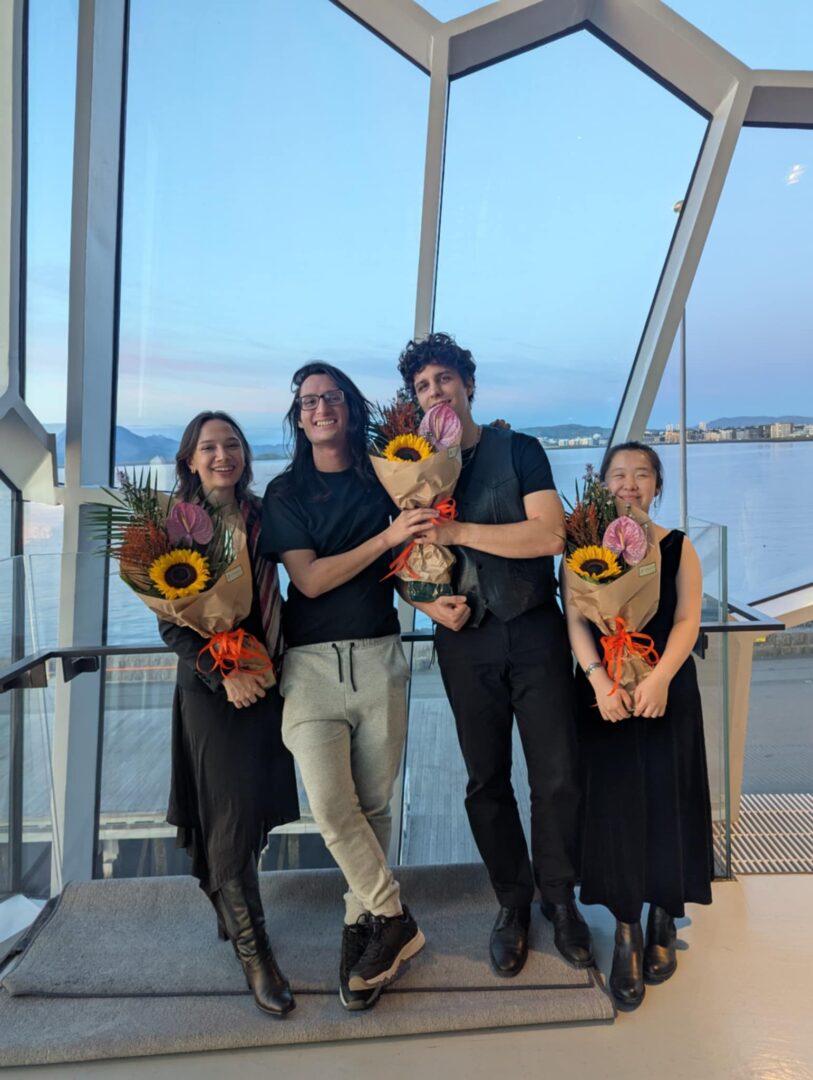
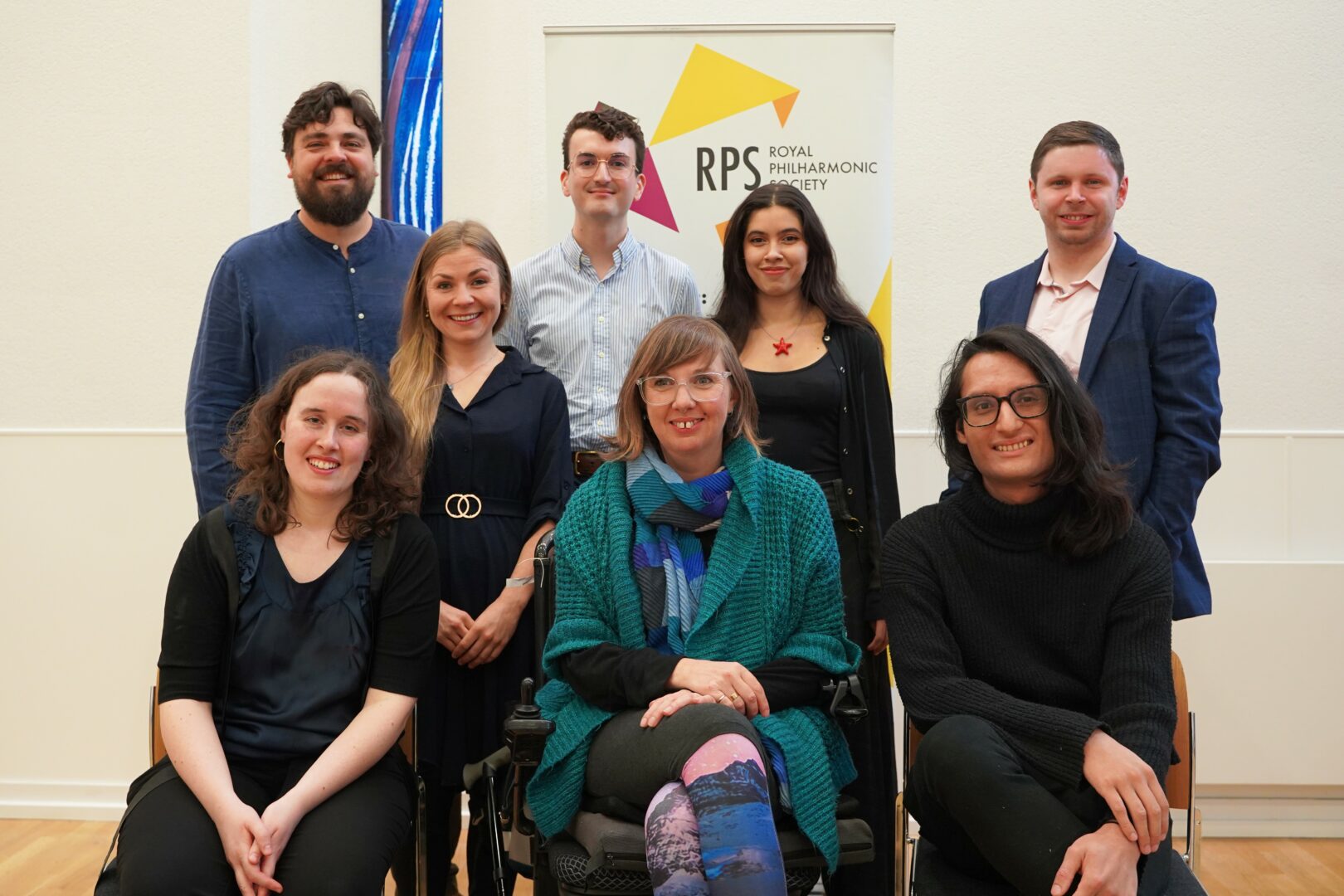
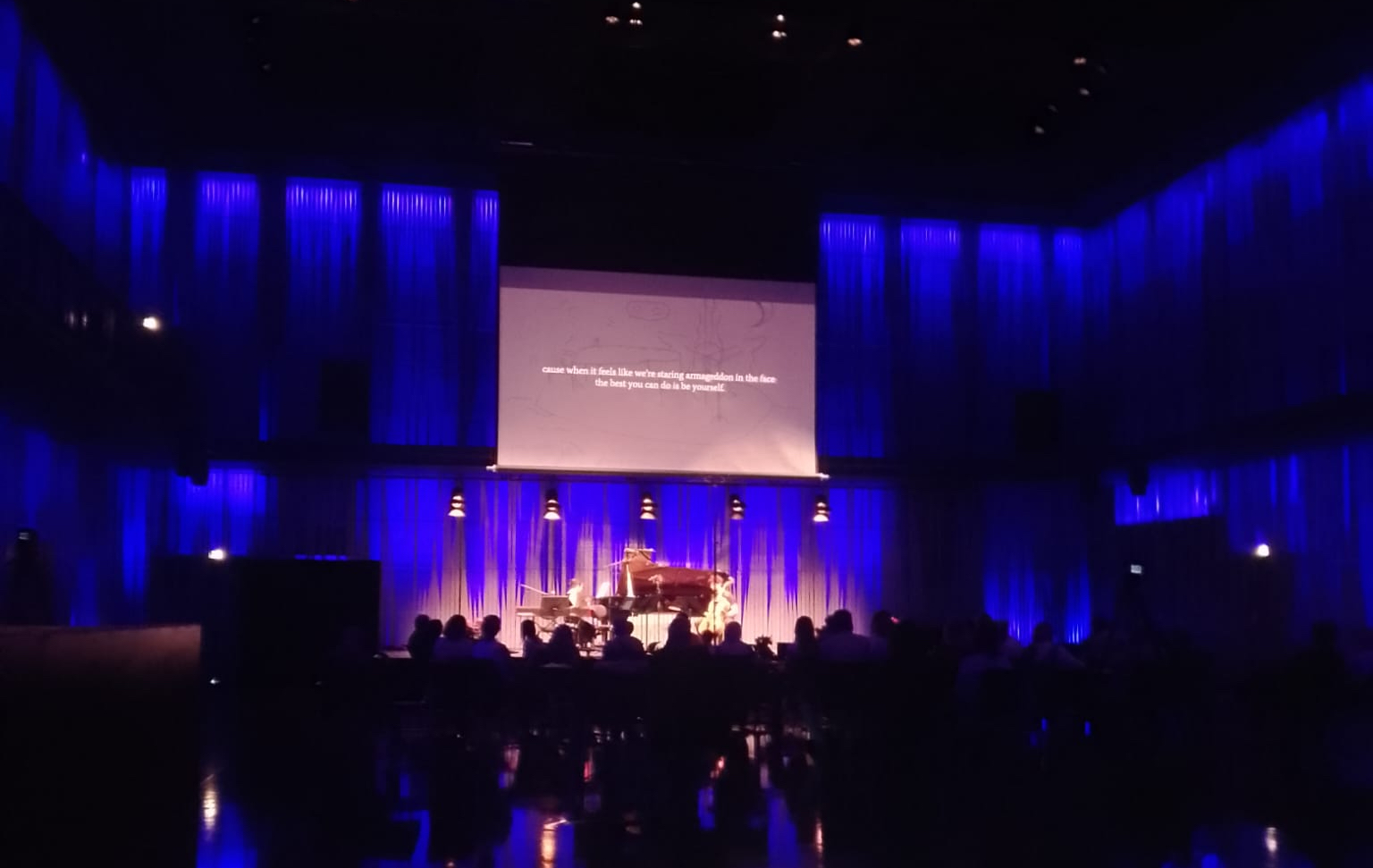
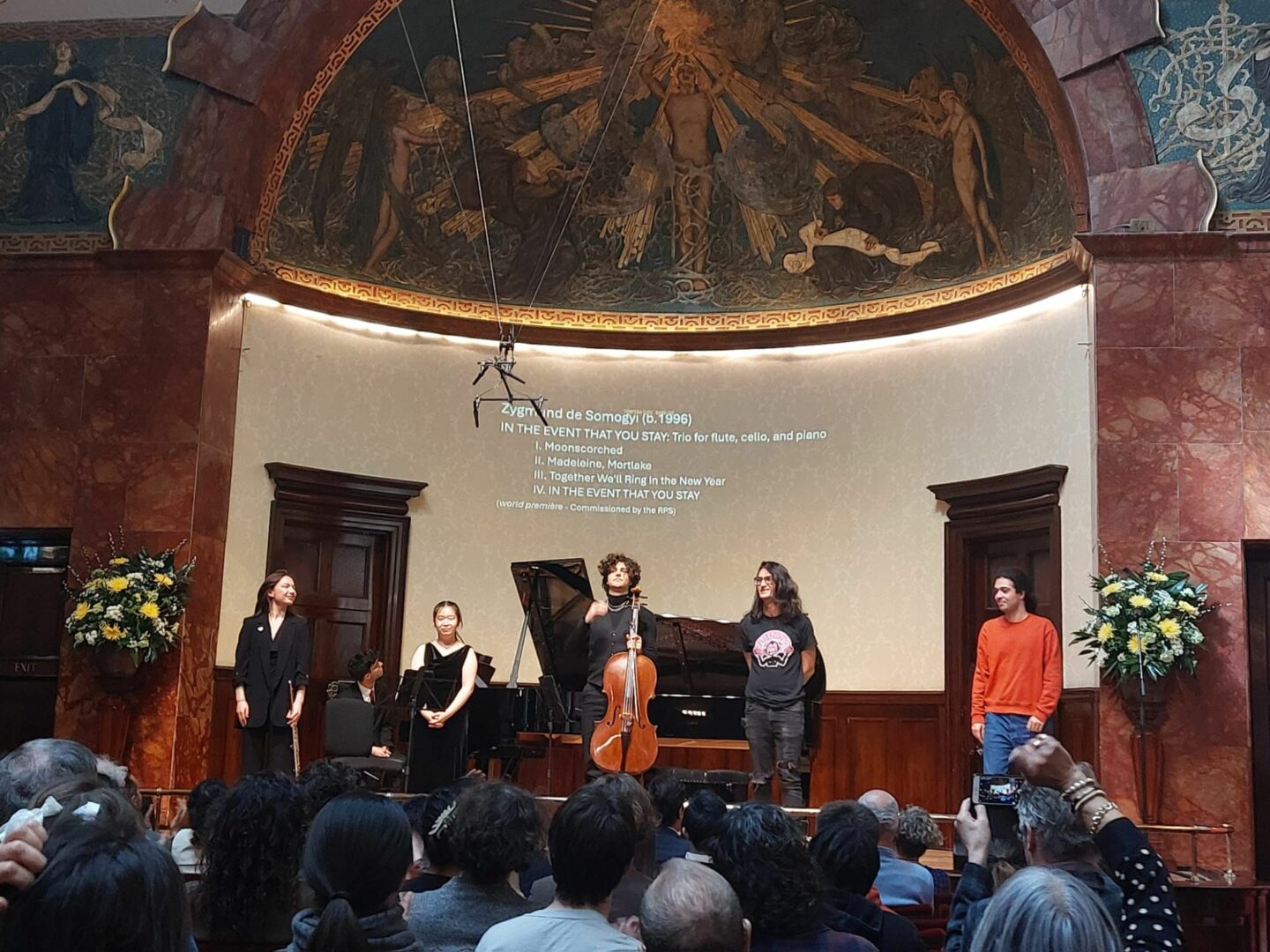
Image Credits
Royal Philharmonic Society photo courtesy of Cathy Hare.
so if you or someone you know deserves recognition please let us know here.