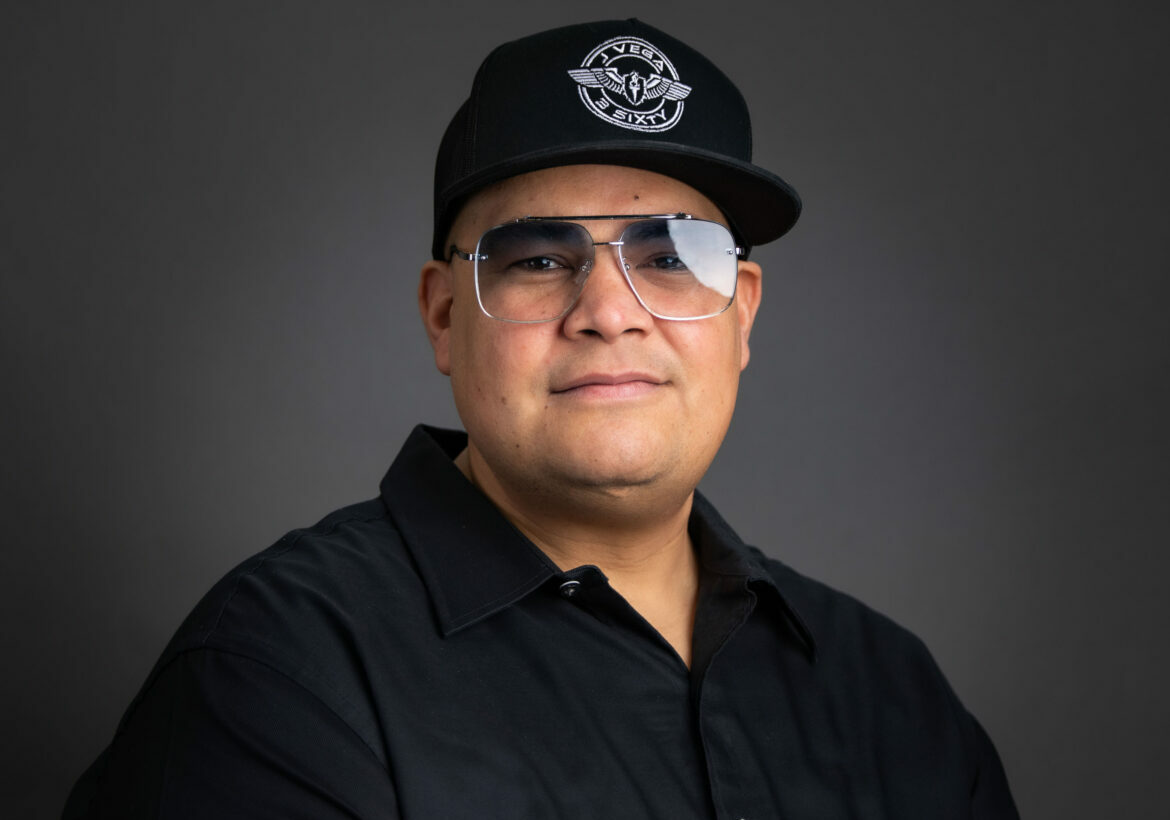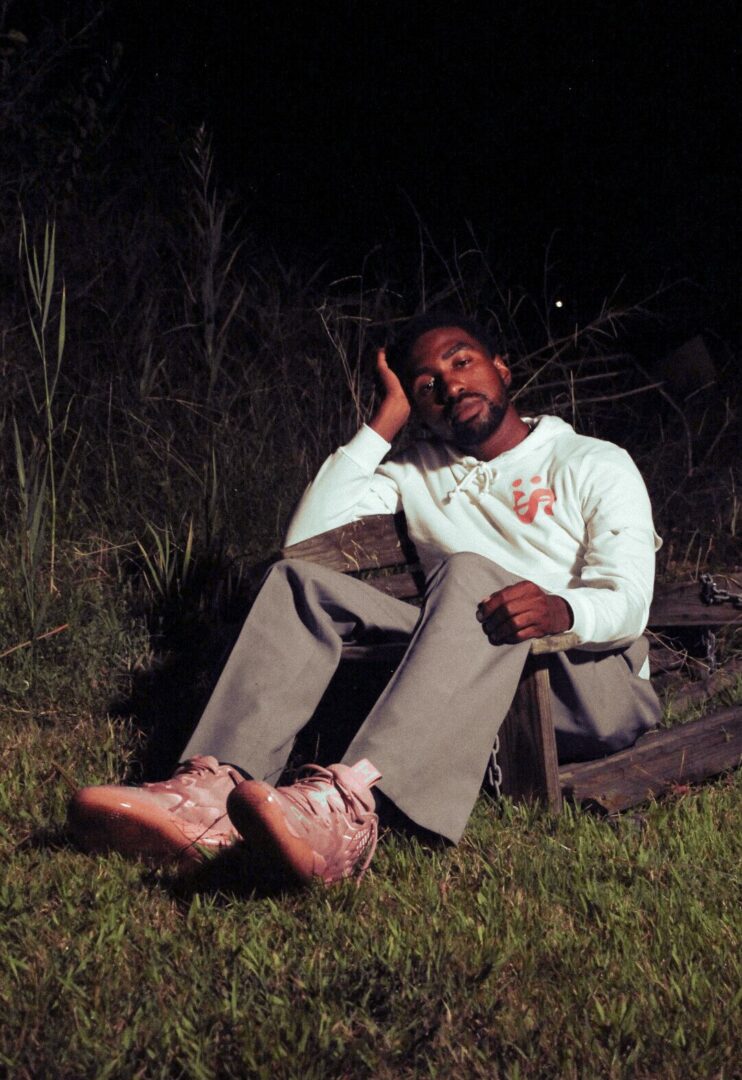
Oliver Caspersen shared their story and experiences with us recently and you can find our conversation below.
Hi Oliver, thank you so much for joining us today. We’re thrilled to learn more about your journey, values and what you are currently working on. Let’s start with an ice breaker: What are you being called to do now, that you may have been afraid of before?
I have long carried a quiet aspiration to lead in the realm of technology, a pursuit that once seemed distant and unknowable. For years I considered it, drawn to its potential yet uncertain how to begin. There was no fear really, just curiosity, and most of all not knowing how to begin—I was drawn to it although for the last decade of my life I have spent my days amid the chaos and alchemy of film sets, film writing, and seemingly endless post-production where nothing is ever really “fixed,” all in flux.
Now the opportunity has arrived, more or less fell in my lap, and I am stepping forward to guide a new technology company, which is on the very cutting in its domain. The specifics must remain unspoken (and unwritten) for now, but I can say this: it is the very thing I once dreamed of building, a convergence of vision and possibility I did not know how to summon. I am deeply grateful. The feeling surrounding the progress of it is steady and slow—like the quiet before a scene reveals itself during a shoot.
In preparation I have studied the lives and methods of those who came before: the executives who built enduring enterprises not through rigid blueprints but through presence, intuition, and the courage to let the work find its form. I have learned from their willingness to dwell in uncertainty, to eliminate what does not serve, and to trust the process as it unfolds. This mirrors the way a film discovers itself when one steps aside and allows its invisible intelligence to give expression to itself.
And importantly, for me, this path grants me the space to continue making films—time each year to return to the set, to the edit, to the dream that has always been my one of my greatest callings, previously to the exclusion of almost everything else. The two worlds will inform one another: big tech grounded in personal humility, personal art hopefully enriched by clarity of vision.
Can you briefly introduce yourself and share what makes you or your brand unique?
I am a writer and filmmaker. I studied film in London to travel Europe and observe the world. I learned early that America, in many regards, does not make much sense, culturally speaking, and traveling showed me that other cultures do not make much more sense. What I mean is people do inexplicable things that are not in the best interest of achieving their objectives. Economists often point this out, calling the human variable in economies often the most unpredictable. In Europe we have the same thing, in a way, but their differences are older — from a time when social, political, and economic forces were different, and therefore molded people into different traditions than we have in America.
I have made three films. The first is Fear Blood & Gold, a western I directed and produced over four and a half years. The sales agent promised theatrical distribution and mentioned taking it to Cannes. They released a version with the main actors overdubbed by other actors without telling me. I was informed two months after release. They didn’t even tell me when it was going to be released. Avoid working with a company called Zeta, they are sales agents who claim to be distributors and will promise things that will never happen, as well as mutilating your film. The director’s cut is no longer free on my YouTube channel, but will be released by another (actual) distributor soon.
The second is Agent Orange, an animated film about Donald Trump’s first four years in office. It is not pro-Trump or anti-Trump. It is a factual presentation in cartoon form. After posting trailers, I received death threats. The film will not be released commercially, not yet anyway, until some time passes, Trump is out of office, and the controversy surrounding him takes a backseat.
The third is Bloodlander, a science-fiction film now in post-production. It is about nonhuman intelligence and multidimensional existence. The main character is a video game coder in one dimension and an F-35 pilot fighting UFOs in another. The story includes how nonhuman intelligence affects some people in daily life. It will be on the film festival circuit next year and probably find distribution after that. It will get a limited theatrical release (which Zeta said they would do for the Western, then didn’t, and didn’t inform me in advance of when it would be released — don’t work with them!).
Next, I am set to begin an A.I.-alien sci-fi film called Hazelwood and set in Scotland. We plan to shoot it in 2026. The story was inspired by the current wave of A.I. doom in Silicon Valley, which I suspect is being put out mainly to sell the technology and make the current bubble as large as possible before it finally blows.
In a new incarnation I have now begun to lead a technology company Silicon Valley, which, as I mentioned, is developing a technology on the cutting edge in its field, soon to be released to the world. This role allows me to continue producing one or two films per year.
Okay, so here’s a deep one: Who taught you the most about work?
Ingmar Bergman taught me the most about work in film. I have never met him (I once saw a limo with him in it pass me on the high street in Hampstead London shortly before his passing — I think he was on his way to the screening of one of his films there), but I studied his films and his interviews and writings on directing. He showed that the director’s job is to create conditions for discovery, not to impose a fixed plan. You set up the scene, observe what happens, remove what does not work, and repeat until the film reveals its own structure. This method guided me through Fear Blood & Gold, Agent Orange, and now Bloodlander. And it will guide me again, I hope, through Hazelwood.
For technology, the late Ada Lovelace and the former Twitter CEO Jack Dorsey taught me the most. I never met either of them. (Of course not Lovelace, she passed long, long ago; and Dorsey, I have very little idea of what he’s currently doing in his life.) I read Lovelace’s notes on the Analytical Engine and learned how she combined mathematics with imagination to describe the first computer program. Dorsey’s public statements and interviews showed how to build and scale a platform while keeping decisions minimal and focused. Their examples helped prepare me for stepping into the role of heading off the new technology company I am now involved with.
What did suffering teach you that success never could?
Suffering taught me to persevere no matter how the world appears in the mind at any given time. After Fear Blood & Gold was released with the actors overdubbed and after four and a half years and the false promises of the sales agent, I was unhappy with this to say the least. After Agent Orange brought death threats for a film that took no side (and no one making the threats had actually seen), I was once again at a loss. Big name distributors embraced releasing the film until it appeared that Trump would get back into office—then they wouldn’t return my calls. In both cases, the brain produced illusions of having a career badly botched with films maimed from the start. Then I wrote some scripts and I was very happy with the way they were produced. The last one I produced myself. I don’t think I will ever let someone else direct something I write again, unless it is good my friend Peihong Yan. Suffering showed me these are temporary states caused by attachment to outcomes and identity. By examining the root causes—expectations of fairness, fear of loss, ego—and recognizing their true nature as mental constructs, I learned to continue working. (Or that’s what an a.i. chatbot. may have told me to say.) Success never required this analysis; it arrived without resistance and taught nothing about the mind’s mechanisms. Perseverance became the practice of acting despite the illusions, which is why I am now finishing Bloodlander, beginning preproduction on Hazelwood and leading the technology company.
Next, maybe we can discuss some of your foundational philosophies and views? What are the biggest lies your industry tells itself?
The biggest lie the film industry tells itself is that it is a place of moral uprightness. It projects an image of creativity, diversity, and social progress while (I believe, let me say “allegedly”) covering up rampant satanism, pedophilia, rape, gang-rape, and incest. These acts occur at high levels and are protected by power structures, silence, and complicity. This is not all of the elite, but I believe it is, at least, some. The same people who lecture on ethics in public often enable or participate in these crimes in private. The industry uses awards, activism, and public relations to maintain the facade. Again, allegedly. There are some public examples, which have been made in recent years with Harvey Weinstein and Jeffrey Epstein, whom, if I remember correctly, had some involvement in the entertainment world.
I saw the edges of this during the post-production of Fear Blood & Gold while collaborating with an actress on a project for a major studio that I eventually walked away from over creative differences. She had allegedly been asked by some producers to participate in what seemed to be, by her description, a gang rape scenario, on camera, which, I believe would later be used to blackmail her, in exchange for giving her a leading role in a major Hollywood film. I don’t know any more details than this, and I believe she walked away from the situation. To be fair, this was nearly five years ago. I’m not sure whether these sort of alleged practices are in place anymore. I believe the #metoo movement, as well as several exposés have put a bit of a damper on this. But it’s hard to be sure.I chose independence from the start for a reason. The only way to avoid this corruption, I believe, is to stay outside the system entirely—fund your own work, or find private funding sources, distribute it yourself if you can, avoid signing with the major players — if you do, perhaps you can avoid some of the worst-case scenarios, as aforementioned, but you will still in all probability lose a measure of creative control, if not the majority of it, or all of it. Agent Orange won’t likely be released through traditional channels. Bloodlander will follow the same path, as will Hazelwood. Go independent or become part of the deception.
Before we go, we’d love to hear your thoughts on some longer-run, legacy type questions. What is the story you hope people tell about you when you’re gone?
I don’t really mind, I won’t be there to be disappointed. But if I have to choose, I hope they say I stayed outside the system and kept working. That I made Fear Blood & Gold, got betrayed by the distributor, and never signed another bunk deal like that again. That I finished Agent Orange, and refused to release it through the industry. That I completed Bloodlander the same way, as well as Hazelwood—funded by myself and good friends, and eventually distributed, no compromises. That I walked into technology on my own terms, collaborated on releasing something new into the world that people would enjoy intensely, and still made a film or two films a year. That I never joined the mainstream media mind control deception program, never covered for anyone, never pretended to be part of their moral facade, or pretended to be anything else, for that matter. Just a man who kept shooting, kept cutting, and never let the gatekeepers touch the work. Also, I’m about to release my first novel—a work of science fiction, titled Elon Musk Escapes to Mars. I don’t really know how I expect to be remembered for this, if I am remembered at all. I have no idea how it will be received or who will receive it.
Contact Info:
- Website: https://www.imdb.com/name/nm8487586
- Instagram: https://www.instagram.com/oliverlander26/
- Twitter: https://x.com/oli43443
- Facebook: https://www.facebook.com/oliver.lander.9
- Youtube: https://www.youtube.com/@dreamblue26





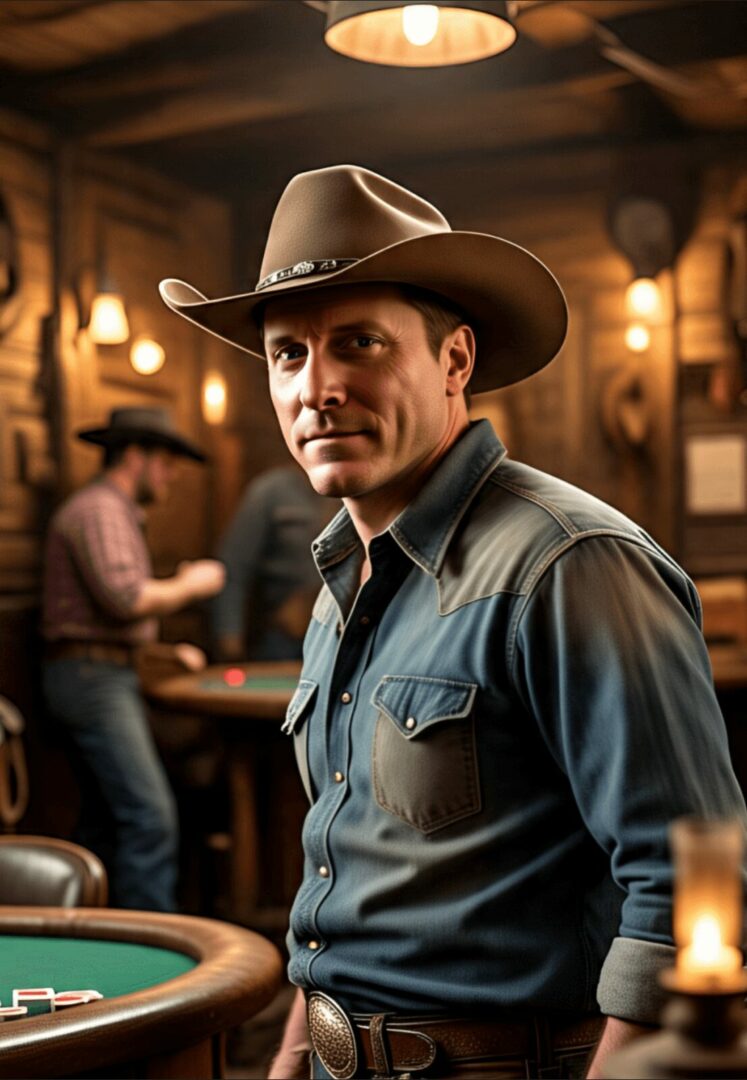


Image Credits
Oliver Caspersen
so if you or someone you know deserves recognition please let us know here.