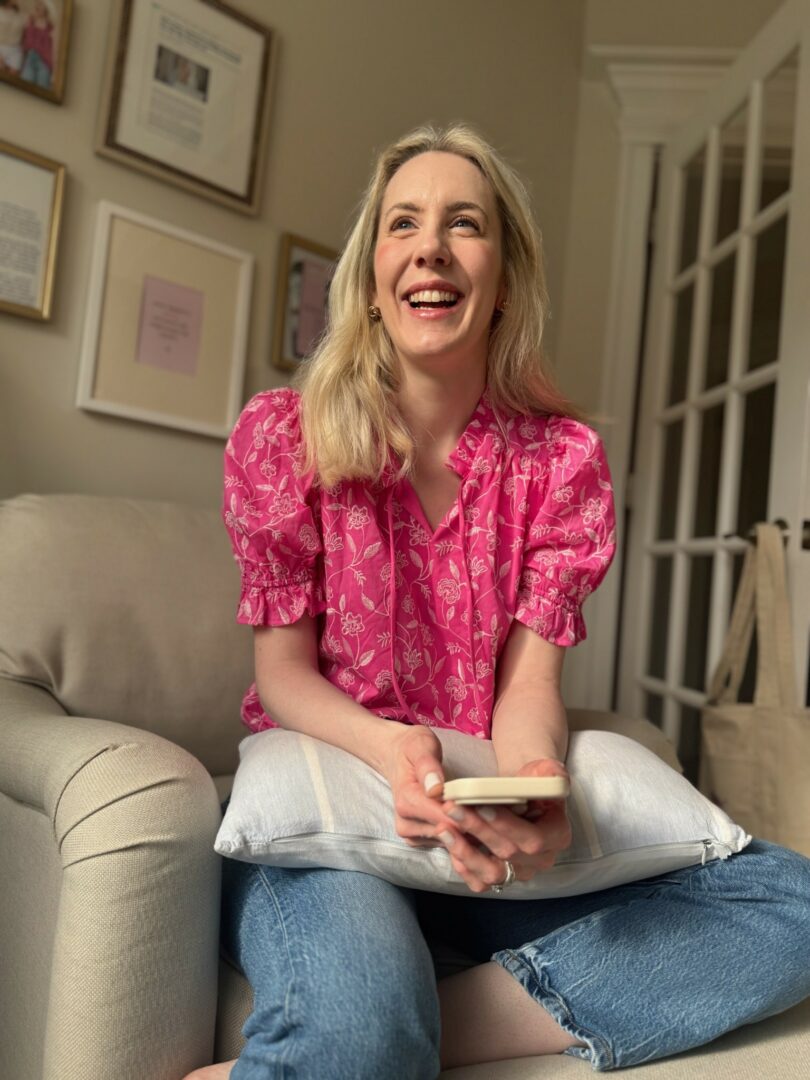
We recently had the chance to connect with Erika Page and have shared our conversation below.
Good morning Erika, we’re so happy to have you here with us and we’d love to explore your story and how you think about life and legacy and so much more. So let’s start with a question we often ask: Have any recent moments made you laugh or feel proud?
I got an email this week from a member in my community who reached out to share her story with vitiligo and how much Living Dappled has helped her gain confidence while living with this skin condition. She mentioned that even if I don’t always hear it, the work I’m doing is changing lives, and making this community feel seen and valued. Talk about a dream email to receive as the founder of this community. I created Living Dappled because a space like this—a safe haven for women with vitiligo to share their stories and experiences—didn’t exist. It always means so much to get notes like this in my inbox. It’s a little reminder of why the work I’m doing matters. I always save them in a digital notebook and if I’m having a bad day, I’ll read back through them to remind myself of the “why” and find the motivation to keep going.
Can you briefly introduce yourself and share what makes you or your brand unique?
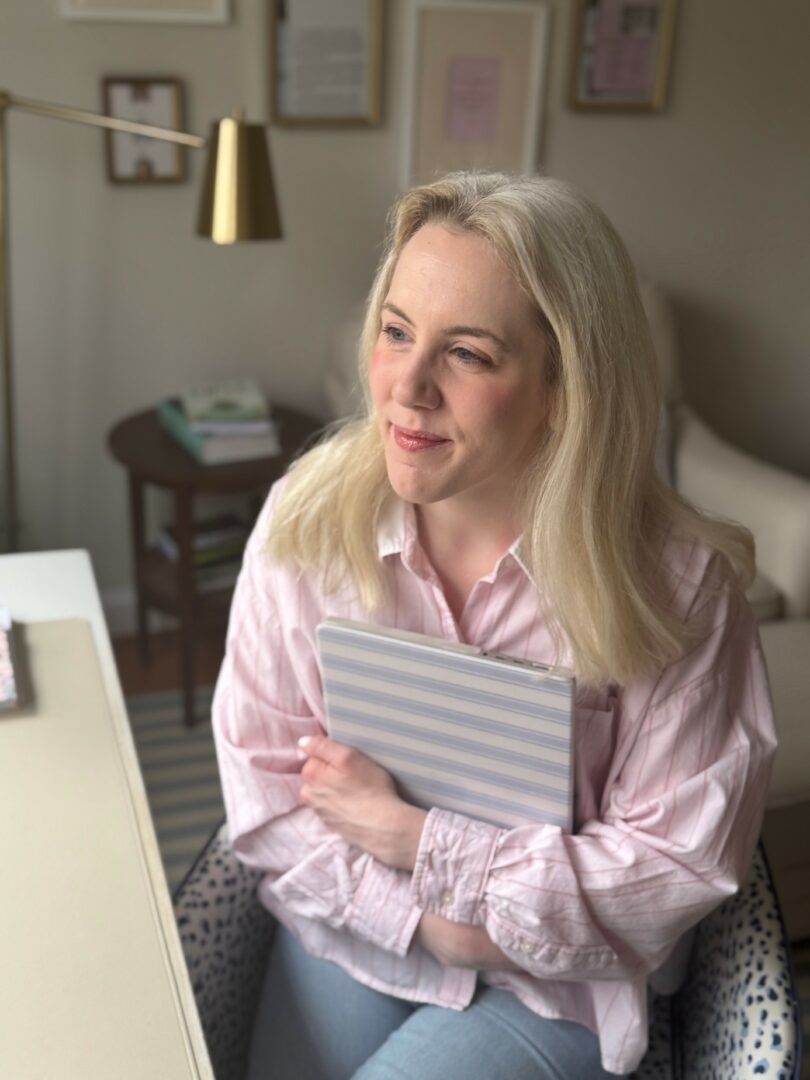
I’m Erika Page—I’m the Founder and CEO of Living Dappled, a media brand and community for women with vitiligo.
If you’re not familiar with it, vitiligo is an autoimmune disease that causes loss of pigment in the skin and hair. About 1% of the world’s population has vitiligo, t’s not contagious and there’s no cure—but there are treatments. You may know about vitiligo because of Michael Jackson or Winnie Harlow.
I got vitiligo when I was seven years old and lost 100% of my skin’s pigment by the time I was in my twenties. I’m still losing pigment in my hair and eyelashes today. I struggled significantly with this condition growing up—the stares, the low self-esteem, a body that was changing before my eyes.
I was at one of my lowest points in my twenties—and knew something needed to change. I googled “vitiligo” and when I didn’t find the resource I wanted, I decided to create it. I paired my career in marketing and communications with my life-consuming experience with vitiligo to fill a gap in the marketplace and create a digital safe haven for women with vitiligo to feel seen and supported.
This community is all about women helping women live with vitiligo—everything we do is created by, with and for this community. It’s such a community-first way of working and it creates incredible engagement and trust. You can find us on our website (livingdappled.com), social media and through our weekly email subscription.
Thanks for sharing that. Would love to go back in time and hear about how your past might have impacted who you are today. What did you believe about yourself as a child that you no longer believe?
I got vitiligo when I was seven years old. And as I grew into a teenager, a lot of my mental space was focused on my skin. It was so hard to watch vitiligo take my pigment from me, spot by spot and day by day. I was watching my body change in front of my eyes and couldn’t do anything about it. I felt like I didn’t recognize myself anymore and couldn’t be the girl I wanted to be. Alongside that, I held onto a strong limited belief: I believed that my vitiligo had to go away before I could be happy in my skin.
Fast forward to today, and I now know this isn’t true—because I’ve proven it. While I have lost 100% of my skin’s pigment and therefore no longer appear “spotted,” I’ve also done the hard work of slowly letting the world see me as I am today. I spent 7 years covering my skin head to toe with tanner before throwing the bottle away and embracing my depigmented skin. I stopped dying my hair and have started embracing my white hair. I still struggle with this “new me,” but I also choose to lean in instead of hiding. Because I know that I can be happy in my skin today.
When did you stop hiding your pain and start using it as power?
Growing up with vitiligo, I rarely talked about my skin. The few times I did, I felt like it was hard for those around me to really understand what I was going through. That was hard—and fueled my feelings of isolation. It was easier to just put on a smile and pretend I was okay.
One day in my twenties, I was getting dressed for the day and rushing back and forth between my dresser and the mirror. I was on my fourth outfit and nothing looked good—because nothing could change my skin. Standing there in the mirror, I suddenly realized that I would likely have vitiligo for the rest of my life. Subconsciously, I had been waiting for some magical day when it would disappear and I could live my life. I started sobbing—and only stopped four hours later.
That was one of the hardest moments of my life. But it also changed something in me. It was time to do something about this. Because if my skin wasn’t going to change, then I had to. And that’s the start of what inspired the launch of Living Dappled a few years later—a media company and community for women with vitiligo. If I couldn’t change my skin, I could at least create a space to bring together women like me to talk about what it’s like and bring comfort to each other.
Today, that looks like a ten-year old business and a full-time job for me as a community founder and patient advocate—my superpower.
Alright, so if you are open to it, let’s explore some philosophical questions that touch on your values and worldview. What’s a belief or project you’re committed to, no matter how long it takes?
Advocating for women with vitiligo like me—and hopefully tied to my company, Living Dappled. Someone recently asked me about an “exit plan” for Living Dappled and the question stunned me—because I’ve never thought about stopping.
I got vitiligo when I was 7 years old and it took 100% of my skin’s pigment. It also fundamentally and dramatically changed the course of my life. It was the hardest thing I’ve ever gone through and with every fiber of my being, I want to change the way the next generation of women with vitiligo live with this condition.
Vitiligo is a chronic condition that takes so much more than your pigment—it steals your identity, your confidence, your sense of self. It infiltrates every part of your life—shopping at the store, going to the beach, personal relationships and more. It’s a visible condition with such a heavy invisible impact on those living with it.
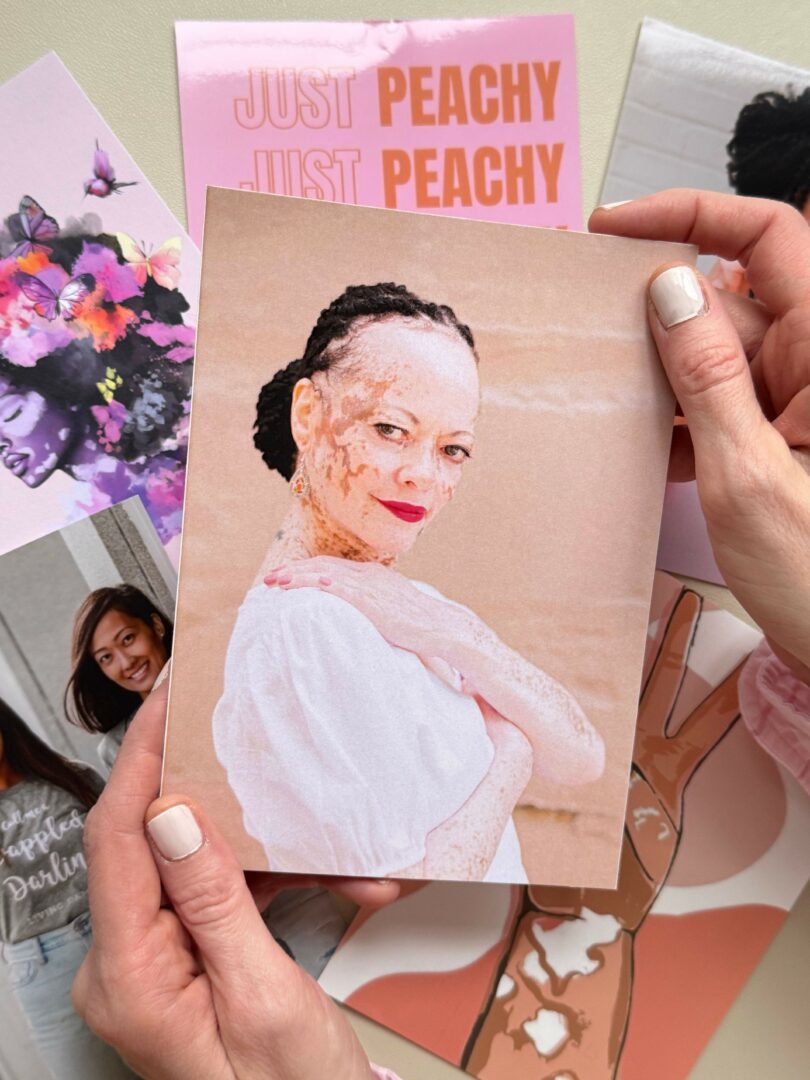
And these women deserve support. They deserve representation—to be seen in the spaces that matter. Like on runways thanks to Winnie Harlow and on Taylor Swift’s Eras tour stage thanks to Taylor Banks. They deserve education—about the cause, treatments and research being done for vitiligo. Not medical jargon, but clear, simple information they can trust. They deserve support and connection—people who make them feel seen and valued just as they are.
This project is personal—because it’s about fighting for the little girl who spend years crying herself to sleep because of her skin. I’m fighting for her. But I’m also fighting for every girl after her.
Okay, so before we go, let’s tackle one more area. Are you tap dancing to work? Have you been that level of excited at any point in your career? If so, please tell us about those days.
Yes, now! Well—I work remotely, so let’s say I’m tap dancing down my stairs and into my home office. It’s not every day, because being an entrepreneur is hard and the future can feel uncertain.
But I’m coming off an exciting year that feels like our brand is being reborn, and I’ve set a big, audacious vision for the next 3-5 years that makes my skin tingle. Those tingles keep popping up—literal goosebumps up my arms—as we talk about some of the projects and work we’re doing in support of that vision.
I created my business for women just like me who have lived with vitiligo and are struggling to find the support they need. Because of that, I think deeply about what I would have wanted to find when I visited my website, when I open my emails or when I scroll and find one of our posts on social media. Every single detail of this brand should be about lifting up this community and helping them feel seen and valued. And that feels exciting to me.
Contact Info:
- Website: https://livingdappled.com/
- Instagram: https://www.instagram.com/livingdappled/
- Facebook: https://www.facebook.com/livingdappled/
so if you or someone you know deserves recognition please let us know here.