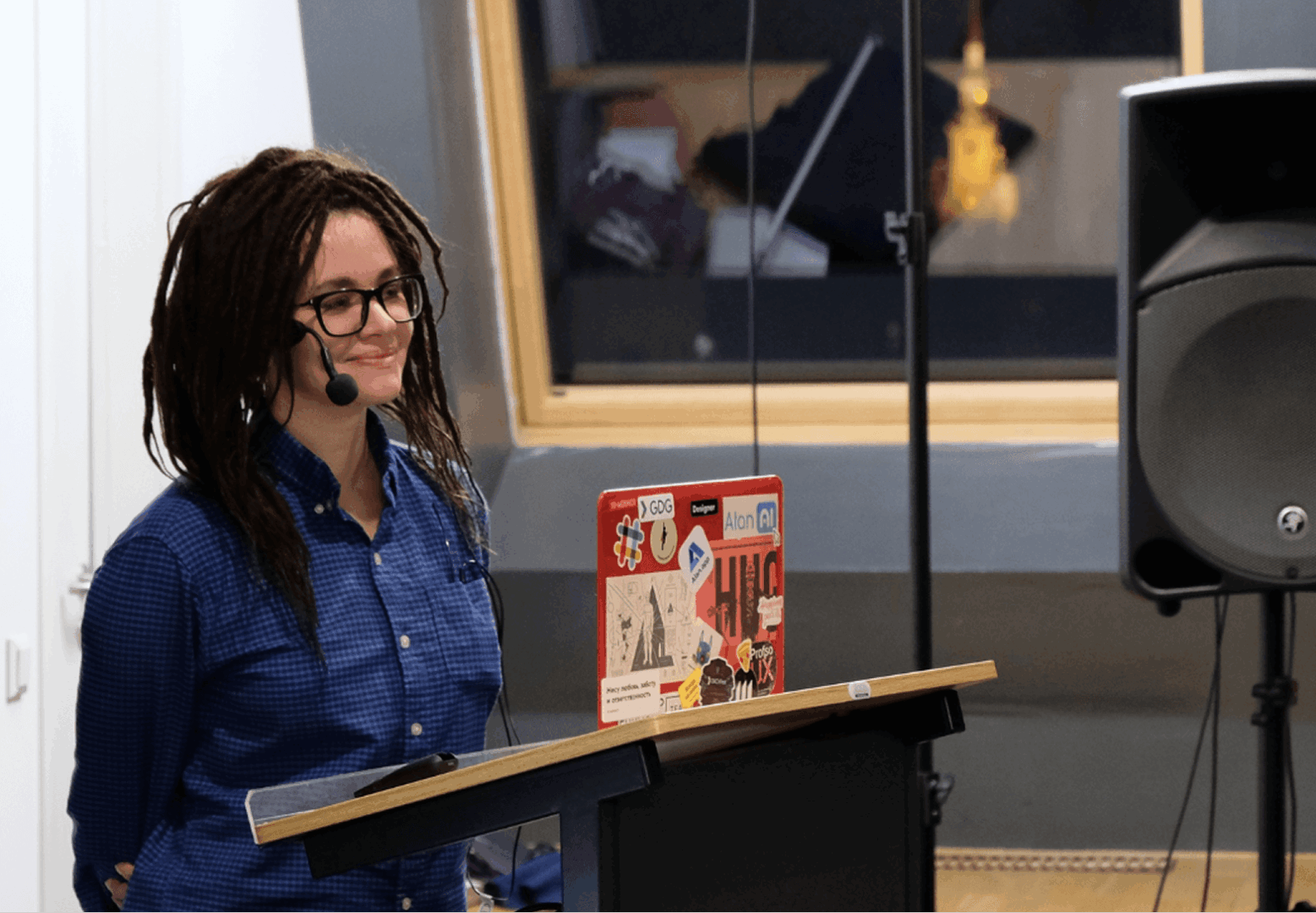
We recently had the chance to connect with Nelli Kamaeva and have shared our conversation below.
Hi Nelli, thank you for taking the time to reflect back on your journey with us. I think our readers are in for a real treat. There is so much we can all learn from each other and so thank you again for opening up with us. Let’s get into it: What are you being called to do now, that you may have been afraid of before?
I’m being called—more like nudged repeatedly, the way a very insistent idea taps you on the shoulder until you finally stop pretending you don’t notice—to make the zines I’ve been avoiding for years. Not because they’re terrifying in a mythic sense, but because they demand the kind of personal honesty that product design rarely asks for.
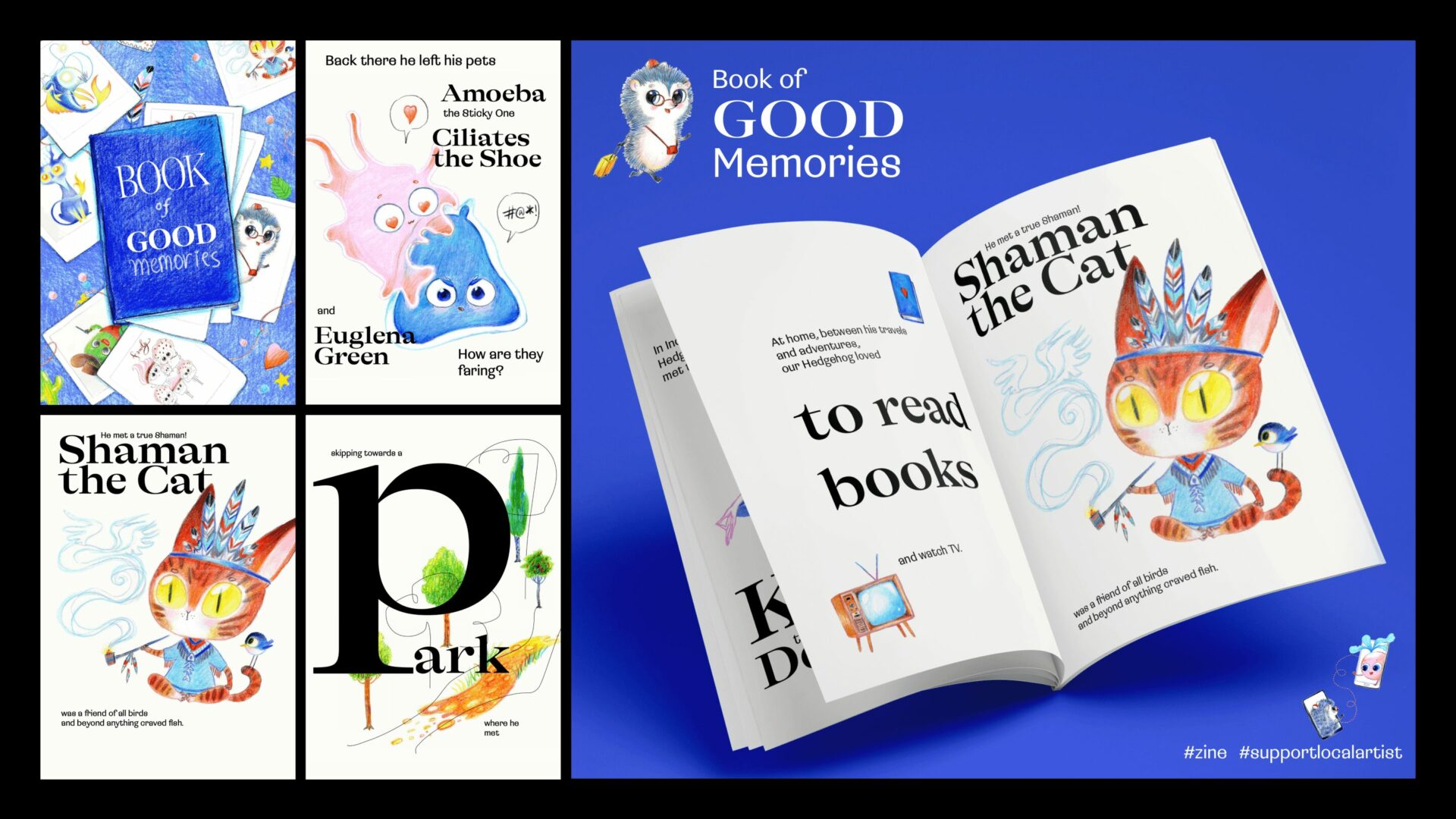
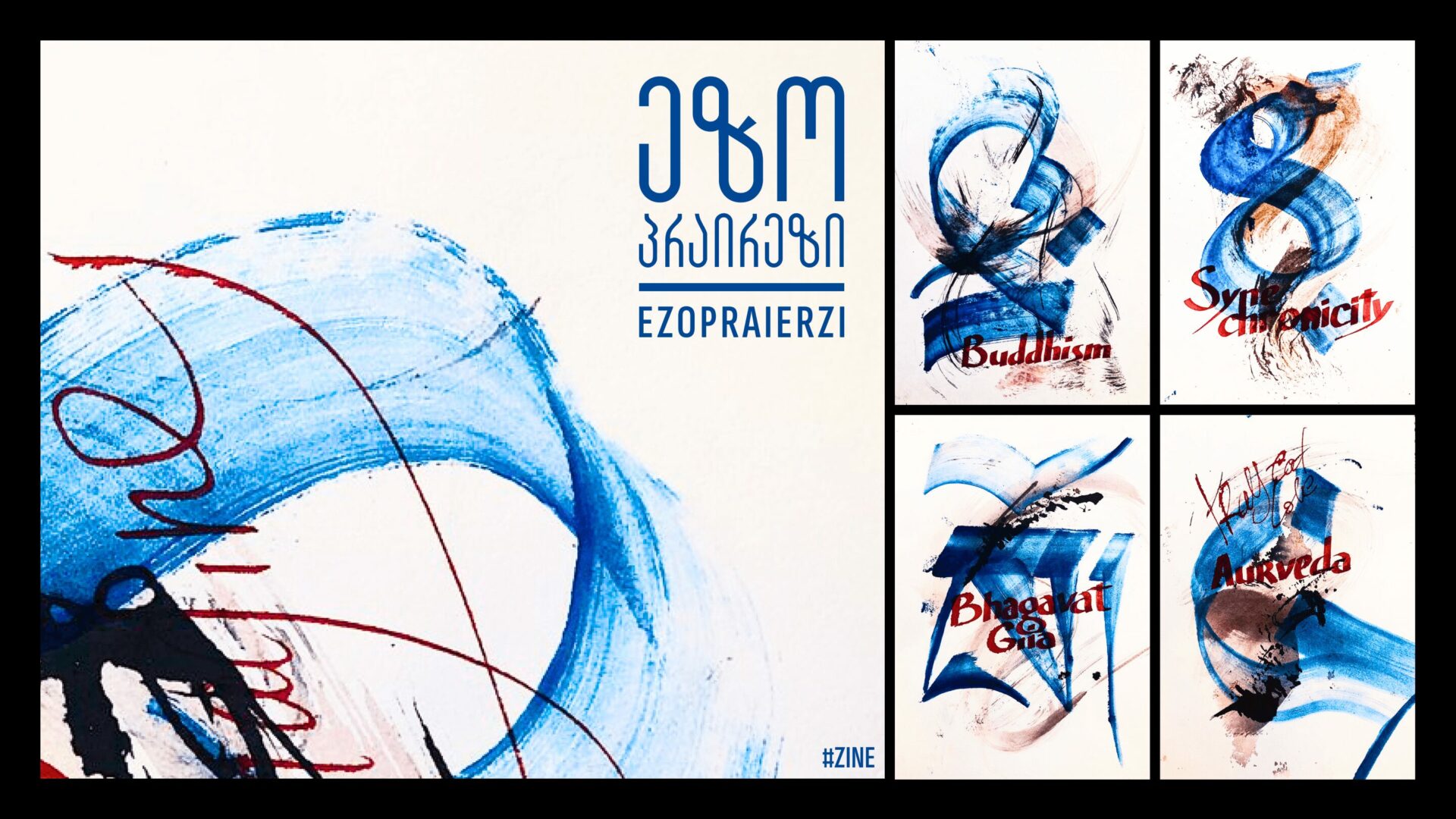
For a long time I let ideas pile up. The “Good Memories” zin with illustrations by the brilliant Anastasia Amaizing stalled during the pandemic. Ezopraries, a project about the practices I’ve explored throughout my life—meditation, gratitude, knot-tying, brief detours through Kabbalah and Buddhism—got as far as calligraphy and a synopsis before I conveniently set it aside. More concepts accumulated quietly, like objects you keep placing on a shelf promising you’ll get to them “properly” one day.
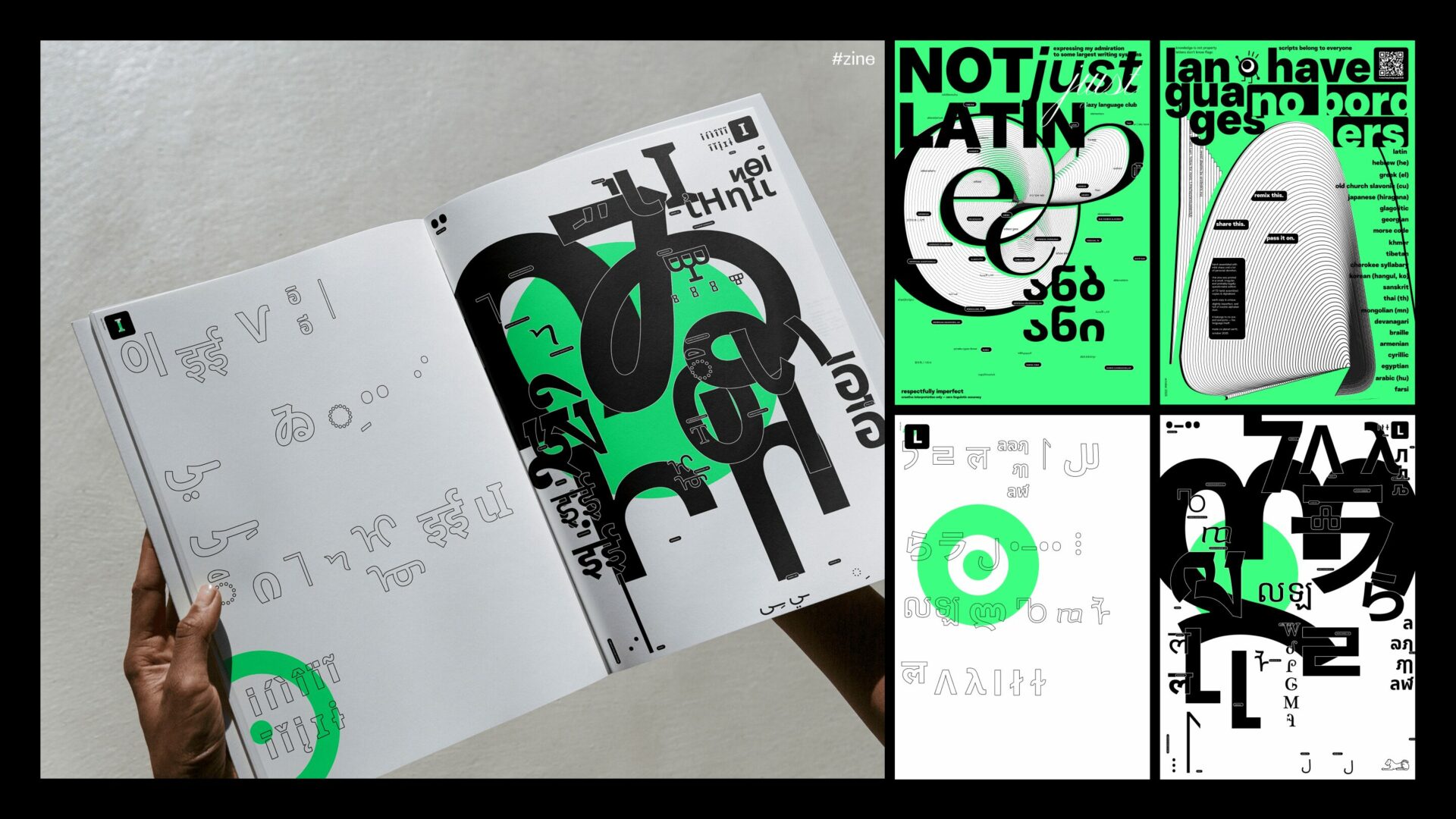
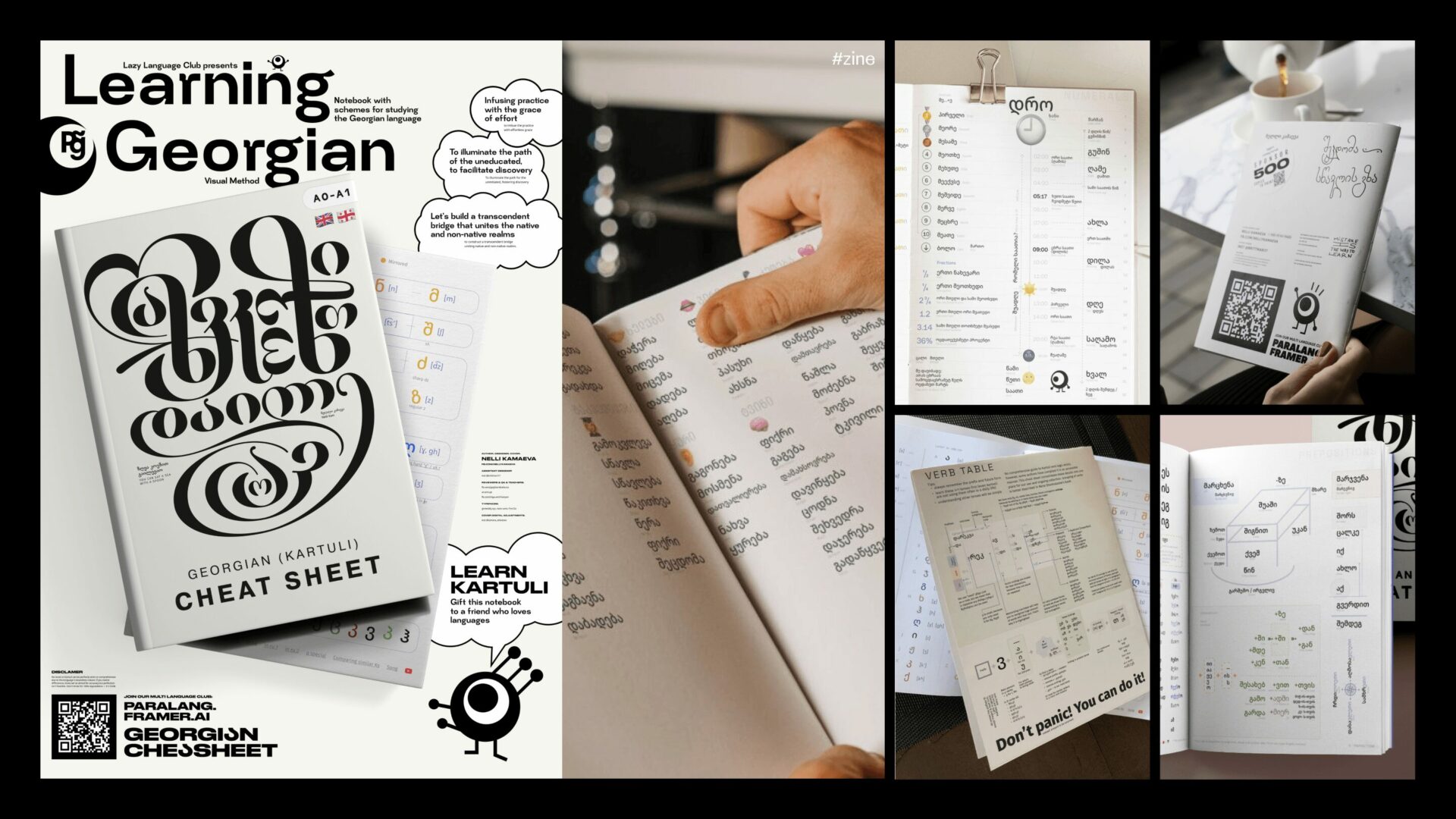
Recently I stopped postponing and made Not Just Latin, a zin about alphabets behaving in ways that shouldn’t be legal in polite society. I worked on it for a week straight and lost track of time, which I take as a sign that I should probably have started much earlier. Before that I printed a Georgian art-book-notebook hybrid—grammar, method, and calligraphy bound together—which then found its way into an exhibition at Fabrika in Tbilisi almost accidentally, as if the book had its own social calendar.
What’s calling me now is to treat these projects not as side quests, but as the actual work. The blend of alphabets, linguistic structures, teaching methods, poster logic, and obsessive research isn’t a hobby. It’s the method. And the method apparently insists on expressing itself through zines—those odd, brilliant mini-books where design, narrative, pedagogy, and controlled chaos can coexist without asking permission.
So yes. I’m being called to make the zines I’ve avoided. The ones that reveal what I actually think about language, learning, and how humans construct meaning.
And this time, I’m not pretending I don’t hear the call.
Can you briefly introduce yourself and share what makes you or your brand unique?
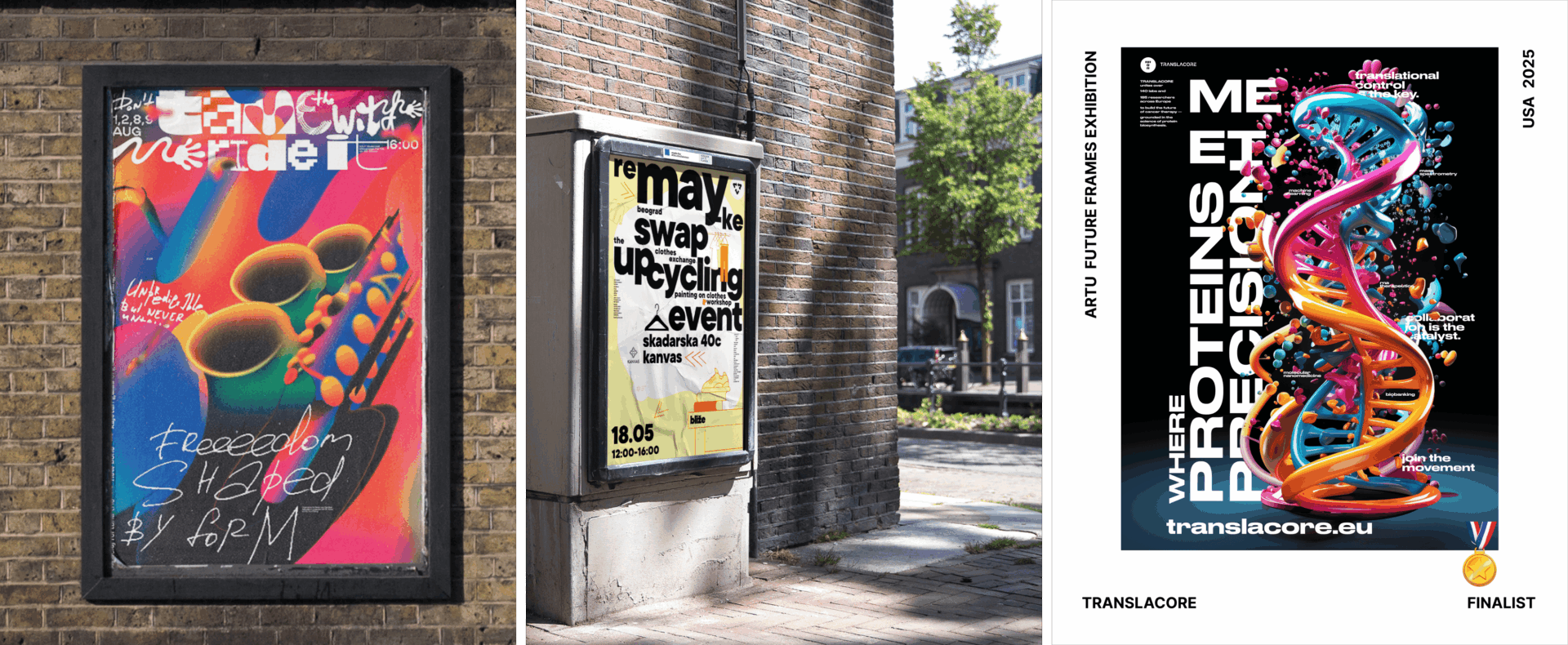
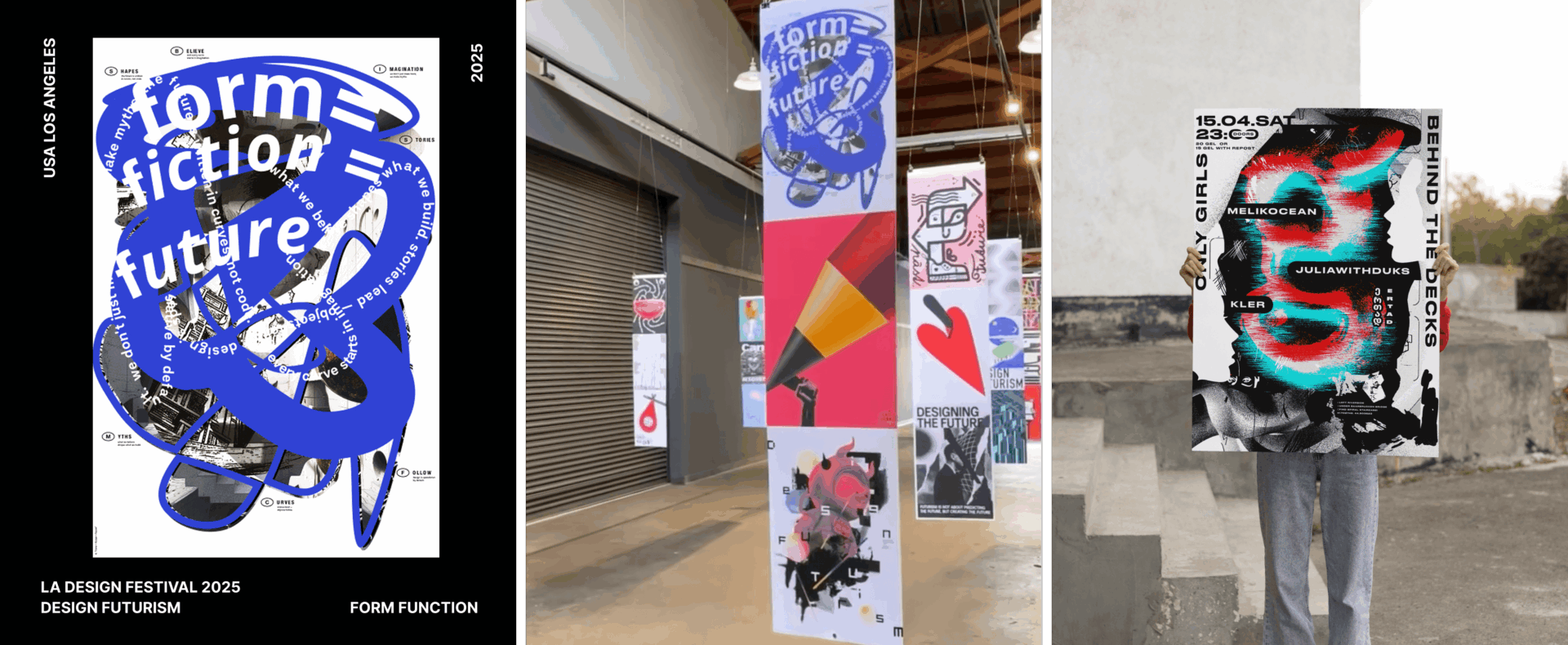
I’m a designer whose core drive is helping people make sense of the world—at work through product systems and user-centered problem-solving, and in my creative practice through language-driven posters, experimental books, and zines.
My work blends linguistic structures, visual design, and research into objects that teach, clarify, or reframe how we think about language itself. Projects like Not Just Latin or my Georgian grammar art-book grow out of this mix of method, curiosity, and visual experimentation.
Right now I’m expanding this practice, developing new multilingual pieces and revisiting earlier zine concepts that explore how language, design, and human experience intersect.
Thanks for sharing that. Would love to go back in time and hear about how your past might have impacted who you are today. What’s a moment that really shaped how you see the world?
A moment that shaped how I see the world happened when I was six to nine and kept turning our home into accidental art installations. I didn’t know the words “experiential design” or “performance,” but I was already doing both. I’d cover the walls with drawings on a single theme, hang paper trees from the ceiling, set up cardboard characters with unexplained roles, and let guests sign up for a meeting with an owl—also played by me, with great seriousness.
What I understand now is that I wasn’t decorating; I was creating environments where people stepped into a story and discovered it through interaction. That instinct—build a world, let others experience it, watch meaning unfold—became the foundation for everything I do in design, language projects, and art.
When did you stop hiding your pain and start using it as power?
I think the moment I started turning pain into power came when I fell obsessively in love with French. I dreamed of living in the suburbs of France (and, truthfully, still do), and I enrolled in a three-year course where the first — and most terrifying — lesson was just how much I didn’t know. I was shy, cautious, constantly worried about looking foolish, about being rejected by the group, by the language, by myself.
Then our teacher gave us an assignment: create a little manual —a sort of mini-zin, though we just used notebooks — where we wrote down the main grammar rules and vocabulary. We studied it over and over, filling exercises, correcting ourselves, layering knowledge on top of fear. Slowly I realized something crucial: fear, discomfort, and self-doubt are not obstacles to be magically “overcome.” They are raw material. You can shape them into tools—rules, methods, shared knowledge, structured practice—that let you act confidently in a space where you once felt powerless.
That tiny notebook became my first manual for transforming vulnerability into agency. I could follow the rules, engage in the community, make mistakes safely, and — most importantly — still remain myself. It taught me that the very things we hide, the anxiety of not being enough, can become the instruments through which we create mastery, expression, and connection. From that point on, fear stopped being a signal to hide and started being a map for where I could grow, learn, and, eventually, create.
Sure, so let’s go deeper into your values and how you think. What are the biggest lies your industry tells itself?
The biggest lie my industry tells itself is that talent is everything. Sure, if you were born in Italy or France, surrounded by centuries of curated beauty, you might have a “natural” eye for aesthetics. But most of us weren’t. We grew up in less picturesque corners of the universe, without a guidebook or a museum on every corner.
What that teaches you — if you survive — is that skill, taste, and mastery are built through regular practice, curiosity, and persistence. You learn to recognize beauty, but also chaos, and to love both. You understand that not everything comes naturally, and that struggle, effort, and unconventional origins are not weaknesses — they are advantages. They let you combine formal beauty with a kind of delightful, human chaos in ways that someone who had it all handed to them might never notice.
The lie is seductive because it excuses laziness: “I’m not talented, so I can’t do it.” The truth is, regularity, reflection, and the courage to experiment are far more powerful than any inherited “gift.” And that’s where the real magic happens.
Thank you so much for all of your openness so far. Maybe we can close with a future oriented question. If you knew you had 10 years left, what would you stop doing immediately?
If I knew I had ten years left, I’d stop pretending that life is a rehearsal. I already try to live with the awareness that I can die at any moment — not in a dramatic way, but as a practical operating system. It forces different choices: less procrastination, more responsibility, fewer illusions about what happens if I neglect my health or waste my attention on things that don’t matter.
Other people’s deaths make this awareness even sharper. My grandmother died this Monday. I can’t be at the funeral, but I’m honoring her by working — harder than usual — because I know my time is limited too. That kind of loss switches on an internal engine: a reminder that every hour is a disappearing resource, and you either use it or you don’t.
So if I had ten years left, the first thing I’d stop doing is pretending I have more than ten years. The second: spending energy on anything that doesn’t build, transform, or matter. Everything else becomes noise.
Contact Info:
- Website: https://zaap.bio/nellikam
- Instagram: https://www.instagram.com/helly_kam
- Linkedin: https://www.linkedin.com/in/nelly-kam/
- Facebook: https://www.facebook.com/nellykamaeva/
so if you or someone you know deserves recognition please let us know here.