We recently had the chance to connect with Christopher Jessup and have shared our conversation below.
Good morning Christopher, it’s such a great way to kick off the day – I think our readers will love hearing your stories, experiences and about how you think about life and work. Let’s jump right in? What makes you lose track of time—and find yourself again?
I lose track of time when I’m inside sound—when a piano resonance keeps unfolding long after the key is released, or when a choral texture finally breathes the way it’s been living in my head. Writing music from poetry does this to me: Frost, Baudelaire—ideas become landscapes, and hours pass while I’m shaping a single gesture to say something true.
I find myself again in the quiet afterward. At the keyboard late at night. In water, where breath and motion reset my nervous system. In those moments just before dawn, when everything feels suspended. Time disappears when I’m building something precise and meaningful; I return when it finally aligns—when the music reflects back who I am, not who I’m trying to be.
Can you briefly introduce yourself and share what makes you or your brand unique?
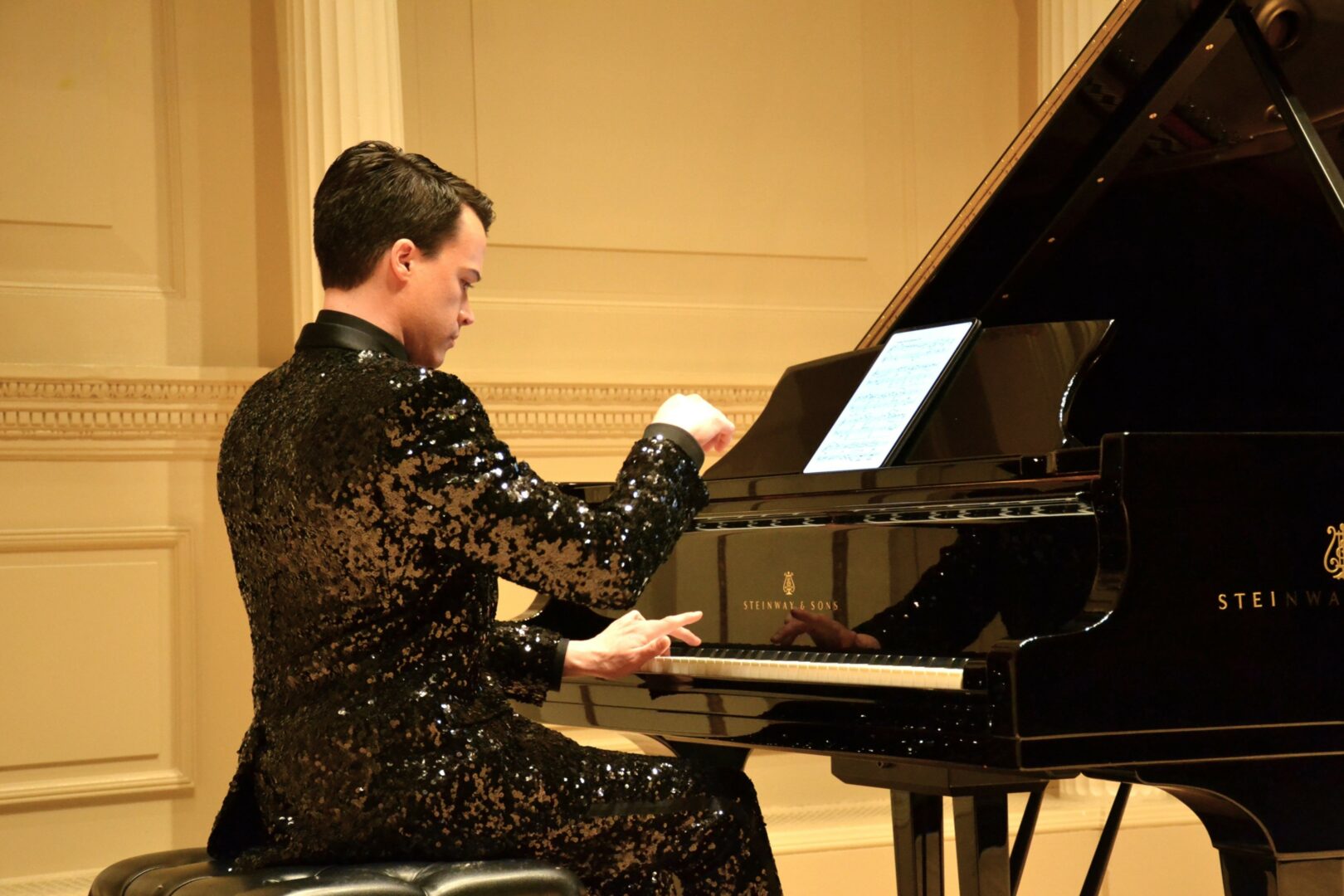
I’m Christopher Jessup, an award-winning composer and pianist based in New York City. My work lives at the intersection of music, poetry, philosophy, and astronomy, and I’m drawn to writing pieces that feel emotionally precise—whether that’s an intimate piano miniature or a large-scale choral or orchestral work. Critics have described my music as “lovely” (New York Times), “imaginative” (Fanfare), and “ethereal” (Textura), which reflects my ongoing interest in lyricism, resonance, and the inner psychological life of sound.
I began composing early, premiering my own piano concerto in Italy at age sixteen, and since then my music has been performed and recorded by renowned ensembles and artists including the London Symphony Orchestra and GRAMMY® Award-winning choir The Crossing. My recordings are released on Navona Records, and my work has been featured by outlets such as The New York Times, Gramophone, and Billboard.
What feels most central to my work—and my “brand,” if you will—is a commitment to sincerity and depth. I’m less interested in spectacle than in creating music that invites listeners into a focused, contemplative space. Right now, I’m working on several new commissions and recordings, continuing to explore how sound can translate ideas from poetry and the natural world into something deeply human and transformative.
Appreciate your sharing that. Let’s talk about your life, growing up and some of topics and learnings around that. Who taught you the most about work?
The person who taught me the most about work was my teacher at Juilliard, Melinda Wagner. Studying with her shaped not only how I compose, but how I think about discipline, craft, and responsibility to the music. She emphasized rigor, honesty, and patience—showing me that real work isn’t about quick results or external validation, but about sustained attention and deep listening. That mindset continues to guide how I approach every piece I write.
If you could say one kind thing to your younger self, what would it be?
I would tell my younger self that your sensitivity is not a liability—it’s the source of your strength. You don’t need to rush, prove anything, or harden yourself to be taken seriously. Trust the depth of your inner world, keep listening closely, and know that the parts of you that feel most vulnerable will one day become the parts that allow your work to truly reach others.
Sure, so let’s go deeper into your values and how you think. What’s a belief or project you’re committed to, no matter how long it takes?
I’m deeply committed to writing an a cappella choral work that explores how the brain heals from trauma. It’s a project I’m willing to take as much time as it needs, because it’s not just about finishing a piece—it’s about honoring a long, complex process of recovery. I’m fascinated by the idea that healing happens gradually, through repetition, connection, and re-patterning, and choral music feels like the perfect medium to express that: individual voices rebuilding something whole together. No matter how long it takes, I want the work to be honest and capable of offering listeners a sense of hope.
Okay, so before we go, let’s tackle one more area. What do you understand deeply that most people don’t?
I understand how fragile and nonlinear healing really is—especially after trauma. From the outside, recovery is often expected to look tidy and progressive, but in reality it happens in spirals: returning to the same places with slightly more distance, slightly more language, slightly more compassion. I also understand how art can function not as decoration or escape, but as a neurological and emotional tool—something that helps rewire attention, regulate the nervous system, and restore a sense of coherence. That understanding shapes how I live and how I write music: slowly, deliberately, and with deep respect for what can’t be rushed.
Contact Info:
- Website: https://www.christopherjessup.com
- Instagram: https://www.instagram.com/thechristopherjessup
- Linkedin: https://www.linkedin.com/in/christopher-jessup-64b1b1395
- Twitter: https://x.com/cjmusic123
- Facebook: https://www.facebook.com/thechristopherjessup
- Youtube: https://www.youtube.com/user/Awesomecomposer
- Soundcloud: https://soundcloud.com/christopherjessup
so if you or someone you know deserves recognition please let us know here.