We’re excited to introduce you to the always interesting and insightful Beckett Brueggemann. We hope you’ll enjoy our conversation with Beckett below.
Beckett, thank you so much for joining us. You are such a positive person and it’s something we really admire and so we wanted to start by asking you where you think your optimism comes from?
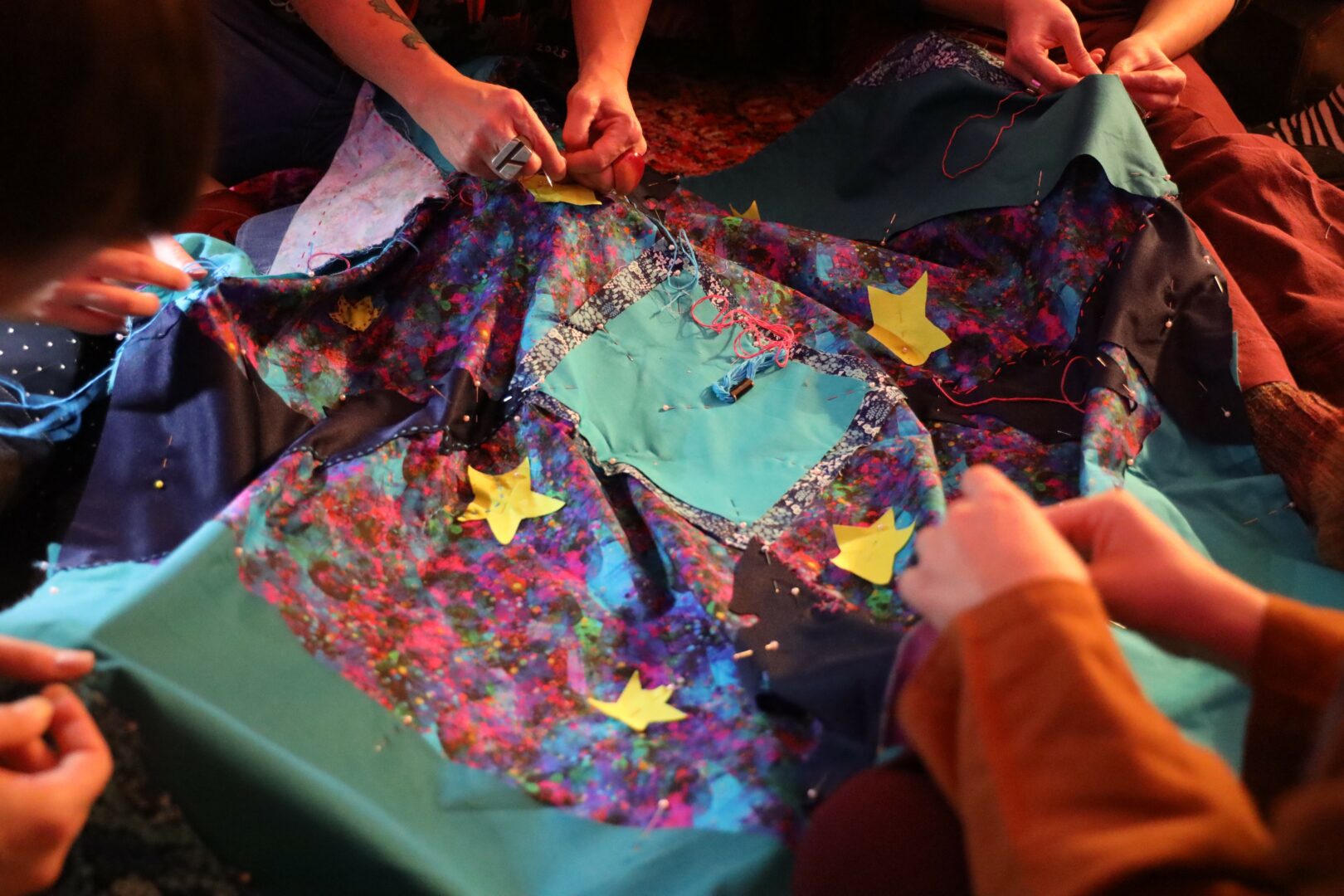
My optimism is in my community and in my craft. I believe in the community of craft-based and craft-inspired artists who have been infinitely generous with their time, knowledge, materials, and care. I have been blessed with people and spaces that generate, encourage, and validate makers across their varied pursuits. Through this community, I have found my path (winding and ever-twisting though it may be). They have taught me to trust my body: that I will find where I need to go if I follow my interests and allow myself the potential to fail. They have taught me to sit with the unknown and that the discomfort of not knowing will eventually subside into a curiosity which will in turn become a whole new path in my lifelong artistic adventure. Finally, my optimism stems from the histories of the materials I work with. Craft is healing and craft is care, stories are infinite and ever changing, and I am contributing to a language that grows with every generation of creatives who dedicate themselves to radically soft lives.
Thanks for sharing that. So, before we get any further into our conversation, can you tell our readers a bit about yourself and what you’re working on?
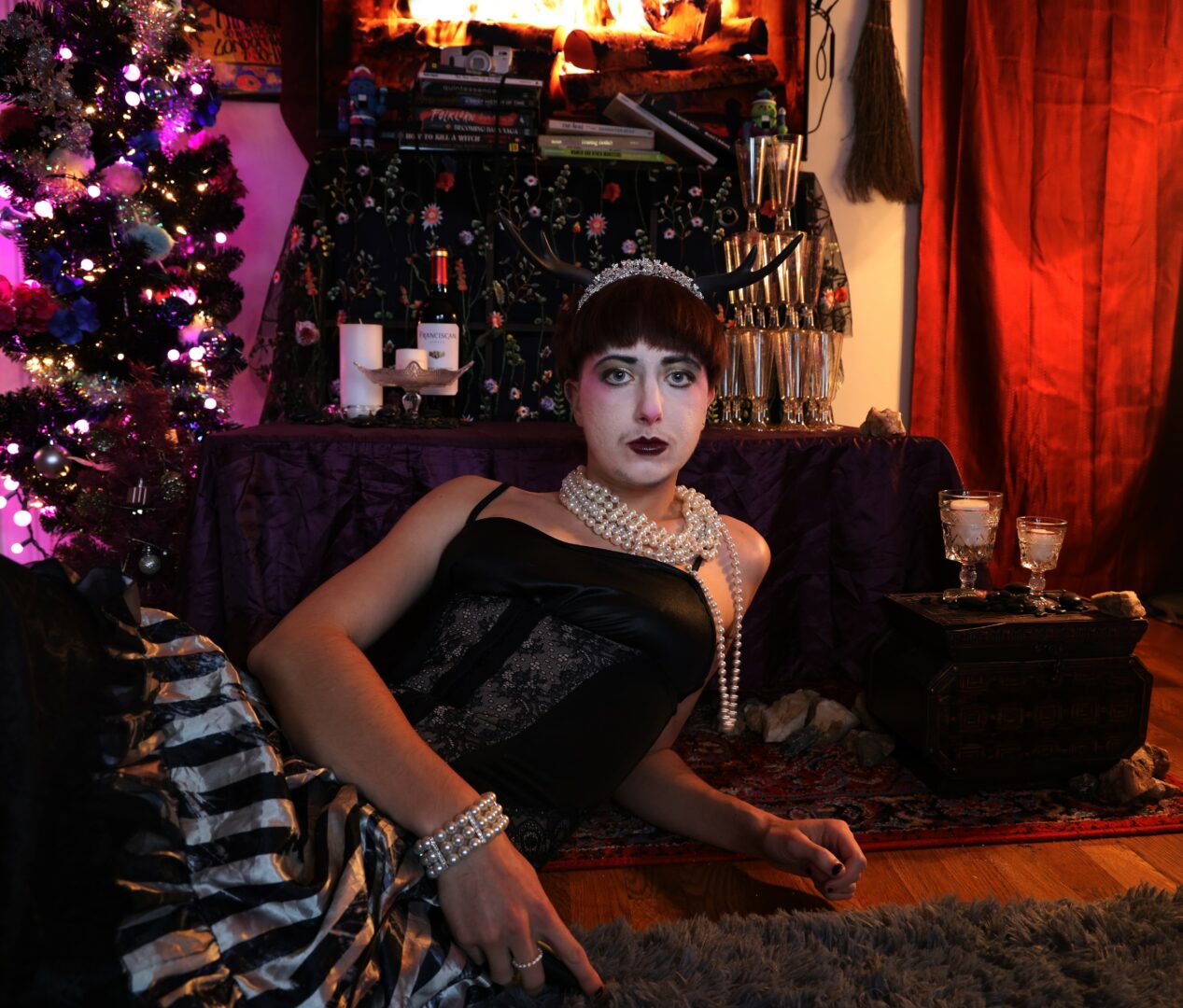
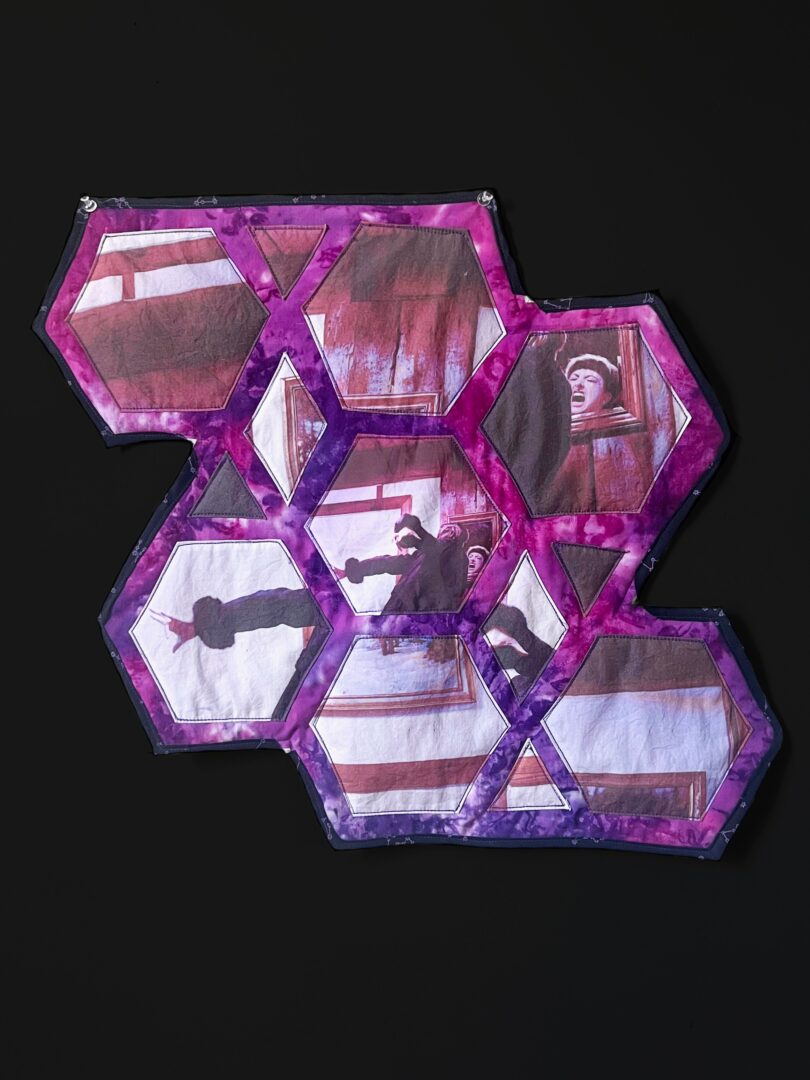
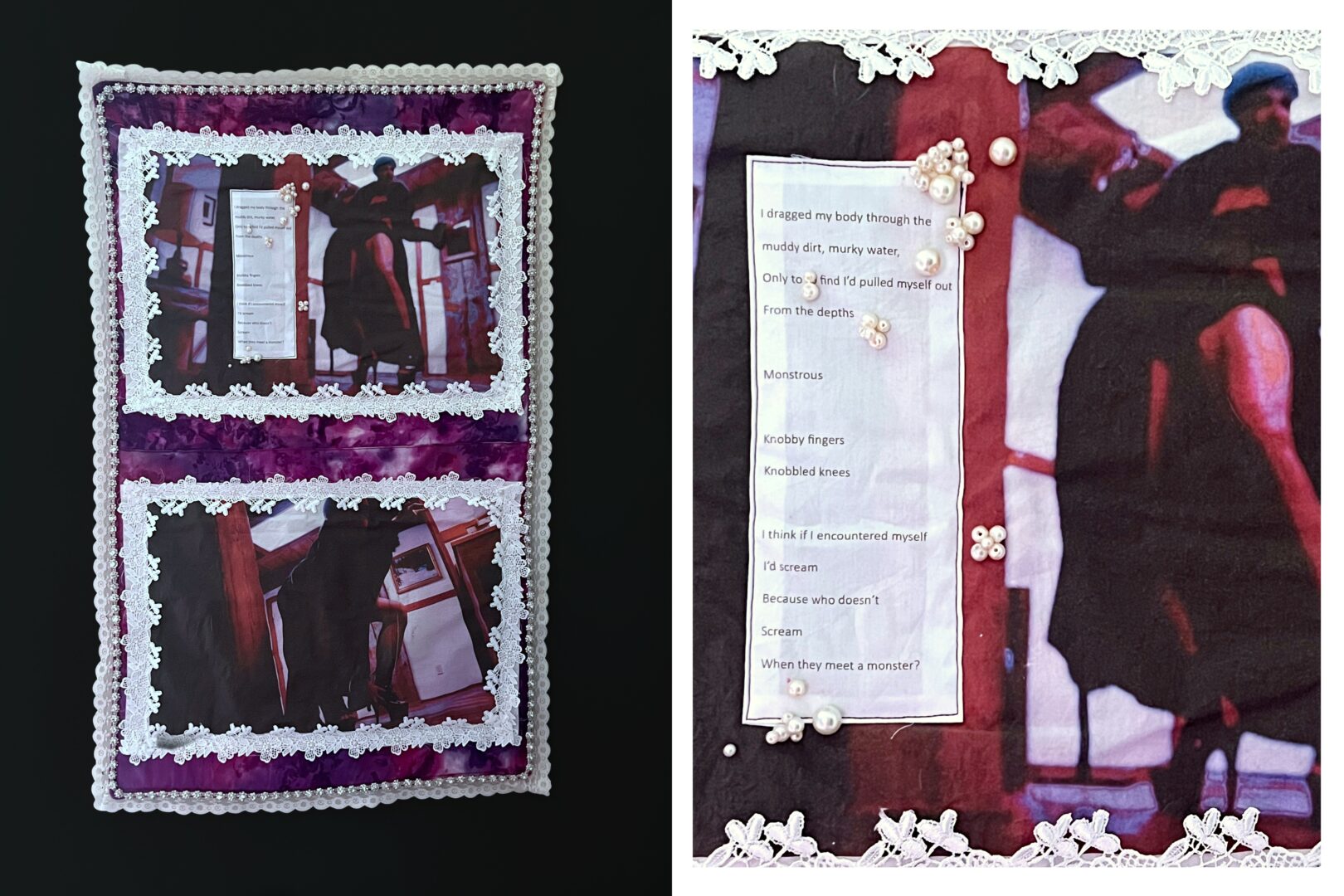
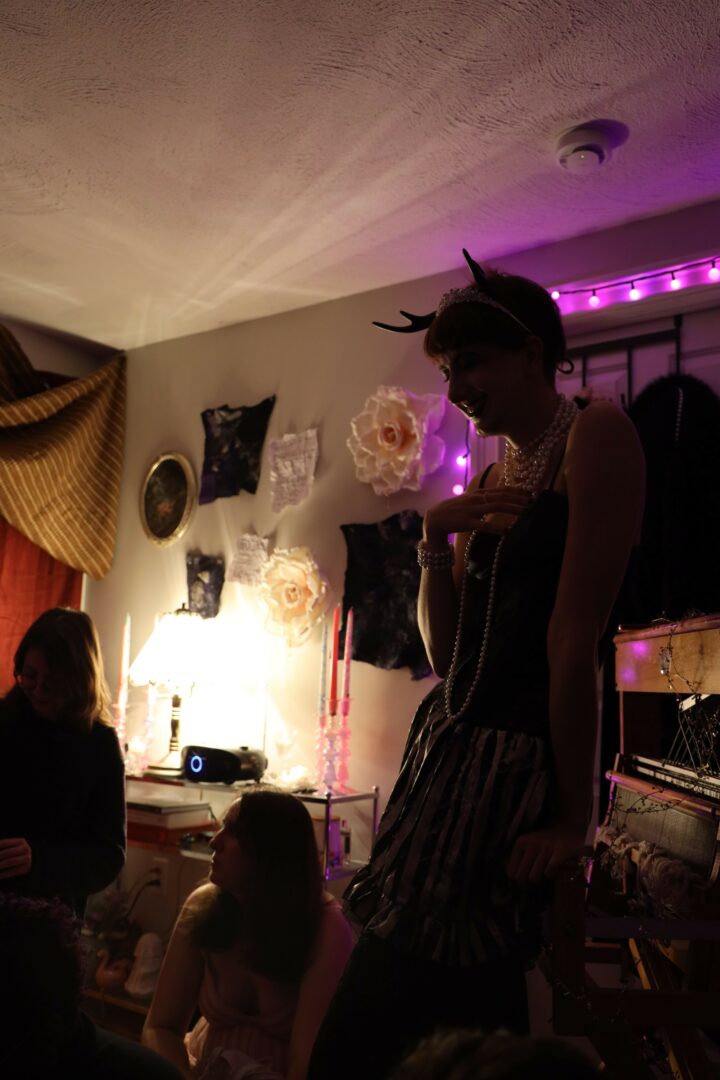
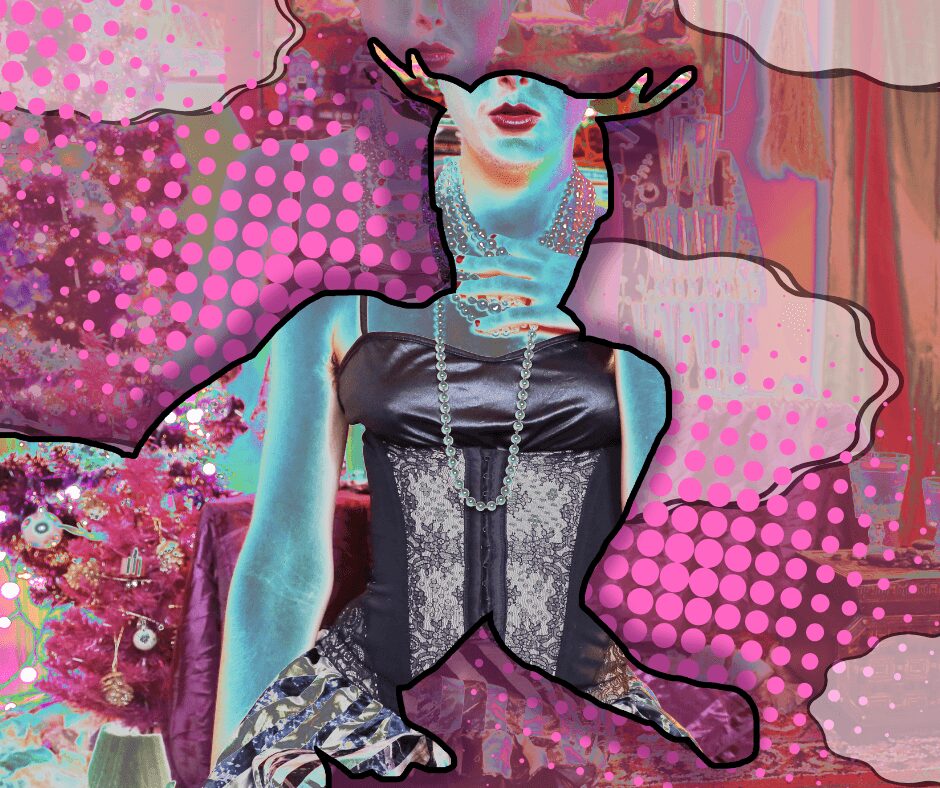
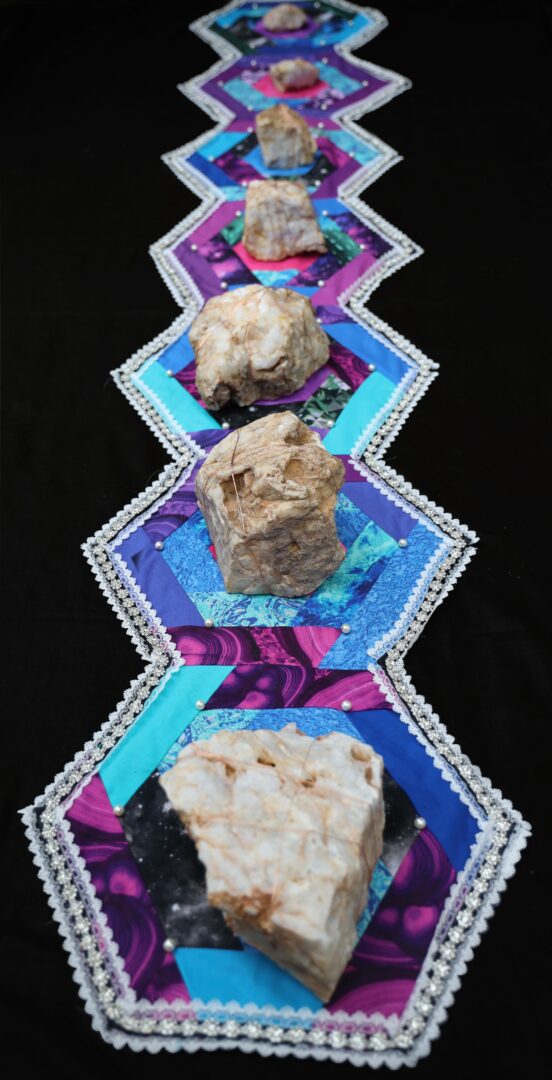
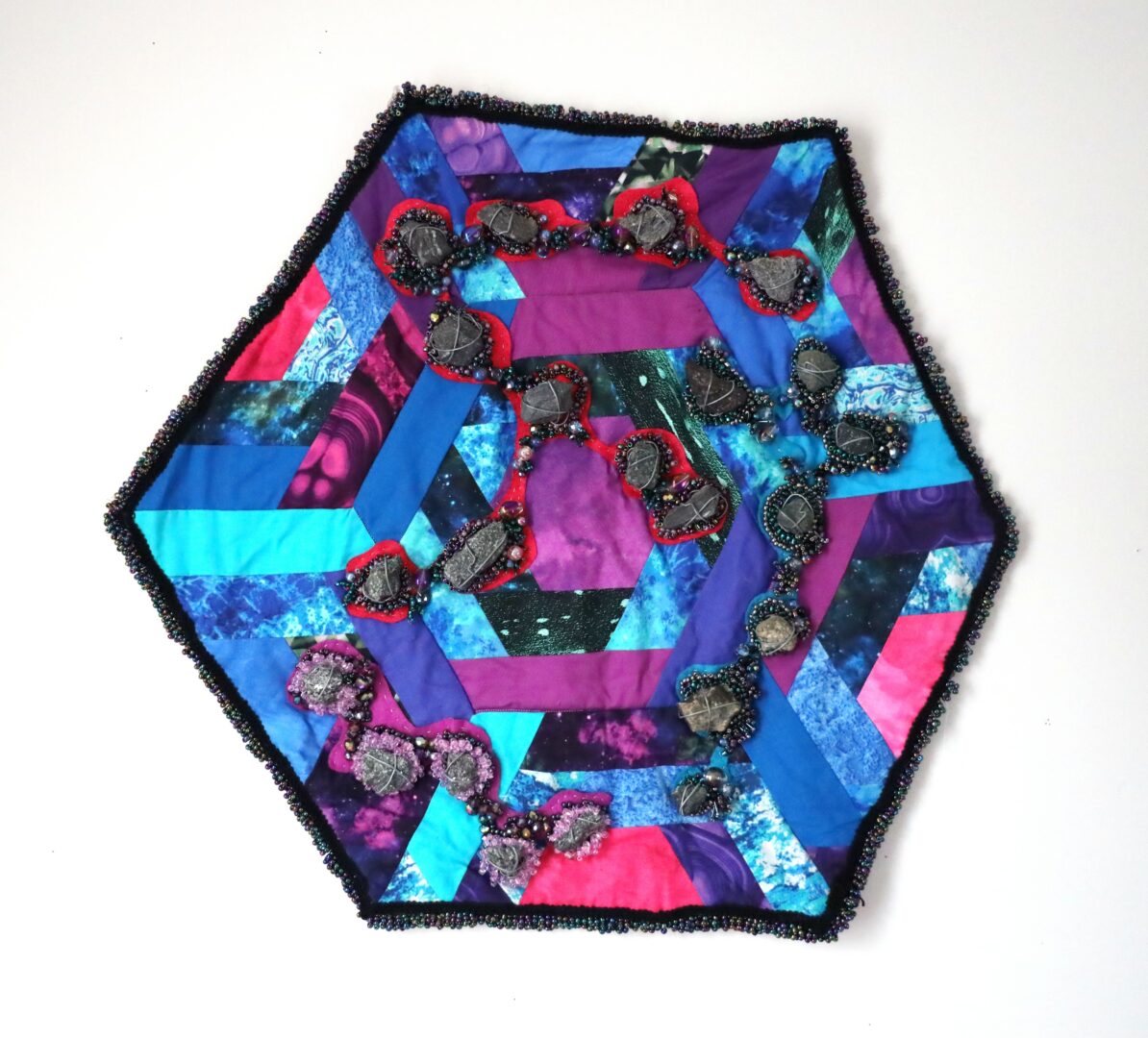
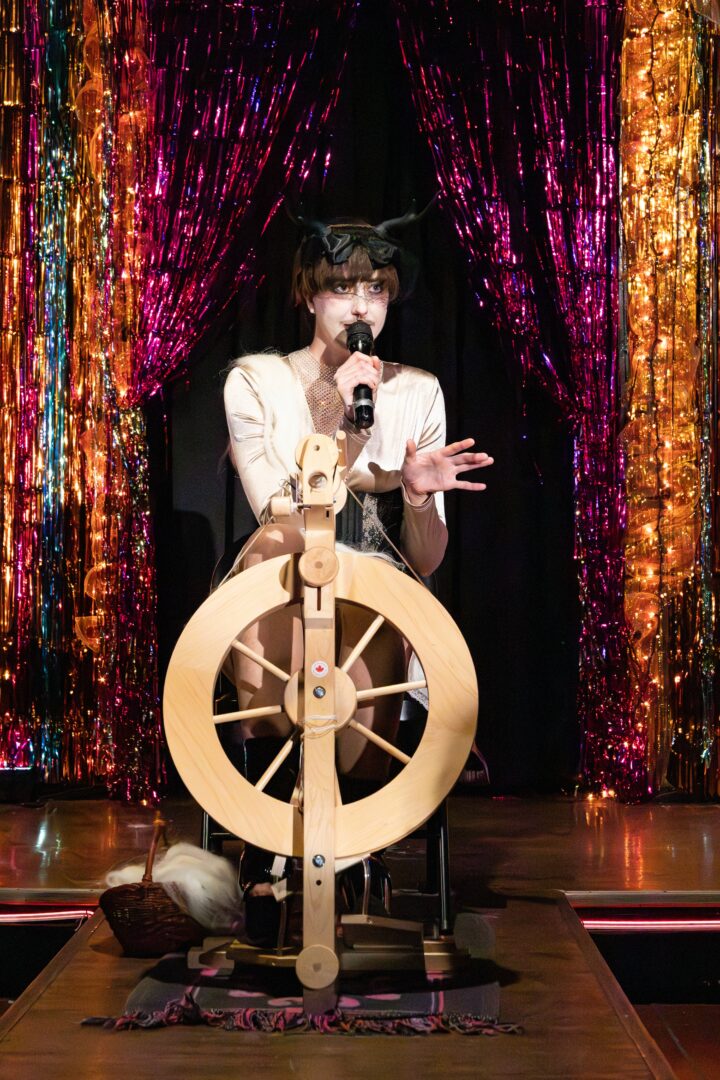
I am an artist exploring soft escapism and the ways slowness opens space for healing, comfort, and care. Through intersecting practices in photography, fiber, and storytelling, I investigate how the languages of craft and cosmology mirror one another. Drawing on the vocabulary of astrophysics—fabric of the universe, black holes, the warping of space-time—I build narratives that bind together material processes and celestial mythologies. In my work, holes in socks become ruptures in the space-time continuum, stars transform into god-like figures spinning the threads of existence, and I take on the role of traveler and narrator through my drag persona, Grendelin Drag, who moves through and interprets this otherworldly folklore.
Language also carries me into the world of fairytales, folklore, and the shifting stories societies use to understand themselves. Engaging with the Catholic Bible, cryptids, and European folktales, I rewrite and reimagine inherited narratives through drag performance, queer aesthetics and histories, and the softness and sadness I hold within my own queer trans body.
I regularly explore new projects and performances which can be found on my instagram and website both as myself and as my drag persona, Grendelin Drag.
If you had to pick three qualities that are most important to develop, which three would you say matter most?
When I started my career as an artist, I was torn between passions. I wanted to be a scientist (more specifically, an astrophysicist). Or, I thought I did: I loved the idea of science—I loved to dream about the universe and I loved asking the “what-if’s.” The questioning and defining and re-defining were wrapped up in my brain but never quite grounded into the mathematics of it all. But I kept reading articles: the way that space warped, the potential of dark matter as a material, and other questions pertaining to the fabric of our universe. In this, I found a common thread: language. The way we described our universe was the language that we had developed from craft-based practices. So I took up walking. Long walks, writing out daydreams about the universe we live in (science, folklore, fairytales, religion, etc) and listening to podcasts ranging from the reality of wormholes to the role of folklore in creating our social fabric to the healing function of naps.
All of this to say, I learned three very important things across the beginning of my career. First, research is expensive. Going on walks is research. Conversations are research. Fairytales are as much research as scientific articles are. Second, I am a storyteller. Language, folklore, and dreamings spiral through my body. I am as much the vessel of these stories as they are the foundation of my craft. Third, you have to rest. Not only is craft grounded in slowness, but our bodies cannot always be doing. I have worked myself into tension headaches with borderline carpal tunnel pains shooting from my wrists to my elbows. Craft is healing and craft is care, but this is only true if we engage ourselves, our bodies, and our communities in said healing and care. Our passion will only love us as much as we love ourselves.
So my advice is this: follow your interests. Slow down. Read a book about it. Write down that line that makes your brain say “what?” Make a quilt because you never have. Fall in love with learning something new. Embroider that line from that book about that interest into your quilt because you can. Or make something completely different because you can. STRETCH!!! Everyone needs a stretch break. Share your interests abundantly and show up for your people because they matter and they will be there for you in turn. But overall, just keep going because no creative life will ever be the same. And isn’t that a blessing in its own right?
What is the number one obstacle or challenge you are currently facing and what are you doing to try to resolve or overcome this challenge?
I was struggling to answer a final question, so I let myself fall into my storytelling habits. This is what I tell my friends:
I haven’t been sleeping at night. At first, I thought it was insomnia. I’ve struggled with sleep on and off for most of my life. The real issue, however, is that there’s a Monster in my closet. It’s taken up residence there and really I wouldn’t mind. It’s nice enough for being a Monster and it even hangs up my laundry when I can’t seem to muster up the energy. The problem is, at night, the Monster throws the loudest parties that I’ve ever heard. The Monster Mash starts up at midnight and goes on til it’s towards 4:00 in the morning. I just lay in bed listening because really it sounds fun and goodness knows I’d love to join but I wouldn’t know anyone there and I really need to be sleeping. I get up early for work, get home around 6:30pm, work on my art practice, and then it’s a good two hours until the midnight rager starts up again and the cycle continues.
All of that to say I have anxiety…. I’m going to therapy. But isn’t it nice to end on a story?
Contact Info:
- Website: https://beckettbrueggemann.wixsite.com/artist
- Instagram: @beckett_bee
- Youtube: @Beckett_Bee
so if you or someone you know deserves recognition please let us know here.