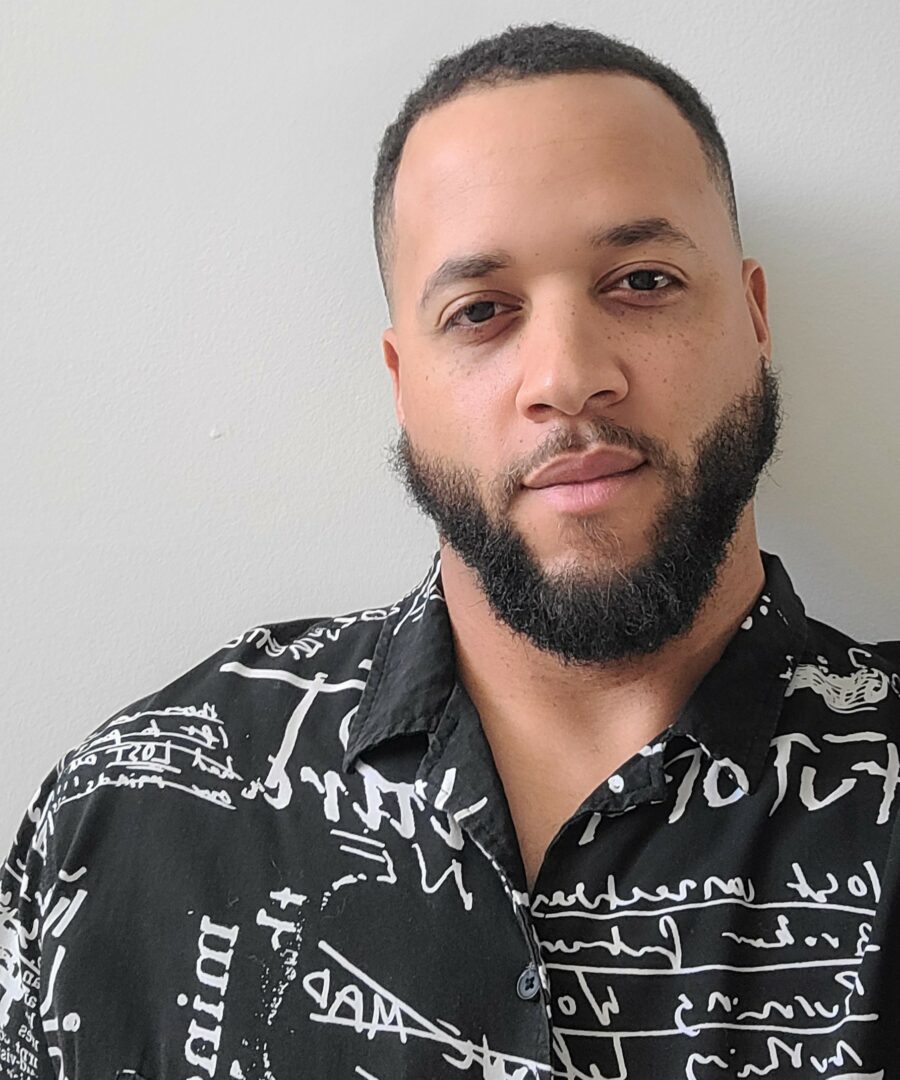
J Leonard Costner shared their story and experiences with us recently and you can find our conversation below.
Good morning J Leonard, we’re so happy to have you here with us and we’d love to explore your story and how you think about life and legacy and so much more. So let’s start with a question we often ask: What are you chasing, and what would happen if you stopped?
I’m chasing the impossible – turning a seven-book fantasy series into a global transmedia franchise that can stand alongside properties like Game of Thrones or Lord of the Rings. But it’s more than ambition. I’m chasing what I believe is already complete, and authentic to it’s message, waiting to be recognized. Legacy isn’t something I created in the traditional sense – it came through me in what I can only describe as transmissions, starting with 30 nights in 2011 when the first book downloaded itself into my consciousness. I was just the translator.
If I stopped? The work would still exist, perfectly formed, but it would die in obscurity with me. And I can’t let that happen because this isn’t just my story – it’s a mythology that doesn’t belong to just one culture or tradition – it’s built to hold space for warriors from everywhere. It’s designed to activate something in readers, to help them recognize their own potential beyond whatever limitations they’ve accepted.
The truth is, stopping would be inconvenient, because trying to ignore the message only makes the transmission louder. This feels less like a choice and more like a responsibility. When you’ve been given something this complete, this intricate – with mathematical patterns woven through seven books, synchronicities that keep validating the path forward – stopping would feel like abandoning a post. So I keep pushing, keep pitching, keep creating proof-of-concept footage and meeting with producers, because this mythology deserves to reach the people who need it.
Can you briefly introduce yourself and share what makes you or your brand unique?
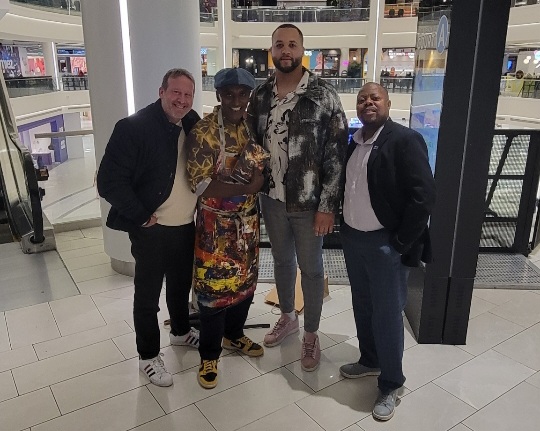
I’m J. Leonard Costner, a 6’7″ former Division I basketball player who experiences synesthesia and what I can only describe as channeling. In 2011, after suffering a catastrophic injury, I went through ego death – and in that space, I received the first book of what would become my seven-book fantasy series, Legacy, over 30 nights of transmission. I didn’t dream of writing a novel. I was just attempting to create an art piece through a medium I hadn’t worked with before. This story arrived fully formed, and I spent the next fourteen years translating what I was shown.
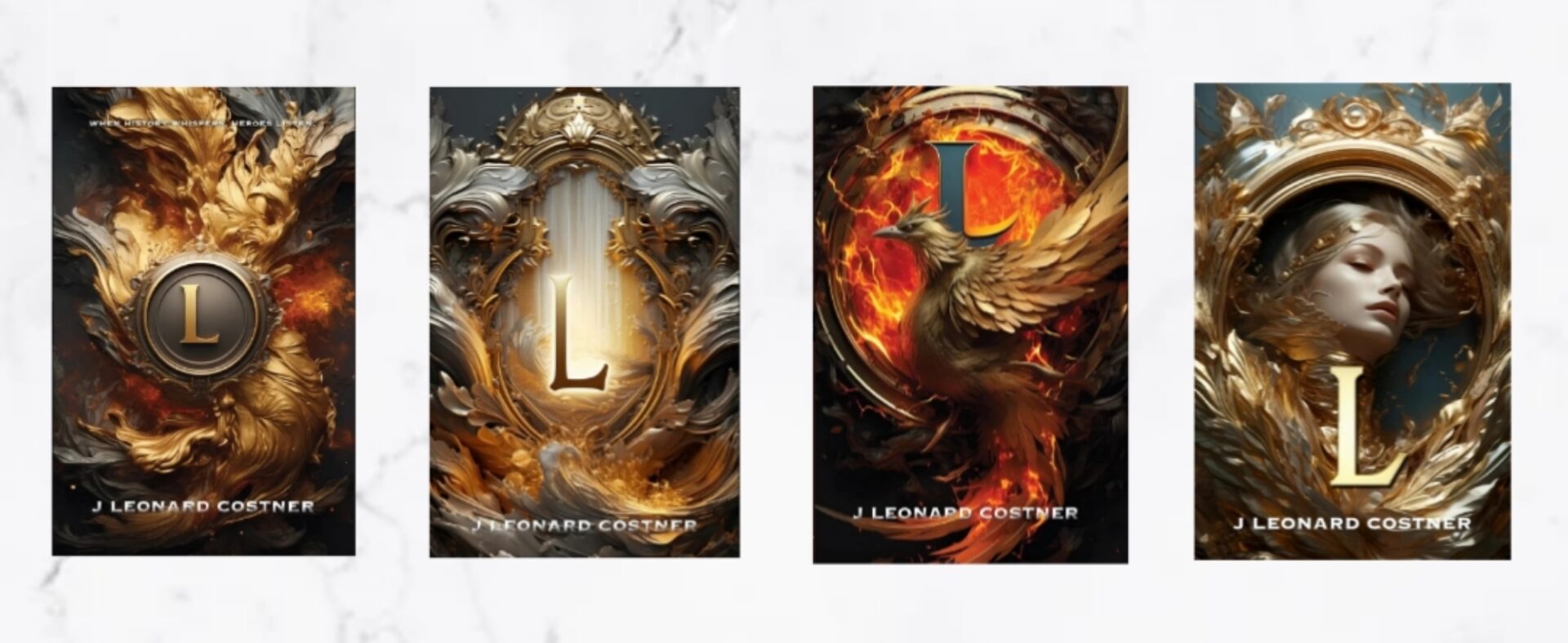
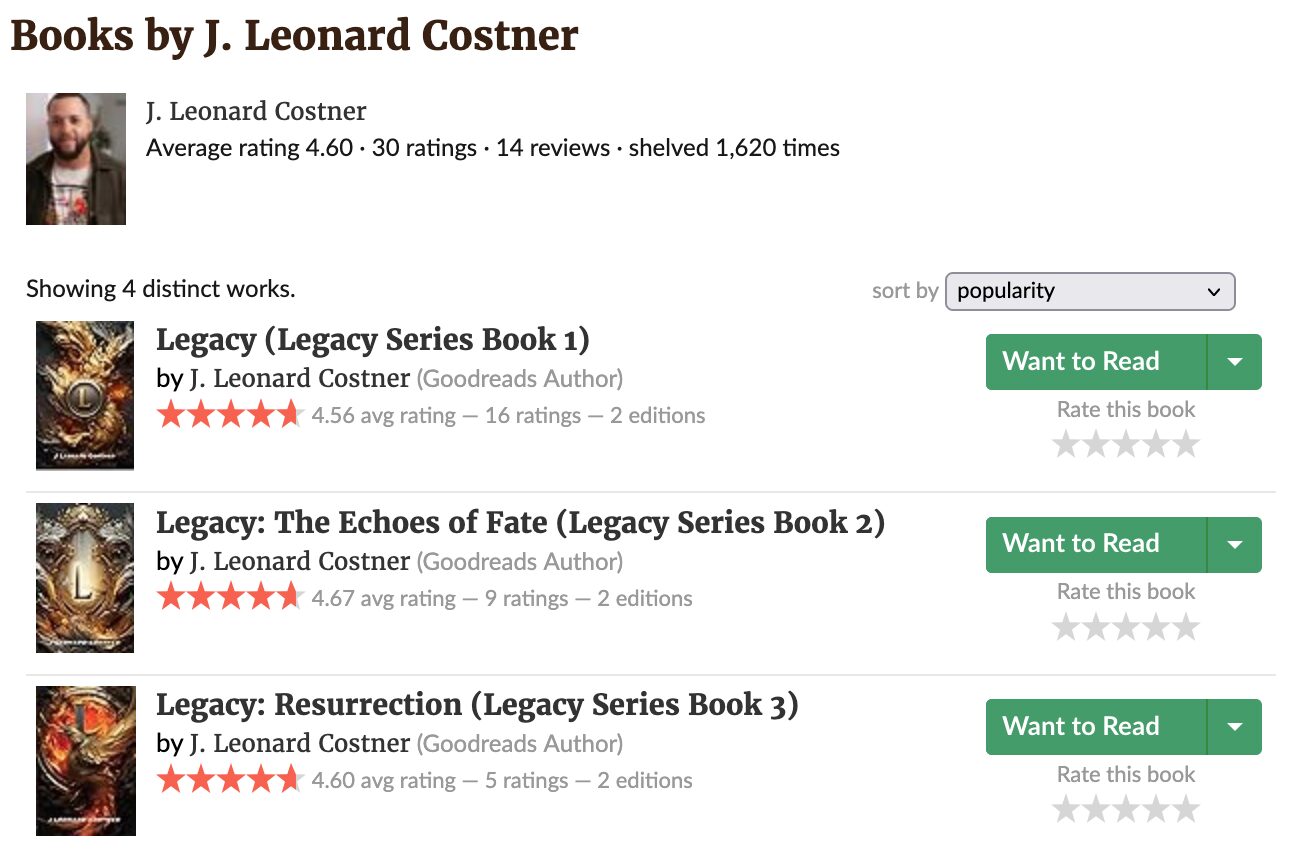
Legacy follows Luke Hart, who discovers he’s the reincarnation of Spartacus and is recruited into a secret institution where descendants of legendary warriors from every culture compete in hidden arenas. The series is complete now, all seven books, and I’m actively pitching it as a transmedia franchise to film and TV producers.
What makes this different is how I perceive the work. I don’t experience stories as narratives – I see them as oil paintings in what I call an infinite gallery. The synesthesia I was left with after recovering from illness changed how I process creative information entirely. I can access scenes that already exist, observing and describing. The series is an intricate epic that would be impossible to invent.
Great, so let’s dive into your journey a bit more. What did you believe about yourself as a child that you no longer believe?
I believed that if I worked hard enough, sacrificed everything, and refused to quit, I could will my way into the life I wanted. Basketball was Plan A – it was the only plan. I was built for one purpose, talented, and grew up watching my father play the game, learning from my grandfather who overcame everything life threw at him, surrounded by men who taught me there were no excuses. Just results.
So I pushed. I played through pain I didn’t understand, competed in 9 games a week from 13-18 years old. Made all-star teams, climbed the national ranks. I believed the ache in my hip was just weakness I needed to overcome, inadequacy I needed to defy through sheer determination. I sacrificed everything – my body, my social life, every ounce of energy I had – because I thought limitations were just tests of character.
Then an orthopedic surgeon showed me X-rays and told me I’d been born with a broken hip. That the head of my femur was a rectangle in a ball socket, that I’d been destroying myself with every rotation since birth, playing at 30% capacity on one leg. “You’ve never played healthy,” he said. “No one has ever seen you play healthy.” That was the message before suggesting that at 21 I should have a hip replacement.
It wasn’t inadequacy I was fighting. It was the universe. It was destiny telling me basketball wasn’t the path, no matter how hard I pushed.
The pivot wasn’t easy. When Plan A dies and there is no Plan B, you’re left in this void asking: what am I actually here for? I had to stop trying to overcome limitations and start listening to what they were redirecting me toward. My real purpose wasn’t something I could force into existence – it was something I had to allow.
What did suffering teach you that success never could?
Suffering taught me how much I can actually endure and keep moving forward when there’s real purpose behind it.
Success in basketball was hard work, but I never trained to retire – the next game, the next season, the next challenge. You push, you achieve, you rest, you push again. It was difficult, but it was routine.
Suffering is an enigma. A broken hip that destroyed itself with every step since birth. Fourteen years translating transmissions while dealing with chronic pain. Pitching a seven-book series in an industry that doesn’t want to take risks. There’s no finish line, no moment where it gets easier, no guarantee of a win. You just keep going because the work demands it.
What I learned is that I can take more than I thought possible and still show up the next day. Not because I’m tough – but because when you’re carrying something that matters beyond yourself, you compartmentalize, assigning priority and classification to what you experience. The pain doesn’t disappear. The obstacles don’t get smaller. You just discover that the balance of self-pity vs belief and faith in yourself depends on your capacity and desire to reach a milestone or goal.
Success taught me that I am capable. Suffering taught me that success is fleeting because one slain dragon doesn’t equate to achievement.
I think our readers would appreciate hearing more about your values and what you think matters in life and career, etc. So our next question is along those lines. Is the public version of you the real you?
The public version of me is whatever perception people form – what my work says, the energy I share. But my true thoughts and feelings? I can’t really share those because no one can understand them, or they’re just irrelevant to the conversation.
I’m not JK Rowling yet, so no one actually cares that I’ve written books unless they’ve read the stories themselves. My struggles as an athlete and the loss of identity – that’s not a new tale. Athletes lose their careers to injury all the time. But how I managed to achieve what I did on a broken hip, playing with severe limitations? No one else lived that. And it doesn’t matter now because I achieved it before social media existed. There’s no documentation, no highlight reels that went viral. People can only remember if they were physically there, and the only information about me and basketball online is from a college career I didn’t truly have because of injury.
So the public version is fragments – stories I tell, work I share, energy people pick up on. But the actual experience of being me, the internal reality? That’s not something I can convey, and honestly, most people don’t need to know it. If I’m totally honest, the public version is the one that speaks, and the private, that’s the version who is constantly managing how to find a voice.
Okay, so before we go, let’s tackle one more area. What do you think people will most misunderstand about your legacy?
The irony is that my legacy is unclear – even to me.
My parents’ wish for my brother and me is that we be the men they raised, blessed with the opportunities and worldly experiences they gave us, so we can carry that forward to our children. Even in my mid-30s, I’m blessed that they’re still able to give that support and love. Living up to their dreams for me is the easy part. Being able to say I can be half the people they’ve been for me to my own children? That’s unknown. For my children, I want health and happiness, to pay forward what I’ve been blessed with. But for myself? It’s unclear.
I can’t see myself. My baseline is silence and observation – both learned and enforced by the life I thought I would live. I played basketball until I was 26. At this stage of my life, the longest instances of me speaking are now gathered in a collection of works entitled, Legacy, that will survive me long after I am dust.
Perhaps legacy for me isn’t about what I leave behind. It’s about having the longevity to continue growing and fulfilling my purpose while I’m here. Maybe people will misunderstand that I’m not chasing immortality through my work – I’m just trying to figure out what I’m supposed to do with the time I have.
Contact Info:
- Instagram: @thelegacyxii
- Linkedin: https://www.linkedin.com/in/jcostner/
- Youtube: Legacy Universe

so if you or someone you know deserves recognition please let us know here.