We’re looking forward to introducing you to Jack Remick. Check out our conversation below.
Hi Jack, thank you for taking the time to reflect back on your journey with us. I think our readers are in for a real treat. There is so much we can all learn from each other and so thank you again for opening up with us. Let’s get into it: What makes you lose track of time—and find yourself again?
Writing. Poetry. Novel. Short Story. Essay. Any time, any day I’m working the words, I lose track of time. Raymond Chandler, a novelist few of us read anymore, said that when the words are pushing the pen, he knows he’s on the right track. When the pen is pushing the words, he wrote, he knows the writing isn’t coming from the right space. We all feel that, as writers, when we sit down and say “I’m going to write…” A few years ago, Robert J,. Ray, a novelist, introduced me to Natalie Goldberg who introduced me to timed writing. It changed my life–for the better–and from that first writing, I found the essence to produce the twenty-six books I have done. And in each book, as I look back at it, try to read it, I say to myself, “I don’t remember writing this…” Those few words tell me that I’ve done it right. I got lost in the work, in the words, in becoming the characters. In short, this “lose track of time,” is code for living in the unconscious mind where all the good stuff lives. I consider myself to be a denizen of that dark and inexplicable place–the Jungian Unconscious.
Can you briefly introduce yourself and share what makes you or your brand unique?
My writing life started in poetry. I am a graduate of UC Berkeley where I met Thom Gunn, an English poet who, after I had worked with him for awhile, told me, Jack, when you live in another man’s universe, it will always be smaller than the one you create for yourself. Stop imitating…That was the push I needed to move on and that is the same push I give to other writers who work with me. Writing is a continuous journey of discovery where the writer has to explore the infinite possibilities of the poetic line. The deeper you go into the line–poetic doesn’t mean “poetry” but a way to dig the essence of words out so you see and understand the underworld of the dictionary. Emily Zants, a professor I studied with asked us the question–“What makes Balzac a great writer?” Among the answers were, Oh he makes Paris a character, or he gives us the inside view of an outsider. Dr. Zants held up a hand. She said–Balzac is a great writer for what he leaves out. And with that, the doors and windows opened on another universe–the universe of Implication. What the writer doesn’t say is as big and important as what is said. The underworld of syntax, semantics. The mystery of subtext. I now carry both Thom Gunn and Emily Zants into every story, novel, screenplay, poem that I write. I need to hear the melody that lives below the words. Franz Schubert, the composer, wrote that in music, everything can be taught except melody. In writing, where is the melody? It’s in the poetic line with its infinite possibilities.
Okay, so here’s a deep one: Who saw you clearly before you could see yourself?
My life would be plain, simple, and uninteresting if I had not met and worked with Jack Moodey–a poet involved in the Valley Renaissance. I asked him one day if he had ever written an epic poem. His response: Six lines or eight? With that simple answer, I saw into another world of writing and art. The big word is Compression. Compression leads to this technique–If you say it in five words, can you compress it to three and still have the same intent, intensity, and drive? I understood from that moment, that the question isn’t How many words do you have in that novel? But how many images hide under all those words. I became then, more interested in the deep image than in the number of words. As a result, I find that the more I write, the shorter the pieces become. Another writer, Mark Stone, reviewed my novel Blood and in the review he hit on the notion of compression and its intensity: “At the heart of this story it is sad and poignant, wild and paranoid and even downright surreal, but no matter how odd, how bizarre, it grips the reader with furious tension.” Each revelation after the writing, not always in the act of writing itself, shows the writer who and what they are. I see myself now as a writer of Incantatory Prose, prose ripe with the intricacy of the poetic line. There is much to be said about Incantatory Prose.
Was there ever a time you almost gave up?
If you can find a writer, artist, painter, poet who hasn’t almost, at some time, given up, you’re not looking deep enough. It’s one of the dynamics of completion–Finish what you start. If you give it up because of this or that little pitfall, you will never rise to the demands the work places on you. There are, in essence, always three stories: One: the story the “I” wants credit for. “I wrote this, I’m the author.” Two: The Story that Needs to be Told. Three: The story your viewer/reader wants you to write. The artist who doesn’t give up, in the end will always work Story Two. The Story and must be told. In this there is failure. Failure comes either from the writer/artist who gives up or from the gatekeepers who want only the story that’s already been told thousands of times. We all know who the gatekeepers are–the editors, publishers, agents who pass judgement on the art as they look for the story they want the writer to tell. If you give up without daring to live in “Story Two,” then you have not touched the heart of art and met the demand it places on you to bring back from the Unconscious not the same old stuff but to bring back new works for the Museum of Words. Original. The pagan word we all can learn. Be original. Be vicious. Be savage. But don’t give up. Live in Story Two.
Sure, so let’s go deeper into your values and how you think. What do you believe is true but cannot prove?
In writing, I have come to understand the many levels of the work. To me, the issue is the melody that lives in vowel harmony within words and images. A lot of writers think that stories are told with words. Yes and No. Stories are told with Action and Image. If the writer conjoins Action and Image, then language lifts to greater heights and the Unconscious perceiving mind sings the vowels. In other words, the Mind perceives the intricacy under and in the sounds of words while another part of the Mind reads the words for meaning. This idea, unproven, without any linguistic evidence, links to that notion of Schubert’s that in music everything can be taught except melody. I have learned that people who speak Chinese are fortunate to have a tonal language that, when spoken, lights up a different part of the brain than a simple alphabetic language does. In other words, the Chinese language “sings” at a level different than English. Or does it? I suggest, and to repeat–this is all without any evidence, that we in reading English activate the singing mind. I call it Vowel harmony. The song resides also in other dynamics such as rhetorical devices–alliteration, rime, repetition. There is a Lawrence Durrell poem that has this: Out of the swing of the swing of the sea. That line has everything–rhythm, alliteration, meter and vowel harmony: I/E. Swing/Sea. A true poetic line.
Thank you so much for all of your openness so far. Maybe we can close with a future oriented question. Are you tap dancing to work? Have you been that level of excited at any point in your career? If so, please tell us about those days.
This is a good question because for me, there are times when I am in a work so deep that I feel “liquid,” “fluid,” almost disembodied. Not mystical, but in those moments of the “flow,” I am outside Self and exist for that time not as a person but as an essence. Returning to time, then, is a chore because the flow, some call it “white flow” is so intense that I am reluctant to return. I suppose this is where the Rhapsodes lived, and this is where Jackson Pollock lived, and Giacometti also lived–in a space that lies beyond time and body. That is the true moment of discovery–the moment when art reveals itself to the artist. It is a revelation that comes with the fluid brushstroke, the elegant image, the line of poetry that sings, as does this from Jack Moodey: When the dream comes, the sea-deep mind speaks. Words from the wave, voice from waters profound.
Contact Info:
- Website: http://jackremick.com
- Instagram: remickjack

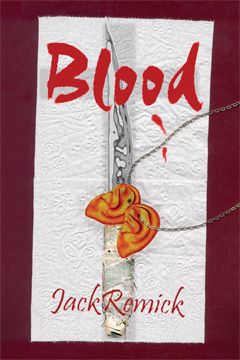
Image Credits
Jerry Jaz
Jac Seery
Russ Spitkovsky
so if you or someone you know deserves recognition please let us know here.